Reviews, Reviews, Reviews

If you’ve been following this page for the last 10 years (yes, it has been almost 10 years!), then you know I’m a story teller. I’ve posted a LOT of stories on here over the years. Before I continue, if you have been following this page, even for a day, thank you. I honestly wasn’t sure this page would go that long, and I’m happy it has. 

If you’re a lurker, thank you. If you’re someone who comments, thank you. Just the fact that you are here, is awesome. Now, let’s get down to business.

I’m seeking reviews for my books. Yes, I know, I’m always seeking reviews. What writer isn’t? Over the next few months, I’m going to give away 10 free ebooks of each of my books to 10 people. No, I’m not giving them away all at once. It will be one book at a time, every 2 to 4 weeks. The catch? You have to review the book, and no, not a year from now, but preferably within 6 weeks of receiving the ebook. 

Yes, I am trying to garner some reviews for some of my books that don’t have many. And, yes, I am trying to garner some reviews for my books that also have over 20.

You get a book for free. I get a review. 

If you want to review more than one book, great. Read one. Review it. Request another one. 

Also, the review can go on a personal blog or Goodreads or Amazon, or even here on this site as a comment on the page the book is on (or all of the above). 

I’m thinking of starting with The Forgetful Man’s Disease, one of my favorite stories that a lot of folks haven’t read (but more details on that in the next couple of days).

If you are interested, please comment below and leave me your email address. Again, thank you for being here and your interest in my works.

Until we meet again, my friends, be kind to one another.

A.J. 

Hi

Hi.

It’s me, A.J. Brown.

I just wanted to pop on here and say hello and give a, hopefully, quick update on things. This shouldn’t take too long.

Type AJ Negative is in it’s tenth year, which absolutely blows my mind. I started this blog/website in June of 2012 as a way to promote my work, get my name out there and connect with readers. There have been times where I have kept the site updated regularly and times where I didn’t. So is the ebb and flow of life and writing. 

I took a six or so month break last year to reevaluate more than just writing, but life in and of itself. Around that time, I really looked at me, at my head space, at what I wanted in life. You could say I was going through a midlife crisis if you want, but I think it was more of learning how to prioritize, well, me. I started a workout program and dropped thirty pounds of fat and found a confidence in myself that had been sorely lacking for years. I felt better and I was able to run again for the first time in twenty years. That was monumental for me.

I got rid of Twitter, which I found to be the most toxic form of social media. I also culled my friend’s list on Facebook from nearly 3800 to about 700 people. Suddenly, a lot of toxicity was gone from my feeds. I removed in person people from my life and had long conversations with other people I did not want to remove. 

And I wrote, but differently than before. I wrote for me, for my enjoyment, without the pressure of needing to get my work published. I wrote some of the best stories in years. I wrote a course on story telling (so if you know someone who might want to learn hot to tell a story … ). Then, after I reached a place where I was happier, I set out into the publishing world again. I put out Five Deaths in September of last year, then GRIM in February of this year. I’ve written an amazing love story and have three books that are interconnected around the theme of love. Talk about stepping outside of your comfort zone.

One thing I had to look at was holding myself accountable. The biggest of those is not making excuses for not doing things, or why I can’t do things. I think most people are in the habit of making excuses. I had to cut that out. I’m still working on it, but for the most part, it’s a habit I have broken.

I also had to look at RIGHT NOW. There is no tomorrow. It is always today because once you reach tomorrow, well, it’s still today. I know, confusing, but the point is don’t put off until tomorrow because tomorrow never arrives and you only have so much time in this world. Do what you want to do in life RIGHT NOW. 

Before I go, I want to talk about Type AJ Negative. I am currently revamping the site. Please, check out the menus and the links, check out the book pages. I’m adding purchase buttons to each book page, so if you’re interested, check back soon and you should be able to purchase directly from my site. If you’ve read my work, comment on those pages, please. I will be adding my social media links, probably in a menu tab as well as a sidebar menu. I’ll also add my Patreon page on here, which I hope you will give it a visit, and maybe subscribe to it. More on that at a later date. 

I am going back to promoting my books and stories and maybe some other writers as well. I’ve been thinking about a WHO AM I kind of thing where I invite other authors on here to talk about themselves and their works. I know some fabulous people in this business. I will still post stories from time to time, but maybe not as much as before. I hope to post more inspirational things as well. 

I hope, even more than all of that, you will stick around for this. 

I have 370 followers. To each one of you, I want to say Thank you. I know, in reality, it’s probably more like thirty people who follow this site regularly. To each of you, a big thank you. If I’m able to bring one person some entertainment and joy into their life with this site, then I’ve done what I set out to do. 

Okay, so this is important. If you follow this site, if you have read this post, can you do me a favor? Yes, please like the post, but more than that, can you leave a comment? Let me know who you are or say hi. If you’ve read my work, tell me about it, tell me if you liked it, hated it, used it to balance a table. 

I’m done for now. I have a lot of work to do, but it is work I am happy to do. I look forward to hearing from you and thank you for reading. Until we meet again, my friends, be kind to one another.

A.J. 

Broken Shells

A few years ago, I wrote a story titled, Broken Shells. (Brief spoiler coming) In it a teenaged boy who recounts the last night he saw the girl he loved and how he believed it was his fault she died. It’s a terribly sad piece about how things are viewed as ugly or beautiful, how people are viewed in that same manner. 

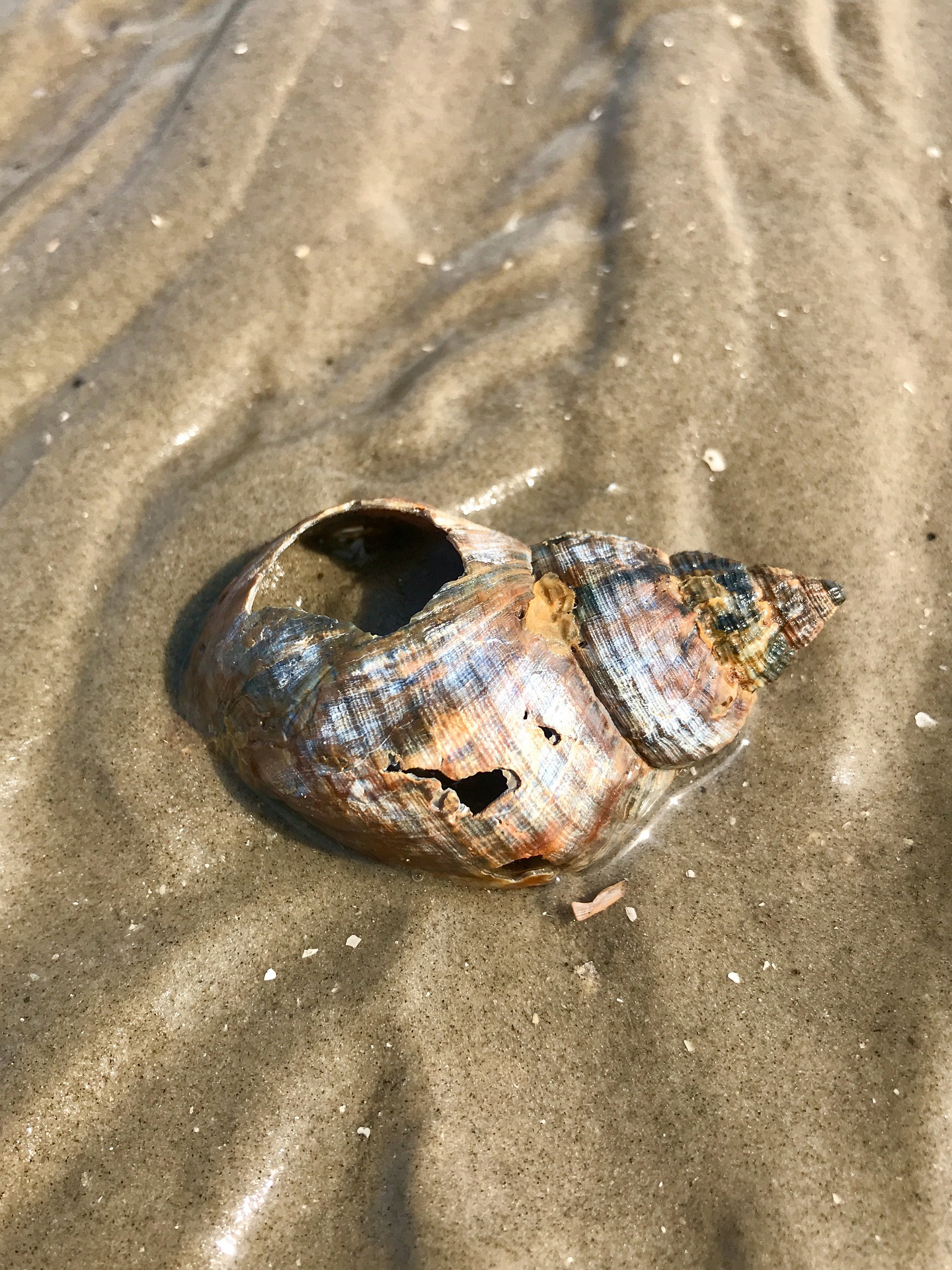
I wrote the story one night around Thanksgiving of 2013. That year we went to Folly Beach for Thanksgiving with my wife’s family. It was insanely cold during the day and even colder at night. We went out one afternoon, braving the cold and the wind that whipped around us. As we walked, I did what I always do: look for shells. I came across this shell that was nothing more than a fragment. It’s edges were purple and faded into pink. I almost threw it back, then stopped. It wasn’t a full shell, but it was beautiful, probably one the prettiest shells I’ve ever seen.

That’s when the story began to take shape. You see, beauty can be found in anything if you look for it. It’s what the main character of the story didn’t know, but what Mazzy did. I tucked the shell into my coat pocket and wrote the story shortly after.

Fast forward to the end of 2021. Cate and I return to Folly Beach on a warm day shortly after Christmas. We walk the beach for a couple of hours. At one point, we pass these driftwood trees to our right. Cate had seen them on one of her prior trips earlier in the year and she wanted to show me. She takes me to this tree, one with all these half shells attached to it with twine or string or anything that people could find. Up a little high, as if it were the star on top of a Christmas tree, was a starfish with some words written on it. She took a few pictures and we left. But a seed had been planted. Now, all I had to do was water it.

That night, I sat at my laptop and wrote the story, Forever Broken, Forever Beautiful. It takes place five years after Broken Shells. It deals with the guilt of poorly chosen words and the perceived results of those words. Below are those two stories. I hope you enjoy them.

As always, until we meet again, be kind to one another and keep taking one step forward. It’s the only way you get anywhere.

A.J.

Broken Shells (2013)

Mazzy wanted to walk on the beach. I thought she was crazy. I’ve always thought she was a little nuts, but this time, she was taking it to a new level. It was bitter cold—twenty-six degrees—and it was well after noon, so the temperature wasn’t going to rise much, if any. The sun was as high in the sky as it would go before making its descent back the other way. The wind blew off the ocean, dropping the temperature another ten or so degrees. We had tried the beach before lunch, but the gust whipped her blond hair about her head. It cut through my coat and sweater and the T beneath it. It made my face hurt and my nose run and my body like ice. We gave up then after only a few minutes.

Still, Mazzy wanted to walk on the beach.

“Why?” I asked.

“I want to look for shells.”

“Shells?”

“Yes. Seashells.”

“I know what you mean. Why do you want to look for them now?”

“We can add them to your collection.”

With that, I donned my long shirt, my sweater and jacket. She pulled on only a thin coat, not enough to keep the chill from her skin, much less the wind off her bones.

“You’ll be cold,” I said.

She regarded me with pale blue eyes that hid a truth in them I didn’t see right away.

It didn’t take long to get to the beach. It was a block from the house her parents rented. My hands shoved deep into jean pockets, I still shivered, even with the layers I wore. Mazzy gave no indication she was cold at all.

Clouds rolled in, brought by the wind. A threat of sleet or ice hung in the air. 

“We shouldn’t stay out long,” I said.

“You can go back,” she remarked, knowing I wouldn’t leave her.

For the next two hours we picked up shells to add to a collection I had started years before, when I was only a child of six. I picked up one with frozen fingers, dropped it back to the sand, and plucked it up again. By then the sun was setting behind the darkened clouds, giving the clouds a purple hue. I stared at the shell for a moment, before flipping it into the incoming tide. 

“Why do you throw back the broken ones?” Mazzy asked. In her hand she held a curved piece of a conch shell—it was just a piece, and nothing more. 

“It’s broken—it’s not worth anything.”

Again, she regarded me with those pale blue eyes. They were sadder than I had ever seen. She held up her piece, turned it over in her hand. “Is that how you see them? Just broken pieces that have no meaning. Pieces so insignificant you can’t see the beauty in them?”

“There is no beauty in broken things.”

She frowned, looked down and whispered, “A shell is like a life—fragile and easily broken. Each one should be looked at for what it is: once something beautiful before the world destroyed it, before people destroyed it.” She dropped the broken shell and turned away from me.

I wanted to chase after her, but I couldn’t. Even if it had been a hot sunny day, my legs would not have moved, and my voice couldn’t be bothered to speak up when I needed it to most. 

I looked to the sand. The piece of shell was there. I bent, picked it up and had a hard time standing upright, thanks to the cold that had seeped into my bones. With the dying sun sinking further into the horizon, I caught a glimpse of the purple edge of the shell, the way it turned red, then pink. It was a beautiful fragment of something much larger. It was like Mazzy, and right then I understood her grief.

Life had been cruel to her, but she kept going, kept putting one foot in front of the other. At least until then. 

“Mazzy,” I called, but she was gone. I looked up the beach in the direction she had gone but didn’t see her. I saw shoe prints in the sand that led to the water. You can figure it out from there, right? I don’t need to go into all the details of how I called her name until I was hoarse, or how I ran into the water up to my knees, even as the tide rolled in harder and harder, pushed along by the bellowing wind, or how her body washed up on the shore three days later, bloated and blue and nipped at by hungry fish, or how I cried until no more tears would come, and still, my heart lay shattered in millions of tiny pieces. Or do I?

All that really matters is Mazzy is dead, and I can’t help but believe part of it is my fault. The words I said echo in my skull, haunting me daily, keeping me awake until the early hours of morning. 

There is no beauty in broken things.

I was wrong. 

Mazzy was a broken shell, but she was beautiful in her own special way.

I once had a collection of seashells. They were whole and carefully cleaned and sat in boxes in my closet. They were beautiful. They still sit in their boxes, but I haven’t added any to them since Mazzy left. Now, I walk the beach in search of the beauty of broken shells …

Forever Broken, Forever Beautiful (2021)

It’s warm today, even for mid-November. The last time I was here, it was bitterly cold, in the mid-twenties and with a wind coming off the ocean that made it feel like it was below freezing. That was five years ago. Five. Years. Ago.

I can only shake my head at that. 

I left my car in the gravel parking lot. Four years ago, this part of the beach had been wiped out thanks to Hurricane Andrew. The parking lot had been just a dirt road that dead ended at a small building with two changing rooms—one for women, one for men. A sandy path led from the building to the beach; a thin slat fence kept people from going onto the dunes. Now, there’s a building with four ramps leading up, up, up to changing rooms and bathrooms. There is even a deck area with nice wooden tables you can sit at and look out at the ocean. It’s a beautiful view from there. 

Mazzy would have thought it was neat, maybe interesting, but beautiful? I’m not so sure. 

The ramps lead to a long boardwalk that takes you right onto the beach. Real guard rails keep people off the dunes. 

“Are you sure you’re ready for this?”

I look to my right. Kimberly stands there. Her light brown hair moves with the slight breeze. There is concern in her hazel eyes and written all over her face. She holds a small paper bag with both hands in front of her. She’s a good person, my friend, my heart. She’s understanding, and in so many ways, I don’t deserve her. She knows Mazzy no longer had my heart, but a big part of me still missed her … still mourned her. She knows that, too.

“Not really,” I reply. “But I need to do this. I need to put this behind me. If not now, when?”

She nods. It’s a sweet gesture of pure understanding. She also knows this is as much for her as it is for me. We can’t go on until this is done. 

We walk, not quite side by side. She’s a little ahead of me, and I’m okay with that. She can’t see the anxiousness on my face that way. We go up the ramps and to the boardwalk, where the view is absolutely breathtaking. The tide is coming in and the whitecaps roll along the shore. There are a handful of people on the beach. We stand there for a few minutes, then walk down the boardwalk to the beach. There are three steps that lead to the sand. She goes down. I stop. 

“Are you okay?” she asks after taking a few steps and realizing I’m not there with her. 

I take a deep breath, swallow the nothing in my mouth and nod. I’m not okay, but I hope … I hope, soon, I will be.

Kimberly walks back to the steps and reaches out to me. Her nails are light purple and seem to shimmer in the sunlight. “I’ll be right beside you the whole way. Just take my hand.”

I take the three steps down to the sand and grab her hand. It’s warm and soft and everything I need to go forward.

To the left are a row of houses that span about a mile, then a hotel that seems to extend forever. Just beyond that is the pier loves stand on and grumpy men fish from. To the right is just beach. No houses. No hotels. Just beach. We go right. 

There are less people in this direction than the other, mostly out of towners from up north who probably didn’t expect it to be in the upper sixties down south this late in the year. What they don’t know is this is typical South Carolina weather. Today it’s upper sixties, tomorrow it might be lower thirties. Stick around a few days and you can experience all four seasons in less than a week. 

Neither of us speak as we walk along. I try not to look at the ground, at the broken seashells that dot the sand. To the right a few small trees have grown up on this side of the dunes. They look like nothing more than driftwood that sprouted roots and grew into the ground. 

Then I see what I’m looking for. It’s still over fifty yards away. One of those driftwood trees stands by itself. It has no real branches and it looks like it could be a wooden person standing there with two arms extended out and a pointy head separating them. Part of me thought the tree would be gone, pulled into the ocean when Hurricane Andrew blew through, but there it stands. And what lies beyond it is our destination. 

I squeeze Kimberly’s hand. She squeezes mine back. 

We approach the tree. About ten yards from it, we stop. Just beyond the driftwood tree is another bank of smaller trees, these with dozens and dozens of limbs. One, in particular, calls to me.

“Is that it?” Kimberly asks.

“Yes.”

For at least a minute, maybe two, we stand there, staring at the tree.

“Are you okay?” 

I’m not. “Yes,” I lie. She knows. 

I release her hand and take a few tentative steps. I pass the driftwood tree that could be a wooden person and stop in front of one that could have been a bush at one time. Like the driftwood tree, I half hoped it had been swept away. Its branches have no leaves. It holds seashells, put there by people over the years, memories of loved ones or important moments. Most of the shells are gray or white, just boring things that, at one time, I would have thought were ugly and not all that special. I was wrong then. Each of those bland shells means something to someone.

“Here,” Kimberly says and holds out the small paper bag. 

“Thanks,” I say and take it. I open it. Inside is a piece of a shell—something I once thought was insignificant. I reach inside, pull out the shell. It’s the curved piece of a conch shell. It’s white and pink and when the light reflects off it, the pink looks purple. Once upon a time, I would have tossed it back—in fact, I had, five years before, on a frigid November night when the temperatures were anything but warm. Mazzy had picked it up and regarded it with terribly sad eyes. 

“There is no beauty in broken things,” I said that night. I’ve lived with the guilt of those seven words ever since. Mazzy considered herself broken, even at sixteen, with what should have been her entire life before her. She looked at the shell and spoke about broken things and humanity and dropped it back to the ground. Then, as I bent to pick it up, she walked into that icy ocean. Her body washed up on the shore three days later. It may have washed up sooner, but she wasn’t found until three days passed. 

And I haven’t been the same since.

Last night I drilled a hole in the thick end of the shell. I ran a zip tie through the hole and connected the two ends, creating a loop. I wrote on it in tiny print, Mazzy. Forever Broken. Forever Beautiful. Forever loved. This morning, Kimberly put it in the small bag. Now, I hold it in my hands. The sun shines off it, making the pink a beautiful purple. 

I lick my lips and swallow hard. My chest tightens and I struggle to breathe. Finally, I hand the bag to Kimberly and take the few steps to the tree. There is a shell on one branch that someone—either Rochelle or Augustus wrote the words: Rochelle and Augustus 4 Ever 11/02/2021. There’s a dried out starfish on the top someone wrote a bunch of words on that I can’t read it. I guess it represents the star on the top of a Christmas tree. Maybe.

I hold the shell up by the zip tie, turn it over and read what I wrote. Mazzy. Forever Broken. Forever Beautiful. Forever loved. 

I slip the ornament on a branch not too far below the starfish and pull the end of the zip tie, tightening the loop and securing the shell in place. 

“I’m sorry, Mazzy,” I say as tears fill my eyes. “I miss you.”

I lower my head, take a deep breath. The floodgate breaks and I can do nothing to keep from sobbing. A warm hand touches my back, then I turn. Kimberly’s arms go around me, pull me into her. One hand goes onto the back of my head when I lower it into her shoulder.

We stay like that for a while, until I have cried my tears out, until I have wet the shoulder of her shirt. Not once did she remove her arms from around me. Not once did she tell me I needed to grow up or get over it or anything else along those lines. I said I didn’t deserve her. I don’t. 

Then I hear it, a soft voice. Not Kimberly’s but Mazzy’s. Two words. That’s all.

It’s okay.

I look up. I pull away from Kimberly and turn around. The sun shines off Mazzy’s shell and I see that beautiful purple. A soft breeze blows through the branches and the sun catches the shell. The pink and purple and white glisten and seem to wink at me. I smile. It’s nothing much, but still a smile. 

“Thank you,” I whisper. 

I wipe my eyes and take a deep breath. For the first time in five years, I feel light; the weight of guilt lifted from my shoulders. I turn around. Kimberly stands in front of me, her eyes full of her own tears.

“Are you okay?” she asks.

I nod. “Yes.” It’s the truth this time. She knows it.

WHY?

I wrote a letter at the end of 2020 that I eventually sent to my publisher, editors, proofer and select friends. It is titled, Why I’m Getting Out of the Publishing Business. When I wrote this letter, my resolve to leave the publishing business was so strong I almost sent it without letting it sit, without letting my strong emotions run its course before making such a decision. Instead, I sat on the letter for nearly a month longer, watching things play out, seeing if I would have a change of heart. 

I did not.

One of the biggest reasons for my desire to leave the business of publishing is I feel the system is broken. I feel there are too many small presses with the right ideas but without the funding and/or the understanding of how to make those ideas work for both them and the authors. I feel there are small press publishers who steal the ideas of others to benefit themselves within the writing and publishing communities. I feel there are so many writers out there who don’t care about the readers and will throw anything together to make a buck. 

I feel the business model in publishing is broken. Authors submit their works to agents or directly to publishers, who, if accepted, make more money off the authors’ hard work than the actual authors make. But the business of editing, creating cover art, marketing and so on is why the publisher makes X percent of the royalties and the author makes x percent. Please, understand something important that has been lost throughout the years: without authors, there are no publishers. 

There are rights—so many rights—to published works that authors lose for either a period of time or forever when they sign certain contracts. But those authors get advances, you say. Only with certain publishing houses, but if the book doesn’t sell well enough to meet the advance amount that puts the authors in a precarious position. Sometimes part or all of that advance has to be paid back if the book doesn’t meet the publisher’s expectations. To go with that, sometimes authors have to fight to get the rights to their work back, even after a publishing company has folded. 

That’s not the worst of it. I once had a publisher tell me he would give me the rights to my book back if I paid him five hundred dollars for what he paid out on the book. I asked for receipts and he sent me a bill. I asked for proof work had been done on a book I had not seen edits for though the book was scheduled to be released in less than two weeks. I had not seen cover art, either. The publisher had not done anything he said he would in the contract, and I pointed that out. We had a bitter back and forth until I finally told him he can talk to my lawyer from that point forward. I had already been in touch with an attorney and he had found the contract was null and void and that I could sue the publishing company if I wanted. I did not want to do that. I just wanted the rights to my book back. In the end, I was lucky. The publishing company’s contract provided an out that they didn’t realize was in there. A lot of authors aren’t so fortunate.

Then there is Amazon. I loathe Amazon. There is a mindset among some readers that if your books are not on Amazon, then you must not be that good of a writer. That’s a bogus mindset. Amazon is not a publisher. It is a provider. It provides people who want to publish their books with an avenue to do so. It also provides a means for readers to get those books. It is, in no way, an actual publisher. They don’t edit, they don’t proof. Don’t try to get them to market. They just provide. 

What it boils down to is a story is an author’s intellectual property. It is also an art form—yes, even bad stories are artistic in some way. More than those things, a story is the brainchild of the author. It is a part of them, one the author cherishes. At the end of the day, publishers should respect the authors under their imprint. They should treat them like customers they long to get and keep. A writer is not a dollar sign, and yes, I know the business of publishing is about money. Or is it? Rather, should it be? Maybe it should be about entertaining the readers and giving them the best bang for their buck. I honestly feel doing that will lead to more dollars down the road.

The thing is, it’s not just the publishers doing this. It’s the authors. I work hard on crafting atmospheric and emotional stories. I work hard on putting stories out that move readers. I work hard to give the readers an experience. I work hard on the logic of the stories I tell. I don’t just write some words on a screen and call it good and publish it to make money off readers. That would be tantamount to screwing them. But many authors do. Sadly, readers eat those writers up, hang on their every misspelled word or poorly constructed sentence. 

The art of telling a story is dying and we’ve watched it happen. Sadly, authors have allowed it to happen. It makes their job easier. They don’t have to invest time and energy and heart and soul into crafting something memorable or something that moves you. Just give the readers a beginning, middle and somewhat of an ending and call it a day. Smoke your cigarette. Drink your wine and smile your yellow-stained teeth smile.

I can’t do that. For every story I’ve published, there are at least ten stories I have not. If you do that math, only nine percent of the stories I have written I feel are worthy of seeing the light of day. Nine. Percent.

I’ve always done things my own way. I question things. I question rules. One of my favorite questions is simply, Why? If I’m given an answer I feel is satisfactory, then great, if not, I ask again. Why? The biggest of those questions is why is it done this way? Because it always has been is not a good answer.

So, I left the business for about six months. I wrote more in that six-month period than I did in the previous two years. I cleared my mind. I didn’t watch the business. 

When I decided to step back in, I went with a book I had released in January, then pulled before it could get a head of steam. It’s a good book, one of my favorites. I also went about it differently. I focused on the fun side of the business, which has always been about creating. In September of 2021, nearly seven months after leaving publishing, I rereleased Five Deaths, and I was excited to do so. I was excited to talk about it. I was excited to promote it. I was excited to get it in people’s hands. What a glorious feeling.

That leads us to here, to Patreon. Why? Why Patreon? Patreon is a platform for artist, and as I stated before, writing is an art, sometimes good, sometimes bad, sometimes it can be amazing. Patreon allows the artist to offer you, the fans of such an art as writing, the opportunity to get content no one else can get through a subscription. It allows fans to help artists continue to create. It allows the artist more control over the content you receive. It allows the artist to actually make a little money off their work. 

I’ve been in this business a long time. I’ve seen how writing organizations treat those who are not members and it is shameful. I’ve witnessed biasness firsthand. I was once told by a publisher who rejected one of my stories that he would have taken the story if a more well-known author hadn’t sent him one for consideration. Someone had to get booted so the well-known author could have a spot. He went for name recognition over quality of story. Sadly, that happens a lot in this business. 

Admittedly, I see things differently. I feel this business fails its readers more than it should. I won’t kiss butts to get further in this business. I won’t lie to a reader. If I feel my work is not a good fit, I tell the reader. It might cost me a sell, but if it’s not for that person, what are the chances that person will read it to the end? And what are the chances they will ever buy from me again?

I stated earlier without writers there are no publishers. There’s one other thing that goes with that: without readers, there is no reason to write and be published. The most valuable person to a writer is not the publisher, editor, proofer, cover artist, or beta readers. It’s the book buying reader. You are the most important thing to me, as a writer. Without you, then I’m not writing this. 

So, what do you get by subscribing to my Patreon page? Depending on the tier you subscribe to, you get exclusive stories, either in a series format or as stand-alone pieces, once a month. You get first looks at new books, you’re the first to know about new releases and you are the first to see cover art. You get a quarterly print booklet, much like my original Brown Bag Stories or Southern Darkness booklets, mailed to you in February, May, August, and November. You get an exclusive first look at my novel Unbroken Crayons—once a month (over a twelve-month period) a new portion will be posted, and you get it all before it is released. There is a 25% discount on print books. You also get what I call ONE STEP FORWARD—one writer’s journey in this business of writing. You also get a birthday shoutout video from me and your name goes in the Great Big Page of Appreciation at the end of my books. Again, all that depends on what tier you subscribe to. I absolutely must stress that. It’s not free. 

So, if you are here, I thank you. You’ve taken time out of your life, from your daily activities, to come here and read my words. Thank you for your support, here on my Facebook page, and hopefully, over at Patreon.

On January 1st, I will share the link to the Patreon page. Why not now? It’s not quite ready yet, and it won’t be launched until January 1st. I hope you will consider checking it out, and subscribing to one of the four tiers. And please spread the word. Help me build this Patreon page. 

Until we meet again, my friends, be kind to one another and keep taking one step forward. It’s the only way you get anywhere.

A.J.

Coming Soon: Five Deaths

Andrew Colson never intended to kill anyone. The dead that haunted his childhood had other plans.

The first ghost to appear to him was Billy Jumper, a four-year-old special needs child murdered by his stepfather in a drunken fit. Billy was followed by Sarah Lockingham and Janie Whiteside, then the one person who he loved most, his father. 

After the death of a close friend, Andrew learns what the ghosts want from him and sets out to fulfill their needs. In doing so, Andrew discovers a devastating truth that may push him beyond setting things right for the dead. It might lead him to revenge.  

Coming to an e-reader in your hands or get your hard copy on September 13th.

Spread the news. It’s coming.

Happy, Happy, Joy, Joy?

(This is a rather long post, one where I talk about some of my writing and how I feel about some of those things. However, this isn’t just about writing. It’s about everything you do in life that brings you joy, which leads to happiness.)

I wrote a book a couple of years ago titled, Simply Put. It’s my thoughts on writing, on the craft, on telling stories, and on the things they don’t tell you coming into this business. They are, simply put, my opinions. It is not a how to book. Sure, there are some tips about writing, things I’ve learned along the way, but it’s not a book that teaches writing stories. I’m not a professor at a college who teaches writing and all its little nuances, so I don’t really feel I am qualified to say, ‘hey, do it this way or it’s wrong.’ Besides, I don’t believe in ‘do it this way or it’s wrong.’

Simply Put was set to come out mid-2020, but when the world went into shutdown mode, I decided to push it, and three other books back to 2021. As I sit here today typing this, I’m not so certain Simply Put is ready to be released. Don’t get me wrong. It’s been edited sixteen times. It’s gone through massive overhauls and rewrites. I’ve even taken a lot of snark out because I don’t think the sarcasm and snark are warranted in many places or will serve a purpose. 

Though a year ago I believed Simply Put was ready, now … now I don’t know if it will ever be ready. I’m not sure how I am going to explain this but let me try.

When I decided to get published—or attempted to—I thought I was a good writer. I was wrong. I had several people tell me I was. They were wrong. Those same people said, ‘you should try to get published.’ They meant well and they stroked my ego by suggesting that. Before I continue, I want you to understand something about writing: don’t listen to people you trust when it comes to publishing. Most of those people say you are a good writer because they don’t want to hurt your feelings. They are lying to you, just as they lied to me. They suggest things like ‘you should get published’ knowing fully you probably won’t pursue that avenue. Unless, of course, you do, and by then it’s too late for them to say, ‘oh, by the way, you really suck.’

Though I was wrong about being a good writer, I wasn’t wrong about being a good storyteller. That I have always been good at. When I really want to tell a story, I can do so with flare and humor and I don’t need the written word to do it. I could have been a comedian and told funny stories to crowds of eight or fewer at open mic night at whatever local bar was open at the time. I could have entertained with the oral word (get your minds out of the gutter …).

I may not have been an even halfway decent writer when I started out—I don’t think anyone is—but one element about it was also what pushed me to try and get published. I enjoyed it. The act of writing was fun and exciting. I could visualize things on the silver screen in my head as I typed or handwrote the words. I could watch events unfold for the first time and have the excitement of it all play out before me. Reaching the end of the story and signing my initials and dating the story always brought me great satisfaction. The accomplishment made me happy, but the process of writing brought me joy.

Publishing was the logical next step, even if others hadn’t suggested it. Again, I believed I was good enough to get published. For the record, you should never be ‘good enough.’ Never. Ever. You should always be good, great, awesome, amazing, brilliant, but not ‘enough.’ Enough is like being second place in a two person contest. I know that sounds harsh, but ‘enough’ is not really good. It’s barely getting by, it’s meeting the minimum to not fail. So, first lesson to this post: Never be just ‘enough.’ Never be average when you can be amazing. Oh, and don’t ask ‘what’s wrong with average?’ or say ‘this is who I am.’ Those are excuses to not try. 

So, I was an average writer wanting to be an above average author who really didn’t know what I was doing and who didn’t take the time to or put in the effort to become a better writer. I was just good enough.

For several years I couldn’t get published. I was rejected time and time again until a now defunct webzine published one of my stories. It was called, Diane’s A Whore and Simeon’s Payback. It was truly atrocious. The title alone makes me cringe now. Ah, but getting that story published made me happy, got me excited. It was like a drug and I wanted more of that euphoric high. 

I wrote more bad stories and got published by more bad webzines looking for content they didn’t have to pay much for. Each time I received an acceptance it fed my addiction to get published again and again and again. Hearing someone wanted to publish one of my stories, then seeing it on the computer screen on a webzine intensified that euphoria.

I continued to write, but this time, I didn’t just write a handful of stories a year. For those who didn’t know me in the early 2000s you might find this hard to believe but From 2006-2009 I wrote an average of 126 short stories a year. That’s not including poems, haiku, songs, limericks, novels, blog posts and all the things I didn’t finish. That’s just short stories. Of those 504 stories, maybe a hundred were good. Maybe half that number were good enough. The rest? Slop. 

Though probably 350 or so of those stories weren’t that great, the process of writing and writing so much in such a short period of time was immensely satisfying. I found great joy in the process of creating characters and putting them in crappy situations to see how they managed to survive if they survived. 

I want you to remember one word in that last paragraph for just a little later. JOY. Forget everything else. Okay, well, don’t forget everything else. Just remember JOY.

In 2010, I changed my entire concept—the very idea—of how I was writing. I wrote less stories, but they were longer and fleshed out and the characters were believable. My enJOYment of writing grew, even as I wrote fewer pieces. 

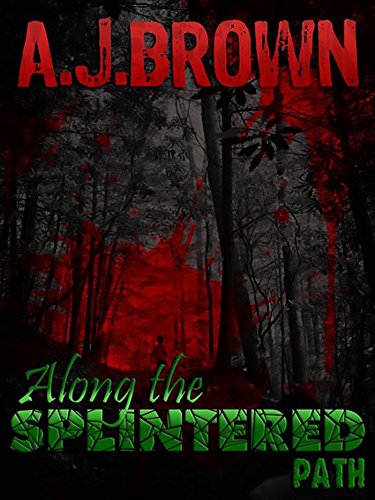
In January of 2012, my first book, Along the Splintered Path, was published by Dark Continents Publishing. I was excited. I was ecstatic. A publisher wanted to put out a book written by me. Sign me up, buttercup. 

In November and December of 2011 and on into early 2012, I had a serious bout of pneumonia. It was bad. Really, really bad. Though I was so sick I would cough until I threw up, and I couldn’t lay down in my bed for nearly two months, I worked on the edits to ATSP and got them back to my editor as quickly as I could. 

The book came out, the reviews were good, the sales were decent, and I was happy. I did interviews to promote the book and things were looking up. Then someone asked me if I planned to put out anything else. More importantly, they said, ‘In order to stay relevant in this business, you need to constantly have new books for the readers to get their hands on.’

What? Relevant? You mean one very good book isn’t going to catapult me to fame and fortune? 

In October of 2012, I released Southern Bones, a collection of 11 short stories. It was the first time I put out a book myself. The process of putting the stories together, editing and getting cover art and learning to format and upload the ebook, then the print version was exhilarating. I was excited and happy with what I had done. With my second book out there, I thought, ‘hey, I’ll get more readers and things will be even better than they are right now.’

That didn’t happen. I did a handful of interviews, but the book didn’t do that well in either sells or reviews. My happiness waned. ‘It’s a good book,’ I lamented. ‘Why aren’t people buying it?’

‘You need a novel,’ someone answered. 

‘Yeah, that’s the ticket,’ I thought. I already had several novels written, but one in particular, stood out. Cory’s Way came out in December of 2014, just in time for Christmas. It did well. It still does well. It is our best-selling book to date. 

I have put out quite a few books since then, some of which you may have read. Each time a book went out, I was happy. Happy. Happy. 

Happy is a fleeting feeling. You accomplish something and you become happy for a minute, then you have to accomplish something else to keep that happiness. You say to yourself, ‘If I only had more money or a better job or a spouse, I will be happy.’ Then you get a better job and it pays you more money and you meet the man or woman of your dreams while working there and get married. You’re happy for a while. Then it wanes. You don’t like the job as much as you used to, you want a raise, and maybe the things you overlooked while dating the man or woman of your dreams you have a hard time overlooking now. Happiness is such a fleeting feeling. 

Do you remember that word I mentioned a few paragraphs up? If not, scroll up and you will find it. I will wait.

Do you have the word? Okay. Say it with me: JOY.

Joy and being Happy are similar but are two different things. 

Happy is feeling or showing pleasure, contentment, according to the Oxford Languages dictionary. A lot of times happy comes after getting something you want or accomplishing something or even marrying someone. It is also fleeting.

Joy is slightly different: A feeling of pleasure and happiness. What brings you joy? Your job? What is it about your job that brings you that joy? Money? What is it about money that brings you that joy? Your spouse? What is it about your spouse that brings you joy? 

Do you follow me so far? Okay, let’s take this a step further.

Enjoyment is the state or process in taking pleasure in something. Right smack dab in the middle of the word enjoyment is the word JOY. Joy is active during the process of doing something. It is called enjoyment for a reason. What do you enjoy doing? What is it that brings you joy?

For me, for the longest time, it was writing and telling stories. The act of telling a story still excites me. However … let’s go back to another thing I said earlier. ‘In order to stay relevant in this business, you need to constantly have new books for the readers to get their hands on.’

Talk about putting pressure on yourself. I took that to heart when it was told to me. I would get antsy if I went too long without a new release. I got frustrated when the books weren’t selling, or the reviews weren’t coming. I kept asking ‘why?’ and not having any logical answers. I promoted the works and even started promoting months in advance. I checked my Amazon numbers obsessively. I checked to see if there were new reviews daily. I questioned myself on whether the books I released were any good. I revamped my social media pages and turned my blog into a full-blown website, all in hopes of driving people to my various pages and upping the sells of books. 

The happiness of a new release was no longer there. It was replaced with ‘I hope this one does better.’ The addictive euphoria was gone. Still, one thing hadn’t really changed: the joy of the process of writing a new story and creating a new book. It waned some and there was a time or six I thought it had died. It didn’t, but it was on life support.

Happiness is fleeting, but joy is always there, even if we don’t realize it, even if we push it out the way because our pursuits and our goals changed.

I put pressure on myself to create stories people would want to read, to put out books that would be good and do well. I put pressure on myself to get readers and reviews and create posts about books on social media and create marketing materials. A lot of writers do. A lot of writers buy into being relevant. A lot of writers buy into the idea of publishing, so much so, they lose the enjoyment of why they write in the first place. 

Why? Why do we do this? My only answers are money, success and … validation. Yes, validation. Writers need publishers and readers and reviews to validate that they are worth a damn at putting words together. It’s not enough to know we are good at this. We need to be told. And that’s the most damning thing of it all. Validation outside of our own minds is the driving force behind so many writers. 

I love writing. I love telling stories. I love the process of putting word after word after word to create sentences that form paragraphs that lead to worlds being opened in my mind and characters being created. I love the act of writing, the process of writing. It is what I enjoy doing. That never fails for me. 

I do not love publishing. I do not love marketing. I do not enjoy the obsession of reviews and hoping readers will find me. 

Creating … creating brings me massive enjoyment. No, it’s not a euphoric high like publishing used to be for me. But it brings me such satisfaction that I want the world to read my stories. 

Recently on Facebook I posted part of a review for my dark collection of stories, Voices. The review was from Scream Magazine and it was extremely good—one of the best reviews I have ever received. Yet sells and more than a handful of reviews didn’t happen for Voices. I was frustrated that one of the best collections I’ve put together had done so poorly. It took the words of a long-time friend and someone I admire to set my mind where it needed to be, to make me think about what I was doing and why I was doing it. Here is what my friend, Frank, said:

‘I say that is an excellent review and you shouldn’t overthink it. Unless, of course, what you lust after most in your authorial life is to write for “everyone.”’ And then, ‘Provided you’re content with the quality of what you’ve done … The review you posted flat out confirms you were right about the collection, no ifs ands or buts. The rest is just a crapshoot outside of your control.’

The idea of publishing is grand, and everyone now has the capability of doing it themselves if they choose not to go through a publisher. The idea of publishing so often leads to the need of validation from publishers, readers and other authors who can give us blurbs and help us push our books. The idea of publishing has also ruined the dreams of many writers. Outside of the actual writing and publishing, everything is a crapshoot outside of your control. As writers we overthink things and so many of us small press writers are left scratching our heads and asking ‘why?’

After writing the last 2600 words I no longer believe Simply Put is ready to be released. There needs to be an understanding that you should never let publishing a book or lack of sells and reviews hinder the enjoyment of writing and telling the story. But this isn’t just about writing. It’s about life. Don’t let anything hinder what you enjoy doing. Joy is an active thing. You can actively be joyful and when you are, happiness follows and tends to last longer. And isn’t that what we all want in life? Joy and happiness?

I am writing some of the best stories I have ever written. That joy of writing had been on life support, but now it’s off the respirator and getting its strength back. The joy of creating a book is back and there are several in the works with titles such as The Color of Sorrow and Grim as well as a possible three book set down the road. I still enjoy the process—I’m probably more excited than I have been in a while to create books, then release them. I think you’re going to like what’s coming, starting with Five Deaths on January 12th. I also think everything outside of writing the story is a crapshoot. 

If you’re doing something you used to love and you now longer love it, then you, like me, have probably altered your plans and goals and have forgotten what brings you joy. Be joyful in what you do. It leads to the happiness we all desire, but it also shows in your work. Readers and fans of any type of art can tell when something is forced and when the love of it is gone.

This has been one of the longest post I’ve written, and if you are still here, thank you for indulging me. 

Until we meet again my friends, be joyful, kind and happy.

A.J. 

Right Now: Harris and Hunter

Life is about change, Everything in life changes from birth to death. Change is important … Hmmm … I have a feeling I might use those three sentences again real soon.

I start this off with that first sentence for a reason. Most of you know me as A.J. Brown. That is not a pen name. Those are my initials and that is my real last name. However, when I started writing, I didn’t write under my initials. I wrote under the name given to me at birth, shortened to what most folks call me: Jeff. 

My first thirty-nine publications all came under the name Jeff Brown. It’s not the coolest name and there is even a punk song with my name as the title by Mi6. It’s not very flattering. And, no, the song is not about me. 

Back in 2004, I submitted a story titled, The Woodshed, to a publication called The Butchershop Quartet. It was an anthology of four stories put out by Boyd Harris and Cutting Block Press. I wanted so bad to get into this publication.

I didn’t make it in. I honestly don’t believe I came close to making the cut. However, when Harris sent the rejection notice, he didn’t send the dreaded form reject. He wrote me a little letter. I can’t remember it word for word, but here is the gist of it:

“I think you have good ideas, but you don’t have the skills to pull them off.”

No, that is not an insult. That is just honesty. And it wasn’t worded quite like that. Harris was nicer in his assessment. Looking back now, he was right. But he didn’t just make a critical point about my writing. He invited me to an online writers’ group called Zoetrope Virtual Studios. It was my first foray into social media, but it was in a web forum style. The name of the group was +The Horror Library+.

I’m not going to lie and say I wasn’t sure about it. I wanted to become a better writer, but I didn’t know Harris. For all I knew he could have been some psychopathic serial killer. Thankfully, he wasn’t. 

I joined Zoetrope under the name of A. Jefferson Brown. Sounds kind of distinguished, but that wasn’t what I was going for. To this day, I still don’t know why I chose that username, but it wasn’t to sound distinguished. Once I joined THL, I sat in the shadows and read a lot of posts from writers who were way better than me. I was thoroughly intimidated. I was out of my league.

It was eye opening. 

These writers did something I thought was crazy. They posted rough drafts of their stories and had other writers and editors tear them apart. What type of sorcery is this? After a while I was encouraged by a couple of writers to post something I wrote and let them read it. It was then that I realized I wasn’t that good of a writer. I didn’t have the confidence in my words to submit one of my stories for others to criticize. I had thin skin and I only wanted people to praise my stories. 

I had been pretending up to that point. I wasn’t a writer. I wanted to be, but I couldn’t say I was a writer. Not after realizing how little confidence I had in my work. But I made it a point to get better. In making that decision, I chose a story I had written called Black Cancer. They tore that story up so bad it should have been considered a crime scene. 

Over the next couple of years, I submitted more stories, participated in contests, asked these better writers questions about how to do things, and I worked, worked, worked on the craft of writing. From 2005-2008, I wrote nearly 500 short stories and two novels. Over half of those stories were experiments in writing. 

During that time, I became friends with some great people. Boyd Harris was just one of them. There was Fran Friel, who is like a big sister to me. Chris Perridas, who my wife and I hung out with at Waverly Hills Sanitorium in Kentucky. Petra Miller, John Mantooth, Michael Dixon, Erik Smetena, Dameion Becknell, who might be might twin in theological beliefs, Steve Sommerville, Michelle Garren Flye, Jamie Sunshine, C.J. Hurt, John Lovero, Frank Hutton, all of whom pointed me in one direction or other (even if they don’t know it).

Then there is Bailey Hunter. Bailey allowed me to be myself within the group. She was funny and had no problems letting me asks her questions. She’s smart and the owner of Dark Recesses Press, who I always wanted to put a book out with. Maybe one day I will. She was also the web admin for +The Horror Library.Net+. She was a member of the Terrible Twelve. She encouraged me more than everyone except for Fran. 

Bailey is also responsible for A.J. Brown.

In 2006, two of my stories were accepted for publication with THL.Net (A Bone White Hand in March, and Drainers in June). In June, I became a contributor to THL.Net. That meant I got my name on the site. Bailey input the information and after my story had been workshopped with the Terrible Twelve members, it went up. That story was Bone Yard

When Bone Yard went live, I went to the website to check it out. In the place where my name was supposed to be was A.J. Brown. I smiled. I have always wanted to go by my initials. One of my favorite football players when I was a kid was A.J. Duhe, a middle linebacker for the Miami Dolphins. I still don’t know why she put my initials up, but I contacted her and asked her about it. She apologized and said she would change it. I think I yelled, NO! out loud. I didn’t yell it in my message to her. I just said, no, leave it.

From that day on, I have written under the name of A.J. Brown. 

I’ve lost touch with a lot of the writers I learned from in the early 2000’s, but Bailey and I still keep in contact, thanks to social media. As of this writing, she is getting married soon. I wish her a ton of happiness in that marriage. 

Though I haven’t heard from Boyd in a long time, I can point to me submitting to his anthology and his rejection letter as the cornerstone for me being the writer you guys love. Or, at least, I hope you love. I can point to Bone Yard and the name attributed to the story as the beginning of A.J. Brown. It was the thing that gave me confidence in my words. After that, I’ve had no problems showing people my stories. 

Boyd Harris, wherever you are, thank you. You put me on the path I follow to this day. To Bailey Hunter, thank you for mistakenly putting A.J. Brown on that first story. It stuck and that’s a good thing.

Until we meet again my friends, be kind to one another.

A.J.

Communion, A Short Story

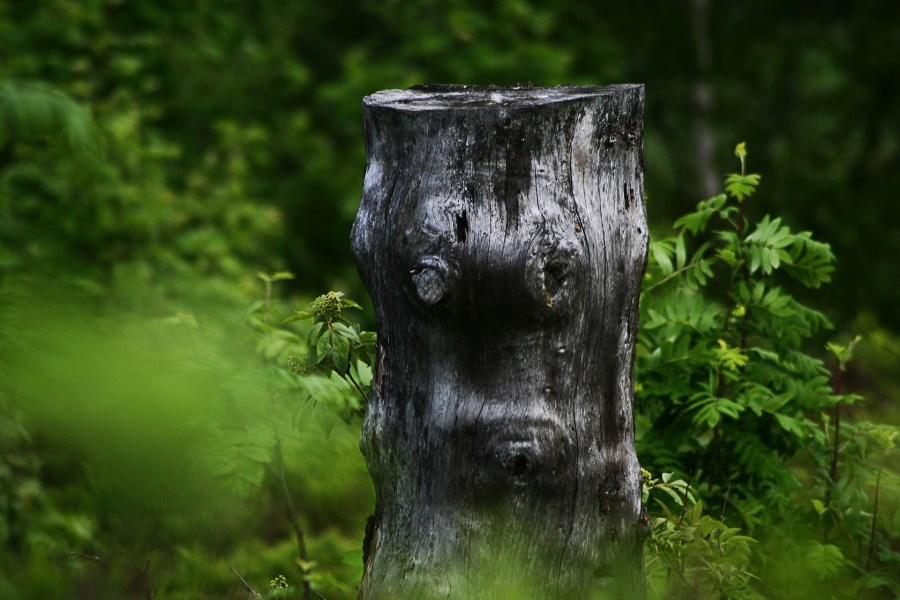
My dad sat on a tree stump every day before dinner. It was about three feet tall and stood near the back fence. Dad looked more like he was leaning when he sat on it. Usually both hands dangled between his legs and he stared off beyond our yard toward the trees that ran along the backside of the neighborhood. If you walked through the trees, you could only go about ninety or so feet before you came to a stream that split the center of the wooded area. 

It didn’t matter how hot or cold or rainy it was, he went to the tree stump, sat for a few minutes, then came inside. On some days—mostly in early fall—he would sit a little longer, sometimes with his head bowed as if he were asleep or maybe praying. Dad wasn’t the religious type, so I doubt he ever prayed.

I guess I was four or five the first time I noticed him go outside and to the stump. I went to go after him, maybe so he would play with me, but probably out of curiosity more than anything. 

“No, Heath,” Mom said from where she stood at the counter, cutting a peanut butter and jelly sandwich in half for me. 

I looked back at her. “I wanna go outside,” I said—or I think I said. Time has a funny way of playing with memories. 

“Not right now.”

“Why?”

“Your dad’s having communion.”

“What’s com-u-non?” I asked. 

“It’s what your dad is doing right now.” She set my sandwich on the table. “Now sit down and eat. Your daddy will be inside when he is done.”

I didn’t sit and eat. Not at first anyway. I went to the back door. It was open and the screen door was shut. I could see Dad from there. His shoulders were slouched like he was tired. His head was down. I thought he just might have fallen asleep. Then I saw his shoulders go up then down a couple of times. His head bobbed in sync with them.

“Sit down, Heath,” Mom said and steered me away from the door with both her hands. She closed the door gently.

I ate my sandwich and set my plate on the counter. Dad came in as I was leaving the kitchen to take a bath. He looked so tired. His eyes were rimmed red and there were angry red squiggly lines in them. The tip of his nose was pink. He wiped it as he went by me and to the bathroom where he washed up. He didn’t say anything to me as he passed, just went by without even glancing in my direction. I remember how bad it felt. He walked by me as if I were invisible. Maybe I was.

“Get ready for your bath,” Mom said when she saw me standing at the foot of the hall looking toward the bathroom where Dad went. She sounded irritated. That was her default setting.

“Dad’s in there.”

“He won’t be for long, so do what I said to do.”

I went to my room and gathered my night clothes, then took a towel from the hall closet. I waited outside the bathroom door until it opened, and Dad walked out. His eyes were no longer red, and he didn’t look as tired. 

“Hey there, Heath,” he said with a smile. He bent down and picked me up, then gave me a big hug. His hugs always made me feel safe, like everything would be okay. He set me down and all was right again. He didn’t look worn or weighted down at all. He didn’t look sad. 

Every day for the next six years, I stood at my window, watching Dad out on the tree stump. After the first time I was shooed away from the  back door, I didn’t think Mom would take too kindly to me going and watching him as he had communion. 

I still didn’t know what that meant.

***

I was eleven when Mom died. She wasn’t really the loving type. She was stern and rarely gave hugs, kisses or said ‘I love you.’ I should have felt more, but I didn’t. I think I felt more ashamed that I wasn’t as sad as I thought I should be. It didn’t help that we had argued before I left for school. I wanted to go to Jerry’s house before coming home. 

“Not with your grades, Heath. You come straight home and do your studies.”

I guess it wasn’t much of an argument after all. I left for school, angry at her for the umpteenth time in my life. 

Mom died while I was at school and Dad was at work. It wasn’t anything terribly tragic like the house caught on fire and she couldn’t get out or she was in a car accident, or even someone broke into the house and murdered her. No, it was nothing like that. Mom choked on a piece of toast. 

I found her when I got home from school. She lay on the kitchen floor, faced down. She was still in her bath robe and nightclothes and her face was a shade of purple that bordered on black. I stared down at her. And I didn’t feel anything, at least not right then.

I called Dad, then I called 9-1-1. Then I sat on the front porch and looked out on the road in front of our house. 

The ambulance made it there before Dad did, but not by much. They were inside tending to her body when Dad pulled up in his old truck. He was out of it in a hurry. He forgot to close the door before he ran across the yard to me. His face was red, as were his eyes. I had seen that look every day for the last six years of my life. 

I stood.

Dad reached me and put his arms around me. Just like when I was little and he would pick me up, I felt safe. I know it sounds crazy, but even with Mom in the house dead and the emergency people inside the house doing what they do, I felt safe in Dad’s arms. Everything would be okay.

Dad released me and went inside. I walked over to his truck and gently closed the door.

For me, everything was fine. Like I said, Mom wasn’t very loving, and we never really got along. But for Dad, nothing would ever be the same again. 

One thing didn’t change, though. Like every night since I could remember, Dad went out the back door to the tree stump. He sat, stared off into the woods, but this time I could tell he was crying. I stepped away from the window and sat on my bed. And I cried. too.

***

Dad did the best he could. He was a widower and he and Mom had been together since they were kids. They were high school sweethearts and married right after graduation. 

For the better part of my life since her death I’ve regretted not being closer, not trying, though she never really tried either. Guilt is a funny thing. You don’t realize you’ll feel it until you do.

***

I was sixteen when I finally worked up the nerve to ask my dad why he went outside every day before supper. He was already out there with his coat on and his hands between his knees. His head was down, and I could see his lips moving when I approached him.

“Dad?”

He didn’t jerk in surprise of my presence. His head didn’t swivel on his neck and he didn’t look irritated to see me standing there, my hands jammed into my coat pockets, vapor pluming from between my lips.

“Everything okay, Heath?” His voice was shaky.

I nodded. “Yeah. Yeah, everything is okay. I just …”

“You just what?”

I shrugged. “Dad, why do you come out here and sit on this stump every day?”

He looked away from me, back in the direction of the woods. By then, some of the land had been sold and some of the trees further down from our place had been removed. The frame of a house stood like a silhouette in the dying sunlight. When he looked back at me, he had tears in his eyes. He wiped at them and looked away.

“My Daddy died cutting this tree down.” He patted the side of the stump with one hand. “I was a little older than you, eighteen, I think. He had a heart attack and died where he fell. I come out here to be near him. It’s like he never left. I can feel his presence.”

Dad looked back at me again. His eyes shimmered with tears. “I know it sounds crazy but sitting here makes me feel like he’s still around and not dead and in some box in the ground in Meacham Cemetery. I come out here and talk to him. Then I listen for his voice. I reckon you can say I come to have communion with him.”

I never bothered him while he was out there again. I still looked out the window from time to time, but I never bothered him. It was sacred for him.

Now, I understand why.

***

Barely two years later, Dad passed away. I just turned eighteen, and yes, I see the foreshadowing in our lone conversation about his visits to the stump. He died before supper, and yes, he was sitting on the stump.

He had aged so much in the seven years since Mom passed. He looked older than his fifty-four years. If you do the math, you can figure out my parents had me when they were in their mid-thirties, but Dad looked like he was in his mid-seventies that last time he walked into the back yard to the stump to have communion with his father. 

I stood at the back door, something I hadn’t done since that first time when Mom shooed me away. He sat gingerly on the stump. As always, he looked out to where the woods used to be, but now they were all gone. Houses now sat where trees once stood. His head dipped, his chin touching his chest. Then he leaned to one side and fell.

“Dad,” I yelled and ran from the house. I vaguely heard the clatter of the screen door as it slammed shut. Dad was gone by the time I reached him. I reached into my pocket and pulled out my cell. Much like when Mom died, I dialed 9-1-1. This time I didn’t wait on the front porch, my elbows on my knees and my head down. No, this time I waited in the back yard, Dad’s head on my lap. 

***

It’s been two days since his funeral. The coroner said he died of a massive heart attack. He was dead before he hit the ground. I can still see him toppling off the stump. I can still hear me yelling for him. 

Tonight, just before I sat at the table by myself for the first time in my life, I walked out to the stump where my dad died, and where his dad died. I sat down on the stump with my hands between my legs. Tears spilled down my face.

“I miss you, Dad.”

Then, like so many times as a child, I felt his arms around me, and I knew I would be okay.

AJB

10/15/2020