Back In The Saddle

A couple years ago, I quit the business of publishing for a while. I even wrote a letter and posted it here and on social media. I was frustrated with the way the publishing world treated people, the way many authors treated other authors, with the amount of plagiarism I saw in this business, with the amount of … I don’t know … hate I saw in the writing community. 

When I left everything behind, I went through a period of mourning. You see, I loved writing. I loved the act of telling a story. I loved sharing those stories with the world. That period of time was slightly depressing, almost like a lesser version of Runner’s Depression. In case you don’t know what that is, let me try and explain it in as few words as I can. This happens to people who run, who love to run and all of a sudden, they can’t. They were born to run. They lived for that alive feeling they had when they were finished running. It’s an exhilaration that is similar to an adrenaline rush. Not being able to run can sometimes send a runner into a depression that could last a long time or just a little while. It’s as if part of them has died. It’s a mourning period.

After a few weeks, I started writing again without the pressures of wanting to put out a story, without feeling like the story needed to be amazing or I was wasting my time. I wrote a lot of bad stories during that time period. They were pieces that had been inside of me but I refused to write because I knew they would be crap and ain’t nobody got time for that. 

I also wrote some really good pieces, some I think will end up getting published at some point. 

Though I was writing, I can honestly say, I wasn’t really happy or content with what I was doing. I had been part of the writing community for over twenty years and by leaving it, I also left part of me behind. Hence, the mourning.

A few months after leaving publishing, I was convinced by two friends to give it another go. So, I did. I put together a collection of stories, titled A Color of Sorrows and began querying publishers. Not long after submitting to this one particular publisher, they responded saying they loved the collection. Yes. Awesome. I was excited. A contract was worked out. They did an analysis of my writing and deemed my style was similar to this exceptional author of horror whose initials just happen to be S.K., who also just happened to be my favorite author. 

Things were going well. Discussions were had and I did a lot of work on my end. About six months before the book was to be released, I was sent a formatted copy of the book to look over. It looked great, but there was one problem. I still hadn’t been assigned an editor. I had received edits, but those had been done by software, not a person. I had rejected half of them because they made no sense within the context of the stories. A month of so later, I enquired about an editor, more specifically, when was I going to work with one. 

I was told they don’t provide editors unless the writer pays for it. Umm … no. Up until right then, I had been excited. The discussions after that were not as cordial as they had been. I told them I expected an editor and that editing the stories was part of the process and the publisher should be the one paying for the editor. They didn’t see it that way and my excitement went from on fire to ice, ice cold. 

My enthusiasm for getting back into the publishing world tanked. You see, this was one of the things that made me want to get out of the business, poor treatment by publishers. 

Still, I was under contract and I didn’t want an unedited book to be released to the world. I asked my editor to go over it, even though she had done so before I submitted the collection. I wanted one more pass. She found two things that needed correcting, one of which was a change I had made because of the software suggestions. 

They released the book in May of 2023. I promoted it … Just. Once.

You see, the very first publisher I worked with after getting up and dusting myself off, didn’t do things the right way. 

And just like that, the experience was soured for me. To say I was frustrated and aggravated was an understatement. 

I’ve released two books since then, but I have to be honest, my heart wasn’t into promoting them and I did a bad job of letting people know about them. I’ll talk about those later. There are other things to get to for now. 

Not only did I lose enthusiasm for publishing, I neglected my website. I mean, seriously neglected it. Don’t believe me? Go look at the last post. It was in February, it’s June now. I also shut down my Patreon page. I mean, really, I just kinda said screw it.

Now for some hard truths I had to tell myself. I wrote a book called Motivational Shit You Didn’t Ask For. Great title, right? I think the title will sell the book all by itself. The book isn’t huge and most of the chapters are under two thousand words. Yeah, it’s short. Something I mention in the book multiple times is making excuses. We humans make excuses to not do things. We might say we want to do them, but if we don’t then do we really want to? Nah, I didn’t think so. 

I sat back recently and thought about why I didn’t promote my work. Sure, maybe I had some valid points with the publisher issue, since it felt like I did all the work except formatting (which I could have done) and cover layout (which I could have done, also). However, it was MY book, those were MY stories. Okay, let’s just say I had valid reasons instead of excuses for not promoting The Color of Sorrows. What about Six Strands To Lost Sanity? What about Human Touch? What about two books I believe are really good? I mean, seriously, what is the reason behind not promoting them? I have no valid reason. Only excuses. 

I have neglected a lot since first walking away, then coming back, then making excuses. That passion and drive I had when I first started out have been gone for almost three full years now. I’m trying really hard to find it again. So what have I done about it? I started mentoring again, which is going well. I’ve written a bunch of stories. I’ve joined the staff over at Memento Mori Ink, where you can read the first article at the end of August. More on that later. I’ve started submitting stories to publications again. 

And … I’m posting here. I recently realized I don’t have to post long pieces like this one. I can simply post something like: It’s coming, and post the cover of a book. And I can post as many times as I want. Once a day, once a week, 18 times a day. It doesn’t matter. You’re either going to stick around or not. If you do, thank you. Also, thank you for sticking around while I’ve been gone.

Until we meet again, my friends, be kind to one another.

A.J.

A Talk With Rhapsody In Red Author, Pete Molnar

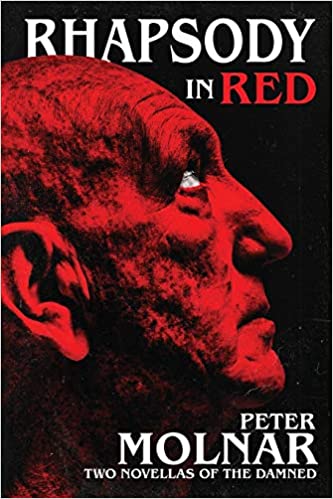
On December 17th of this glorious year, my good friend, Pete Molnar, released his second book, Rhapsody in Red. It’s a two novella collection that is sure to keep you up at night. Having read some of Pete’s work, I’m really excited to get my hands on a copy.

Here’s the thing about Pete: he is a true lover of horror and one hell of a nice guy. I got to meet him a couple of years ago at Scares That Care and the time I spent with him and his wife was one of the highlights of the event. I couldn’t think of a better person to support than Pete.

Shortly after the release of Rhapsody in Red, Pete and I had a chat through PM’s on social media. The following is our conversation, in it’s entirety.

A.J.: So, Pete, talk to me about your new book, Rhapsody in Red.

PETE: Well, it started out with just one novella I had been working on about a second Civil War sparked by a pair of Undead Confederate vampires. Then I started a second novella and it just so happened to center around the same vampire theme, only it came from a very different place. 

I’m always listening to the news and following stories and the subject of gun rights and the school shooting epidemic just wouldn’t leave me be. Just as the first novella was sparked by the ongoing tragedy of systemic racism, the second was sparked by another social crisis. My mind married both issues to a sanguinarian plot line and the result is Rhapsody in Red

I’m deeply concerned with societal ills and this is how I process them, so as not to wallow in hopelessness when it comes to some sort of divine reckoning or soothing of the masses. Basically, I worry about the world just as much as I dread what’s underneath the bed, so to speak.

A.J.: I’m curious, what role do the vampires play in these societal ills?

PETE: They take advantage of our weaknesses as human beings as well as manipulate our vices and tragic flaws.

A.J.: That makes sense. 

You state something intriguing in your first response: Basically, I worry about the world just as much as I dread what’s underneath the bed, so to speak.

With this in mind, could the world itself be considered the boogeyman or the monster beneath the bed or in the closet?

PETE: Absolutely. I liken that to the main theme of one of my favorite books, Lord of the Flies. The boys on the island think the island is evil and there is a monster stalking them. In reality, they fail to realize the monster is within each and every one of them. That hits me hard.

A.J.: In Lord of the Flies, Piggy’s death is what I feel is a turning point for the story. Though Roger was responsible for his death, the events leading up to that point all build up to the moment where Piggy dies. In this way, the evil is kind of a creeping up type of thing. Do the events of the two stories in Rhapsody in Red have that same build up where the reader possibly starts dreading turning the next page?

PETE: I think so. Each chapter of each novella is like another couple of steps in the downward spiral.

A.J.: Do the two novellas go together or are they standalone stories?

PETE: They are conjoined by the presence of The Familiar, an ageless vampire who has taken the form of The Tumor Deer. It watches and waits, sort of like a god.

A.J.: Nice. Do you feel like you are tackling subject matters that others might shy away from?

PETE: I used to write straight horror when I started out, but I started to realize that I had other things to say that were pressing to me. I realized I was kind of walling myself into a very specific far too stringent genre of writing, and I decided if I was going to keep writing horror then I wanted to do more with it than I was before. And I had to start grounding it in the real things and people that have always scared the sh*t out of me. I mean, sorry, but Cthulhu doesn’t quicken my pulse in the slightest. But a student walking the hallways with an AR-15, picking off anyone that moves, well, that’s something I could find outside my classroom one day.

And that’s horror.

A.J.: That is, indeed, horror—a real horror.

When writing the two stories for Rhapsody in Red, did you find yourself rooting for any characters in particular or did you know where the stories were going and knew the fates of the characters already?

PETE: I always know the ending, but the journey towards that end is almost always a surprise in how it plays out. And the heroines in both novellas have been living their lives under perpetually black clouds of bad luck and hardship. To watch them both grapple with evil and rise above their own difficult circumstances made me feel really good and it kept me writing because I wanted to get them to the finish line!

A.J.: Did those characters surprise you in how they overcame their circumstances?

PETE: Yes, and they made me very proud of them.

A.J.: Is there anything else you would like to tell us about Rhapsody in Red?

PETE: I think we covered everything.

If you’re looking for your horror grounded in both myth and reality, then Pete is your guy. If you’re looking to support a small press author who won’t disappoint you, again, Pete is your guy. If you’re looking to support someone I support, for the third time, Pete is your guy. I love this guy like a brother, and y’all know me, y’all know I’m all about quality work and good people. Give my buddy a try. You can do so on his website where he has several stories posted to whet your appetite, and by purchasing his books, Broken Birds and Rhapsody in Red. 

Until we meet again my friends, be kind to one another.

A.J.
Visit Pete at his Amazon author page and his website.

The 5 and 3 with M.F. Wahl

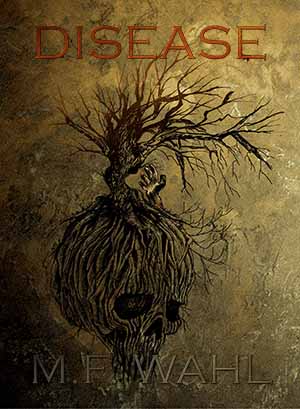
Back at the beginning of March, MF Wahl rereleased her novel, Disease, through Stitched Smile Publications. It was a long wait, but one well worth it. I had the opportunity to participate in her online release party as well as do The 5 and 3 with her. So, here we go.

The Five:

  1. We always hear the question, “Where do you get your ideas from?” What I want to know is how do you go from idea to finished story?  Mostly, I just plant my ass at my computer and write. Is there another way to do it?
  2. What is the hardest part of writing for you? Probably the planting my ass at my computer to write part. Life is demanding, and more often than not, it’s not demanding that I make time for myself to pull the words out of my head and slap them on paper … err … screen …
  3. Outside of the writing/publishing circle, when you tell someone you are a writer how do people react? How do they react when you say you are a horror writer? The vast majority of people will tell me they’re not really into horror. It’s not everyone’s cup of tea. Others are fans of the genre though, and that’s always nice.
  4. If you could meet a character from one of your stories, who would it be and why? My character Alex from my novel Disease. He’s pretty quiet, but I’m positive he has a lot going on inside his head. I think it would be interesting to discover all those things.
  5. What qualities make up your ideal reader? If someone reads they are my ideal reader. They don’t need to read my stuff, and if they do, they don’t even need to like it. Reading opens worlds and allows us to glean knowledge from just about anyone and anytime in history or future. It allows us to live other lives and partake in experiences that we would otherwise be closed off from, both real and imagined. Through it we can explore the human condition. In addition, reading fiction is proven to increase empathy, and learning to read earlier in childhood is a leading indicator of intelligence later in life. Reading is incredibly important and such a boon to human civilization. If someone reads, they are my ideal reader. Period.

The Three:

  1. If you were ruler of your country for one day and you could make one change that DISEASEbyMFWahl_Cover_Thumbnailcould not be revoked, what would it be? Any change that could be made is wrought with consequences, both good and bad, and any policy change that could never be revoked would make for bad policy. Take education, something I feel strongly about, something I feel is on the “need” list if we want a viable society. But, say we were to be invaded by aliens and required all resources for one year to go toward surviving the invasion as a country rather than education. If a policy of universal free education couldn’t be revoked temporarily we might perish at the hands of the tentacled invaders. Beyond that, every policy must be made with an idea of how to fund, implement, and sustain it at its highest ideal. I don’t think I’m qualified to make such decisions. So, I suppose I would veer away from an individual sweeping reform policy, despite the fact there are many issues I feel strongly about. Instead, perhaps I would try to install a diverse, flexible, and highly intelligent council that operated outside the influence of politics and money and that could help create policies with the public’s input for society’s good. Of course, now we’re essentially speaking about the total destruction of our current and corrupt, money motivated political system, and such an overhaul is bound also to have unforeseen consequences, although they may be preferable to the abomination we currently kowtow to. It would also likely be met with vehement opposition by those who benefit from the status quo and be susceptible to corruption in of itself. Which, I suppose would lead me to deciding that the one change made that couldn’t be revoked be that I was the ruler of my country for ever and ever, past my one day with the stipulation that I would step down from my position once I installed an new and fair system. But now, don’t I sound like a wondrous dictator?
  2. Do you have a guilty pleasure? If so, what is it? Nope. I feel no guilt about my pleasures.
  3. Can you give us one memory from your childhood that helped to shape you into the person you are now? My mother used to read to my siblings and me every night. I think that had a large impact on me and helped lead to my love of reading and eventually to writing.

Bonus question:

How does your significant other/spouse feel about your writing? Does he/she support your pursuit of writing/publishing? Of course. I couldn’t get along without the support and encouragement I receive.

You can find M.F. Wahl at her website HERE.

The 5 and 3: Author Briana Robertson

I’m fortunate enough to be able to work with a lot of great writers who are also great people. I’ve done hundreds of interviews over the last fifteen years, many of which were very fun and informative. Yes, I have my favorites, both types of interviews and people I’ve interviewed.

One of the things I want to do in 2018 is more of those interviews. The first of these you will read shortly, but for now, let me say, The 5 and 3 is dedicated to authors under the Stitched Smile Publications umbrella. There will be others outside of The 5 and 3, but I want to dedicate an entire series to the wonderful authors at SSP.

Here is what the 5 and 3 is: Five writing/publishing related questions, three non-business related questions and one bonus question. Unlike many of my interviews where I tailer the questions to the individual, these interviews will have the same questions for each author. Yes, it sounds generic, but the answers are always so different, sometimes startlingly so.

You are in for a treat with the first 5 and 3. Briana Robertson is a young, up and coming author. Her words drip emotions. Her recent collection, Reaper, was released in December by Stitched Smile Publications, and I can tell you, it is an emotional, white-knuckle rollercoaster ride you won’t soon forget.

To go with being a great writer, Briana is also a terrific person with a huge, huge heart.

I hope you enjoy the first of many 5 and 3 interviews. Here is Briana Robertson.

IN HER OWN WORDS:

BrianaBriana Robertson excels at taking the natural darkness of reality and bringing it to life on the page. Heavily influenced by her personal experience with depression, anxiety, and the chronic pain of fibromyalgia, Robertson’s dark fiction delves into the emotional and psychological experiences of characters in whom readers will recognize themselves. Her stories horrify while also tugging at heartstrings, muddying the lines of black and white, and staining the genre in multiple shades of grey.

In 2016, Robertson joined the ranks of Stitched Smile Publications. Her solo anthology, “Reaper,” which explores the concept of death being both inevitable and non-discriminatory, debuted in 2017. She also has stories included in several anthologies.

She is currently serving as Head of Dark Persuasions, the dark erotic branch of Stitched Smile Publications.

Robertson is the wife of one, mother of four, and unashamed lover of all things feline. She currently resides on the Illinois side of the Mississippi River, with a backyard view of the Saint Louis skyline, and is a member of the Saint Louis Writers Guild.

THE FIVE:

A.J.: How do you go from idea to finished story?

BR: Ideas usually come to me in one of two ways: they are born from actual personal experience or from the potential emotional response a character would have to a set of given stimuli. For example, the story Lucy, included in my collection, “Reaper,” started as an idea after my own daughter, who was three at the time, suffered a head injury and had to be rushed to the hospital. Luckily, she turned out to be completely fine. But Lucy evolved as I imagined the worst-case scenario; as I asked myself “What if?” and then followed that line of thinking.

On the other hand, Capitulation, also included in “Reaper,” emerged from a huge surge of anger I initially felt. And as Yoda has always told us, anger leads to hate, and hate leads to the dark side. In that story, the protagonist’s anger ultimately leads to despair, guilt, self-hatred, and a not-so-happy ending. I simply let the emotion translate into action and followed the actions as they led to an unavoidable outcome.

Reaper CoverA.J.: What is the hardest part of writing for you?

BR: Worrying that my stories will become repetitive. So much of my fiction is inspired by my own experiences, my own emotions, my own psyche, that I tend to doubt whether each story will continue to ring true. Will they all start sounding the same? Will my readers start wanting something different? Will they start hankering for monsters and villains that live outside the main characters’ heads, rather than constantly reading about an inner struggle?

Simply put, self-doubt.

A.J. How do people react when you tell them you’re a writer, specifically a horror writer?

BR: There’s usually an immediate, “Oh, wow! Really? That’s cool.” About half the time it’s followed up with something along the lines of “I always wanted to write a book.” Then there’s usually a question or two about where I come up with ideas, or why do I write what I write. Occasionally I get a request for where they can buy my book.

To be completely honest, I’m an extreme introvert with four kids. I don’t go out much. Most of my socializing is done online, and when I am out in public, I tend to avoid conversing with people at all costs. And when I do converse with them, it’s usually because they’ve made some comment about how cute my kids are—which they are, extremely so. So, I don’t have this experience all that often.

A.J.: If you could meet one of your characters, who would it be and why?

BR: Thana, from the title story, Reaper, of my collection. One, because she’s the Grim-f*cking-Reaper. And secondly, because she’s not based off me. A lot of my characters are, at least in part. They have personality traits or quirks that come directly from me (and no, I’m not going to point out which of those they are). Thana is completely her own character, and I think she’d be fascinating to meet.

Baby Grand CoverA.J.: What qualities make up your ideal readers?

BR: My stories—I like to think—require the reader to be open to an emotional response. They’re not gory horror, they’re not extreme horror, they’re not the kind of horror that makes you jump at shadows. They epitomize the everyday horrors that can catch you completely off-guard and shatter your life, your everyday well-being.

So, my ideal reader has to be willing to experience their worst nightmare. They have to be willing to acknowledge they have a dark side as well, and then be willing to face themselves in the mirror. They have to realize that they themselves may be their worst nightmare.

My ideal reader is intelligent, non-judgmental, and openminded.

THE THREE:

A.J.: If you ruled a country and could make one change that couldn’t be revoked, what would it be?

BR: I would abolish exemptions for Congress members from the laws they pass for us common folks.

A.J.: Do you have a guilty pleasure? If so, what is it?

BR: Oh, so many. Binge-watching shows like Grey’s Anatomy and Dance Academy. Musicals. Belting songs from musicals at the top of my lungs while driving. Animals. Gushing over animals I’ve seen a million times at the zoo. Crazy socks. Disney movies. Belting Disney songs at the top of my lungs while driving. Click-bait. Hollywood award shows.

A.J.: Can you give us one memory from your childhood that helped to shape you into the person you are now?

Unleashing Briana CoverBR: When I was twelve, a close friend of the same age committed suicide. He attended the public school, and I attended a parochial school in the next town over, so we only saw each other after school or on weekends. We got to be close because neither of us had too many friends at our respective schools; we were both teased and picked on fairly relentlessly. The difference was, I had supportive parents who paid attention. His dad was an alcoholic, and his mom had eyes only for his little sister. So, one day, when the teasing had been especially bad, he took a final ride around the neighborhood on his skateboard, and then went home and hanged himself in the garage.

I saw him that day. He came by to see me while he was riding around town. Two hours later he was dead. I had known something was wrong, but I was way too young to understand the signs I was seeing, or to know what they might lead to. He didn’t want to talk about it, and I did all I knew how to do. I gave him a hug, told him the other kids weren’t worth it, and I’d see him that weekend.

When I found out he was gone, I swore even at that young age, that I would 1) make an effort to not be purposely cruel to other kids (I haven’t always succeeded) and 2) I would try like hell to always be attentive to my kids, that I would pay attention and know when there was a problem, so that, God forbid, any of them ever decided to take their own life, I wouldn’t stand there afterward, like his mom had, and say “I didn’t know anything was wrong.”

BONUS QUESTION:

A.J.: How does your spouse feel about your writing? Does he support your pursuit of writing/publishing?

BR: I’m going to be completely uncooperative here and refuse to speak for him. My writing, just like his job, our kids, housecleaning, etc., is a drain on time we get to spend together, and it, just like the others, can sometimes garner negativity. But that’s an issue between him and me; it’s one we’ve discussed at length between ourselves, and it’s nobody else’s business.

That being said, he tells me often how proud he is of me and my writing. That’s enough for me.

You can find Briana at:

Her Website

On Facebook

On Twitter:  @Briana_R_Author

On Amazon

On Instagram: @wyfnmmarbrtsn