She Had Fangs (Free Fiction)

She Had Fangs

A.J. Brown

She had fangs. I noticed them when she smiled at Billy from across the bar. 

“Yo, you see that?” Billy asked after slapping my arm. His eyes, that had been dulled by alcohol a few seconds earlier, lit up with possibility. “She wants me, Jordy.”

“Are you sure about that?” 

“She smiled at me, man, and I know that type of smile.”

“Really?”

“Yeah, that’s a woman who wants a man, and I’m that man.”

“Did you see her teeth?”

“Oh, I saw them, Jordy. Teeth like that can …”

“Teeth like that can what?” the woman said, her voice soft and sultry and inviting.

We both jerked our heads toward her. I don’t know about Billy, but I didn’t hear her walk up. I didn’t even feel her there until she spoke. 

“Umm …  umm …” Billy stammered. I understood why. From a distance she was attractive and sexy—a trick alcohol often played on your mind. Up close, she was breathtaking. Her skin was pale, and against the backdrop of the dimly lit bar, it almost glowed. Her blue eyes were almost a smokey gray and her lips were full and smooth and kissable. She wasn’t petite, but had more of a full figure, one that Marilyn Monroe would have been envious of, and her green dress clung to every Monroe-like curve.

“Would you like to find out what these teeth can do?” she asked Billy. One of her hands touched his chest, the nails on the long fingers painted a dark shade of purple. 

“I’d love to know what those teeth can do.” He had a stupid smile on his face, showing off his yellow stained teeth. 

Vampire 2She took his hand, pulled him from the bar and pressed her body against him. Their lips touched and she kissed him for several long seconds. I’m not going to lie and say I felt a little jealous. I didn’t. I was a lot jealous. My chest tightened as I watched her kiss that bum, Billy, a womanizer if there ever was one. He would bed her, thank her, maybe even drop a twenty on her nightstand, get dressed and leave her in the bed wondering how she managed to let him in her life. Then he would come back to the bar and talk about his conquest. I hated him.

“Come on,” she said and led Billy through the bar and toward the back door. A moment later, they were out the door and into the night.

I sat at the bar, beer in hand, shaking my head. What did she see in him? How could she even want him? Billy didn’t even like curvier girls, preferring the taller, thinner ones. I took a swallow of my beer. It tasted stale. I set the glass on the bar and dropped a five beside it. I lifted my hand to order another one, then stopped. Her teeth … they had been long and sharp, as if she had fangs.

I stood fast. The stool shot from beneath me and clattered on the hardwood floor. The barkeep said something, but I missed it. I made my way through the bar and out the back door. 

The air gripped me in its cool embrace, just as she gripped Billy in her pale arms. I felt the chill run up my spine, but a heat stir below my belt. She had Billy pinned to the wall, her mouth buried in his neck. Billy’s eyes were glazed over and his mouth hung open. The palms of his hands were flat on the red brick wall. 

“Hey!” I yelled.

Her head lifted up and she stared at me. Blood dribbled down her chin and landed on her dress. My breath caught and that heat grew more intense; my jealousy skyrocketed. 

She grabbed him by the hair with one hand and smiled at me. “Do you want some?”

I nodded. It was as if I was hypnotized by the scene in front of me. 

“Come and get some, then.”

I walked toward her, my feet not quite dragging on the ground, but not being picked up and put back down either. I reached them in seconds. She smiled. I smiled back. She turned Billy’s neck, showing me where she had bitten him. I lowered my mouth to his wound and drank.

She had fangs. So did I.

AJB

__________

I don’t write many vampire stories. When I started writing vampires were the subject matter I liked the most. However, vampires with feelings and sparkly vampires kind of ruined them for me. I hadn’t written a vampire piece in over fifteen years when this little idea came to mind. I don’t know if I will write many more fanged stories, but I kind of enjoyed this quick piece.

If you enjoyed She Had Fangs, please like, comment and share on social media so others can read it. I truly appreciate it.

When We Were Kids (Free Fiction)

When We Were Kids

By A.J. Brown

“Remember when we were young and we used to walk on the stones in the stream?”

Brandon had asked that question as they walked along the very stream he spoke of. They were no longer kids and walking outside at any time during the day was more dangerous than ever before. Colby found that thought ironic, considering the state of the world before. 

“Yeah, I remember,” he said. “And when we got tired of walking on the stones, we tried to catch crawdads.”

Brandon laughed at that. It was a sound Colby hadn’t heard in a long while. He had heard screams and yells and crying from people as they died, ran, or ran then died or suffered from that thing called mourning when someone—or everyone—they loved was dead. But laughter was something that sounded foreign in these days. Colby looked at his longtime friend and couldn’t help but smile. 

“What?” Brandon asked.

“You laughed. I haven’t heard laughter since …”

“Since Micah died,” Brandon finished.

“Yeah.”

They were silent for a few minutes as they walked the stream, coming up on the wide section a short footbridge spanned across. On the other side of the bridge was a path that led through a length of trees that opened up into a park where no kids played anymore. Micah died at least a month earlier, but Colby could have never told you exactly when—time wasn’t measured in days and nights anymore, but in minute by minute. He closed his eyes, shook off the thought his friend’s death. 

Brandon stopped. Colby looked back at his friend, at the deeply tanned skin, the hair much longer than it had been when this all started and in need of washing (like the rest of his body), his clothes covered in dirt, blood and who knew what else. He looked, as Colby thought everyone who was still alive probably looked, like the homeless of before. “What’s wrong, Brandon?”

“I wish we were kids again.” He stared at the water, at the stones they had walked across in another life. 

“Yeah. Me too.”

“Life was so much easier back then.”

“Everyone was still alive back then.”

“Yeah, that too.”

More silence followed, then ended when Brandon started for the water.

“What are you doing, man?”

“We can’t be kids again,” Brandon said. His green eyes seem to shine as he looked back at Colby. “But that doesn’t mean we can’t try to have a little fun. Heaven knows we could use some.”

STREAMWith that said, he dropped his pack to the ground, his baseball bat landing beside it. He stepped from dry land onto one of the stones. It wobbled under his foot and Brandon shifted his weight to remain upright. His arms went out, his hands extended, making him look like a stationary airplane. His other foot went onto a flat stone that barely stuck out of the water. Brandon looked back at Colby with a smile that could have belonged to a six-year-old. “You coming?”

Though he knew it was dangerous—anything other than paying attention to one’s surroundings was these days—but Brandon was right. They needed some fun, needed something to make them feel less like the world was ending and more like they had a reason to continue living. 

Colby went to the edge of the stream, dropped his pack and the crowbar he kept in hand. The water was murky and brown and not like it was when they were kids, when you could see the bottom of the stream, the sediment, the rocks, water plants, minnows, and yes, crawdads. The water was cloudy. Though he could see the stones and the mud on them, he didn’t like that he couldn’t see much more than that. Still, he stepped on one of the rocks, pushed on it for good measure to make sure it was sturdy, then put all his weight onto it. He found another stone, this one with a touch of green moss growing along the edges that stuck out of the water. Then he was stepping from that one to another one, his arms out very much like Brandon’s.

For a few minutes, Colby and Brandon, friends since the first grade, and possibly the last two people alive in their world, were kids again. They laughed. Their feet slipped from time to time, getting submerged in the water before they could get back on the stones. For a few minutes the world was right. 

Colby turned around when he heard the startled ‘whoa,’ from Brandon. He saw his friend’s arms pinwheeling, his eyes wide, as he tipped backward, his left foot slipping out from under him. He landed in the stream with a loud crash, water splashing up and coming back down. Then Brandon laughed. 

“DId you see that?” Brandon asked, still laughing. 

“Are you okay?”

“Yeah, man. Nothing like being a kid ag—“

Brandon’s laughter came to a sudden stop. His mouth opened but he didn’t scream. From out of the water came his arm. 

Colby saw the blood before he heard Brandon finally scream. His forearm was missing a chunk of flesh and blood gushed from the wound. Behind Brandon came the corpse that had been hidden by the murky water. It’s bloated head lulled on it’s shoulders. The rest of its upper torso was waterlogged and the same shade of brown as the muddy stream water. It made no noises—the dead’s vocal chords died right along with their bodies. But it bit down on Brandon’s shoulder, sinking its sharp teeth through the wet shirt and pulling it’s head back, ripping cloth and flesh away. 

“No, no, no, no!” Colby yelled and forgot all about trying to stay on the stones. He ran and splashed his way to dry ground, scrambled up the embankment to where Brandon’s pack was. He picked up the aluminum baseball bat with the dented barrel and ran back to the stream. He waded in as Brandon tried to shove the corpse away, but shock and the sudden loss of a lot of blood made him sluggish and unable to pull free. 

A second corpse appeared from the woods. It wore a long sleeve work shirt and what Colby thought was a green pair of pants and heavy workbooks that didn’t seem to fit it’s withered feet. It didn’t so much as walk as it dragged it’s feet across the ground. Somehow, it didn’t fall. 

“No,” Colby whispered to himself as he waded through the water, the bat raised above his head. He brought the barrel down on the muddy corpse. Its head split open with a sickening pop. It fell back into the water, but didn’t sink right away. Colby turned to Mr. Work Clothes, knowing if he stopped to pull Brandon from the stream, he was as good as dead as well. 

Colby met the corpse near the edge of the water. He swung the bat at its knees and Mr. Work Clothes fell onto it’s side. The bat went above Colby’s head again and came down with all the force he could muster. The skull ruptured with a similar gross crack. One eyeball shot from its socket and landed in the water with a plop. Colby swung the bat down several times, screaming as he did so.

The bat slid from his hands when he turned back to the stream to see Brandon floating in the water, his face to the sky, eyes open and blank. Tears filled his eyes and the strength left him. Colby’s legs gave way and he stumbled a few feet before he crumpled to the ground, landing on the soft grass of the embankment. 

Colby cried for several minutes, his last friend in the world now dead and soon to be one of the walking corpses that had killed everyone else. 

Then, as if a sudden realization swept over him, Colby rolled onto his knees. He grabbed the bat and stood. “I can’t let him change.” His voice was hoarse from crying and his eyes were blurry and the lids puffy from tears. He looked at the bat and shook his head. 

Colby didn’t cross the stream by hopping from stone to stone. He went to the bridge, crossed over the water and went to his pack. In the front pouch was the .22 and it was fully loaded. He dropped the bat, took the gun from the pack and took the slow and somehow very long walk (though it was only fifteen or so yards from where he stood to where Brandon floated) to the edge of the stream. 

He didn’t want to step back into the water. As he had feared, they didn’t pay attention to their surroundings and one of them ended up dead, and soon to be undead if Colby didn’t hurry. 

No other corpses came out of the water when Brandon fell in or when I splashed around.

The thought should have been reassuring, but it did little to calm his nerves or set his mind at ease as he stood on the embankment, staring. 

If you don’t hurry, he’s going to change and then you’ll really have issues, won’t you?

Issues was a nice way to put it. The freshly dead were faster, stronger and more limber than the stiffs that teetered on falling with each step they took. They were harder to put down—their skulls seemed harder, at least. No knife will do for the fresh ones. 

“Okay. I’m going.”

Colby stepped into the water, his nerves on edge, his head moving from side to side as he searched the water for anything that might move. At one point, his foot struck a submerged stick, dislodging it. It floated to the surface and Colby screamed, fired two shots at where he thought a head should be. When he saw it was a stick, he laughed nervously as his heart beat rapidly. 

“Get it together,” he said and waded through the stream. He reached into the water, grabbed the back of Brandon’s shirt and started back for dry ground. Once there, he started to slide his hands beneath Brandon’s armpits, then stopped. “All he would have to do is turn his head and then you’re as good as dead.”

Colby looked at the gun in his right hand, then down at his friend. He put the barrel to Brandon’s temple. “I’m sorry, buddy,” he said, closed his eyes and pulled the trigger. The bang sounded like an old party favor they would get as kids—a simple cork-like pop that seemed to echo in a world where noise had become almost obsolete. It was followed by the sound of something striking the water; the bullet, he thought. Brain and skull, as well.

Colby tucked the gun in the back of his belt and grabbed Brandon beneath the armpits. He pulled him to dry ground, then sat beside him.

“Hey, Brandon,” he said. “Do you remember when we dug that grave for Micah?” He nodded, knowing that Brandon didn’t remember. As a matter of fact, he didn’t remember anything at all, and he never would again. “Yeah, well, I’m going to dig another one, so, you know, don’t go anywhere. Okay?” Absentmindedly, he patted Brandon’s leg.

The crowbar was all he had to dig with. He used the claw end to loosen the ground and pulled clumps of dirt out by hand. After what felt like hours, though it had been not even forty minutes, he had a shallow grave dug out right next to the stream, a place of their childhood, one that, at least Colby hoped, Brandon had found some joy and fun at before death claimed him. He pulled his friend’s body to the hole, careful to step into it and drag him along before setting him down gently. 

Covering the hole was easier and took far less time to finish. Colby covered his friend’s body from feet up, ending with his head. He stood, took the baseball bat and drove the barrel into the dirt near where Brandon’s chest was. 

“Rest in peace, my friend. I’ll never forget you.”

Colby took one last look at the grave before grabbing both his and Brandon’s packs and his crowbar and walking away from the stream toward the town they had avoided by following the water. As day gave way to night, Colby sought out refuge in the back of a car that would have been considered old in the before. The owner was long gone, but a blanket had been left behind. Colby covered up and used the two packs as pillows. 

Colby closed his eyes, but before falling asleep he said, “Hey, Brandon, remember when we were teens and we took our girls to the old drive in movies in Monetta? Yeah, me too.”

AJB

__________

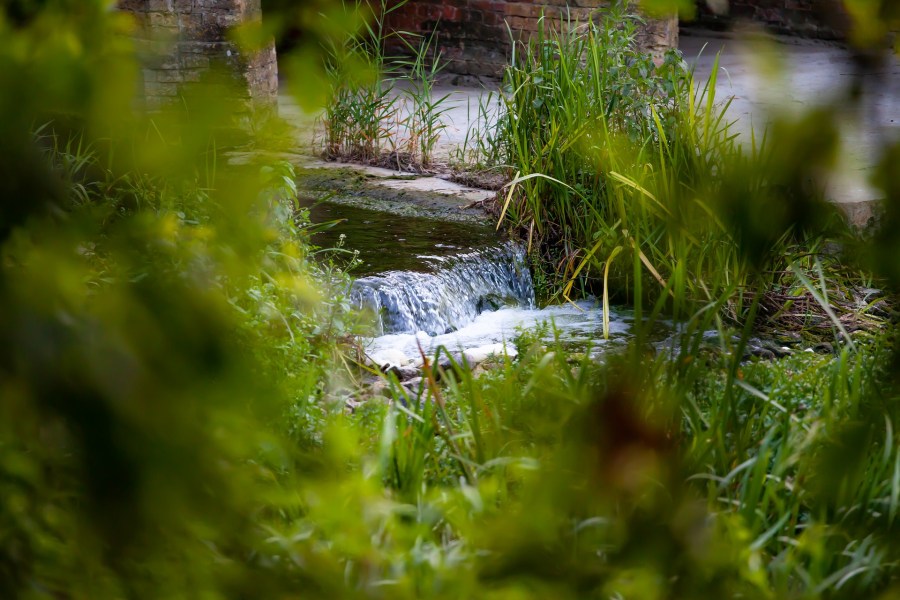
In the little town of Cayce, South Carolina, where I grew up is a small park near the police department. There is a stream that runs along the outside of it, a growth of trees separating the stream from the actual park. That is where this story takes place.

When I was a kid, me and a couple of buddies would go down to Guignard Park (not the same park, but yes, still in Cayce) and wade in the water or climb along the rocks and try to keep from falling in. It is here where we would go crawdad hunting. Me and my buddy, Clark, once caught 38 crawdad’s in there and one of them was huge and mean.

For this story, I combined the two parks–the location from one, and the catching crawdads from the other, to create the scene and events of this story. And, if you are wondering, yes, Brandon was based on my buddy, Clark.

(If you enjoyed When We Were Kids, please share this post on social media and help me spread my stories to the world. Thank you!)

I Asked For Your Company (Free Fiction)

I Asked For Your Company

A.J. Brown


I asked for your company.

It was dark beyond the window to my right. I hate the dark, the feeling that there is always something lurking in the blackness of night. The lights of the train station were dim, at best, but at times, nonexistent. The rain outside beat against the roof of the car and tap-tapped against the windows like tiny pebbles. Taped to the walls near the door were pictures, drawings, I guess done by little children with big imaginations. One was of a series of hearts and a music box that could have been playing a love song.

My skin itched from fear. My nerves burned as if on fire. 

From my seat near the door of the train car, I saw you. Dark hair, cut short, a mole on your left earlobe. Sad eyes surrounded by bruised hollows, small nose, thin lips, a scar on your right cheek, put there by someone who didn’t think you were special or of any consequence. You were soaked from head to toe, as if you had just come out of the rain, much like I had. You looked lonely and downtrodden, as if you were running away from something … or someone. There was something familiar about you, something that felt like kinship, but I couldn’t place it.

You stared at me without seeing me, your eyes hauntingly distant. At that moment I thought I could love you forever if you would just speak to me, just say ‘Hello.’

“Stay here with me,” I whispered. You opened your mouth and spoke words I could not here over the steady drumming of rain all around us. You could have said anything. I asked you to repeat it, but I think you said something else instead. I know not what that was.

I asked for your company and you made no move to give it to me.

I reached for you when the train began to move, needing the touch of someone to allay my fears. My heart lifted into my throat. My stomach flipped several times. You put a hand out, fingers up, as if to stop me. You didn’t quite touch my fingers, but it was clear you didn’t want anyone touching you, least of all, me. I dropped my hand back into my lap and clutched at the small bag there, the one with the bare necessities to get me through with life. You lowered your hand as well, but I couldn’t see if there was anything in your lap.

You stared at me, unflinching as the world passed by us in the dim, almost brown color of the car’s ceiling lights. Outside, the rain pelted the glass and the clouds hid the moon and the stars from our view. Water seeped in through the windows and trailed down the walls like tears.

“They say the world is going to flood,” I said, hoping for conversation. I knew the topic was depressing, but ‘How’s the weather?’ sounded lame when I considered it had been raining for nearly two weeks.

You didn’t respond. I think I angered or upset you when I reached for your hand. I didn’t mean to. It’s just … it’s just … I was scared. I just needed comfort. 

Water rose along the rails outside the car. It splashed along the sides and sprayed outward as the car picked up speed. It flowed in through the windows, some of them cracked in places.

I Asked For Your CompanyI asked for your company as the dim lights on the car flickered. I looked up, as did you, to assure myself they were still on. The sound of water filled my ears and I tried to talk to you again, but I couldn’t hear my own voice inside my head, much less when I spoke. You looked much the same, eyes big and fearful, trying to speak but your voice carrying nowhere beyond your throat. 

The train slowed, as if it struck an embankment along a river. Then it stopped. The lights flickered again, then went out entirely. 

I asked for your company as water came in through the cracks in the doorway and the windows all around us, slowly at first, then faster, faster, faster. 

We stood, yes, you and I, and ran for the door. I bumped my hip on the side of one seat and my feet came from beneath me. I tumbled to the floor and slid a foot or two before my shoulder struck the edge of one seat. 

“Don’t leave me,” I yelled as I reached for you, but I couldn’t see you anywhere. 

As water filled the car, I struggled to my feet, slipping once and falling back in headfirst. I swallowed water. I came up, my mouth open and searching for air. 

“Help me! Don’t leave me!”

I got to my feet, maybe with your help, maybe not. I do not know, but when I stood, there you were, soaked from head to toe along with me. You stared, wild-eyed and terrified, but said nothing. 

The water rose above my thighs and I waded toward the door. You did the same but  you were so far away. Somehow we met there all the same, but … but somehow, you had gotten out and stood on the other side. The door was closed, as were the windows, yet we stood on opposite sides of the door.

I placed my hand to the glass. You did the same, this time not pulling away but reaching for me. Our hands seemed a perfect fit, a perfect match.

We both slapped at the door’s window. My fear of drowning kicked in, and from the expression on your face as you beat on the window right along with me, you had the same fear. I didn’t understand this at first. You were outside the car. You could swim to safety or climb on top of the train. Then I realized you weren’t scared for yourself, but for me. 

“Please …”

I asked for your company when I was afraid and you stayed with me as the water rose above my waist. Your eyes grew wide and we must have had the same thought because I swung my fist as hard as I could at the glass door. You did the same. My knuckles split. So did the glass.

The weight of the water pushing on the window collapsed the cracked glass in on me. As I was shoved backward and carried to the back of the car on an icy cold wave, I saw you being pulled away, in the opposite direction. I screamed. I think you did, too.

I sunk beneath the water, the train car no longer a way to safety but soon to be a tomb. The drawing of the heart picture floated by me before it was sucked away, possibly on a current that would lead out to sea.

As the water filled the car well over my head, I lost you forever. I asked for your company and you stayed. 

AJB

__________

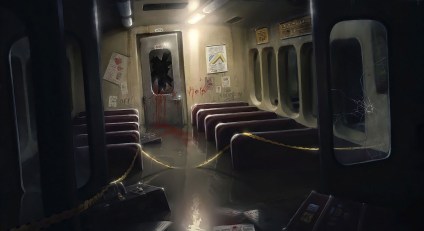
This was originally supposed to be a story for Stitched Smile Saturdays. The featured image was the actual prompt. After I completed the story, I realized I was nearly 300 words over the 1000 word limit. Even after culling back as many words as I could, I was still nearly 200 words over the limit. Instead of posting it to the SSS blog, I decided to hold it for later. I consider this later.

(If you enjoyed I Asked For Your Company, please share on your social media pages and help me spread my stories around the world. Thank you!)


Free (Zombie) Fiction: When We Were Kids

“Remember when we were young and we used to walk on the stones in the stream?”

Brandon had asked that question as they walked along the very stream he spoke of. They were no longer kids and walking outside at any time during the day was more dangerous than ever before. Colby found that thought ironic, considering the state of the world before. 

“Yeah, I remember,” he said. “And when we got tired of walking on the stones, we tried to catch crawdads.”

Brandon laughed at that. It was a sound Colby hadn’t heard in a long while. He had heard screams and yells and crying from people as they died, ran, or ran then died or suffered from that thing called mourning when someone—or everyone—they loved was dead. Colby looked at his longtime friend and couldn’t help but smile. 

“What?” Brandon asked.

“You laughed. I haven’t heard laughter since …”

“Since Micah died,” Brandon finished.

“Yeah.”

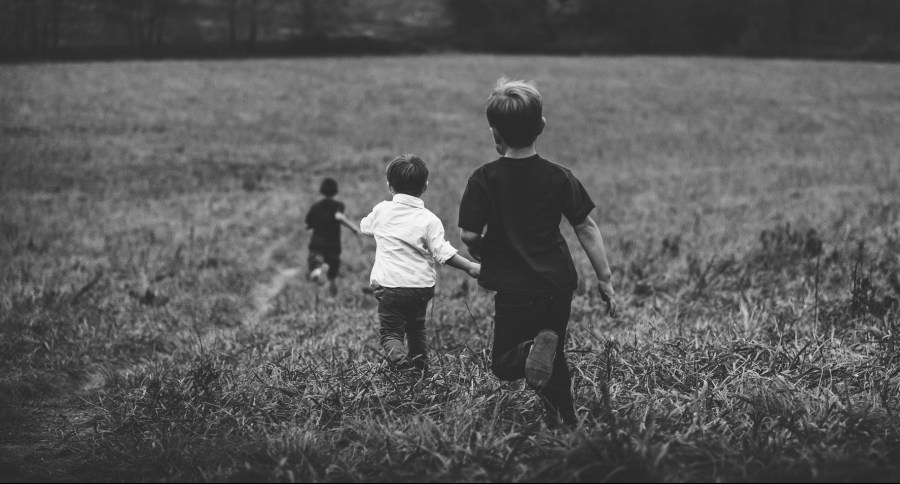
They were silent for a few minutes as they walked the stream, coming up on the wide section a short footbridge spanned across. On the other side of the bridge was a path that led through a length of trees and then opened up into a park where no kids played anymore. Micah died at least a month earlier, but Colby could have never told you exactly when—time wasn’t measured in days and nights anymore, but in minute by minute. He closed his eyes, shook off the thought his only other friend who survived for longer than a couple of weeks when the world went to Hell. Boys

Brandon stopped. Colby looked back at his friend, at the deeply tanned skin, the hair much longer than it had ever been and in need of washing (like the rest of his body), his clothes covered in dirt, blood and who knew what else. He looked, as Colby thought everyone who was still alive probably looked, like the homeless of before. “What’s wrong, Brandon?”

“I wish we were kids again.” He stared at the water, at the stones they had walked across in another life. 

“Yeah. Me too.”

“Life was so much easier back then.”

“Everyone was still alive back then.”

“Yeah, that too.”

More silence followed, then ended when Brandon started for the water.

“What are you doing, man?”

“We can’t be kids again,” Brandon said. His green eyes seem to shine as he looked back at Colby. “But that doesn’t mean we can’t try to have a little fun. Heaven knows we could use some.”

With that said, he dropped his pack to the ground, his baseball bat landing beside it. He stepped from dry land onto one of the stones. It wobbled under his foot and Brandon shifted his weight to remain upright. His arms went out, his hands extended, making him look like a stationary airplane. His other foot went onto a flat stone that barely stuck out of the water. Brandon looked back at Colby with a smile that could have belonged to a six-year-old. “You coming?”

Though he knew it was dangerous—anything other than paying attention to one’s surroundings was these days—but Brandon was right. They needed some fun, needed something to make them feel less like the world was ending and more like they had a reason to continue living. 

Colby went to the edge of the stream, dropped his pack and the crowbar he kept in hand. The water was murky and brown and not like it was when they were kids, when you could see the bottom of the stream, the sediment, the rocks, water plants, minnows, and yes, crawdads. The water was cloudy. Though he could see the stones and the mud on them, he didn’t like that he couldn’t see much more than that. Still, he stepped on one of the rocks, pushed on it for good measure to make sure it was sturdy, then put all of his weight onto it. He found another stone, this one with a touch of green moss growing along the edges that stuck out of the water. Then he was stepping from that one to another one, his arms out very much like Brandon’s.

For a few minutes, Colby and Brandon, friends since the first grade, and possibly the last two people alive in their world, were kids again. They laughed. Their feet slipped from time to time, getting submerged in the water before they could get back on the stones. For a few minutes the world was right. 

Colby turned around when he heard the startled ‘whoa,’ from Brandon. He saw his friend’s arms pinwheeling, his eyes wide, as he tipped backward, his left foot slipping out from under him. He landed in the stream with a loud crash, water splashing up and coming back down. Then Brandon laughed. 

“DId you see that?” Brandon asked, still laughing. 

“Are you okay?”

“Yeah, man. Nothing like being a kid ag—“

Brandon’s laughter came to a sudden stop. His mouth opened but he didn’t scream. From out of the water came his arm. 

Colby saw the blood before he heard Brandon finally scream. His forearm was missing a chunk of flesh and blood gushed from the wound. Behind Brandon came the corpse that had been hidden by the murky water. It’s bloated head lulled on it’s shoulders. The rest of its upper torso was waterlogged and the same shade of brown as the muddy stream water. It made no noises—the dead’s vocal chords died right along with their bodies. But it bit down on Brandon’s shoulder, sinking its sharp teeth through the wet shirt and pulling it’s head back, ripping cloth and flesh away. 

“No, no, no, no!” Colby yelled and forgot all about trying to stay on the stones. He ran and splashed his way to dry ground, scrambled up the embankment to where Brandon’s pack was. He picked up the aluminum baseball bat with the dented barrel and ran back to the stream. He waded in as Brandon tried to shove the corpse away, but shock and the sudden loss of a lot of blood made him sluggish and unable to pull free. 

A second corpse appeared from the woods. It wore a long sleeve work shirt and what Colby thought was a green pair of pants and heavy workbooks that didn’t seem to fit it’s withered feet. It didn’t so much as walk as it dragged it’s feet across the ground. Somehow, it didn’t fall. 

“No,” Colby whispered to himself as he ran into the water, the bat raised above his head. He brought the barrel down on the muddy corpse. Its head split open with a sickening pop. It fell back into the water, but didn’t sink right away. Colby turned to Mr. Work Clothes, knowing if he stopped to pull Brandon from the stream, he was as good as dead as well. 

Colby met the corpse near the edge of the water. He swung the bat at its knees and Mr. Work Clothes fell onto it’s side. The bat went above Colby’s head again and came down with all the force he could muster. The skull ruptured with a similar gross crack. One eyeball shot from its socket and landed in the water with a plop. Colby swung the bat down several times, screaming as he did so.

The bat slid from his hands when he turned back to the stream to see Brandon floating in the water, his face to the sky, eyes open and blank. Tears filled his eyes and the strength left him. Colby’s legs gave way and he crumpled to the ground, landing on the soft grass of the embankment. 

Colby cried for several minutes, his last friend in the world now dead and soon to be one of the walking corpses that had killed everyone in the world. 

Then, as if a sudden realization swept over him, Colby rolled onto his knees. He grabbed the bat and stood. “I can’t let him change.” His voice was hoarse from crying and his eyes were blurry and the lids puffy from the tears. He looked at the bat and shook his head. 

Colby didn’t cross the stream by hopping from stone to stone. He went to the bridge, crossed over the water and went to his pack. In the front pouch was the .22 and it was fully loaded. He dropped the bat, took the gun from the pack and took the slow and somehow very long walk (though it was only fifteen or so yards from where he stood to where Brandon floated) to the edge of the stream. 

He didn’t want to step back into the water. As he had feared, they didn’t pay attention to their surroundings and one of them ended up dead, and soon to be undead if Colby didn’t hurry. 

No other corpses came out of the water when Brandon fell in or when I splashed around.

The thought should have been reassuring, but it did little to calm his nerves or set his mind at ease as he stood on the embankment, staring. 

If you don’t hurry, he’s going to change and then you’ll really have issues, won’t you?

Issues was a nice way to put it. The freshly dead were faster, stronger and more limber than the stiffs that teetered on falling with each step they took. They were harder to put down—their skulls seemed harder, at least. No knife will do for the fresh ones. 

“Okay. I’m going.”

Colby stepped into the water, his nerves on edge, his head moving from side to side as he searched the water for anything that might move. At one point, his foot struck a submerged stick, dislodging it. It floated to the surface and Colby screamed, fired two shots at where he thought a head should be. When he saw it was a stick, he laughed nervously as his heart beat rapidly in his chest. 

“Get it together,” he said and waded through the stream. He reached into the water, grabbed the back of Brandon’s shirt and started back for dry ground. Once there, he started to slide his hands beneath Brandon’s armpits, then stopped. “All he would have to do is turn his head and then you’re as good as dead.”

Colby looked at the gun in his right hand, then down at his friend. He put the barrel to Brandon’s temple. “I’m sorry, buddy,” he said, closed his eyes and pulled the trigger. The bang sounded like an old party favor they would get as kids—a simple cork-like pop that seemed to echo in a world where noise had become almost obsolete. It was followed by the sound of something striking the water; the bullet, he thought. Brain and skull, as well.

Colby tucked the gun in the back of his belt and grabbed Brandon beneath the armpits. He pulled him to dry ground, then sat beside him.

“Hey, Brandon,” he said. “Do you remember when we dug that grave for Micah?” He nodded, knowing that Brandon didn’t remember. As a matter of fact, he didn’t remember anything at all, and he never would again. “Yeah, well, I’m going to dig another one, so, you know, don’t go anywhere. Okay?” Absentmindedly, he patted Brandon’s leg.

The crowbar was all he had to dig with. He used the claw end to loosen the ground and pulled the clumps out by hand. After what felt like hours, though it had been not even forty minutes, he had a shallow grave dug out right next to the stream, a place of their childhood, one that, at least Colby hoped, Brandon had found some joy and fun at before death claimed him. He pulled his friend’s body to the hole, careful to step into it and drag him along before setting him down gently. 

Covering the hole was easier and took far less time to finish. Colby covered his friend’s body from feet up, ending with his head. He stood, took the baseball bat and drove the barrel into the dirt near where Brandon’s chest was. 

“Rest in peace, my friend. I’ll never forget you.”

Colby took one last look at the grave before grabbing both his and Brandon’s packs and his crowbar and walking away from the stream toward the town they had avoided by following the water. As day gave way to night, Colby sought out refuge in the back of a car that would have been considered old in the before. The owner was long gone, but whoever it had been had left a blanket behind. Colby covered up and used the two packs as pillows. 

Colby closed his eyes, but before falling asleep he said, “Hey, Brandon, remember when we were teens and we took our girls to the old drive in movies in Monetta? Yeah, me too.”

AJB

2/25/2019

2/26/2019

Not Like It Used To Be

As I’ve gotten older, my love for the Christmas season has dwindled significantly. This is terribly sad. Sad, I say. I guess that happens to a lot of folks when they realize the magic of the season fades as you get older. No, it doesn’t fade for everyone, but most. There is still a certain joy at points during the Christmas season, but for me it doesn’t carry that sense of awe like it used to. Yes, sad…

I guess it is the commercialism which lends to seeing Christmas stuff up in stores in August (yes, there was a store here in South Carolina that actually had their trees and lights and decorations up in August) and the Black Friday sales, Cyber Monday sales and all the insane traffic around any store for months in advance of Christmas.

There is a part in A Charlie Brown Christmas that I’ve always enjoyed. Good old Chuck has just been laughed out of the auditorium because of the Christmas tree he picked out. Charlie Brown then wonders about the true meaning of Christmas, and Linus obliges an answer by telling the story of the birth of Jesus. Now, that’s not the part I am talking about. The part I like is right after that as Charlie Brown is looking up at the sky to the North Star that shines bright, he smiles and says:

Linus is right. I won’t let all this commercialism ruin my Christmas.

Linus is right.

Still, Christmas just isn’t like it used to be. And that is the basis of today’s story. I hope you enjoy.

Not Like It Used To Be
By A.J. Brown

Families line the streets. Kids are bundled in coats, hats, gloves and blankets. Adults stand or sit in folding chairs, hands in pockets or laps, their excitement matching the children’s. A chill hugs each person tight. Teeth clatter, legs shake and dance; people trying to stay warm. Hot chocolate and coffee work for a while, but fade, leaving shivers along spines.

“How much longer, Momma?” they asks, young eyes and hearts waiting, hoping to catch a glimpse of an elf or reindeer or even Santa Clause. Maybe some candy will get tossed their way.

“Not much longer,” mothers and fathers announce, some happily, others with a chagrin that sits in their stomachs like heavy rocks. Christmas isn’t like it was when they were kids, back when December meant presents and eggnog and feasts, parties and family get-togethers, Christmas lights and holiday specials on television. Snow-filled streets meant sledding and snowmen, snow angels and snow ball fights.

There’s no snow this year; streets are covered in dust and dirt, debris from crumbling buildings, worn by time, weather and the passing wars. Few trees have stood the test of bombs and bullets. Fewer windows remain intact.

A breeze blows along Main Street, lifting grit and trash into the air. Many cover their faces, kids cry out from the sting of sand in eyes; some adults shake their heads and wonder why others choose not to wear protective goggles.

“Here they come,” a kid shouts. Others echo his words. Eyes open wide in anticipation and little ones squirm in their seats; blankets come off as they stomp their feet, kicking up clouds of dust.

Down the street a truck appears, adorned in reds and greens, its lights shining. The driver honks and waves a meaty hand as he passes through the crowd of onlookers. Three fingers are missing. A pinky and thumb form an odd L shape. “Merry Christmas,” he bellows. It comes out “Mare-wee Cwis-moss.”

The next vehicle inches along, yellow and orange lights cling to its exterior. The top of the car is missing, shorn off pieces of metal still jut out where the top use to be. A real beauty sits on the trunk, her feet inside the car. Her blond hair is singed at the ends, her once youthful face scarred on one side, an eye drooping, the eyebrow gone. A rusty crown sits atop her head. An unraveling sash across her faded blue dress reads Miss WW III 2038. She smiles. Her teeth are missing.

A marching band follows, horribly out of sync, no rhythm, none of them marching in unison with the ones in front, behind or beside them. Damaged horns squeak and squeal, bells clatter, hollow drums are rapped on with broken sticks from fallen trees, all forming a cacophony of noise that no amount of rehearsing could fix. Some of them are missing limbs, a foot here, an arm there, both legs over there, being pulled along in a wheel chair by a man with no arms and a limp, a rope tied around his waist. Distorted faces and twisted torsos make the rag tag orchestra a crowd favorite. Several other bands would follow, strategically placed along the length of the parade, but none quite as spectacularly grotesque.

A semi pulling a trailer creeps up the street. Women dressed in red and white striped bathing suits dance along poles to ancient Christmas Carols that few of the children have ever heard. Adults sing along to Rudolph the Red Nose Reindeer and Holly Jolly Christmas. Few even notice the women. The new wave of freaks stare out at nothing as they dance, cringing with fear at those gawking at them. Tears fill their crystal blue, green and brown eyes.

Cars proclaiming the holiday season inch along, large men behind the wheels, motorcycle riders doing wheelies and criss-crossing figure eights careen about, almost going into the crowds, but pulling back at the last moment, much to the dismay of the thousands of onlookers. It is rumored that once a year a bike goes off course, taking out several spectators to the delight of those who are fortunate enough to take in the carnage. Smoke billows from rusty mufflers, engines growl, spit and sputter during turns, but none of the bikes slide out of control, maiming or killing folks along the streets. Children poke out their lips. The pain would be worth not being like the freaks dancing on poles for men and women alike to ogle and insult, to abuse as they see fit when the parade is over.

The first hour pushes well into the second one. As the end draws near a burnt orange fire truck looms in the distance, its tires dirty, ladder crusted in grime and rust. A wooden chair sits at the back, elevated. A large man with blush red cheeks and flowing white and gray hair, a beard down to his stomach and a red jump suit sits on the throne. A hole is in one knee, no black belt at the waist. His black boots are scuffed and his red cap is missing the dangly white ball that should be attached to its tip. At his feet sit several packages and bags, wrapped in newsprint and tied with twine.

The children scream, “It’s Santa Clause.” They laugh and cheer and clap; some of the adults cry. Santa didn’t look like this when they were kids. He wasn’t a scraggly old man whose rosy cheeks came from drinking a pint of illegal liquor before the Christmas parade. He wasn’t a man with a sack not full of goodies, but something much worse. He wasn’t this vision of insanity that the younger people know and somehow love.

The fire truck stops. Santa stands, reaches behind his throne, hefting a gray bag onto his shoulders. He waves a black glove at the crowd as he turns in a circle, a toothless smile noticeable even with the thick tufts of gray and white that cover most of his face from ears down. His eyes fall on a group of people huddling around a metal barrel, flames licking up from it. They warm their hands and roast marshmallows; the perfect picture of happiness.

Santa points. “Onward, Rudolph.”

The fire truck veers to the left as the driver mashes the gas. The engine revs, the truck lurches forward, black smoke spills from the exhaust. Bodies scatter as the grill and bumper strikes the crowd. A brilliant flash of orange, yellow and red emits from Santa Clause’s bag of gifts. The explosion follows, ripping the back of the fire truck apart. Santa evaporates in a spray of metal, flesh and shredded wrapping paper. The front of the truck smashes into a dilapidated building. It collapses, brick, metal and glass tumbling to the ground, taking with it several more people and kicking up a large dust cloud. Fire engulfs the truck, the building and many onlookers. Others scramble about, searching for body parts, tossing pieces aside, frantically looking for…

“I found it,” a woman yells and lifts Santa’s head from a pile of rubble. His jaw is missing, along with one ear. An eye dangles from an empty socket. Her family and friends pat her on the back, congratulating her, some grudgingly, others with the genuine sincerity only offered by loved ones.

A collective groan emits from those seeking the Christmas prize. People gather their blankets and meager belongings. Kids shuffle with parents back to their cold homes, devoid of windows and heat, misery greeting them at their doorways.

A green car pulls alongside the woman, the back door opens but no one gets out. The woman hugs her family, tears streaming from her eyes.

“I’ll miss you all,” she says and steps toward the car.

“We love you, Mommy,” one little girl says and hugs her leg tight. She lets go, steps back. “You’ll be the best Santa ever.”

“You bet I will,” she says and lifts Santa’s head high in the air before stepping into the car. It speeds off, leaving the family waving. The little girl bends down, picks up Santa’s stocking cap, turns it over in her hands, places it on her head.

“Daddy, do you think I’ll ever be Santa Clause?”

Her dad kneels, puts both hands on her shoulders. “Anything’s possible, sweetheart. Anything’s possible.”

The family leaves, father and daughter holding hands. They chatter about the parade, the fireworks and wonder about the body count. Still, some parents, some adults stand, shocked, dismayed by the events. Christmas wasn’t like this when they were kids…

With the recent events in Connecticut, I took one story out of the mix for my Happy Horrordays postings. I had to think about whether I wanted to post a horror themed story today or write about the events that unfolded yesterday. I chose to go with the story—so many others have written on the tragedy and my commentary wouldn’t be much different than most.

Still, I am a horror writer (by definition, I reckon), and my stories have a decided slant toward the darker things. I hope you enjoy the story, this one written in 2009 and originally published in Estronomicon.

Grandma Haygoode and the Devil In Me
By A.J. Brown

My initial reaction to seeing her dead on the floor was shock, tempered with joy. Grandma Haygoode had always been so loving, doting on Charles and Winnie, showing compassion to dumb George, feeding stray animals and taking in the homeless. Yeah, she was a caring old woman for certain.

Except when it came to me. For some reason or other, Grandma didn’t like me much. She would swat my head if I spoke out of turn; spank my bottom if I came home late from school. I got kicked out the house at fifteen. Dumb George got my room and the vagrant that slept in the empty corner lot near the Holiness Church got George’s basement quarters. It was like we all traded spaces, with me getting the cardboard box. It was filthy and stank of crap and urine and body odor. I don’t even want to know what the stains along the box’s walls were.

Right up until just before I turned eighteen I roamed the streets, begging for food or a bit of spare change. The looks folks gave me—you’d think they would want to help a poor teenager in need, kicked out of the home his parents had owned before their deaths. That wasn’t the case. Many shunned me, others chased me. Preacher Hollings lectured me every few days about doing right by the Creator and begging for forgiveness, not just from a higher being but from Grandma Haygoode as well.

Reckon a feller like yourself done did something mighty bad to fall out of her good graces,” he would say while wagging a crooked finger at me. “Confess your sins, boy and make things right with her.”

You’d think that Grandma Haygoode was akin to being the Creator that Hollings preached about. When he spoke of her his face would light up, his breath would hitch like he had himself a good orgasm and his bottom lip would glisten with saliva. The first few times I heard him talk of her I thought he would cry, or maybe he had been in my shoes at one time, put out by the Saint of All That is Good in the World. Not the case, though I do think he secretly fantasized about getting between her wrinkled thighs. Just thinking about that makes me shudder and my stomach lurch.

Charles visited me in the back alley one evening, said Grandma Haygoode wanted to see me. Sick with the fever and chills, I shrugged, staggered home for the first time in nearly three years. Being Christmas, I thought maybe she had forgiven me for the nonsense of eating one too many slices of bread at dinnertime. Yeah, that was the sin that got me put out at fifteen. The house was all decorated in bright greens and reds, a tree sat in the corner, dozens of presents under and around it. Stockings—too many of them—hung from hooks along the room and on the mantle piece. She waited in the kitchen, her blue apron on, cinnamon rolls baking in the oven. When she turned to me I had to hold myself still. She had changed.

Her face was lined with deep grooves—not just wrinkles, like they used to be, but valleys that bore right down into her very being. The skin around her eyes and mouth sagged. I thought for a moment that she looked like one of them bulldogs that Old Man Harper has—they are some ferocious animals that would rather rip your leg off than lick your hand if given a chance. She had lost weight—about a person, if you ask me. But what startled me the most was that she smiled when she saw me.

Rarely did she smile at me. Everyone else she loved, smiled at, but for me it was a scowl and a snarl, like I was the devil or something. Maybe she thought I was. Preacher Hollings sure made it a point of telling me how the devil had hold of my soul and that I need to break free from his treacherous grip. Yeah, that’s the words he used: “treacherous grip.”

I‘m getting away from my thoughts here. You see, Grandma Haygoode, well, she went and smiled at me, exposing her yellowed teeth. A few of them were missing that weren’t before, but the one in the front, I’ll never forget that one. It was bright white, not yellow like the rest of them. I wasn’t too certain it was real or fake, like some of them folks who have those dentures the tooth doctors make for them.

Something was wrong though. The tooth, well, it seemed to glitter and all, like it could have been some small light instead of a tooth. I stared at it for a moment, not sure I was awake and standing in the kitchen or still asleep in my cardboard box, the one that used to belong to the bum that sleeps down in the basement now.

The trance was broken when she closed her lips, concealing the tooth from me. I shook my head, trying to force the cobwebs away. Dazed and disoriented, I stumbled back until I bumped the wall. My head pounded, eyes hurt.

Marty, it’s been a while. You look like the devil done got hold of you.” she said and shuffled toward me. Her voice was like glass breaking against rock. I guessed age had caught up to her. She motioned with one knobby-knuckled hand. “Have a seat. Let’s talk a spell.”

At that, I didn’t know what to do. I just stood there like a knot on the log, dumbfounded, my head humming a tune of pure pain. “I need to go—I ain’t feelin’ all that good.”

She smiled again, showing off that tooth, repeated her request for me to sit. Without thought, my legs moved on their own and I found myself sitting in the chair across from her.

All the energy drained out of my body and I slumped in the chair, vision blurred, sweat spilling down my face. My head swooned.

Never before did I want to run away from my own home, but at that moment, in the kitchen with Grandma Haygoode, my head swirling and the fever biting down hard, I wanted to scream, to run away and never come back. I just didn’t have the strength to push myself out the door and down the steps. Even if I did manage to get out the house I didn’t think I could make it much further than the front walk without collapsing.

Doubt surfaced, like so many times before in my life, but different this time. At that moment I thought I would never be able to leave the kitchen, to free myself of Grandma’s ancient eyes. It’s like she had her claws sunk deep in my skin and she was reeling me in for the kill. And all I wanted to do was escape, go back to the empty lot by the church and hide myself away from the world. If I was lucky, I would die and it would all be over. No more Grandma Haygoode, no more Preacher Hollings, no more worry of the devil getting me.

How about you tell me what ails you, Marty.”

All I could see were blinding white dots dancing in my vision. Half of her face had been blotted out by these moving white lights, but her tooth remained, sparkling, shining. My thoughts became muddled and the fever overcame me. Nausea swept through my body and I dropped from the chair to my hands and knees. Very little came from my stomach, mostly stomach acid and a few half digested pieces of bread I found in one of the trash cans on the other side of town.

Poor child,” she said and stood. Her ice-cold hand touched the back of my neck. Shivers trailed up and down my spine. I held onto my fading world, trying not to pass out. I bit down hard on my lip, drawing blood and fresh pain. The world came back, no longer washed away in confusion and lightheadedness.

Please,” I said, grabbed the edge of the table and pulled myself onto my knees.

You want me to help you?” she asked, the smile never wavering.

No,” I said, refusing to look up at her. “Stop smiling.”

Everyone loves my smile, Marty,” she said in that broken glass voice of hers. Her hand tightened on the back of my neck, nails piercing skin. I felt the warmth of blood trickle from new wounds.

With my strength waning, I swung a fist up, catching the bottom of her chin. Her few teeth clattered and she fell back. Crawling, I tried to get to the door, but it was so far away. Exhausted, I reached it, and then looked back at Grandma. She lay on the floor, her head to one side, blood spilling from her open mouth. The tooth lay beside her, part of her gum still attached to it.

Yellow voids appeared in the corners of my vision, faded to brown, then black. I awoke some time later, head cloudy, neck hurting. Sitting up, the pressure eased on my skull, neck and shoulders. Grandma Haygoode still lay on the floor, her eyes turned to the ceiling, mouth open, tooth by her head. Blood crusted along the side of her face and had soaked her white hair. The smell of burnt cinnamon rolls hung in the air.

Early evening peeked in through the windows and I wondered where everyone was. Then I remembered, Grandma had a standing rule. If you lived with her, you spent the Christmas holidays taking care of the things she couldn’t. I guessed most of them were out doing her bidding. But with the coming of night they would all get home sooner rather than later and what would they do when they found Grandma dead in her kitchen?

As I crawled toward her, I kept an eye on the tooth, but it no longer sparkled. I picked it up. It was just a regular tooth, chipped where her bottom teeth had clipped it when I punched her, a flap of dry gum hanging from it. My fever must have made it appear special, like folks thought Grandma Haygoode was. Was. I nudged her to be certain she was dead.

Running wasn’t gonna do me much good. Once the law found out Grandma was dead and that she had been talking to me when it happened, well, I would get strung up right there in the yard, no trial, just a bunch of pissed off executioners. And, I guess the devil certainly would have had me then, now wouldn’t he.

To tell you the truth, which is I guess what I have been doing all this time, though Grandma’s tooth wasn’t a light stuck down in her gums, it did kind of look like one, but without the bulb. I went into the front room where the logs in the fireplace crackled and all the pretty decorations were hung.

On the tree were lights strung around. Their bright yellows, reds, greens, oranges and blues flicked on and off every few seconds. My heart ached and I longed for Momma and Papa, to be with them in the grave instead of alive and despised by all in our little town just North of Hell.

Anger filled me, and all the years of hate that I had suppressed for Grandma and Charles and Winnie and that old bum who slept in the basement surfaced. And for Dumb George, too, who wasn’t so dumb after all—he just liked to play stupid so folks would feel sorry for him. I rolled that tooth in my palm with my fingers, and I stared at that Christmas tree wishing I had decorated it with my mom and dad. That Devil, well, he did get hold of me then.

Lying about it will do me no good now. There was an axe on the back stoop—sharp enough to cut through firewood, sharper still to cut through flesh. I sat and waited at the front door, listening for the others. One by one they came home, their faces weary from a hard day’s work. Too tired to fight me, they were easy to take. Charles first, the bum next; it was a little harder on my heart taking out Winnie—deep inside she was always a good person, but influenced but Grandma Haygoode, well, I guess even the best folks can think bad about someone when encouraged enough. I took their teeth with a pair of plyers that had been beneath the kitchen sink.

Laying in the dark, hidden by the door, I wait for Dumb George. He should come in soon and when he does, his teeth will join the others along a strand of lights, ornament hooks twisted around them and holding them in place. They look nice around the Christmas tree, all glowing and glittery with the glare of the colored lights shining off of them. Then I’ll call Preacher Hollings, invite him over for a while. And he’ll come. He’ll come because I’m at Grandma Haygoode’s and he’ll want to rejoice with her and me and everyone else because the Devil, he don’t have me in his clutches no more. Like the rest of them, he’ll be wrong…

***

Until we meet again, my friends… stay safe and love one another.

O Christmas Tree–Free Seasonal Fiction

It’s the time of year where folks are supposed to be joyous and merry and cheerful and… yeah, whatever. Christmas is not what Christmas used to be. There’s really no need to pretend. Most folks just don’t get into the Christmas spirit and plenty of them have forgotten the reason Christmas is even celebrated.

I must be honest, I’m not a big fan of this season, but not because Christmas isn’t a joyous time of year, but because of all of the commercialism that Christmas has become. It wasn’t like this when I was a kid—or at least, I didn’t notice it being this way.

Since there are only 16 days left until Christmas, I’m polishing off the Christmas stories and writing a couple of new ones to post in the next two plus weeks. Hopefully, you will enjoy them. Please, feel free to comment or share with others. And try and have a wonderful Christmas season.

O Christmas Tree
By A.J. Brown

“It’s the most wonderful time of the year,” Cory sang as he climbed down from the attic. In one hand was a small white box. The other held tight to the railing. He folded the ladder, locked it in place and closed the drop door to the attic. “With the kids jingle belling, and everyone yelling—”

He paused, his song not sounding quite right. Ad the lyrics ran through his head, he tried to recall how the song really went.

“It’s not ‘yelling’ you dense fool,” he said to himself and began singing again. “It’s the most wonderful time of the year. With the kids jingle belling and everyone telling you ‘Be of good cheer.’ It’s the most wonderful time of the year.”

Nodding in satisfaction, Cory walked into his living room and set the box down on the coffee table. He looked around at the other boxes that held lights, ornaments, tinsel and other little knick-knacks. There was a Santa Claus doll and a train, complete with tracks and a smokestack that blew out real smoke, thanks to a sliver of dry ice and a dab of water. There were several houses in little red boxes, a town he liked to put together around the tree, places for the train to pass by as it went along its merry way.

“I love this time of year,” he said and clasped his hands together. “Don’t you, Charles?”

Charles looked up at him from his mat on the floor, his muddy brown eyes holding that forlorn look that all basset hounds seemed to have. His tail lifted off the floor and flopped back down—his best attempt at a wag.

“I knew you did,” Cory said and opened the box labeled LIGHTS. He pulled out several groups of green-chorded bulbs, bundled together and tied neatly with twine. Setting each strand aside, he thought of what he wanted on his tree this year. White lights? Multi-colored lights? The big ones or little ones? Bubble lights or maybe the little twinkly ones? Cory’s eyes lit up when he saw the blue lights. “I haven’t used these in years.”

As he untied the twine around the chord, Cory began singing again.

“Have a holly, jolly Christmas.
It’s the best time of the year.
I don’t know if there’ll be snow, but have a cup of cheer.”

Cory plugged the lights in and smiled when they came to life. “Blue it is this year.”

Carefully, he began to string the lights onto his tree. Though it held only two branches and was bare of leaves and that wonderful pine smell, it would still serve its purpose, even if it was unconventional. Cory shrugged at the unconventional thought. Most new-agers weren’t into all the Christmas tradition, but Cory was, so not having his normal lush green pine tugged at his heart a little.

With only the two branches near the top, Cory had to put hooks all along its trunk. Occasionally a little fluid seeped out where the hooks were, but Cory didn’t seem to mind. Charles always cleaned it up. For some reason, the old dog liked the way it tasted.

As he strung the lights, he sang again, changing a couple of words to reflect his own tree.

“I’ll have a blue Christmas without you.
I’ll be so blue thinking about you.
Decorations of blue on a white Christmas tree,
Won’t mean a thing if you’re not here with me.”

After the lights, he pulled out a long strand of garish yellow garland. He strung it a little more haphazardly, but tried to make sure it didn’t clash with the lights.

“I’m loving it,” Cory said to himself and opened a box of ornaments.

He was searching through them, trying to find the right ones when he heard a soft moan. Cory’s head jerked up and he turned around. A smile creased his face. “Awake so soon, my dear?”

The lady in the corner said nothing, but her eyes spoke volumes.

“Oh, don’t be afraid,” Cory said. “They’re only Christmas decorations.”

Another moan escaped the blonde’s throat, this one coming out much louder than the first one.

“Please, don’t fuss, sweetheart. It’s Christmas remember? The holidays?”

A third, louder moan that would have been a scream if she could have opened her mouth.

Cory shook his head in disappointment. “I knew you wouldn’t be in the holiday spirit,” he said. “Well, maybe when I’m done, you’ll change your mind.”

Turning away from her, Cory picked up two ornaments, both bright purple with white sequins forming a curly-queue pattern on them. He attached a metal loop on each one and then walked back over to his tree—to the lovely blond who had been less than vigorously ringing the bell outside the department store earlier in the evening. She hadn’t been too cheerful at all and she made it obvious when Cory dropped his change in the bucket. Cory thought it was because of the charity hour she had to donate to the cause of the homeless.

“Have a nice Christmas,” he had said and listened as the coins rattled in the bright red kettle.

“Yeah, right,” she murmured under her breath.

Cory didn’t think he was supposed to hear the comment but he had, and it bothered him. He stopped and looked at the woman, her green eyes underneath eyebrows that were furrowed down, making her look angry. She wasn’t the most appealing woman in the world but there was a certain prettiness even through her cold demeanor.

“Ma’am, would you like to have dinner with me?” he asked.

“You’re kidding, right?”

“No, I’m serious. You seem like you’re not too much into the Christmas spirit and I would like to help change that.”

“No,” she said, flatly.

“Suit yourself,” Cory said and walked off.

By the time he reached his car, Cory was distraught over her reaction to him. “I must change her mind,” he said.

Patiently, he waited until her shift was over and she made her way to her car, a couple of parking spots down from his own. With her back to him she wasn’t able to see him until his reflection appeared in her window. Her eyes grew wide as she spun around to defend herself. Cory grabbed her face and smashed her head backwards into the driver’s side window. The window cracked into tiny outstretched lines, like a spider’s web, as a smear of blood rolled down it.

“You’re a mean one, Mrs. Grinch,” he sang as he lifted her to her feet and helped her to his car. “You really are a heel. You’re as cuddly as a cactus. You’re as charming as an eel, Mrs. Griiiiinnnnnch. You’re a bad banana with a greasy black peeeeeel.”

“Aren’t these lovely?” he said and held the ornaments in front of her. “I think they’ll look great on you.”

He went to hang the two ornaments on the hooks he hard carefully screwed into her flesh. She struggled to move her arms and legs, but the wooden cross she hung on held her arms out and her legs together, making it impossible for her to do anything but shiver and shake. He placed the ornaments, one at each elbow, and went back for more. Again he sung a song as he decorated her body with ornaments of all different shapes and sizes.

“It’s beginning to look a lot like Christmas everywhere you go. There’s a tree in the Grand Hotel, one in the park as well; the sturdy kind that doesn’t mind the snow. It’s beginning to look a lot like Christmas, soon the bells will start. And the thing that will make them ring is the carol that you sing right within your heart.”

He looked up at the tears tracing down his blond tree’s face. Wiping them away, he frowned. “This isn’t working, is it?”

She screamed the best she could, but with her lips sewn shut with green thread it came out muffled.

“That’s okay,” Cory said and pulled the Santa Clause from its box. Lifting it up, he brushed off a year’s worth of dust that somehow got into the box and set it at her feet. It matched her red toenails.

The houses that normally went around the tree, went along the mantle above the fire place, set up in a precise manner that had the town’s small Christmas tree in the center. Santa Claus was on one roof, about to set foot in a chimney. All the while, Cory sang Christmas carols, sometimes stopping to put his hands in the air, dramatizing each movement and word he belted out.

“All that’s left is to plug in the lights,” Cory said, happily.

Carefully, he plugged all of the lights into surge protectors and turned off the overhead lamp. The lights came alive when he flipped a switch on the main power chord and the room became a glow of blues and yellows and whites. Santa Clause danced at the foot of the tree and Charles even sat up for a moment, his tail smacking hard on the floor a couple of times.

“Something is wrong, Charles,” Cory said as he stared hard at his beautiful tree. “What is missing?”

Charles only glanced up before lying back down on his mat, closing his eyes, as if to try and forget what his master was doing.

“A-ha,” Cory shouted in elation. “There is no star on top of the tree.”

Cory knelt down and rummaged through several of the boxes. Standing up, he walked over to where the little box he had pulled down from the attic was. Opening it, he took out a silver star.

“I thought I cleaned this, last year,” he said and began to wipe the crusted red flakes from its sharp steel tip. Underneath the flakes was rust that had set in and wasn’t coming off easily. “Oh, well, I guess she’ll be the last one that gets to wear this star, Charles. It gets tossed out with the tree this year.”

Cory stood and walked back to the tree, singing.

“O Christmas Tree, O Christmas Tree, how steadfast are your branches!
Your boughs are green in summer’s clime
And through the snows of wintertime.
O Christmas Tree, O Christmas Tree, how steadfast are your branches!”

“You’re going to be so beautiful,” Cory said and stepped onto a step stool.

Charles sat up, his tail wagging faster than it had in a long while.

“O Christmas Tree, O Christmas Tree, what happiness befalls me
When oft at joyous Christmas-time
Your form inspires my song and rhyme.
O Christmas Tree, O Christmas Tree, what happiness befalls me.”

The woman let out a loud muffled scream that tore part of the green stitching away from her lips just before Cory drove the star into her skull. It cracked and then gave way under the tip’s pressure. Blood trickled from around the star and dripped down her face. Her body convulsed, violently at first, slowed and then ceased moving altogether.

Cory stepped back and wiped a speck of blood from his brow. “I almost toppled the tree this year, Charles,” he said. “That would have been a terrible thing, don’t you think?”

Charles stood and walked over to Cory, his eyes fixed on the small puddle of blood underneath the woman. He lowered his head and started lapping at the puddle.

Looking up at his work of art—the woman with no Christmas spirit—Cory began to sing once more as tears brimmed in his eyes.

“O Christmas Tree, O Christmas Tree, your boughs can teach a lesson
That constant faith and hope sublime,
Lend strength and comfort through all time.
O Christmas Tree, O Christmas Tree, your boughs can teach a lesson.”

***

I hope you enjoyed O Christmas Tree, and for anyone who knows me, then you know I like telling folks where story ideas came from.

O Christmas Tree is a product of the blond-haired woman portrayed in the story. One evening in 2006 (when this story was written) I exited the local Wal-Mart with a bag in hand and in a bit of a festive mood. The woman stood outside the front doors, bundled up and barely ringing the little hand bell that comes with the hour long commitment to The Salvation Army charity that happens all along the country. This ‘commitment’ is voluntary—unless of course, a business sponsors it for a day or week, then the workers get ‘volunteered’ to do it, which I suspect is what happened in this case. None-the-less, if you are going ring the bell for an hour, the least you can do is appear that you want to be there. I generally give to those who are singing and saying Merry Christmas and are smiling and saying thank you and all that good stuff. It’s harder to give to those who just stand there like our Mrs. Grinch.

I placed a dollar in coins in the bucket, said ‘Merry Christmas,’ and proceeded to walk away.

‘Whatever,’ came mumbling from her lips. I honestly don’t believe I was supposed to hear the comment, but I did. I turned and looked at her. She glared back at me, as if daring me to say something. I smiled, though my head was shaking from side to side and my lips were somewhat tucked in against my teeth. ‘That’s sad,’ I said and walked off.

I would love to say I brushed this off and forgot about it, but I didn’t. I was disappointed in the attitude of the volunteer and just couldn’t let it go. I started to go back and say something when I noticed someone was standing beside her. She handed the bell to an older black man, and then walked away, her hands shoved into her pockets, her head down and a somewhat relieved, yet angry expression on her face.

There was no need to say anything to her. She struck me as an unhappy person who would just argue anything I—or anyone else, for that matter—would have to say. Instead, I walked off, reached my car and went to get in. That’s when I noticed her car was only a few spots away from mine. No, I didn’t go over to her and smash her head against the window, but right then the story came to me and I knew that one of my favorite character’s, a guy named Cory, would make another appearance in a short story. I went home that night and wrote O Christmas Tree.

I hope you enjoyed the read, and until we meet again, my friends…

The Coffin Hop–The Final Day–and a Short Story

~Sigh~

The end of Coffin Hop 2012 has arrived. I will be putting names in a hat in the next day or two, and my children will choose two of them to win a copy of my collection, Southern Bones. Also, one individual that commented on the Day 6 Coffin Hop post will win a copy of Necrotic Tissue’s Best of Anthology, courtesy of me—oh, and I’m going to sign the book as well since one of my stories appears within its pages.

I hope you enjoyed The Coffin Hop this year—it was a great experience for me. I found some good writers who I will continue to follow.

I leave you all with a Halloween story titled, The Orange Wrapped Ones. It’s something I wrote several years ago, and one of the few Halloween pieces I have in my arsenal.

Thank you for visiting Type AJ Negative, and please do come back in the future. For now, I bid you farewell.

Until we meet again, my friends…

The Orange Wrapped Ones

“I wonder what type of candy we got this year.” Percy held his pillowcase trick-or-treat bag close to his face, peering in at the various goodies, but not seeing much more than shapes that looked like wrapped rocks and pebbles.

“Don’t know, Percy, but I hope I didn’t get none of those horrible chewy things that come in those orange wrappers. You know which ones I mean, right?” Carson didn’t so much as look up from his bag, which, to Percy looked to be twice as full as his own.

“You mean the ones that taste like peanut butter or the ones that taste like caramel?” Percy asked, scrunching his face in thought.

“Caramel?”

Percy set the old tattered pillowcase with the crude drawing of a skull and cross bones in black ink on the top step of the porch. He looked at Carson, and shook his head. “Yeah, you know, the ones with the caramel in the centers.”

“Those are Rolo’s,” Carson said and reached into his bag, pulling out a Snickers bar. “I like them, but I don’t care much for the orange wrapped ones. They stick to your teeth and I hate cleaning my teeth out. I heard that Mary Santeleone lost a fang one year chewing on one of those things. Yah want this?”

“Sure,” Percy said and stretched out one eerily white hand. He took the candy bar, then frowned. “Hey, one ‘em kids bite you or something?” He nodded at the perfect set of indentions on the backside of Carson’s hand—five little teeth marks in a half circle. There was a trace of blood and an ugly blue/black bruise had already formed.

Carson barely glanced at the wound, shrugging it off as if it didn’t matter. “Yeah, this kid didn’t wanna give up his bag, so he tried to take a chunk out of me. I kicked the crap out of ‘em. You should’ve seen the boy’s teeth come outta his mouth.”

Percy’s eyes grew huge in their sockets. “You know the rules—we ain’t supposed to hurt the rug rats—just scare ‘em and take their candy.”

“He wouldn’t give it up,” Carson argued, his brows were creased just above his nose.

“You better hope he doesn’t tell anyone.” An uneasy quiver formed in his stomach. Carson was still young—not like Percy, who took to haunting on Halloween years before.

“He won’t.”

“Did you warn him not to?”

“Something like that.”

“Something like that? What’s that supposed to mean?”

“I left him out by the old creek down in Bryar Woods.” Carson had a chocolate bar opened and took a bite from it.

“You killed him?”

Carson shrugged, took another bit of his candy. “I didn’t want him tellin’ anybody I took his candy.”

Percy put his forehead in his hands and shook his head. “You idiot. Ma’s gonna kill you when she finds out.”

“She ain’t gonna find out.”

“Yeah she will. She always finds out.”

Carson glared at Percy, his cold gray eyes cutting through the darkness. “Not if you don’t say nothin’.”

Percy stood, grabbed his bag as he did so. The skull and cross bones shimmered, the black sockets seeming to come alive for a moment before settling back to hollow voids.

“I ain’t gotta say nothin’. She’ll know. She always knows. Just ask Jerry. He’ll tell yah.”

“Jerry?” Carson laughed, tossed the candy wrapper on the ground. “Jerry can’t even talk.”

“Yeah, he can—you just gotta listen to him.” Percy was halfway up the steps. That jittery feeling had been replaced by the heavy weight of dread. He no longer cared about the candy and the Halloween fun they normally had after midnight. No, the only thing Percy wanted was to be as far away from Carson when Ma found out what he had done.

“Really—Jerry can still talk. Even after what Ma did to him?”

“Well, yeah. All of Ma’s children can still speak. Even the ones like Jerry, who ain’t nothin’ more than a sack cloth with a face on it.”

“Hey, do you know what this is?” Carson said. He raised both of his arms, and then folded them just below his chin, his hairy hands touching their opposite shoulders.

“Don’t know.”

“Jerry before he became a pillowcase.” Carson threw his head back, his mouth open and a donkey’s bray of laughter coming from it.

The skull on Percy’s treat bag shimmered again and its eyes flared, red replacing the black holes. One of the crudely drawn bones changed, the one dimension of it becoming two, then three-dimensional. It reached out, tearing free from the well-worn pillowcase. A bony hand extended from its stump, and snagged the front of Carson’s ridiculous vampire outfit—a black tuxedo, red cummerbund, slicked back hair and red bowtie. Surely, Dracula didn’t really dress like that. The hand pulled Carson toward the sack, its jaws opening and closing, snapping angrily. The skull pulled free from the bag, held on by mere threads that seemed to stretch beyond their capacity.

“Let go, Jerry,” Carson yelled and dropped his candy. He grabbed one of the tall flaking white and red painted pillars of the porch and held on tightly. His fingers grew white beneath the sparse hairs on top of them, his nails scraped across it as Jerry continued to pull, leaving deep grooves in the wood. “Get him off of me. Get him off of me.”

Jerry growled and pulled at the arm of Carson’s costume, his skeletal fingers slicing through the coat of the tuxedo. Carson pulled, his hands slipping, until the cloth tore free and he was suddenly pushed forward. He smacked his head on the column and lost his grip. Then he fell onto the porch and rolled into the dead azaleas that lined one side of the steps. Jerry howled as the pillowcase absorbed him, pulling him back to his abstract ink existence. The skull shimmered and then was still again.

“Has he lost his mind?” Carson snapped and scrambled to get himself free of the plants. He looked at the backside of his black pants and poked his finger into a hole. “Look what he went and did. He tore my new pants.”

“You shouldn’t pick at him, yah dimwit,” Percy said and rubbed Jerry’s skull, before starting for the door.

“Where are you going?” Carson asked and picked up his bag of candy.

“Inside—it’s almost midnight and Ma don’t like us out past the witching hour.”

Carson ran up the steps and grabbed Percy’s arm. “Why are you so afraid of Ma, anyway?”

“Because I’m not stupid.”

“Not stupid? Come on, Percy. If we joined together we could get rid of Ma, and then we would own All Hallows Eve. We could do whatever we wanted to. Those kids out there wouldn’t stand a chance against us then.”

“You haven’t been here that long, Carson. In case you’ve forgotten, you’re one of the new children, recreated only a couple years ago. Ma ain’t gonna be too happy with you as it is, and I don’t wanna be around when she finds out what you went and done. And missing curfew on top of it—you’re just asking for trouble.”

“Ma’s just a bag of bones that knows a bit of that black magic. That’s all she is. When yah figure that out, Percy, yah can stop being afraid of her and stand up to her.”

Percy laughed—a nervous sound that made that heavy weight of dread jiggle in his stomach. He glanced up at the half moon hanging in the sky. If he didn’t know better he would have sworn it was staring at them, one accusing eye focused on Carson while the other one hid from sight. Inside the old house Ma’s Grandfather clock chimed its mournful melody before tolling the midnight hour.

“We need to get inside,” Percy said, opened the door and stepped inside. As he stepped over the threshold, yellow and green sparks jitterbugged along the floor and the doorjamb and his hair stood on ends. He looked back at Carson, who stood on the edge of the porch, treat bag in hand and a defiant scowl upon his face.

The bell tolled on and Percy counted each one. Sweat beaded on his forehead despite the cool night air.

“Come on, Carson, get inside before the clock stops.”

“I ain’t doing nothing.” Carson snapped and crossed his arms. The heavy pillowcase, bumped against one hip, the candy wrappers rubbing together momentarily.

The clock tolled twelve, the echo ringing through the house. Percy held his breath, his mouth went dry. Several seconds passed and nothing happened. Carson glared upward and laughed loud into the night.

“Told yah nothing would happen.”

Percy shook his head again and looked past Carson. He could hear the faint sound of bones rattling together and dripping water, but could see nothing.

Carson turned and stared into the darkness.

“What’s that?” he asked and turned back to Percy.

“It’s Ma.”

“No it’s not,” Carson snapped. “Ma never leaves the house.”

Percy chuckled. If only Carson had known, “Ma ain’t never lived here.”

“What?” His head whipped back toward Percy. “What do you mean, she ain’t never lived here?’

“She looks after the dead, Carson. Not the living. She lives in the cemeteries. Or wherever someone has died.”

“I don’t get it.”

“Where’d yah leave that little boy?”

“I done told yah—by the creek.”

“Yah hear that dripping water?”

“What about it?”

“That’s how she knows yah killed that boy.”

“I still don’t get it—how would she know?”

“I told you—she looks after the dead, Carson.”

“Are you saying Ma’s dead?”

“We all are—that’s why we stay in the house—it’s our graveyard, yah dimwit.. I told yah that before. Yah just didn’t listen. We’re only allowed out once a year—on Halloween. Halloween’s over and you’re not inside. Ma ain’t gonna be too happy with you.”

Carson looked back toward the darkness, his eyes wide. He turned and darted for the door but when he reached the opening he crashed into… into… nothing. There was a tinge of electricity and those green and blue sparks, but there was no crossing over. His face and body and hands struck an invisible barrier and bounced back, sending him to the floor. His bag dropped from his hand and the candy spilled onto the wooden porch. Carson stood and went for the entrance again, but was met with the same resistance.

Percy’s eyes caught the orange colored wrapper of one of the candies skittering across the floor, but his attention was quickly torn away by Carson trying to ram himself through the doorway.

“What’s going on?” Carson asked, his voice full with panic. “Why can’t I get in?”

“It’s after midnight, yah dimwit. I tried to tell yah.”

“Carson?” The female voice was ragged and it echoed in the night air.

Carson and Percy both looked toward the trees. Ma came from out of the darkness, her bony body almost transparent through the grayed skin. Her hair hung down in wet strands; dirt and grass clotted in several places along her ribs; skin hung off of her nude figure and Percy could see one nearly gone breast, despite the small dead boy she held in her arms. The child’s face was purple and black and red; one arm dangled down at an odd angle, a bone poking through the skin at the crook of the elbow. A chunk of flesh was missing from the boy’s neck and his mouth was frozen in a bloodied grimace that held no teeth. And his eyes held that faraway stare that only the dead have.

“Carson, what have you done?” Ma asked, her milky white eyes staring at him.

“I didn’t do anything, Ma. Honest, I didn’t.”

“You killed this boy.”

“I didn’t do that—honest I didn’t.”

Ma stepped into the gleaming light of the half moon and set the boy on the grass. She stood straight, and at that moment, Percy wished the dead child were still in her arms, hiding her hideously thin, decaying form. Without thinking a hand went to his mouth, covering the O it had formed.

“Carson, we do not kill children,” Ma said and approached him, her steps awkward as if she was teetering on the edge of collapsing. Droplets of water soaked into the dirt, leaving muddy footprints behind.

“Why do you think I killed him? Percy might’ve done it.”

Percy’s head jerked in Carson’s direction, his mouth hung open in shock. “I didn’t do–”

Ma raised a hand to Percy and he fell silent. His eyes dropped to the porch, toward the candy in the orange wrapper.

“The dead speak, Carson, and the boy told me you were the one.”

“He lied,” Carson yelled and tried to back away.

“You lied,” Ma said and raised one blackened-nailed hand toward Carson.

Then she spoke words into the air quickly, a spell that tore through the night like lightning and rumbled the earth like Thunder.

Carson dropped to the ground, his hands holding tight to his stomach. His body twisted, his legs pulling back, as did his head. A scream tore from him. It was unlike anything Percy had ever heard—even Jerry didn’t sound as pained. Carson’s vampire costume ripped apart, and was replaced by old jeans and a bloodied t-shirt. His thick skin split and his hair fell out in clumps; his skin grayed.

Carson rolled onto his stomach and tried to stand, but could only manage a feeble lunge toward Ma.

And the spirits came, their gray forms dashing about, leaving streaks of white in their wake. They grabbed at Carson’s decaying form, and pulled the limbs from his torso and bit out chunks of his flesh. They pulled and tugged at his skin, hair and organs until all that remained were a pair of arm bones and his skull, both eyes lulling in their sockets. One of the Spirits lifted the skull to its face. It inhaled sharply, sucking Carson’s soul into itself. Then it tossed the skull back to the ground.

The spirits turned to the dead Ma had found, encircling him. The one that had picked up Carson’s soul hovered of the boy’s body, its mouth to the boy’s mouth. The blooms of red, black and blue that had been put there by Carson faded. The broken arm was mended, the torn flesh stitched back together. After they were finished, the Spirits disappeared into the night, their wails like the wind rustling through the trees.

The child stirred, blinked several times before opening his eyes. Percy thought he might be scared—Heaven knows he was when he woke up from death. The world looked different, the black of night not so dark or scary. There was no pain. There was plenty of fear, but not because of waking up. No, it was because the memories remained, the way he had been beaten and stabbed and stowed beneath a house with the bodies of several other little boys. Percy shivered as a cold finger traced itself along his spine. It had been so long ago, but still felt like just minutes had passed.

The boy stood, his body slightly deformed. The wounds Carson had inflicted on him were scars that would be there forever—or at least until the boy did something stupid the way Carson had. He was taller and his body was bigger; there was hair on his face and his clothes were rags that fell off as he stood. The boy looked to Ma and took several steps backward.

“Good morning, Child,” Ma said. “Your name is Robbie, and that is your older brother.” She pointed at Percy. “Run along inside, now, and Percy will tell you how we do things around here.”

The boy turned to Percy and started up the stairs without question.

Ma turned and went back the way she came, her feet dragging, leaving wet footprints behind. “Yah take good care of my baby, Percy,” she called out.

“Yes, ma’am.”

“Can I come in?” Robbie asked when he reached the door.

Percy nodded. “Sure, but can yah do something for me, first?”

“Yeah.”

“Yah see that piece of candy on the floor there? The one in the orange wrapper?”

“Uh-huh.”

“Can yah get it for me?”

Robbie bent down and picked up the candy. He stepped through the door—there were no sparks of any color this time—and put it in Percy’s hand. Percy looked at it for a moment. It said Mary Jane on the wrapper. He opened it, and stared at the light brown piece of sweet.

“Man, I hate these things,” he said and tossed it back outside.

“What is it?” Robbie asked.

“The nastiest piece of candy ever,” Percy said and reached into his bag. He pulled out a Milky Way bar and handed it to his new little brother. “This is good eatin’ here.”

As they walked away, the door closed slowly behind them.

The Coffin Hop Day Five and a Short Story To Boot

The Coffin Hop is in day five now. Twice I have teased folks with excerpts from Southern Bones. Let me make this up to those who have read those excerpts. The following story is one I considered placing in the collection—it made it through a couple of rounds, managing to not get cut until the next to last round of decisions. It’s a very short piece—less than 1900 words.

Being that this is The Coffin Hop, I would be remiss if I didn’t make sure and mention the link to all of the other hoppers. Please, check them out—there are over 100 authors and artists participating in the Hop. You will find something for every taste out there. Go here and hop, hop, hop along.

Before you leave, enjoy this little piece titled, Like Gravel Under Foot And when you’re done, hop on over to Amazon as well and check out my newly released collection, Southern Bones, which can be found here. Also, would you mind liking the Amazon page and consider leaving a review? This writer would appreciate it.

Without further adieu, here is Like Gravel Under Foot.

Not where I wanted to be. Not where I wanted to go. The car sat on the side of the road. Beth and a guy that used to be a friend were behind me in a town that used to be home. I kicked the fender as smoke billowed up from the engine.

“Piece of crap.”

I laid my head on the top of the car, fought back tears that threatened to spill, and took several long breaths. My mind scrambled for reasons things ended the way they did, but found none worth believing. Could it have been my fault? Maybe I just didn’t provide Beth with enough love or money or… or… maybe she just wanted someone else. It didn’t necessarily have to be my fault, did it?

The constant wind-whip of speeding vehicles rocked me the car. Some idiot honked his horn as he passed. I looked up, flipped him the long finger. The afternoon stretched out before me. The sun, though still high, couldn’t send the chill of the late fall day into hiding.

There wasn’t much in the car I wanted, but still I reached for the lock, pushed it down and slammed the door, taking only a back pack and a coat I feared I would need if I didn’t find somewhere to hunker down before night fell. It was laughable, locking the door of a car with a blown engine, one that would sit by the interstate until it was tagged and towed away to some impound where it would rot forever.

I hunkered my shoulders against the passing cars and their passing draft and walked on. Gravel crunched underneath boots, and though they weren’t the loudest sounds the world has ever known, I felt I understood it better than anything else at that time. The cracking, popping of small rocks against one another, ground into sand over time by cars, weather… or boots, it’s much like the heart when a man finds a friend in bed with his wife. There’s the crack and crunch and then the pop of dreams, hopes, desires, all within seconds of seeing two bodies intertwined together that should never have known that type of intimacy. There’s the grounding to dust of a heart underneath the weight of betrayal and pain. Yeah, I understood those rocks, and at the time, I felt as sorry for them as I did for myself.

The horn of the truck pulled me from my thoughts. I scampered further off the side of the road, onto the grass, my heart thumping, body shaking with adrenaline of almost being ran down by a semi. The truck slowed and coasted to the shoulder, as if trucks really coast. The brakes let out a loud, long hiss and the driver hopped out.

“Damn, son,” he said in a thick southern accent. “I’m sorry ‘bout that—you was walkin’ in the road and all. It was all I could think to do.”

I stood my ground, not knowing what to say or do and wishing like Hell that old rig would have hit me and ended this sack of crap life of mine. The burly guy walked up to me, his graying beard hanging down his chest, his blue eyes like two round marbles inside deep sockets. The hair on his head was as scraggly as his beard and an unbuttoned red and black checked flannel shirt hung off his shoulders, showing a grease stained white T beneath it.

“Boy, I really am sorry ‘bout that,” the trucker said when he reached me. “Are you okay?”

“Yeah. Fine.”

We stared each other down for a moment, my heart rate slowing and the rush of blood in my ears no longer sounding like waves along the beach.

“Can I give you a ride somewhere?” he asked, a bit on edge I guess.

“If you don’t mind. The next town would be fine.”

He nodded and clapped me on the shoulder. “Sure. No problem, buddy. Cleveland is about thirty miles on down the road. It’s on the way to Chattanooga.”

“Ohio?”

“Awe, hell no—we’re a good ways from that. It’s another Cleveland, right along this here interstate. Good, friendly folks.”

“Sounds good,” I said. “Let’s go.”

Most of the ride was kept in an uneasy silence, the driver cutting his eyes at me every few seconds as if he expected me to whip out a knife and slit his throat. I got the feeling he regretted making the offer the moment I accepted.

“So, why are you walking on the interstate?”

“Car broke down. Had to foot it.”

He nodded. “That red thing on the side of the road a couple miles back? Is that one yours?”

“That would be the one.”

More silence followed. I liked it that way.

Don’t talk much, do you?”

“Don’t have much to say.”

“So, where are you coming from?”

All the questions were irritating. I glanced at the guy. He had been staring at me, but then looked straight at the road in front of him. He tapped his pork-link thick fingers on the steering wheel and licked his bottom lip with a fat tongue. I wanted to laugh—he outweighed me by nearly a hundred pounds and he was nervous.

“If it matters,” I said. “I left behind a cheating wife and a not so loyal friend. As far as the name of the town—I’d just as soon forget it all together.”

He nodded. “Fair enough.”

Silence sat with us the remainder of the trip. I stared out the dusty windshield as the truck ate up mile after mile of interstate. We turned into a grungy looking truck stop a half an hour later than I thought we would.

“I gotta piss,” he said and then pointed to my right. “Just down that road about a mile is Cleveland. You should be able to get you a room for the night. Cheap hotels ‘round there and, if you’re lucky, a piece of tale will be walking around the parking area.”

He opened the door and hopped down. I unzipped my bag, pulled out a wallet and fingered out some cash. A moment later, bag zipped and back on my shoulder, I slid out the truck and walked around to the front. Holding out the money, I thanked the man.

“I can’t take that, son. It’s the least I could do after damn near killing you.”

I nodded, pocketed the money. “Thanks again for the ride.”

He shuffled away and into the diner, a bell ringing as the door opened and closed. I followed the road into town, my bag a little lighter and my burdens, well, they were somewhat lighter as well.

Cleveland’s a small town with only about a dozen real businesses in it. The one I wanted was the hotel and it sat near the end of the main street, beyond the small one car police department. Inside the parking area was a homely looking girl with long legs and wearing an outfit that said if she bent over she would show the world all her goods, both front and back. I thought of getting to know her better, but then scrapped the idea. I hoped not to be there too long.

Inside the hotel room the bed was hard, but a welcome reprieve from the day just passed. I closed my eyes, dozed and woke an hour or so later. The shower of hot water on tense muscles relaxed and rejuvenated me. I thought of taking a nap, maybe spending the night. Then I thought better of it. I had a job to finish. I took my bag and coat and made my way to the small diner near the center of town. The food was greasy and the coffee thick—and better than anything any of those fast food joints can come up with.

“You gotta phone I can use?” I asked the elderly, blue haired waitress after paying my bill.

“Round the corner by the men’s room.”

I nodded my thanks and walked back to the bathrooms. I hadn’t seen a payphone in years. Honestly, it made me smile. I dropped several quarters into the slot, dialed and waited.

“Briarsville Police Department, how can I help you?” the pleasant voice on the other end said. She sounded young and beautiful, like my Beth.

“Yes, Ma’am,” I started. “I was just riding with this guy in a light blue Peterbuilt rig—got a ride after he damn near ran me down. He was acting all nervous and jittery. We talked for a while before he let me out at Ruth’s Truck Stop off 95. When I was climbing down from the truck I noticed some pictures and a bloody knife under the seat. There was also a torn pair of bloodied panties. I glanced at the pictures when he went to the bathroom—the photos looked like a couple of folks had been sliced up pretty bad. I’m almost certain they were dead.”

“Sir, where did you say this was?”

“Just off 95 at Ruth’s Truck Stop.”

“Where is the driver now?”

“I don’t know—I got the hell out of there as soon as I saw the pictures. If he’s capable of doing that type of work on two people, I didn’t want to know what he could do to me.”

“Do you know where he was heading?”

“He said something about Chattanooga.”

“And what did—“

The phone went back on its cradle. The dispatcher had all she needed to know, and if I was lucky I would be long gone before they got anyone with half a brain to track down the trucker. I walked out of the diner, leaving a tip on the table. I lit a cigarette and took a long drag, letting the smoke fill my lungs and lighten my head. Twenty minutes later I was back at the interstate and the sun was going down.

I smiled as I reflected on the day. I had taken pictures after I finished off my wife. I made her watch, you know, as I took out her love—and my long time friend. I didn’t bother with torturing her—she would have begged me if I had given her a chance. I may not have been able to finish things then. But there was one particular picture of Beth and her sex toy, their bodies cut to ribbons, their heads on the pillows of the bed she and I once shared. Yeah, that was a good snapshot. I had tossed one it in the restroom on the backside of the diner and made my way to the road. I didn’t know how many men had pissed there since my ride had but it was just one more piece of evidence to link him to the murders. After all, somebody had made an anonymous phone call.

As night settled in for the long haul, I walked the interstate, shoulders hunkered against the wind as vehicles raced by me. I still felt sorry for the gravel beneath my boots, but I no longer felt the crushing pressure and pain of betrayal. In the distance sirens cut through the night.

#fridayflash One

(As usual, not for the kiddies and for those who may get offended easily)

Flames kiss the exterior walls, cracking and shattering glass, working its way up the sides of the house. I sit in the middle of my room, Mom and Dad and Leroy all dead. Mikhala sits near me, naked, bound at the wrists and feet, gagged with one of her very large panties. Her eyes plead with me, beg me to free her.

I shake my head. “He’s coming.”

A muffled groan escapes her throat; tears spill from her green eyes. She wasn’t so merciful earlier when we slit my parents’ throats and stabbed Leroy so many times the blade broke off in his chest. She didn’t listen to him as he begged us to stop, to stop, to oh please stop. No, she didn’t care one bit when we rolled my older brother from his bed and then did the nasty on his blood drenched mattress. She may be a larger gal, but she’s got a wild streak in her and satiating that bitch was damn near impossible.

She fell asleep. I didn’t.

“Not much longer,” I say, though I’m not sure she can hear me over the roar of the flames engulfing the house. I set the fire on the outside to give me enough time to drag Mikhala into my room where we could both wait for… who? I can’t remember, but I know he’s coming. He’ll be here soon and he’ll take Mikhala as a sacrifice and…

Smoke filters beneath the bedroom door. Sweat breaks out along my body as heat fills the room. Mikhala cries. This angers me and I kick her in the side. My boot connects with one flabby breasts and she lets out a yelp of pain and gives me an angered look.

“Quit your whining, Mikhala. This was your idea.”

And it was. She wanted to summon the demon, the creature who could make our lives that much better, make us eternal… she, with her ‘I’m a Satanist’ attitude, dark clothes and pasty white skin. She, who laughed in the face of religion.

She’s not laughing now.

The doorknob glows red and the snap and pop of burning wood echo through the house. The door gives, the flames peel away paint, burn through the flimsy thin wood. A rush of reds, yellows and oranges fill my vision and heat sears my skin, singes the hairs on my head. I want to duck away, but don’t. Only cowards duck away…

The air flees the room and a black mass appears in the crumbling doorway.

“He’s here,” I whisper.

Mikhala’s eyes grow large and she struggles to move. Screams tear from her as gray smoke fills the room, takes on the shape of a beast, horns on its head, wings on its back, talons jutting from its ankles. It reaches a dark hand toward Mikhala, its fingers impossibly long, its arm stretching further than it should.

“Yes,” I say. The smell of urine mingles with smoke and burning wood as I wet myself.

The beast looks up; its void-like eyes stare through me. A shiver runs along my spine and it smiles, showing horrible flaming teeth dancing in its black mouth. Its hand reaches for me, fingers stretching, seeking… me.

“No,” I say and try to back away. “You want her. She’s the one who called you. She’s the sacrifice.”

My legs grow numb and I fall backward. Its fingers latch onto my ankle, burning skin, cooking flesh. I slide across the floor. I grab for Mikhala, feel her doughy flesh and my stomach turns. Reflexively, I let go of her. Flames lick at my legs as it pulls me through the door.

I hear Mikhala, catch a glimpse of her as her bonds loosen, freeing her limbs. She laughs… that bitch laughs and points a meaty hand at me. She smears ash on her naked body and her smile broadens. From behind her another mass appears, this one so much larger than the one that grips my ankles. It reaches around her and grabs one of her sagging breasts. It smiles, a gaping maw of eternal damnation.

Darkness surrounds me as the flames begin to swallow me… I hear her laughter and I am one with the fire; one with the demon…