Summer Jumpers (Free Fiction)

Summer Jumpers

A.J. Brown

Down below us children play.
Old men go about their days.
—Todd Mathis
American Gun
Nature Vs Man (From the album The Means and the Machine)

__________

It’s hot out.

~###~

It’s always hot. There are no winters to temper the summer heat—it’s summer year round. Some months are hotter. Rain only makes it worse—steam spills off concrete in white vapors that make it hard to breathe as the heat evaporates the water when it hits the ground—if it hits at all. Scientists say the hole in the ozone caused all this. I don’t know about that. What I do know is one day we’ll all be gone. We’ll all be jumpers before it’s over with. 

The first jumper plummeted to his end when I was a child. Six years old with a head full of dreams. That was the summer things came undone for the world. The sun had inched closer, notching up the heat—108 degrees on the last day of May in Michigan. The stock market had crashed and a new flu had surfaced, taking with it only a handful of people, but the media painted a picture of pandemic proportions. Many people took it as gospel. The jumpers soon followed. It’s like the entire planet lost its mind. 

Some say it is the heat that finally gets to them, drives them insane. Others say it is hopelessness and despair. I think it’s a little of both.

Harry Taylor started the exodus. Good looks, rich, trophy wife, lots of women to keep him company on those ‘business’ trips. He lost it all, money, home, cars, business and wife. It was 114 degrees outside when he climbed to the top of the Fordham building—a 27 floor high rise—spread his arms and tried to fly. He didn’t scream as he fell. He landed on top of a passing car. The impact shattered the windows and crumpled the roof of the vehicle. One tire blew out. Taylor and three passengers in the car died.

A child lived, a young boy.

~###~

The whispers call to me. 

I sit on the dusty ground. Bodies lay all about. Shattered. People walk by as if they aren’t there, or if they are just part of the everyday scenery. Children play among the bones, using them as drumsticks or anything else they can think of. Some of the kids stick the bones in their mouths.

The rats and snakes have long since cleared out. Either the stench or the glutton of food finally ceased their scavenging ways. Flies and bugs still buzz about, nestled in corpses to raise families by the thousands. 

My eyes are to the sky, focusing on the person on the ledge of the once great Fordham building. No one is going to try and coax him down—they gave that up a long time ago.

He jumps.

And I hear the whispers.

~###~

Many people followed Taylor. At first only one or two a week, then upwards to three or four a day. A handful of people jumped together, their arms intertwined. Even with the blood, broken bones and split bodies, their arms remained hooked together after they hit the concrete, like a flesh pretzel. From there it got worse.

The police tried to stop them, but what could they do? Dying is dying and whether it’s by a bullet or from landing on baking hot concrete doesn’t matter to those who want to end it all. Bodies began to pile up. The cops bowed out. Not even the military could stop the jumpers. How could they? They were jumping, too.

The high rises closed off exit doors to their roofs, but that didn’t stop the truly desperate; those who had lost everything, including hopes and dreams; those whose brains had fried with the increasing heat, whose skin had become as red as a Maine lobster. Windows break easily enough when a bullet strikes it. Or a person crashes through. Not only did bodies fall from the sky, but large shards of glass rained down as well. Some onlookers were cut up. Others died right along with the jumpers.

Some cities resorted to digging pits just outside town limits and burying the corpses by the masses. Others piled them like kindling and set them afire. That didn’t last long—the smell of cooking flesh drove folks even crazier and the extra heat didn’t help things. Eventually, they stopped removing the bodies.

It was almost as if the world spoke and its words were, “Everyone else is doing it, why not us?” The stupid rationale that was carried from the beginning of time to now, the end of it.

~###~

The body crashes down less than six feet from where I sit. Blood splatters from its ruptured skull. I flinch away, a little too late to keep some of it from getting on me. It drips down the side of my face. 

I sit and stare, not bothering to wipe the blood from my skin as it mixes with dirt and sweat. 

One of the man’s eyes lies on the ground, its socket crushed from impact and its optic nerves holding it to the pulp that was once his head. It is blue. It stares at me … and I hear the whispers.

I turn from him and look toward the entrance of the long abandoned Fordham building. There is a line of hundreds making their way inside.

Another body explodes on the sidewalk just past the man. The woman wears a dress. It has bunched up around her waist, exposing her creamy white legs and red panties. A wet spot soaks her crotch.

I stand, the whispers urging me on, and step my way through the corpses. I walk by the man. His eyeball pops under my boot.

I need to get in from the heat. My brain hurts and the whispers keep telling me the summer, the heat, the whole mess will never go away.

Maybe they’re right.

~###~

There was this one guy. He haunts me to this day. Black clothes and a chain for a belt; earrings and piercings and odd tattoos donned his body. His brown, unkempt hair and pale skin didn’t seem to fit his clothing, his image. He had taken a running start and jumped out as far as he could. He screamed all the way to the ground and landed feet first. 

JUMPER 2
Bones shattered and blood exploded from torn skin. From the hips down was a ruptured mass of flesh. He survived the jump. His eyes met mine and held my gaze while he lay broken on the concrete. The odd angles of his legs and arms jitterbugged as exposed nerves screamed right along with him. He begged me to kill him; to end his self-inflicted pain. But I couldn’t move. For nearly seven hours he screamed and I watched as his life faded, his eyes became dim and body parts ceased their twitching. 

I heard the whisper for the first time just before his right thumb stopped moving. It came from him—I’m almost certain. 

Join us. Join us. Join us.

I walked away, found a seat in the doorway of an old department store that closed down when the jumpers began their leaps of death. For the last few years it has been where I sit during the days and well into the evenings. It has been my watching perch, my haven in the insanity that has become our world.

By then they had been leaving the bodies in the streets to rot, maybe even hoping to deter other people from jumping. Yeah, that really worked, didn’t it?

Each day chain boy’s body decayed a little more. Rats dined on him. They gave way to bugs. Time and the elements wore away what flesh remained; leaving only bones among shredded clothes and a chain around a waist that was no more. And every day after that I heard the whispers.

Join us. Join us. Join us.

~###~

My head hurts. It always has. I run a finger along the scar on the right side of my skull. It throbs with my heartbeat. I’ve noticed over the last couple of years, as it gets hotter my head hurts worse. My right cheekbone hums as if there is a bee tucked underneath the skin. It’s maddening. I wish it would go away. 

I follow the procession inside the Fordham building where the heat is so much worse than outside. My lungs constrict and the dry air burns my mouth and throat. Sweat soaks my body, and the stench of the living mixes with the decay all around us. 

I make my way up the stairs, each step tearing at the muscles in my legs. By the eleventh floor I slow down and take several deep breaths, trying to suck in enough air to continue. I struggle upward, the whispers pushing me on. A skeletal hand crushes under foot, its bones turning to dust. 

Weary and weak I continue upward, the throngs of people pushing me further. 

The whispers grow louder as we ascend. Thousands of voices sing a chorus line over and over: Join us. Join us. Join us.

I don’t want to join them. I don’t want to jump. Fear overtakes me and I struggle to turn back, to run down the stairs and go to my seat outside. But I can’t. The people push me upward. I stumble as I fight against the flow of the crowd, but I can only go up. I fear I’m going to fall and get trampled under thousands of feet. I swing a fist; connect with someone’s head. There is no sound of pain, no cry of anger. Only the continuous surge pushing me forward.

They prod me up the steps. Their eyes are vacant; their mouths slack; their skin pale, as if they were already dead and drained of blood. 

I am not like them. I am not cold to the touch or wasting away with time. I am not like them at all. But I am. I know the truth. I have never been any different from any of those before me or those who will come after me. 

Join us. Join us. Join us.

As I reach the door to the roof I see it is propped open by a cinder block. The line of people continues forward, shortening as people drop from the building’s ledge. More and more join us at the top. As one person drops off, another takes his or her place. A never-ending cycle.

My head thumps and vomit fills my mouth.

~###~

At the edge I look down. I see the bodies scattered about the street. The once small hills are now masses of arms, legs, torsos and heads. Thousands of bones lay about, broken and shattered; blood runs through the streets. The stench of decay is worse up here. I wonder if enough people jump will the mounds of flesh rise as tall as the Fordham Building itself. 

Children play within the death below. Men and women—gaunt figures of living tissue—go about their day as if nothing is wrong. Across from me people are jumping from the Seth Building. A child is crushed underneath a hurdling body.

Join us.

My father calls to me. I can almost see him on the street, his body crumpled, glass from a shattered windshield still in his eyes. 

Join us.

Mother’s arm dangles from the window of the car, nearly cut in half from the steel roof’s collapse with the impact of the jumper’s fall. 

Join us.

My older brother, James. His head ended up in my lap; his eyes staring up at me. Not much different from his face and that of the teenage punk star with the chain for a belt. They both looked as if they wanted help; release from a pain far too great to bear. 

They whisper to me, calling me every day, every night. 

Join us. Join us.

It’s so hot out. My head thumps with each heartbeat, the fractured skull forever indented by a metal bar that once held the roof of a car up. The sun creeps closer each day, melting my spirit away with its intense heat. There are many people behind me. Their eyes and souls as vacant as mine feel. I raise my hands to my sides and close my eyes. I’m tired of the heat, tired of this world. 

I’m ready to fly …

__________

Music. It is the universal language. It doesn’t matter if you understand it, simply because it makes you feel it. And if you feel it, you can enjoy it. Music is also a vast source of inspiration. A countless number of my stories have been inspired by a base beat or a guitar riff or a couple of lyrics here or there. Sometimes an entire song can be so powerful it makes the mind explode with images.

For me, one such song is Nature Vs Man, written by Todd Mathis for the local band, American Gun. After hearing it the first time I went back and played it again, and again, and again. You get the picture. The song is great, but one lyric stood out among the rest. One lyric kicked my imagination into overdrive and sparked a story. 

‘Down below us children play.’ 

From it came the image of a young man looking down from the ledge of a tall building. He can see children playing in the street. Before jumping, he wonders if he would land on one of those kids. Summer Jumpers was born from that image, inspired by one simple lyric of a song. 

You might recognize the Seth Building. It appears in another post-apocalyptic story, Lost Art. That story takes place in the same world as Summer Jumpers, only years later, and with similar results.

I received permission to use the lyrics at the beginning of this story by Todd Mathis before I ever wrote Summer Jumpers. For that, I say thank you, Mr. Mathis.

A.J.


Donate

If you’d like to donate a couple of bucks to a working author, it would be greatly appreciated.

$2.00

On A Small House (Free … Poetry?)

On A Small House

A.J. Brown

The storm rages outside.
Lightning flashes,
Thunder rolls,
Rain pelts down on the small house.

Trees bend with the wind.
With candles in each room
Their flames flickering high
Casting shadows of dancing people along the walls,
The child lies in bed.
He stares at the window
With blanket tucked beneath his chin.
He holds the stuffed doggie tight to his chest
And the lightning flashes,
The thunder rolls,
Rain pelts down on the small house.

Shadows flicker in the room,
The tree outlined by the streaks in the sky,
He shivers as a cold finger tickles his spine.
A fan on the dresser
Blows the curtains about
They sway away from the window and lay back into place.
He clutches the doggie and whispers,
“It will go away.”
The lightning flashes,
And the thunder rolls,
The rain pelts down on the small house.

His eyes catch blinding streaks in the night sky
Through the light blue curtains.
Tree branches stretch like fingers
Reaching for him,
Grasping for him.
And the doggie is held tighter.
His eyes grow wide as the curtain lifts upward.
And the lightning flashes,
The thunder rolls,
Rain pelts down on the small house.

He stares at the window
Two eyes stare back.
The child stifles a scream,
Or it catches in his throat.
He pulls the blanket over his nose
Hiding all but his eyes.
The fan flips off as the power dies
And the curtain lays flat against the window.
The lightning flashes,
The thunder rolls,
Rain pelts down on the small house.

A head appears behind the curtain,
On the other side of the window.
A shadow, that’s all,
Is what he tells himself.
Then comes the scratching.
Scritch, scritch,
Scratch, scratch,

The boy’s heart skips a beat,
Then another.
And he watches the window
Waiting for
The lighting to crash
And the thunder to roll,
As the rain pelts down on the small house.
A sound, like glass tinkling on the floor
Fills the room.
The curtain billows inward
In front of the broken window.
Cool air enters the room
And the rain becomes loud.
He hears the steady
Clink, clink, clink
Of raindrops on a piece of broken glass.
The lightning flashes,
The thunder rolls,
Rain pelts down on the small house.

A hand reaches in
Boney and pale,
Fingers like knifes with sharp pointy tips.
He pulls his legs to his chest
And he screams.
“Go away!”
The hand retracts
As the lightning flashes
The thunder rolls,
And rain pelts down on the small house.

Daddy comes into the room.
His savior arrives.
He picks the little boy up
Holds him in his arms,
“All is okay, little one.”
The boy looks at the window
As the light flashes across the sky
The head slinks into the darkness
And the lightning quells,
The thunder quiets,
And the rain slowly ceases

The boy lies back in bed,
Grabs the doggie and holds it tight.
Daddy leaves and the boy smiles
“I told you he would go away.”
And somewhere in the distance
The lightning flashes
The thunder rolls
And rain pelts down on a small house.

__________

Poems are a fun way to make you think of your word usage. Each poem has its own meter, whether it rhymes or not. Your choice of words is crucial to a smooth, lyrical poem. So often when I wrote poetry, I had the most difficult time actually making it smooth, making it sing. So, when I succeed, I am usually ecstatic.

This poem is about every child’s fear, both of storms and of the dark. I wanted to capture the raw emotion of a young boy on a dark and stormy night after his imagination has gotten the best of him. Was there a shadow lurking outside his window? Was there a hand reaching through broken glass to get him? Was there even a broken window, or was it all the boy’s imagination. I’ll never tell because, at the end of the day, the ending will always be left to interpretation.

I hope this poem didn’t bore you and that you enjoyed it. If you did, will you, please, like this post, comment on it and share it to your social media. I greatly appreciate it.

A.J.


Donate

If you’d like to donate a couple of bucks to a working author, it would be greatly appreciated.

$2.00
Linosa’s Number (Free Fiction)

Linosa’s Number

A.J. Brown

A cobblestone road leads through the town and up the lush green hill toward Castle Linosa. Tree limbs, like long arms with outstretched fingers covered with brown and green skin, stretch across the road, intermingling with other trees that form an arch over the pathway. The branches blocked out the moon, not allowing any light to penetrate the hallowed path. It’s been said the trees are alive and bones protrude from their bark, but we do not look to see if this is true. Most men, both knight and thief alike, turn back before reaching the cobblestone pathway, but not us, not on this night, not when our reward awaits us.

Past the trees and into the open expanse that lay before us, we continue on, a band of seven—a number chosen for its lucky implications—men on horse back. Our torches light the night and the path before us. Just ahead we see the castle, thanks to the now visible moon high above it. It’s like an onlooking eye watching as we approach.

Looking back to the trees, we see one of our number is missing, probably having turned back from fright. We are now six, the lucky number no longer on our side. Still, we press on, our fortunes calling us, though some say it is our death that beckons.

The path cuts through a field of tall grass and stakes that are sunk in the ground. The remains of many men who ventured this way hang from them, mostly only skin and bones and hair. We take a collective breath and move forward, our eyes on the dark structure that looms ahead, its voice whispering to us, aching for us.

Once through the field of corpses we reach the giant moat, its drawbridge conveniently lowered for us to cross. Another glance around and we see we have been reduced to a band of five. Off in the distance a scream fills the night. Mercifully, the scream is silenced.

Sweat beads on our heads, and even though we wipe them with our backhands the water pours off us. Hearts in our throats, we press onward. 

Horse and buggyThe first horse steps onto the drawbridge, its shoe creating a hollow clop that echoes in the night. The horse whinnies and bucks onto its hind legs, then jerks forward as if pulled by an unseen force. Its front legs come down on the bridge, one of them losing its footing, sending it and its rider into the murky black waters below us. Our number is now four.

The other horses back away, refusing to step hoof onto the wretched bridge. We are left with only one choice. Though uncomfortable with it, we dismount our horses. As we step onto the bridge, the horses gallop away, back toward the field of corpses and the trees of the dead.

We proceed onto the bridge and across it, each of us with shaky legs, none of us speaking so much as one word. At the other end we see the gates have been raised, its spiked tips high in the air, held up by a giant chain that looks too heavy for any army of men to lift.

As we head through the gates the invisible grip on the chain releases and the gate falls. We scramble, diving into the courtyard as it crashes down with a thunderous boom. Beneath the gate, pierced and crushed by its weight is yet another of our rapidly declining band of men. We stand in the courtyard, backing away from the gate, and we are only three. If we ever wanted to turn back, that opportunity is lost to us forever.

The main doors to the keep are open and we go inside, our goal nearly met, though at the expense of our brethren. Through the dark we climb the steps, our torches lighting the way before us. There are rooms—hundreds of them, but we are only interested in the one where his body lies, where the Inconnu is. There we will find him, his head severed and a stake through his evil heart. And there, too, shall we find riches beyond riches and wealth that will give us lives of a kings if we see fit to live that way.

We reach a door and, though it screams on its hinges, it opens easily. Stepping inside, we see it is the stairwell leading down into almost complete darkness below; into the abyss that is the Inconnu’s burial place.

Our hearts hammer in our chests as we descend the stairs, one by one, dust stirring and rats skittering away. Bats screech overhead and a rush of cool air blows through us. Turning around, we look and now it is just us two: you and I, alone in Castle Linosa, where the greatest vampire that ever roamed the earth was finally slain in his sleep by a heathen, one like us.

Further down we go, our nerves on edge, our bodies soaked with sweat and grime and our hearts beating in our throats, chests, and temples. Our own breathing echoes off the walls and tickles our necks. We hold hands for fear of being left alone or of being the next one taken by the horrid beasts that is the castle and its surrounding lands.

Upon reaching level ground, we let out a collective breath and hold each other tight. The giant door looms over us but opens at the slightest touch, as if its master awaits our arrival. Stepping through the threshold, we see through the flickering light of our torches, we see his coffin, the lid open. We can’t see inside, but that does not matter. He is dead and what surrounds him are the riches we seek. Gold and silver and jewels. Harps and mandolins and ukuleles of bronze line walls; swords of lamentium and armor of gold and jewels; coins and diamonds.

We have finally arrived and the abundance of what we see is greater than we can fathom. I turn and see that your torch lies upon the floor and you are nowhere to be seen. Calling your name, I spin slowly in a circle, taking in the shadows that surround me, hoping, nay, praying I see you pillaging. But you are nowhere to be seen.

My hair stands on end as our number is now down to one.

A wind blows through the crypt and my torch whispers its final breath before blowing out. In the dark, tears fill my eyes and I am but a statue in the room, frozen feet, and paralyzed muscles.

Then I hear the movement in front of me and I know it is you and that I am not alone anymore. We are two again. You and I. My heart leaps silently in joy. I call your name and see your . . . eyes. But they are not the same. These are red ovals in the dark with yellow irises and deep purple pupils.

I feel the sting in my throat as a rush of air swipes by me and I know it is not you in here with me. As I fall to my knees, I realize our number is still two—he and I. But as my face hits the floor, my blood seeps into the gold and silver, and I know his number is still one.

__________

Linosa’s Number was a fun, but tricky story to write. Keeping the language and present tense throughout was difficult. I found myself rewriting portions of it because I slipped into past tense or into third person perspective instead of first (then, conveniently second for a paragraph or two) a few times.

When I wrote this piece I still liked vampires. To be completely honest, vampires dominated my stories for the first few years I wrote. I also wrote a lot more poetry back then. I think this piece reflects that in its almost lyrical feel in spots. 

I hope you enjoyed Linosa’s Number and I hope you will like, comment, and share this to your social media pages. It helps me to get the stories to other folks that way.

A.J.


Donate

If you’d like to donate a couple of bucks to a working author, it would be greatly appreciated.

$2.00

Flash (Free Fiction)

Flash

By A.J. Brown

The world ended in a flash.

Robbie and Sarah were making out at the drive in when it happened. Armageddon played on the movie screen they paid little attention to. For Robbie, his attention span turned solely to Sarah when she nipped his ear with her teeth. When he turned to her, she was smiling, and her upper teeth pinched at her bottom lip in a mischievous manner. He leaned in. One kiss lead to another and another …

One car over, Dale and Delaney Smith sat, not making out, not even talking. They stared at the screen, he actually enjoying the action, she wondering if there was ever love after twenty-six years of marriage. She glanced at Dale. His beard was rough and in need of a trim. Images from the screen reflected in his glasses. He didn’t seem to notice.

Her eyes caught sight of the couple next to them …

Robbie’s hand managed to make it onto one of Sarah’s breasts. It was heavenly and soft and something he had wanted to do since he first asked her out. Deep in the back of his mind, he saw her jaw drop open and her eyes widen. Then he saw her pull away, a hand went forward, and his head jerked away.

“What type of girl do you think I am?” Mind-Sarah asked.

That didn’t happen. In fact, Real-Sarah leaned in, pressing her breast into his hand. She let out a soft moan and slid a hand behind his head. She pushed her lips harder against his. He couldn’t believe it was finally happening. They were kissing and he was actually copping a feel and she let him.

Delaney couldn’t help what she saw. It brought back memories of when they were younger, maybe even the same age as the couple in the car next to them. She had pushed many of Dale’s advances away as teenagers, but now … now she would give anything for one look, one touch … one kiss that brought the magic to her lips and heart.

Robbie’s hand slid down to Sarah’s stomach. He pulled her top free of her skirt and touched bare skin—BARE SKIN!—for crying out loud.

From the corner of her eyes, Delaney saw the girl’s shirt come up. She wore a light blue bra with flower prints—something sexy the boys would like. She wondered if the panties matched, then thought of her own under garments: a cream-colored bra and light pink underwear, nothing she would consider sexy by any stretch of the imagination. Still, she wasn’t in bad shape. She still had good curves, only adding maybe twenty pounds to her frame since their dating days. Okay, twenty-five, but not more than that. 

And maybe that’s where things had gone wrong. The extra weight, the slight chubbiness in her fingers, the pooch in her stomach, the extra padding in her hips. Delaney’s heart sank and her shoulders sagged. She let out a deep sigh and tears tugged at her eyes. 

One car over, Sarah’s shirt hadn’t quite come off yet. It was pushed up over her breasts, but she hadn’t slid her arms out of it. Robbie didn’t try to force it off—that would ruin the moment and he didn’t want to do that. Not if he could help it. His right hand traced the middle of her back until it reached her bra. The fingers lingered there for a moment as Robbie wondered if it would be safe to try and unclasp it—something he had never done before with any girl. Instead, he slid his hand back down along her spine. 

Sarah’s breath hitched and she pulled her lips from his. 

Robbie opened his eyes to see her head thrown back. Then they came toward him. Instead of her lips finding his, they found his jaw, then his neck and then her teeth nipped skin there.

Delaney saw the young man’s hand on the back of the girl’s bra strap. His fingers then fell along her back. Her mouth dropped open for a moment. As much as she didn’t want to look at the young couple making out, she couldn’t help it. She bit the top of her lip with her bottom teeth. When the girl moved in on the boy’s neck, Delaney’s breath caught in her throat. 

She looked away from the scene that played out to Dale’s left. She couldn’t believe he didn’t notice the couple next to them, less than twenty feet away. On the screen, Bruce Willis and Ben Affleck were talking, or were they arguing? She didn’t know. She didn’t care. 

When she looked back to the car next to them, the girl raised her arms and her shirt came off. She wanted that type of passion again, but didn’t think it would happen, not after Dale had tried so often and been rejected more than accepted by her.

Robbie pressed his hand to Sarah’s back. He wanted so bad to rip her clothes off and take her right there in the drive thru theater. He didn’t care if anyone saw them. He just wanted her more than he ever had before. 

She bit down on his neck again, this time a little harder. He didn’t flinch away from the pain. Instead, he leaned into it.

Then she stopped. It was so sudden it startled Robbie. He started to speak. She put a finger to his lips, shook her head from side to side. Her arms went above her head, one hand taking the hem of her shirt and pulling it off. It landed on the dashboard. 

It’s really going to happen, he thought. 

Sarah scooted over and patted the center of the bench seat. For the first time since getting the old clunker of a hand me down from his parents, Robbie was happy there was no console in the center and that the seats weren’t buckets. He slid over and seconds later, she straddled him. 

Delaney saw the girl crawl on top of the guy. She saw the guy’s lips go to her neck—it was his turn to be a Hoover. 

“What are you looking at?” Dale asked, bringing her fully from the show. Heat filled her face and if she would have looked in the mirror she would have seen patches of red on her cheeks. 

“Ummm … you.”

He let out a small laugh. “Really? Me?”

“Yeah.”

It was now or never, she thought. If he looks at the car next to them, he’ll know she wasn’t looking at him. She put one hand on his shoulder, then the other one on his face. She leaned in to give him a kiss.

“What are you doing?” he asked.

In the car next to them …

Robbie worked the clasp on Sarah’s bra, but couldn’t quite unhook it.

“Let me help,” she said breathlessly.

I just want a kiss,” Delaney said.

“Okay.” He leaned to the side and gave her a quick peck.

She frowned, shook her head. “No. I want a real kiss.”

“That was a real kiss.”

“No. I want one like this,” she said and pulled him as close to her as she could get him. 

flash-275423_1920The bra fell away. Though Robbie couldn’t quite see them, he could almost feel how perfect Sarah’s breasts were. He kissed her again, pressing his lips hard to her. Her hands slid down to the front of his pants and the world began to rumble. 

It really is like fireworks going off, he thought as she unbuckled his belt.

Delaney planted her lips firmly on Dale’s and hoped he wouldn’t pull away. The ground rumbled beneath them, sending a shiver of excitement through her. It could have been an earthquake or maybe she just made the world shake with her boldness, with her determination.

Dale didn’t pull away, even as the asteroid in the movie hurdled toward Earth and Bruce Willis offered to sacrifice himself for the greater good of the world. His tongue went between her lips and the world shook harder. She pulled away, looked at him. His eyes seemed to shine, something she hadn’t seen in quite a while. 

She pulled him to her and kissed him hard.

Sarah fumbled with Robbie’s belt, their lips still locked. The car vibrated, the doors shook. 

The windows shattered as they kissed.

Robbie and Sarah took a deep breath just as the world lit up in an orange glow.

Delaney kissed Dale harder as heat filled the car. Neither of them blinked as the world vanished around them. 

As the world ended, Robbie and Delaney, one who always wanted the girl and the other who had wondered if love existed after a quarter century of marriage, both thought of fireworks. 

__________

This is one of those rare stories where there is mild sexual content, something I rarely ever use in my writing. However, this was not a piece about sex. It’s about the desire to be wanted by the one you love.

Robbie wanted Sarah. He’s the typical teenager who is somewhat horny and if he has a chance to make it with a young lady, then he would do his best to make it happen. Delaney, on the other hand, had been where Sarah was once upon a time. However, she had spurned many of Dale’s advances. Interesting enough, she regretted that, feeling as if she had pushed him away. Now, all she wanted was a little passion, to be noticed by her husband of over 26 years. 

I guess that’s the way love and sex can be. Sometimes, you just want to be noticed by the one you love. Other times you want to be touched and you want to feel that passion you once had. It also has the occasional fireworks that take your breath away and leaves you in awe and wanting more. 

I hope you enjoyed Flash. It was a fun and difficult story to write. If you have an extra minute, will you please share this post on your social media pages, like and comment. Let me know what you think of the stories I have posted so far. Thanks, y’all. Have a great day.

A.J.


Donate

If you’d like to donate a couple of bucks to a working author, it would be greatly appreciated.

$2.00

The Voices Inside and Out (Free Fiction)

The Voices Inside and Out

A.J. Brown

Sometimes I get tired of all the voices talking to me, telling me to do and say things. Mom said they are all in my head, just my imagination running wild. Maybe she’s right, but I don’t think so. Here is why:

The voices—the ones that really are in my head—they always sound like me. Sure, one may be higher pitched than others. One may be deeper. One may sound like a kid, but it is me when I was that kid. One may even be a happy sounding, gayer version of me, but it is still me. One is grumpy and mean-spirited, and I swear one of them is a drunk. Those voices, the ones that whisper for me to do things I probably shouldn’t do, they are all me in some way or other. And I recognize them as me. I guess that is why when I do things—bad things—I know the devil didn’t make me do it, or even the voices in my head. They are all me. I did the things I told me to do. 

Here is another reason, and it is the reason why I have to do what I am about to do:

These other voices are male and female. They are young and old, though I don’t believe any of them are children. And they don’t tell me to do things. They just scream and cry and beg me to set them free. Set them free? Like I can do that?

There’s one other reason:

I’ve only heard them since coming to this hotel. Isn’t that odd? 

elevatorI work here, doing simple janitorial crap, like changing the toilet paper in the bathrooms or wiping down the tables in the hotel restaurant. It’s a lousy job but it puts a roof over my head and it pays me enough so I can eat and go to the movies, and occasionally, visit the street corner ladies down on Market Street. (This I find funny in and of itself—I can choose the woman I want to have a night with on Market Street. Sometimes I think of it as Meat Market Street, but I don’t tell them that—can you imagine how they would take it if I told them they were nothing more than meat to me? That’s beside the point, though.) It’s not much of a living, but it’s better than what I had before. 

Still, I don’t care much for most of the tenants. The ones that come daily are needy and arrogant and somewhat entitled since they pay ‘good money’ to sleep, shower, or get laid here. They want clean sheets and a clean room, and I get that. I do, too, but that is housekeeping, and I don’t do that. I fix sinks and toilets and drill holes in walls so I can watch some of the activities. Three floors of this place and when the right person gets in the right room, well, that’s free entertainment right there.

But I guess some of the tenants don’t care much for that—the lady in 218 who caught me peeking in at her while she showered. She sure had a fit. She tried to get me fired, but my manager—his name is Horace, but I just call him Pudge—couldn’t do it. Well, he tried, but one of those voices—one of my voices—told me I couldn’t let him do that. So, I didn’t.

It took a little bit of persuading for me to get him to the elevator and out of my hair. There’s no actual elevator, but the shaft is there and a drop from the first floor down to the basement didn’t kill him, but it hurt him pretty good. The woman in 218 went down there with him. Come to think of it, a good many of the long term folks have found their way to the elevator shaft. I heard the lady from 218 say Mr. Williams from 311 was dead. He apparently landed awkwardly and broke his neck. 

“Fresh meat,” I yelled back. I laughed—she did not. Humorless tramp.

Now, you see, the voices I’ve been hearing lately aren’t in my head. No, they are in the elevator shaft. Every time I toss someone else in, I look down into the darkness. Hands reach up out of the dark, as if they are coming right out of the shadows. They are women and men, young and old, and they complain and whine and moan and cry and scream so much. It’s driving me nuts.

So here I am, the elevator shaft open, a gas can in hand. They are screaming down there. I guess they don’t like the smell of gas. Whatever, the real voice in my head—the one that is solely me—is tired of competing with them. I light a match and drop it. I see their hands reaching. I hear their screams. And the voices in my head—all of them—scream with them.

__________

I often joke about the voices in my head, all 27 of them. They are young and old, male, and yes, there are a couple of females in there. They are not in control. They are never in control and they usually don’t like it.

The squirrels are in control. However, they usually only last a day at a time. Each day a new squirrel takes over when I wake in the morning. By the end of the day, the squirrel usually dies of exhaustion. Seriously, keeping up with my mind is difficult. The voices laugh and cheer when a squirrel dies. They are sick.

I kid you not when I say that is where this story came from. Seriously. No kidding.

I hope you enjoyed The Voices Inside and Out. Please share, like and comment. I greatly appreciate it.

A.J.

Cramps–A Sneak Peek (A Hank Walker Story)

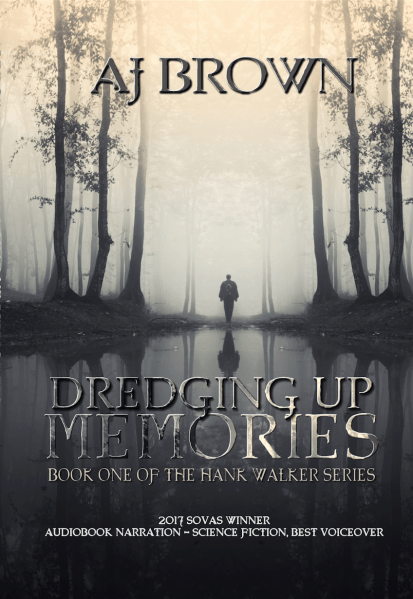
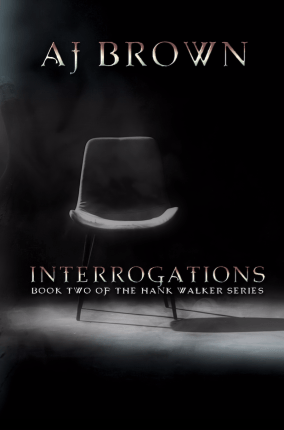
If you follow my work, you know who Hank Walker is. You’ve probably read Dredging Up Memories and possibly Interrogations. He’s a southern man trying to survive in the world of the dead, a world where most people he has come across have lost their minds. You also know there is a third book in the works, Eradication. 

Recently, I realized that over half of the third book in the Hank Walker saga needed to be scrapped. It was a deflating moment for me. However, I’ve been able to save quite a bit of words, including the ones below. This is, potentially, chapter 10 of Eradication. Do I think it will change between now and when the book is completed and when it actually goes to publication? Absolutely. Having said that, I think it gives a hint at a crucial element of Eradication and the arc of Hank Walker’s storyline. Can you figure out what that is?

If you are reading this on the day that I posted it, you may be wondering, why two posts in one day? Well, this is as much for me as it is for you. This is my kick in the behind to get this story finished so you, the readers, can see where Hank Walker is going.

I hope you enjoy this sneak peek into Eradication. 

__________

DUM NEW COVERHis stomach grumbled. Hank thought little of it. The feeling had come and gone plenty of times in the year since the world fell to the dead. When it came again, a gnawing pain came with it. Hank grimaced. Instinctively he hunched over. His face near the steering wheel, his eyes barely on the road, the truck swerved from one lane to the other. 

When the pain subsided, Hank eased back into the right lane. He didn’t think it mattered which side of the road he drove on. There weren’t many people left and the dead wouldn’t be driving. An absurd image popped in his head. It was of the seven biters walking along the highway a few days before. They were all piled in a dusty blue station wagon from the eighties. One of the four men was driving, while one of the women was in the front seat. Between them was the lone child—possibly a teenager. In the backseat, the other four adults scrunched together, with the lone woman almost sitting on the lap of one of the men. In the image he could see a hand between the knees of Lap Lady. It wasn’t sexual in nature, just dangling there, a place to be with no intent at all. 

The Dead Seven sang Ninety-Nine Bottles of Beer on the Wall, all of them off key. The girl laughed as young people would. The car swerved from side to side and the image changed. Instead of the Dead Seven riding along, merrily going about their business, Hank had the rifle trained on the driver’s head. He squeezed the trigger. Less than a second later, the bullet shattered the windshield and struck the driver in his left eye. The bullet exited his skull and struck the hand between the woman’s legs in the backseat.

“You got you a two-fer, Hank.”

Hank froze. He couldn’t move. He couldn’t look to his right where the voice came from. He knew the voice and the tone. He knew the excitement in it. He knew it didn’t sound quite right. 

The car swerved and the Dead Seven, now the Dead Six, screamed. The driver had tipped to the side, his head on the young girl’s shoulder. Her empty white eyes bulged and her mouth was open as wide as it could possibly go. The groan coming from it was loud and scared.

The car sped along the grass, the tires bumpety bumping along. Then the car hit a dip. The front end dug into the ground as the back end tipped up, then fell back down on its top. The windows exploded and the car flipped again, this time sideways. The woman in the backseat appeared in one of the side windows, her body halfway out of the car. She disappeared beneath the vehicle when it flipped again. The next time Hank saw her, she lay on the ground, nothing more than a squashed bug on concrete.

The girl in the front was no longer in her seat, but her head was plastered against the windshield. The three men in the backseat flopped around as the car flipped, end over end, several more times before it came to a stop on its wheels almost a hundred feet from the road. 

The Dead Seven were permanently dead, no longer roaming the world in search of fresh meals. 

“Hmm … looks like you got yourself a seven-fer, Hank,” the voice to his right said again. 

He didn’t want to look, but was helpless to stop himself. The scenery slowly changed from the smoking station wagon, to the interstate (where skid marks stretched thirty or so feet along the road just before the car hit grass), to the trees lining the other side of the interstate, to the edge of the overpass he stood on to the dead and sunken in features of his oldest brother, Lee. He smiled and a centipede crawled from between his rotting lips. 

Hank screamed and woke up. His knee struck the steering wheel of the truck. The horn gave a little beep when his hand hit it. He looked to his right, still believing Lee would be there, staring at him, a centipede crawling down his chin. But Lee wasn’t there. Only the dark of night surrounded him. He had pulled off the road and down a dirt path. Though he didn’t believe anyone else would be traveling that way, he didn’t want to take a chance of being discovered in the middle of the night. Not with all the crazies he ran into. And not while he slept.

A few drops of rain pattered the windshield. When was the last time it had rained? Hank couldn’t recall. The last time there was any precipitation of any kind was when it snowed and that was long in the past, faded like most memories. Yet, here he sat, watching as rain struck the windshield and listening as it pelted the truck’s top and hood and the bed.

Interrogations New Front Cover“Everything in the bed is going to be soaked,” he said and thought about getting out and trying to put as much in the cab as he could. Instead, he sat, watching as the rain came down harder.

His stomach grumbled. Hank turned the overhead light on and searched the cab for food. He found several bags of chips, a can of chili with a pop top and half a dozen bottles of water. He popped the top on the chili. The heavy aroma coming from it churned his stomach. In the past, he wouldn’t have thought about eating anything that made him almost gag just from the smell of it. But times were lean and food was at a premium. 

“Just a few bites,” he said and stuck his fingers into the cold chili. He barely had it to his mouth when his stomach cramped. He forgot about the food and pitched forward, his shoulder striking the steering wheel. The pain reminded him of his dream, of how sharp the pain had been in it and how quickly it shifted to the Dead Seven. The pain grew worse, cramping and pinching at his insides. He let out a moan as he clutched his stomach with both hands, the chili having fallen into his lap, the can having fell between his legs and rolled onto the floorboard. 

Hank got the door open, fell to the wet ground and vomited. The rain beat down on him, cooling his suddenly hot body. Spots filled his vision and he threw up a second time. When he was sure he wouldn’t throw up again, he dropped onto his side, his legs pulled up to his chest, not caring about the muddy ground he lay on, only relishing the icy cold rain. He closed his eyes and waited for the cramps to subside enough for him to stand. One hand went over his face. He felt weak and fear pushed into his mind. 

You need to get up, Hank, it whispered. You need to get up and get back in the truck.

“I can’t,” he said. Several rain drops landed in his mouth. It was like honey off the comb, sweet to the taste.

He lay there a while longer, his hand to his face, his body weak, stomach cramping. Before he realized it, Hank faded off to sleep. 

A.J.


Donate

If you’d like to donate a couple of bucks to a working author, it would be greatly appreciated.

$2.00

The Two

The Two

By A.J. Brown

The windshield wipers beat a rapid tattoo along the front glass, trying uselessly to keep up with the rain pouring down. It was a dark night, made darker by the clouds blocking out any moonlight. The road twisted and wound its way through trees on either side. Pot holes cratered the road every few feet, jarring the car all over the wet, slick pavement. 

“You took a wrong turn,” Marissa said. She stared out the front window while her right hand clutched tight to the door’s arm rest.

“I followed the directions,” Chet said, “at least until this storm hit and the GPS lost signal.”

“Then the directions are wrong. We’ve been driving down this road for miles, there is nothing out here. Turn around.”

“I can’t turn around, the road is too narrow, and the shoulder’s non-existent. If you haven’t noticed, water is covering the road and I don’t know if there are ditches on either side. If I try turning around we might get stuck, or worse.”

“Then, what’s your plan?”

He looked at her. Though the car was as dark inside as the world was outside, he could still see the side of her face, the silhouette on the backdrop of the passenger’s side window. “The road has to come out somewhere, right?”

Marissa’s eyes grew wide. Her right foot shot out in front of her, mashing an imaginary brake pedal. Her left hand clutched her seat. “Watch Out!” 

Chet slammed on the breaks and looked back to the road. The car slid and tires caught dirt and gravel. It went sideways and toward an unknown ditch or soft shoulder he couldn’t see. He jerked the steering wheel to his left. The car fishtailed then went sideways again before it came to a stop, somehow still in the road.  

For several long seconds both Chet and Marissa sat, not saying anything and holding their breaths. They both let the air flow from their lungs simultaneously, relaxing slightly.

“Oh my God,” Marissa cried when she looked out of her window.  “You almost hit them.”  

Hit what?”

“Those children,” she said, looking back at him. “Didn’t you see them?”

“No, I was …” He paused. How many times had she told him to keep his eyes on the road? How many times had he not listened and veered into other lanes? “I was trying to find a place to turn around when you screamed. I just reacted.” It was a partial lie, the only part being true was he reacted to her scream.

Chet looked at the road. The car had come to a stop facing the opposite direction they had been going. Any other time, he would have thought that was a good thing, but right then, he stared out the window, at the pouring rain beating on his car and the road and … and what he thought was a lump of something in the road. His skin prickled as he thought that lump could be kids. 

That’s impossible, he thought. Why would kids be in the middle of the road out here, in fricking Egypt?

“Chet, we need to check on them and make sure they are okay?”

“Are you sure that is a kid?”

Two kids, Chet. Two kids, and I am positive. I saw them while you were busy not looking at the road, again.”

“I was looking for a place to turn around,” he yelled.

“I’m sure you were.”

“Let’s just go,” Chet said and put the car into gear.

“Wait. What? You’re not going to check on those kids? Are you serious?”

“I don’t see any kids, Marissa.”

“They’re right there in the road, Chet. How can you not see them?”

“I don’t know what that is in the road, but it isn’t a couple of kids.”

“Look again.”

Chet did, straining his eyes, trying to see through the rain. He flicked the bright lights on and his breath caught in his throat.

“I can’t believe it.”

“I told you.”

“What are we going to do?”

“We need to help them, Chet.”

He licked his lips. He didn’t like the idea of getting out of the car in the storm, but Marissa was right. They had to help those two kids. 

Chet opened the door and wished he had thought to bring an umbrella with them, but it had been bright and sunny when they left home earlier. The rain soaked his left side even before he got out of the car and stared at the road. He was drenched within seconds, but it didn’t matter right then. Two small kids, the oldest maybe three and a girl, the youngest not even able to stand on its own and possibly a boy, were in the road.  The girl sat in the road, her legs crossed. She cradled the boy in her arms. They looked to be no more than 20 feet in front of the car, which didn’t seem possible to Chet—they had been a good sixty feet or so seconds earlier. At least, he thought they had been.

Marissa opened her door and stood, closing it gently. The little girl looked up at her with deep brown eyes filled with fear. Her long brown hair was flat and stuck to a face that appeared dirty, even in the rain. Her dress and shirt were tattered and clung to her body. The little boy wore a dirty one piece out fit that appeared too small for him.  

“Hey,” Marissa said as she walked slowly toward them. “Are you okay?”

“That’s kind of a dumb question, Honey,” Chet said, rounded the car and stood next to her. Even with the rain pouring down on them, they didn’t hurry, they didn’t risk the chance of startling them. ”What are we going to do?”

“We can’t leave them here,” Marissa responded. “I would hate myself if we just left them out here to die.”

“How do we get them in the car? They don’t know us. They might not go with us.”

girl-3813105_1920“Hold on,” Marissa said and squatted down. She waddled slowly to the little girl, stopping within an arm’s reach of her. The little girl didn’t flinch or attempt to move away.  She only looked up at her with those sad doe eyes that seemed to reflect in the glare of the headlights.

“Are you okay?” Marissa asked again.

The little girl shook her head.

“Is this your baby?”

She shook her head from side to side. 

“Is this your sibling?”

She nodded.

“Where’s your parents?”

There was no response this time.

“Do you have a mommy?”

Another simple nod.

“Do you know where she is?”

The little girl looked toward the woods, then back at Marissa. With one small hand she pointed at the trees.

“Your mommy is over there?”

A nod.

“Chet, can you—”

“Yeah, I’m on it,” Chet said. He didn’t want to be on it. He didn’t like the idea of walking into the woods at the whim of a creepy little girl. As far as he knew, her parents could be waiting in there to ambush him. They would kill him and kidnap Marissa. They would do all sorts of bad things to her before killing her and burying her in a shallow grave. 

Instead of going straight to the woods, he went back to the car. He popped the trunk and rummaged around the junk in there for a flash light and a weapon. He found a screw driver and picked it up. It might not be much, but it would work as a knife if he needed to.  He flicked on the flashlight and walked to the edge of the road and shined the light into the woods.  

Mostly, he saw trees and underbrush. The beam of light shone on a swath torn into the woods. Just beyond it was a battered car.

“Oh no,” he whispered. He glanced back at Marissa. She was still squatting in front of the two children. Chet stepped into the woods and carefully picked his way over broken tree limbs and flattened bushes. When he reached the car he turned the light to the driver’s side window.  His breath stuck in his lungs. A man and woman were in the front seat, their heads split open, the windshield shattered. The rain had washed a lot of the blood away, but he saw a clump of brain tissue and hair clinging to the windshield where the woman’s head and struck it. 

Chet shook his head and backed away as his stomach rumbled. For a few seconds, he thought he would throw up, but somehow managed not to. He stumbled back along the ruined foliage, slipping a couple of times in the mud but not tumbling to the ground. He left the trees behind and hurried to Marissa and the children.

“Did you find their mother?” Marissa asked.

He shook his head and said nothing at first. Finally, he said, “Their parents are … ummm … gone.”

“Gone?”

He nodded. “Dead.”

“Oh no.” It was hard to tell, but Chet thought tears had formed in Marissa’s green eyes. She wiped at them and turned back to the two children—the two orphans.

“Do you want to come with us?” she asked. “We’ll get you something to eat and clean you up and try to find some of your relatives.”

Again, the little girl nodded.  

“Can I take the baby?” Marissa asked.

The girl looked down at her brother, gave a quick nod, then held the child out to her. Marissa looked the baby in her arms, cradled him gently. 

“Come on,” Chet said, held his hands out to the little girl. She reached for him. Chet lifted the girl from the ground. She wrapped her arms around his neck.

“Everything’s going to be okay,” he said.

As they hurried back to the car, the little girl lifted her head and looked toward the woods where the car had caromed off the road. A smile creased her young face, revealing two sharp teeth.

__________

This is one of those stories that just kind of happened. An image popped into my head of a little girl sitting in the street, cross legged. In her arms was a baby boy. It was raining. From there the story kind of told itself. However, when I got to the end, the easy thing to do was create a happily ever after type of scenario. 

Come on. This is me we’re talking about. 

As I wrote the last part where Chet and Marissa pick up the two children and take them to the car, I saw the little girl smiling. Behind that smile were sharp teeth. I couldn’t pass on the opportunity to make the story just a little darker.

Are the two children vampires? Are they something else? Did they kill the couple in the car in the woods? Are they going to kill Chet and Marissa? I will leave that up to you.

I hope you enjoyed The Two, and please, leave a comment, share to your social media pages and like it as well. I thank you from the top of my heart.

A.J.


Donate

If you’d like to donate a couple of bucks to a working author, it would be greatly appreciated.

$2.00

Imprisoned (Free Fiction)

Imprisoned

A.J. Brown

Dim light shone through air holes in the dungeon’s ceiling. Vlad sat in one corner, the darkness concealing him from his prey. Shallow breaths escaped him occasionally, and he shivered in the cold, clenched his teeth to keep them from clattering.  

The roach appeared in the dusty light. Tentative steps from the shadows led to a quick dart across the room and back into the darkness.  

Vlad shifted his weight, lowering his body into a crouch. With eyes long adapted to the black of the tunnel, he followed the roach’s movements toward the crumbs of molded bread lying near him.  

Again, the roach crawled from the shadows, stopping in the center of a patch of light. It was large—a couple of inches long—its brown shell dirty; long antennae twitched, feeling its surroundings.

Vlad_Tepes_002“Come,” Vlad whispered, cupped and lowered his hands to mere inches above the ground.    

The roach scurried toward him, tickled Vlad’s big toe. Vlad’s breath caught, his skin tingled as the bug crawled beneath his hand. With a quick swipe, he scooped the insect up. It squirmed, legs tickling Vlad’s palm.  

“Little bug. I name you Matthias.”

The roach poked its head from between Vlad’s thumb and index finger. The once proud ruler laughed. “You can’t escape, Matthias. You have sinned against your king. For the crime of betrayal I sentence you to death by impalement.”

Vlad stood and hobbled to the corner closest to one of the air holes. He lifted one of the many slivers of wood he had pulled from the giant door that kept him from escaping.  

A crooked grin split his face as he drove the splinter into the roach’s abdomen. Its legs moved fast, as if running; antennae twitched and its cerci vibrated wildly. Vlad pushed the small stake in further. He imagined the bug screaming, begging for mercy. He chuckled in delight, his chest heaving with excitement.  

Vlad lowered the roach he named after the ruler who imprisoned him, made a hole in the dirt and set the stake’s edge into the ground. In the dim light of the dying sun, he sat, watching the bug—Matthias—twitch and writhe in agony. His eyes glazed over as he scanned the many insects and rats he had impaled, each one given the name of an enemy, each one having died slowly.

He leaned his head against the wall, his eyes fixed on the dying roach, his body quaking in something akin to ecstasy. 

Hours later sleep found him, cradled him in her arms and he dreamed … dreamed of thousands of crying, screaming boyers and princes, women and little children, all of them on stakes, all of them sliding, slowly to their deaths …

__________

Yes, I know this story is a bit twisted, but so was Vlad Dracul, better known as Vlad the Impaler. No, this is not a vampire story. There is no mention of Dracula or any of the legends and myths of him being a vampire. 

This story takes place during Dracul’s time in prison around 1462. He named the roach he caught after Matthias Corvinus, the man responsible for his capture and imprisonment. I thought it fitting that he impaled the bug on a splinter as a mode of twisted enjoyment and hopes that he would do the same thing to his captor one day.

I hope you enjoyed Imprisoned and I hope you like, share and comment on the post. Thank you for reading.

A.J.

Eating Dirt (Free Fiction)

Eating Dirt

A.J. Brown

The ground ate Ronald today.  He jumped from the tree we had climbed, landed on both feet and kept from tumbling to the ground by putting a hand on it to steady himself. 

“Your turn, Gordie,” he yelled up at me. 

I shook my head, not so certain jumping was a good idea. If I landed wrong, I could blow out my knee, break an ankle, or worse, smash my skull. 

“I … I can’t, Ronald. It’s too high, man.”

He laughed. “You’re kidding right, Gordie?”

I shook my head again. “No. It’s really high. I don’t think I can …

He gave me a boo-hoo and pretended to rub his eyes with his hands, “Quit your crying and jump, man.”

“I can’t.” I hated the whine in my voice. I hated feeling like a wimp. But that didn’t stop me from staying put where I was at in the tree, my butt perched against a thick limb, one hand hugging to the trunk.

“Don’t be a chicken, Gordie,” he yelled, as he craned his neck to look up at me. He clucked and strutted in a circle, fingers tucked in his armpits, elbows out and flapping. “Gordie is a chicken. Gordie is a chicken.”

Heat filled my face, shame filled my heart. “Am not.”

“Are too.”

autumn-351489_1920I started down, one foot on the branch beneath me, both arms holding the one I had been sitting on.


“Chickens don’t jump,” he yelled.

I tried not to listen, but he was right. It took all my courage to climb that high in the first place—heights and I never got along, but I had been afraid Ronald would pick on me, or maybe even beat me up if I didn’t climb the tree. He was mean like that. 

Looking down, my head swooned. I thought I would fall, strike a few limbs on the way down and break my head open. My heart fluttered and my stomach rolled. I grabbed a branch with one hand and wrapped my other arm around it.

“I’m not a chicken,” I yelled back, my voice shaky. “I’m just scared.”

“You’re a big, fat chicken,” Ronald yelled back as I lowered myself to the bottom limb. I was about to lower myself further so I could sit on it and drop to the ground from there. Still, breaking an ankle was possible even from only about six feet up. 

Then the ground shifted beneath him. It was like the earth moved under his feet. His eyes grew wide and he looked down. The grass parted and the ground opened up, sucking Ronald in to just below the knees. The ground closed just as quickly, like a teeth biting down on a piece of meat.

Ronald screamed.  

I screamed. 

From where I was in the tree it looked like Ronald had been pulled into the ground by some invisible mouth. I scampered back up the tree, one branch, a second one, third and fourth, until I was back up as high as I had ever been, gawking down as the ground ate Ronald.  By then, he was thigh deep in the shifting dirt and trying to grab a hold of anything to pull himself up.

“Gordie, help me!”

Too terrified to move, I could only watch. Blood appeared in the sand around his thighs and spread outward.

“Gordie, help me, please!”

Waist deep, Ronald reached out as far as he could, clawed at the ground. His hand sunk into the earth, followed by his arm up to his elbow. I climbed higher into the tree, height and I no longer bitter enemies. I closed my eyes and clutched tight to the tree with both arms as I stood on a branch I hoped would hold me.

Ronald’s screams echoed in my ears for several seconds. Then he went silent. I glanced down. Ronald was gone. A moment later, the ground burped. It’s the only thing that makes sense—an earthly burp. One of Ronald’s shoes popped up from the dirt and grass, the shoelace still knotted, a bloody sock lying limp inside it.

Now I sit high in this tree, the ground beneath me; Ronald’s shoe and sock taunting me. I know if I jump down and try to run, the earth will get me too, maybe not as quickly as it ate Ronald—it’s had a dog and two squirrels since then. Occasionally, it burps, the ground shakes and a bone or some fur pop out of the dirt. Then it settles down and waits.

I think I’ll stay here a while. Maybe the ground will go to sleep. Maybe I really am a chicken.

__________

Back in 2010 there was an anthology titled, The Elements of Horror. As the title suggest, all the stories had to be based on an element: Earth, air, fire, water and space. When I saw the call for submissions, I wanted to write a story based on each element. I thought it was plausible seeing how the word count was under 750 words per story. I ended up writing four pieces with the only element missing being space. Two of those pieces were published in the anthology, Eating Dirt being one of them.

I’ve since rewritten a couple of the stories, including the one you read here today. It’s short and simple and I hope you enjoyed Eating Dirt. Also, please comment on the post, like and share it to social media for me. I thank you from the top of my heart.

AJB

Everything I Am (Free Fiction)

Everything I Am

By A. J. Brown

“What can I give you that you don’t already have?” William asked. He stood in the white glow of a streetlamp. His body cast a black shadow at his feet that copied his arms out in frustration gesture. 

She stood in the darkness, outside the circle surrounding him. “Your heart,” she whispered, her voice a soft breeze in his ears. 

“My heart?”

“It’s all I ask.”

“It’s everything I am.”

“Then I want everything you are.”

His shoulders slumped. The shoulders of the shadow at his feet does the same thing. “Someone else already has it.”

“Yes,” she said, “The one who left you?”

William looked down at the shadow trailing from his feet. He nodded as tears slipped from his eyes. Then he turned and walked away. A moment later, the streetlamp winked out.

***

“Love is a treacherous thing,” William said into the empty glass in front of him. A scrim of froth clung to the bottom of it.

“What are you on about?” the bartender asked. He took the glass and replaced it with a full one.

William looked at the older man. He had a bald head, and gray hair in his ears. A dirty dishrag was slung over his shoulder. His white shirt had a stain just below the left breast pocket. It could have been ketchup from a burger eaten years earlier. It could have been blood.

“Love,” William said. “That’s what I’m on about.”

“A sticky subject there,” the old man said. He pulled the towel from his shoulder and wiped the bar between them.

“I guess so.”

“Broken hearted tonight?”

broken-154196_1280William shrugged. “Yeah.”

“Your girl leave you?”

William took a deep breath. Tears formed in his eyes. He swallowed the knot in his throat. “No. I mean, yes.”

The bartender slipped the dishrag onto his shoulder and put his hands on his wide hips. “Did she or didn’t she?”

William licked his lips, then wiped them. “It’s been months since she left.”

The bartender nodded. William picked up the glass and took several deep swallows. It was cold, but not refreshing.

“You need to move on, Mister,” the bartender said. “You only have one shot at this life. Mourning the loss of a relationship will only bring you down. Find another person to give your heart to.”

William laughed, a sound with no joy in it. “That’s the sad thing about all this.”

“What’s that?”

“I did find someone else.”

The old man smiled, showing he was missing one of his lower front teeth. “Then why are you here, drowning yourself in booze and not out with her?”

William ran a finger along the top of the glass several times before answering. “She wants my heart.”

“Everyone wants someone’s heart.”

“You ever give your heart away?” William asked, his finger still running the edge of the glass. 

“Once or twice, I reckon.”

“How’d it work out for you?”

The bartender shrugged, a simple up and down of the shoulders. “The first time, not so well. The second, well, we’re still together, so I guess that one turned out okay.”

“Second time was a charm?”

“You could say that.”

“I should probably leave now and go find her—the second woman, not the first—and give her what she wants?”

“What do you have to lose?”

“I don’t know.”

“Then, what are you waiting for? Give it to her. It’s not like it will kill you to do so.”

William stood and placed a ten on the bar. “Thanks for the ear, man.”

***

William heard her calling even before he made it to Itsover Lane. 

William, why won’t you come to me?

Her voice was haunting and hypnotizing, and was that desire he heard? He wasn’t sure—he hadn’t heard that tone from a woman in what felt like years. Still, he listened to the pull of her voice, to the seductive promise in it.

We can be together, forever, William. Just give me your heart.

William stepped into the road. Just as he did, the streetlamp came on, lighting up the spot where he stood. His shadow appeared at his feet.

“I’m here,” he said, a quiver in his voice.

You came back.

He nodded. 

Are you going to give me your heart, William?

“Yes,” he said and slipped the gun from his waistband. 

Just take my hand and I’ll take care of the rest, she whispered and stepped from the shadows. She wore a black robe with a hood that concealed her face. She stretched out a thin hand.

Tears fell from William’s eyes. His chest was heavy, and he was suddenly very tired. 

Do you give me your heart, William?

“Yes,” he said and took her hand. As he did so, he saw the blade in her hand … 

… and the gun went off.

A moment later, the streetlamp winked out.

________

So often my stories come from singular thoughts I have. In this case, an image of a man with his head down and tears in his eyes popped into my head. It was a black and white picture in my mind. He stood in a white circle, his shadow hooked to his heels. All around him the world was black. Reaching from the darkness was a thin female hand. It was like a comic strip image. Above his head was a thought bubble that simply read, What do you want from me? Another thought bubble appeared, and it read, Everything.

My brain spoke up with a question of its own. What is everything? Well, his heart, his love … his life. 

I sat and wrote Everything I Am that night. After I finished writing it, I realized the story wasn’t so much about love, but about desperation. So often love makes us do desperate things, things we wouldn’t normally do. In the case of William, there wasn’t another woman. He was still heartbroken because of the one who had left him. The other ‘woman’ who lurked in the shadows and had a thin, white hand and a black robe was the only way he believed he could get out of the depression and heartbreak: death. 

It’s a painful story. It’s a painful reminder of the power of love, and the ruin it can bring if things end in something other than happily ever after. 

I hope you enjoyed Everything I Am. If you did, please like the post and leave a comment letting me know you liked it. Also, please share this to your social media pages and help me get my stories out to other readers. Thank you for reading.

A.J.