Flecks of Dead Skin on a Landscape of Red (Free Fiction)

The day was warm and we walked, hand in hand, Kyra on my right, marveling at the window displays as we passed them; her mom, Kate, on my left. The park was down the road from us and Kyra carried a bag of breadcrumbs for the pigeons and squirrels. Still young and excitable, my daughter pointed out various clothes and articles in the window displays and asked to go in some of the stores as we passed them. Her mom smiled and pulled her into a boutique. I stayed outside.  

I crossed the street to where an ice cream vendor jingled a small bell on his cart and yelled about his fresh, hand churned frosted delights.  

“What’ll yah have, mister?” he asked in as charming a tone as his rustic voice allowed him. He was short and squat and had a head full of scraggly brown hair. His face was chubby and he was clean shaven. I thought the smooth face didn’t fit the rest of his rough exterior.

An old, worn poster board beside the cart held a wide variety of ice creams. As I tried to narrow down my selection, he rang his bell and yelled for folks to give his treats a try. 

“Can I get three single scoops of chocolate in cups?” I asked.

“Yah want three scoops in one cup?”

“No, sir. I want three cups with one scoop in each of them.”

He said nothing but gave a quick nod. As he leaned into his cart with a metal ice cream scoop the day took on a dusk feel, though it was barely eleven in the morning. I looked up. An odd sky hung above us, its blues traded for grays; its white clouds shifted into a hue of yellow. If the clouds would have been green I might have reacted quicker believing a tornado would be on us soon. But they were yellow, and an odd shade, almost deep enough to be a mustard color. 

The ice cream man mumbled something. He held the scooper in one hand and a bowl in the other. On the ground by his foot lay a scoop of chocolate ice cream.  

“That’s not right,” he said. But he wasn’t looking at the ice cream on the ground at his feet. He looked up at the sky. His mouth hung open and scooping out ice cream seemed to be the last thing on his mind.

“It’s the end of the world,” one man yelled. I didn’t know if he meant the dropped ice cream or the yellowed clouds above me. When I looked at him, it became obvious. He was older than me by a good fifteen years. His hair gray on the sides and still somewhat dark on top. He had a spotty beard that was full at the sideburns and chin, but sparse along his jawline. His red shirt looked too tight and his shorts seemed too loose. He pointed to the sky with one shaking hand. 

I guess that’s when people panicked. They hurried inside stores, fearful of a storm that was certainly brewing, leaving many of us still outside; still craning our necks to the unusual heavens. It didn’t look like a coming storm at all.  

I looked to the boutique, but didn’t see Kate or Kyra. I didn’t think they knew what was going on outside. I started to go inside and find them; hurry them along. As I walked toward the boutique I looked up again.

Soft purple rays of sunlight filtered through tiny breaks in the clouds. They sparkled like glitter as they cut through the thickening air. The beams shot through as if spotlights were switched on one at a time. Still, I looked on.

city apocalypseI’m not sure when the screams began, but I knew why they had.  People began floating upwards within the rays of the sun. They struggled and screamed and begged for help but what could we do? In seconds they were gone, so many of them all at once, disappearing into the clouds, their cries muffled, then falling silent.  

Murmurs ran through those of us still watching, even as others ran for shelter. It was an eerie moment. I looked from the sky to the buildings then back to the sky. More folks were sucked into the purple rays only to vanish seconds later. The thought of running into a building didn’t strike me as the safest thing. Standing outside also didn’t appeal to me, but at least I could run if I stayed outside. I looked to the boutique. My ladies stood at the glass. Like everyone else they looked to the sky.

The temperature dropped a few degrees, growing cool as I watched on. The flesh on my arms swam with chill bumps. A slight wind picked up and the clouds moved closer to us. The hair on my head blew with the breeze.  Other people headed inside, their whispers of fear carried away on the wind, never to touch my ears.  

My breath came out in a fine mist of white.  

Electricity filled the air and the hairs on my head and arms stood on end. My teeth vibrated. Others seemed to have the same issue. Brilliant shoots of green lightning streaked through the clouds. A low rumble followed and within seconds, the world shook with each bolt, with each thunderclap. It may not have looked like a storm was brewing, but one had arrived. 

I ducked, my hands went over my head, and I ran for the boutique. I reached the door and stopped. It looked too crowded in there. I motioned for Kate to come outside using two fingers as if they were walking. I pointed away from the storm. Kate shook her head and pointed to the sky. Her eyes were big and worried.

Others took to the indoors, leaving only a handful of us to continue without the safety of the modern world’s structures.  

From the yellowed clouds fell what looked like red snow. I put a hand out as it dropped all around me, getting on my clothes and skin and hair; sticking to the ground and soon to cover the world in red. The flakes splatter on my palm. It was rain, not snow. I looked around. Others were doing the same thing, holding their hands out and looking at the red drops of rain. As I stared on, the rain grew harder, soaking us. Red ran down the faces of those of us unlucky enough to still be outside. 

Mixed with the red are other colors, mostly tans and brown. These looked more like snowflakes and I pluck one of the larger pieces off my shirt. I held it in my open palm and stared at it until the wind picked it up and carried it off. Seconds later another one landed on me, then flitted away, fluttering in the increasing breeze.  

“This is—” I started.

“Skin!” Someone else finished. The woman held a piece a few inches wide. She dropped it to the ground as if a bug had crawled up her arm. She shook and jittered, then ran for one of the many stores nearby. But she couldn’t get inside—they were all too crowded, much like the boutique Kate and Kyra were in.

The few remaining sky watchers did the same, bolting toward buildings, their screams of the sky raining blood and snowing skin barely audible over the rumble of thunder and the howl of the wind.  

My hair whipped about my face and I stumbled forward, barely able to hold my ground against the onslaught of the growing windstorm. I peeled a piece of skin off my face, stared at it, then let it go. The growing blizzard of blood and skin picked up. The ground was covered in red. The skin dust blanketed the tops of cars and buildings and benches that lined the street.  

I wondered if this was some type of celestial joke, the world being washed in blood and skin. Then I realized the one man was right. It was the end of the world and we were all going to face it.

Fear seized my heart and my soul screamed for me to run. Panic welled up in me and my muscles twitched with adrenaline. As the world fell before me I knew there was no chance to escape the wrath of Mother Nature or Father Time or a Deity in the heavens we have angered by standing pat and not fleeing the situation. I headed for the boutique, my heart thumping, my skin freezing and the remains of those lifted to the sky earlier falling down around me, on me. 

I tapped on the glass. Kate s stared at me, her eyes full of fear. She mouthed something and motioned for me to get inside. I shook my head and point up the road. I yelled that the store is too packed for me and for us to run.  

The buildings in the distance began to crumble as the clouds turned from yellow to purple and beyond that, black. They shook on their foundations. One after another, they fell to the ground, taking with them those who sought shelter, who thought sanctity was within the walls that we had built. People, many of which appeared to be dead, rose into the sky, pulled along by the beams still poking through the clouds.  

The storm grew heavier. People ran from the coming rage and collapsing buildings. Beyond them the world was dying as electricity danced along the wires. Water and sewage shot from hydrants and manholes and into the air and soaking the world with sludge that mixed with the blood and skin of the dead.  

Those who saw buildings collapse ran from the structures they had hid in. Some of them were sucked into the light, their screams echoed in the beams, their eyes wide, and their hands and legs flailing weightlessly, until they disappeared into the clouds and the blizzard became increasingly violent. I stumbled backward with a strong gust of wind. The blood was at my ankles and rising. The frigid air enveloped me and my once white plumes of breath were tinted pink.

Flakes of thick skin pelted down like ice from the sky. Bits of bone splash in the blood and on the hard surfaces of cars.

“Kate! Kyra, come on!” They were trapped in the mass of terrified people. I grabbed the door and yanked on it. Someone yelled for me to close it, but it wouldn’t shut. The wind pulled it from its hinges and it smashed against the wall of the next store. Glass shattered and the aluminum frame bent and snapped off. They became like spears and the wind tossed them about and cut through several people as they ran, splitting them in half.

Not far from me were the beams of light from a sun I will never see again. Somehow the rays penetrated the clouds. A luminous shaft of light struck down in front of me. To my left the buildings shuttered before collapsing and the people who managed to escape were rising into the air.  

To my right people pushed their way out of the boutique. The window cracked, then shattered. Several people fell through the hole and lay dead or dying on the ground as others trampled them. I saw my girls running. Kyra dropped her bag of crumbled bread.

“Run!” It’s all I could say as the beams of light raced for them. I tried to catch up to them, but they were lifted in the air. I heard Kyra’s screams. Kate looked down, her hands outstretched and her eyes begging me to help them.  

“Kate!” I yell as they rose higher and higher into the sky. “Kyra!”  

Then …

They were gone. 

I dropped to my knees and the sting of icy tears burned my eyes. I cried out and yelled at the top of my lungs. My heart cracked, then broke in half. I shivered as I sat there in a puddle made of dead people. More flecks of skin and hail made of bone pelted down on me. I caught a piece of light-colored skin stared at it, wondering if it belonged to my little Kyra.  

Moments earlier, I wanted to run, to escape the catastrophe before me though I knew it was probably futile. But without my girls I can’t bring myself to flee. Instead, I stand and face the ray moving toward me.  

The light is brilliant. It will engulf me with its soft purple aura and I will leave the ground. Weightlessness will probably fill me. The world cracks and crumbles around me. There is darkness behind the storm and there is nothing from where it came. A cosmic void awaits what’s left of the world.  

I look to the intense clouds. The lightning streaks and thunder shakes the world. The ray is on top of me. I close my eyes and hope for a quick death.

__________

This is one of those stories where I had a title pop into my head and the story followed after. The original version was significantly shorter and poorly written and not thought out that well. This version, though quick with a horrific ending, I wanted to leave open ended. In my head (and yours too after reading this, if you got to this point) I could see the narrator surviving with the end of the world fizzling out before it actually sucked him up and spat him out in the form of blood, skin and fragmented bone particles. The torment in such a scenario would be horrific in and of itself.

I hope you enjoyed Flecks of Dead Skin on a Landscape of Red. If you did, do you mind sharing this post on your social media or telling your friends to come on over to Type AJ Negative and read a few of my stories? I appreciate it more than you will know.

A.J.


Courage (Free Fiction)

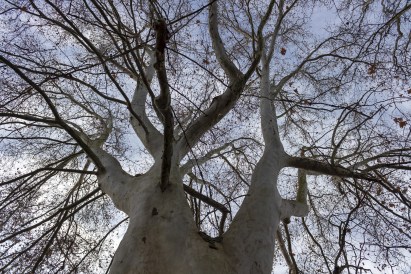
Beneath the Sycamore Tree

A.J. Brown

I told Cassie I loved her as I pushed her on the swing that hung down from the tall sycamore at the edge of the field behind my parents’ house. There was a pond not too far away where fishing was good and swimming in the summertime was a rite of passage. It was the perfect scene for any kid growing up in the south.

“What?” she asked and brought the swing to an abrupt stop, her feet kicking up dust as they dragged the ground beneath her. She looked at me with her crystal blue eyes, her head cocked slightly to the side, her light brown ponytail dangling. “What did you say?”

A lump caught in my throat, my palms began to sweat, and tears formed in my eyes. My chest swelled with fear. “I said I love you.”

She nodded as if satisfied, turned around, and placed both hands on the ropes of the swing. “Okay. You can push me again.”

I stood there for a moment, not sure what to do; not sure I liked or disliked her reaction. I had expected more. Like maybe Cassie hopping off the swing, hugging me, and saying she loved me. Leaning forward, I placed my hands on the small of her back and pushed.

I was eight. It was the first—and only—time in my life I knew love and how strong it could be.

She left my house that afternoon, skipping the way she always did, her ponytail swishing from side to side. At the end of the driveway, she turned, cupped her hands to her mouth. “I love you, too, Joshua Turner.”

It was the single greatest moment of my life.

Three days later Cassie was dead, her mangled body found on the other side of our property, not far from Grover’s Pond. Momma told me someone had done something bad to her but didn’t go into details. The truth is—and I found this out some time later—some pervert grabbed her on the way home from Mr. Hartnell’s grocery store the day after our conversation and raped her. He couldn’t leave it at that—violating her and taking her innocence away. He stabbed her sixteen times. I won’t go into the details of where several of the wounds were. You can figure it out on your own.

Cassie—my Cassie—was gone forever.

So, I thought.

I sat at the base of the sycamore the morning after her funeral, head in my hands, tears streaming down my face, heart broken into a million tiny pieces. A picture of her lay between my feet—I stole it off a collage her parents had made for the funeral. She smiled big in the photo, her eyes shining, her hair pulled back in the ponytail she so loved. The sun beat down on the world, promising another hot summer day. My eyes were puffy, and I wiped away a snot runner. I kept hearing her voice in my head.

I love you, too, Joshua Turner.

I guess as far as last words to hear from someone, those were the best types.

Taking a deep breath, I looked up. The swing swayed forward, hung in the air for a second, swayed back. My skin swam with goose bumps and a cold chill came over me. The swing repeated the process.

Before you say it was just the wind, which I’m sure some folks believe, there was no wind. It was as dry and still as any day could be.

I stood. My legs were weak and threatened to collapse beneath me. My hands shook. The swing pushed forward again, then stopped. The branch that held it creaked. Then the swing turned sideways, as if someone were sitting on it and looking back at me.

I inched away, each step taking me further from the tree. The swing dropped back to its normal position. I turned to run and only made it a few steps before I heard her voice.

Don’t leave.

Remember, I was eight. I was terrified. I knew what I heard and who it sounded like, but it was impossible. Still, her voice stopped me, and I couldn’t have run away if the devil were standing in front of me.

“Who’s there?” My voice cracked.

Don’t leave me, Joshua.

My bladder felt heavy. “Cassie?”

Joshua.

My mouth became dry. “Where are you, Cassie?”

I don’t know. I’m scared, Joshua.

sycamore-tree-4704744_1920I shook my head and pinched my arm, hoping to wake from the nightmare. I winced at the sharp pain. 

“Cassie, can you see me?”

Yes. Can you see me?

“No.”

Silence followed.

She had to be thinking. I could almost see her head cocked to the side, her ponytail dangling, her blue eyes clouded by thought. Why couldn’t I see her? She could see me. She said as much. So why couldn’t I see her? She had to be wondering the same thing.

“Cassie,” I hesitated. “You’re dead.”

Who knew ghosts could cry? Her sobs echoed all around me. The sycamore tree’s branches shook. Some of the leaves pulled free and fell to the ground as if they were green stars dropping from high in the sky. The water in the pond rippled away from the shoreline. I pictured her dropping to her knees, her face covered by her hands, shoulders heaving up and down.

“Cassie?”

I went to the swing, my legs still weak and my insides buzzing. It was much cooler by the swing. I reached for the rope, slid my hand down to where I thought her hand might be. Fingers. I felt her fingers gripping tight to the rope. In that instant I saw her. She faced me, her legs bent in at the knees. One of her shoes was missing. I saw the many stab wounds, her torn dress and bruised face; her split lip; the tears in her eyes. She released the rope, took my hand, and opened her mouth to speak, but said nothing. Instead, she stood and embraced me, putting her head on my chest. I shivered, and my teeth clacked together as her cold body clung to mine. Then I was pulled into her world, her final few minutes of life. She barely saw the man who grabbed her, catching only a glimpse of jeans and old brown work boots before a potato sack was shoved over her head. He dragged her down to Grover’s Pond, Cassie kicking and screaming until he leveled a heavy hand to the side of her head. The rest, the pain, the fear, the very life bleeding from her, I endured as well. I couldn’t pull free and I couldn’t scream. I could only feel.

Then, as if she knew I couldn’t take anymore, she released me.

I fell to my knees. Freezing and scared, I crawled a few feet away, then vomited. Dropping onto my back, I tried to regain some sense of where I was, who I was. Cassie knelt beside me. Her body was a mutilated mass of flesh and torn clothing, but her eyes—even the one swollen badly from a punch to the face, the same punch that had split her lip and broken her nose—held the beauty I had fallen in love with before she died.

I tried to sit up but couldn’t. After several minutes of a silence between us that felt too heavy to bear, I managed to roll over and get to my knees.

“Do you know who killed you?” I asked between deep breaths.

No.

“I’m going to find out.”

How?

“I don’t know.”

It was the truth. I had no clue how I would find her killer, just that I had to, that no one else would be able to.

The next few weeks I spent looking at people’s feet, hoping to catch a glimpse of badly scuffed brown work boots. When I wasn’t searching for her killer, I spent as much time by the sycamore tree as I could. Cassie sat on the swing and I watched it sway forward then back. A couple of times I asked her to take me there, to take me to her last moments again. I felt bad for asking her to do this—she had to relive it so I could be there, so I could try and see something different, or so I could remember those boots. Each time I threw up after revisiting the horror, after seeing the girl I loved raped and murdered.

And each time she pulled away a little more, as if I were killing her all over again.

Almost a year into my investigation, I found her killer. Tommy Tillman—the deputy sheriff. He was young, not even in his thirties at the time.

I found out by accident.

Back then our little town had donation drives for the police department. It was nothing more than canvassing neighborhoods, Jehovah Witness style, but instead of tracts about their religion, the adults received donation cards, and sticker badges were given to the kids. Sometimes they came around in their uniforms, but more often than not, they showed up in normal, everyday clothes. This was done to give the impression the cops in our town were normal, everyday folks, like you and me and Mom and Dad and Grandma across the river and Uncle Earl down at the bar. If people believed the police were no different than anyone else, then they would be willing to give more. It was a trick that worked. Heck, one year Bobbie Joe down on the farm not too far from us cracked open her piggy bank and gave them every penny she had saved up that year.

Tommy Tillman and one of the other deputies—I forget his name—knocked on our door one Saturday morning. Cartoons were on and Dad had let me skirt my chores until later that day. I don’t really remember what I had been doing or thinking, but I remember Momma saying ‘hello’ in her most polite way possible. I got up and walked to the door. She didn’t try to block my view when I stuck my head between her arm and waist. Officer Tillman was there with his best salesman smile on. And that other guy was right there with him, pitching their ‘give to the police of your town’ spill in his best ‘awe shucks’ manner.

I don’t know why I looked down at their feet. They were the law—I had no reason to suspect them of anything. They were supposed to protect us, not hurt us. I glanced down and saw those brown scuffed boots at the end of a pair of blue jean cuffs. Right then there was nothing else in the world. Momma was gone. The house was gone. The other cop was gone. The coming summer was a myth, and I swear, the world could have ended right then and I wouldn’t have known it. I looked up, following the blue jean pants and white T-shirt up to Tillman’s toothy smiling face.

“What’s wrong, kid?” he asked, that salesman voice still trying to make the politician’s pitch. “You look like you saw a ghost or something?”

I shook my head, pulled free of Momma’s arm and backed away. I stumbled, caught myself. I tried not to run, but by the time I was at the bottom of the steps leading to the second floor, I was in full sprint.

I went to bed early that night, telling Momma I wasn’t feeling so good. She checked my temperature, said I felt cold to her. Of course, I did—I had found Cassie’s murderer and there was nothing I could do about it. Contacting the police would do no good. Telling my parents? I thought about it. They wouldn’t have believed me. How many adults actually believe their kids about these types of things? Back then, not many. Instead, I kept an eye on Tillman, watching to see if he would strike again. During that time he didn’t, and Cassie’s death appeared like a random murder. That’s probably how Tillman wanted it to appear.

Dad died two years after Cassie. Mom moved us away, closer to her family in Nebraska. Years passed and seven other little girls, around the ages of eight to twelve, disappeared from around my hometown in the south. None of them were found. I knew who had taken these girls, and more importantly, I knew they were all probably dead. I didn’t find all of this out until I left home at eighteen and headed for a small college in South Carolina—less than a hundred miles from where I had spent the first eleven years of my life.

We still owned the old house and farm, but time and the elements had worn it down. Windows were broken, and a wino had moved in. The inside was a wreck.

Down at the sycamore tree, the rope that had once held the swing was frayed and the swing itself was missing. I got on my hands and knees, searched through the decaying leaves and found it not too far from the base of the tree itself. It was wet, but still solid enough to hold in my hands without it crumbling, to hold close to my heart.

“Cassie?”

I waited, repeated her name and listened. My heart sank. That familiar broken feeling crept into my chest. I had been away too long. She was gone.

Joshua?

Like the first time I heard her voice after her death, I almost ran away, not believing what I heard. At the same time, I thought it was just my desire to see her, to believe she was still there. My emotions ramped up.

Then it came again, soft and hollow, like an echo. Joshua.

My heart lifted.

“Cassie?”

You came back.

“Of course, I did—I never wanted to leave.”

I’ve missed you, Joshua.

The frayed rope swung slightly. I reached out, grabbed it. I saw her. She was still eight, still had that shredded dress on and all those stab wounds. I hadn’t expected that. To be honest, I don’t know what I expected. She died when she was eight. It’s not like she could have aged as a ghost, but part of me thought she would have been the same age as me. It was a ridiculous notion. The dead don’t age a day after they die.

“I’ve missed you too, Cassie,” I said, paused and then blurted out the only thing I knew to say. “I know who killed you.”

You do?

“Yes—and its time he got punished.”

We talked for a while, me and the ghost of the girl I still loved. Then I went back up to the house. The interior was wrecked worse than I thought it was and the remnants of where the bum had slept at one time remained in the corner near the back door. I searched the house, found it empty.

Instead of waiting for the homeless person to come back, I called the police from my cell phone, told them I wanted to speak to the sheriff. Turns out the sheriff was Tillman. An hour later, he met me on the front porch of my childhood home.

“What’s all this about, Mister …?”

“There’s a bum inside my house.”

“This is your home?” Tillman raised an eyebrow. He had changed some during the eight years since I had last seen him. His hair was still dark, but he wasn’t as lean as he had been—good eating had filled his body out. He didn’t wear his sheriff’s badge prominently on his shirt like I thought he would, and he certainly didn’t flash that car salesman’s smile.

“It belongs to my family,” I said. “I want the bum gone.”

“When was the last time anyone lived here?”

“Does it matter?”

“No, I reckon not.”

Tillman walked inside, his thumbs tucked in his belt loops as if he were going to just stroll on in there and have a word of peace with some drunk and that would be that.

“There’s no one here,” he said after searching the house.

“Maybe he went out the backdoor when he heard you pull up.”

He gave me a curious look, a suspicious look. “You said he was in the house.”

“He was, but he might have gone around back.”

Tillman made his way outside and down the steps. He turned around in a half circle, scanning the yard or maybe just appearing like he was. His hands went into the air and he was about to say something when I yelled.

“Over there. He ran behind the sycamore tree.”

“What? Where?”

“The sycamore tree. He ran behind it. I just saw him.”

Some things in life I’ve never been good at: Math. I hated the subject growing up and barely passed every math class I was ever in. Social gatherings. I’ve always been somewhat of a loner. Affection. I’ve only told one person other than my mom that I loved her, and she was dead. Lying. I’m just not good at it. And I think Sheriff Tillman saw right through my attempt at getting him out to the sycamore tree.

If he knew, he didn’t completely let on. He walked slowly out that way, through the tall grass and unleveled ground. He neared the sycamore tree where a picture had been nailed to it. He yanked the photo free.

“Recognize her?” I asked.

He glanced toward me as I swung at him. I caught him below the left ear. He fell to the ground, rolled onto his feet and into a crouch. He drew his revolver, aimed at me. “What do you think you’re doing, boy?”

“Her name was Cassie. You murdered her eleven years ago.”

“I don’t know what you’re talking about, punk, but you’re under arrest for assaulting a police officer.” He spoke the typical cop words in the typical attempt at intimidating me. 

“The other girls—you murdered them, too, didn’t you?”

Full recognition dawned on Tillman’s face. His eyes grew slightly bigger than normal, and then he squinted. A smile—yes, the same smile he used on women to get them to donate money to the police department—appeared on his face. He laughed. “You think you’re smart, kid?”

I shrugged. I don’t know what I was thinking not having a weapon with me. Maybe I thought love would protect me. Maybe I thought I was tougher than I really was. Tillman pointed his gun at me, pulled the trigger. The bullet tore through my shoulder socket, shattering bone and coming out my back. I fell to the ground, blood seeping into the hot earth. Tillman’s shadow loomed over me, the sun behind him. Shading my eyes I saw the revolver a couple of feet from my head. I was going to die, and I was okay with that. Then I could be with Cassie again. For a brief second, I hoped I would be eight as a ghost and not eighteen.

No!

Startled, Tillman spun around. I didn’t see her as clearly as I had before, but Cassie was there, a blur of gray and white. She rushed at him, sinking both of her ghostly hands into his ribs. Tillman fired several times, the bullets striking the ground near his feet but doing no damage to Cassie. His mouth dropped open and his eyes—full of amusement earlier—grew wide in fear. I hope it was the same fear Cassie had felt as he raped and then stabbed her to death.

She held him there as his body shook. Another round was fired from his gun. I think he tried to scream, but nothing came out. Cassie did scream, her voice the same hollow sound, but so much louder, as if there was a microphone to her mouth. Her hands stayed buried in his ribs until his face turned blue and he collapsed, dead at her feet.

Somehow, love did protect me.

I dropped my head to the ground and closed my eyes. I welcomed a death that never came. Instead, I heard Cassie crying for several seconds before the sound faded. I opened my eyes and caught a glimpse of tears in her eyes before she vanished.

Folks around here say Tillman up and left. Turns out another cop had the same suspicions I did and had gathered enough evidence to prove the things he had done. It was enough in the eyes of the townspeople to believe he was guilty even though they haven’t seen him since.

That was nearly four years ago.

I have since moved back into the old family home and have been renovating it the best I can. I hung the swing from the same branch it used to be on. Each day I walk out to the sycamore tree and sit in the shade. I call for Cassie, but she’s gone, this time probably forever. I hope I’m wrong. I hope one day the swing will sway again; that I’ll hear her voice, and maybe, she’ll tell me she loves me one more time.

__________

A prompt-based contest story. The original version was much shorter than the one here. Sadly, I can’t recall what the prompt was, but I can say with certainty the story won that particular challenge.

It originally appeared on the now defunct House of Horrors website back in November of 2009. It can also be found in the short story collection, Southern Bones.

If you enjoyed Beneath the Sycamore Tree, please share this post to your social media pages and help me spread my stories to the world. Thank you, in advance!

She Had Fangs (Free Fiction)

She Had Fangs

A.J. Brown

She had fangs. I noticed them when she smiled at Billy from across the bar. 

“Yo, you see that?” Billy asked after slapping my arm. His eyes, that had been dulled by alcohol a few seconds earlier, lit up with possibility. “She wants me, Jordy.”

“Are you sure about that?” 

“She smiled at me, man, and I know that type of smile.”

“Really?”

“Yeah, that’s a woman who wants a man, and I’m that man.”

“Did you see her teeth?”

“Oh, I saw them, Jordy. Teeth like that can …”

“Teeth like that can what?” the woman said, her voice soft and sultry and inviting.

We both jerked our heads toward her. I don’t know about Billy, but I didn’t hear her walk up. I didn’t even feel her there until she spoke. 

“Umm …  umm …” Billy stammered. I understood why. From a distance she was attractive and sexy—a trick alcohol often played on your mind. Up close, she was breathtaking. Her skin was pale, and against the backdrop of the dimly lit bar, it almost glowed. Her blue eyes were almost a smokey gray and her lips were full and smooth and kissable. She wasn’t petite, but had more of a full figure, one that Marilyn Monroe would have been envious of, and her green dress clung to every Monroe-like curve.

“Would you like to find out what these teeth can do?” she asked Billy. One of her hands touched his chest, the nails on the long fingers painted a dark shade of purple. 

“I’d love to know what those teeth can do.” He had a stupid smile on his face, showing off his yellow stained teeth. 

Vampire 2She took his hand, pulled him from the bar and pressed her body against him. Their lips touched and she kissed him for several long seconds. I’m not going to lie and say I felt a little jealous. I didn’t. I was a lot jealous. My chest tightened as I watched her kiss that bum, Billy, a womanizer if there ever was one. He would bed her, thank her, maybe even drop a twenty on her nightstand, get dressed and leave her in the bed wondering how she managed to let him in her life. Then he would come back to the bar and talk about his conquest. I hated him.


“Come on,” she said and led Billy through the bar and toward the back door. A moment later, they were out the door and into the night.

I sat at the bar, beer in hand, shaking my head. What did she see in him? How could she even want him? Billy didn’t even like curvier girls, preferring the taller, thinner ones. I took a swallow of my beer. It tasted stale. I set the glass on the bar and dropped a five beside it. I lifted my hand to order another one, then stopped. Her teeth … they had been long and sharp, as if she had fangs.

I stood fast. The stool shot from beneath me and clattered on the hardwood floor. The barkeep said something, but I missed it. I made my way through the bar and out the back door. 

The air gripped me in its cool embrace, just as she gripped Billy in her pale arms. I felt the chill run up my spine, but a heat stir below my belt. She had Billy pinned to the wall, her mouth buried in his neck. Billy’s eyes were glazed over and his mouth hung open. The palms of his hands were flat on the red brick wall. 

“Hey!” I yelled.

Her head lifted up and she stared at me. Blood dribbled down her chin and landed on her dress. My breath caught and that heat grew more intense; my jealousy skyrocketed. 

She grabbed him by the hair with one hand and smiled at me. “Do you want some?”

I nodded. It was as if I was hypnotized by the scene in front of me. 

“Come and get some, then.”

I walked toward her, my feet not quite dragging on the ground, but not being picked up and put back down either. I reached them in seconds. She smiled. I smiled back. She turned Billy’s neck, showing me where she had bitten him. I lowered my mouth to his wound and drank.

She had fangs. So did I.

AJB

__________

I don’t write many vampire stories. When I started writing vampires were the subject matter I liked the most. However, vampires with feelings and sparkly vampires kind of ruined them for me. I hadn’t written a vampire piece in over fifteen years when this little idea came to mind. I don’t know if I will write many more fanged stories, but I kind of enjoyed this quick piece.

If you enjoyed She Had Fangs, please like, comment and share on social media so others can read it. I truly appreciate it.

A Conversation With Pete Molnar

Writing horror is not easy. Sure, it sounds like it should be, but good horror is difficult. It’s not about shock and gore and gimmicks. It’s not about grossing people out with a million different ways to kill someone. True horror, at its core, is not even about monsters that go bump in the night. It’s about making people feel something. Something like dread, fear or uneasiness about what they are reading. Its the squirming sensation you get when you think of getting a shot at the doctor’s office or when a bug crawls onto your foot.It’s the heebee jeebies, baby.

PeteI guess you could say life, in and of itself, is horror. After all, some of the things people do to each other is far worse than anything a writer can conjure up. One such story is Broken Birds, by Pete Molnar. In his debut novel, Molnar delivers punch after punch in a story that feels all too real. 

I had a chance to meet Pete at Scares That Cares 6 over the first weekend in August. He is too humble and often doesn’t give himself the credit he deserves. I also got to listen to him do a reading from Broken Birds. That reading was powerful, engaging and cringe-worthy in all the right ways. 

I sat down to talk with Pete recently. Here is what he had to say.

A.J.: First things first: why horror?

Pete: I read Pet Sematary when I was twelve while on vacation in Disneyworld with my family. The book scared me so much I don’t remember much of the trip because I was so preoccupied with holding myself together. Mickey Mouse didn’t phase me, but reading that book changed the trajectory of my life. I knew I wanted to evoke the same kind of fear and terror in another person with something I’d write and I’ve been striving towards that ever since. Then, there is the fact I have been battling depression and social anxiety for much of my adult life. I greatly fear death and dread losing the ones I love, almost on an irrational level. Confronting my own fears and phobias (and they are Legion) through writing horror stories is therapeutic and when its is going well, quite cathartic.

A.J.: Pete, when you set out to write Broken Birds, did you know exactly where the story was going or did you say a prayer and wing it?

1438845475Pete: I started out writing as a “pantser” because I had read Stephen King writes that way. It was a mistake to have stuck to that approach for so long and for such a simplistic reason. Then I signed up for James Patterson’s Masterclass. Drafting a “flexible outline” had confounded me for the longest time, until Patterson laid it out in plain language and broke it down into something less intimidating for me. I am now a sworn “plotter” after having written three previous novels the other way, and Broken Birds was the first novel I wrote using an outline. I used to think using an outline would rob the writer of the magical experience of telling the story to themselves. Now, I swear by this approach, because even with an outline, characters are still going to do whatever they want and they’re going to surprise you no matter what.

A.J.: Some people love animals more than they love people (understandably so). Are you one of these people? If so, did that make writing certain scenes in Broken Birds difficult?

Pete: At first, I was really concerned that the treatment of animals in Broken Birds would turn readers off. Not to mention, the scenes that feature animal abuse were very difficult to write and I almost abandoned the project as a result. Then I realized I was not merely writing a novel about hurting animals, as much as I was writing a testament to the bond between humans and their pets. Will Bentley sacrifices everything to save his dog, Alberta. This is a guy who demonstrates how much his pet means to him, so much so he is willing to put his own life in danger and turn his seemingly idyllic existence upside down to save his dog from the clutches of two twisted, sociopathic people.  

A.J.: Are any of the characters based (loosely or solely) on people you have met?

Pete: I can tell you Will’s girlfriend, Mina, as she is described, is my wife. Dark hair. Light eyes. A book-lover and a deep-thinker. Karl Tarlick is a composite of Charles Manson and Gary Heidnik, a serial killer who created a “real-life” House of Horrors in his Philadelphia rowhome. Will Bentley is modeled after Tim O’Brien, who wrote the critically-acclaimed war memoir The Things They Carried. I’m thankful I’ve never met a woman like Stella or Jack Post, but they are both sides of the Battered Woman-Battering Man coin. I conducted hours of research on this disconcerting and baffling relationship, as well as the phenomenons of agoraphobia and borderline-disorder to flesh out Stella especially.   

A.J.: After writing Broken Birds, did you intend to get it published or did you have help deciding it was worth the shot?

Pete: This was the book I shared with Lisa Vasquez during my mentorship with her. She offered a great deal of encouragement and guidance during the novel’s early chapters. I really put my heart and soul into this book, because I didn’t want to see another full-length novel doomed to imprisonment on my hard drive. I wanted this one to see the light of day and I wanted it to be worthy of publication. Lisa must have seen something of merit in the early stages of the book because she invited me to become a VIP author at Stitched Smile Publications. Prayers answered!

A.J.: How did you find your publisher, Stitched Smile Publications?

Pete: I signed up for the Horror Writers Association Mentorship Program and Lisa Vasquez reached out to me shortly thereafter. She took me under her wing, teaching me the in’s and out’s of marketing and the business of writing. She also offered me invaluable advice and regular critiques of Broken Birds, chapter by chapter. Stitched Smile scooped me up at a time in my life when I had nearly come to terms with the prospect I would never land a publisher or an agent. I had queried roughly eighty agents to no avail for my previous novel The Clockwork Lazarus. It was a tough time, and SSP delivered me from what might have been a lifetime of regret.

A.J.: What was the publishing process like for you, the writer? On the same token, what was it like for you, the person?

Pete: As a writer, the publishing process was as exciting as it was an education. The editorial staff at Stitched Smile made numerous passes through the book and eliminated the weaknesses I had missed during my own three passes. Inconsistencies and grammar mistakes that I believe would have slipped through at many other presses. Their attention to detail was laser-focused. As a person, the journey from draft to finished, packaged novel was pretty magical, and to this day when I see my book lying on a dresser or see my wife reading it, I have to take a second look. It’s so surreal.    

A.J.: Did I hear correctly, that Broken Birds was not the original title?

Pete: That’s true. Originally, the book was titled Moonshadow after the Cat Stevens song. When I imagined how Karl Tarlick, the main antagonist in the book, would look, for some reason Cat Stevens just popped into my head. Long, black hair in thick ringlets that frame and nearly close over his face like curtains. Then, I researched the lyrics to some of Cat Stevens’ songs and stumbled across the lyrics to Moonshadow. When I read them, they seemed to fit the context of who Karl Tarlick is way too perfectly. The lyrics bore a sinister tone, like the song was written by a stalker. 

A.J.: Why did you change the title?

Pete: As I kept writing, I realized the title should be changed to Broken Birds. This was for  two reasons. The first being the psychological phenomenon of “broken bird syndrome” is front and center in the novel’s plot line. But also, I noticed a symbolic thread running through the story itself. That all the main characters are broken in some way. Psychologically damaged and dealing with it as only they know how. In a productive way, or, well, not so productive. I’ll say that. 

A.J.: You went to Scares That Cares 6 this year. What was that experience like for you?

Pete: My first night there, my head was on a swivel. One minute, I’m walking past Sid Haig, and the next I see Josh Malerman a few feet away signing books. Paul Tremblay. Jonathan Maberry. Then there was the fact I was finally able to meet my Stitched family in person. Up until that event, I’d only ever communicated with Lisa, Donelle, Larissa, Deanna, Tara, and yourself through group chat, DM, or Hangouts. I was so thrilled to meet everyone in person and the click was immediate.  

A.J.: If I’m correct, you sold out of your books. How did that make you feel?

Pete: Pleasantly surprised doesn’t even cover it. I had expected to be bringing many of them home with me to sell around my neck of the woods. But Sunday rolled around and they just went and I couldn’t believe it. So cool! 

A.J.: What was it like to sign that first book?

Pete: Another unreal experience. I felt like I’d finally come full circle. My 8th grade yearbook had a section in it where all the students were asked where they saw themselves in ten years. I wrote “Autographing my novel or touring the nation.” I wanted to be a writer or a rockstar. But really, writing was always my first love. Took longer than ten years to get there. It took thirty years, but there it was. Dream fulfilled!

A.J.: You did a reading at Scares That Cares 6. Being there to witness it, I think you knocked it out of the park. Were you nervous at all before reading?

Pete: Not at all. Being an English teacher, I read entire novels to my classes. And if I really want to hold the attention of a bunch of fifteen-year-old kids in 2019, a dramatic reading is required. Voices. Acting out Shakespeare. Playing Macbeth. Otherwise, the words are dead on the page for them. I have no problem making a fool out of myself or stepping out of a comfort zone in order to evoke emotion through live reading. Also, having been a singer in bands for fifteen years, I’m quite at home in front of an audience. It’s a lot of fun!

A.J.: How did you feel after you finished the reading?

Pete: It was exhilarating. But I was a little worried about alienating the audience with the particular scene I had chosen to read. That’s why I did a little disclaimer beforehand. It turned out to be okay after all. I think people enjoyed it. 

A.J.: Writing is such a solitary endeavor and authors often spend hundreds of hours alone with the characters in the worlds they create. But who would you like to thank—someone outside of your head—for helping you along the way?

Pete: My wife, Dana, and my daughter, Ani, gave me the time and the space I needed to do the work. Writing takes you away from your family for periods of time each day, but they both were extremely supportive and understanding. They continue to be, and I’m grateful for their love and for believing in this guy. 

A.J.: Before I let you go, Broken Birds is a great debut novel, but is there more from Pete Molnar? What can we expect from you in the future?

Pete: I’ve got a few irons in the fire as far as short stories go. A short story called Swipe-right about a twenty-something girl who stumbles across a different kind of dating site where if she swipes left on a guy’s picture she doesn’t like, the poor guy just winks out of existence. The guys she swipes right on become obsessed with her to the point of becoming dangerous, sociopathic stalkers. Having a good time writing that one! Then there’s my novel-in-progress titled Undiscovered Countries, which centers around a phenomenon known as “coffin-birth” where a dead woman’s body can be scientifically manipulated into birthing a viable child. This one I’m really excited about. It’s already mapped out and outlined. And it’s going to take on a lot more than just the horrific scenario of a “coffin-birth.” It’s going to tackle the twenty-four hour news cycle, religious fundamentalist groups, as well as the persistent scourges of hate, intolerance, and bias in this country. I really think it’s going to be something special for my readers.  

A.J.: Any final words, Pete?

Pete: A.J., this has been a lot of fun! Thank you so much! For my readers, present and future, I extend the deepest gratitude to all of you. Thanks for taking a chance on a new writer!

For those of you who have not heard of Pete Molnar, get ready to. Broken Birds is just the beginning for this talented writer. Beyond the writing, Pete is also a good guy with a big heart and great pipes for singing. Check Pete out at the following links.

www.petermolnarauthor.com

www.facebook.com/petermolnarauthor

@PMolnarAuthor

http://www.instagram.com/petermolnarauthor

Interrogations Is Up For Preorder

Good evening my faithful Readers. I have great news for you. My novella, Interrogations, is slated to be released in ebook format this Friday, August 2nd, coinciding with Scares That Cares’ opening day. However, you can pre-order that ebook now. Just follow this LINK and check it out. 

For those of you who may not know, Interrogations is the continuation of Dredging Up Memories and will lead to another story, tentatively titled, Eradication. Hank Walker’s story is clearly not through and he has plenty of life left. 

1 DUM COVERIf you haven’t read Dredging Up Memories, you can do so by following this LINK. 

Here is the synopsis for Dredging Up Memories:

In the best of times, loneliness is difficult. At the end of time it can be deadly. 

Hank Walker is alone and struggling, not just with the undead, but with depression that threatens to swallow him. Searching for the family he sent away at the beginning of the rise of the dead, Hank is left to deal with loneliness, desperation, and his own memories that haunt him. 

The dead are everywhere. The few people still alive are scattered, and the ones Hank comes across may be more dangerous than the biters. 

With an unlikely traveling companion, Hank’s search takes him across the state of South Carolina and to the depths of darkness like nothing he has ever experienced before. Can Hank find his family and survive the biters? Or does he completely unravel in the world of the dead?

Curious? Keep reading.

Interrogations picks up where Dredging Up Memories left off. Here is the synopsis for the new novella:

Interrogations CoverHank Walker woke up in a bed in a survivor camp. He should have been dead, and a short time after that, he should have risen and joined the ranks of the shambling biters—those who have died and come back seeking the flesh of the living. Instead, he woke up alive and in a safe place.

Or is it truly safe?

Ruled by Harrison Avis, a militaristic leader, Hank realizes quickly Fort Survivor S.C. #3 might not be so safe after all, especially for those who do not find favor with Avis.

When a member of the camp is exiled to the outside world, Hank launches a plan to expose Avis as corrupt. It’s a plan with possible grave consequences for all involved. Though he knows the dangers of failing, Hank is willing to take the risk to protect what remains of his family, if not from Harrison Avis, then from himself.

Excited? I hope so. I am. 

If you would like to preorder the ebook of Interrogations, follow this LINK. I thank you, as does my publisher. 

Until we meet again, my friends, be kind to one another.

A.J. 

The Scarring, An Excerpt

Screen Shot 2018-01-06 at 2.26.45 PMThe following is an excerpt from The Scarring, one of fifteen stories in the collection, Voices. You can find Voices on Amazon here, or you can contact A.J. Brown directly at 1horrorwithheart@gmail.com if you would like an autographed print version of the collection.

The Scarring (an excerpt)

On the bed lay the drunken man, his eyes wide and bloodshot. They darted from side to side. His mouth opened and closed like a fish out of water, but he only managed a few strangled croaks. His arms and legs were bound to the bedposts with ropes. He was as naked as the day he came into the world.
“Do you hate?”

“Yes.”

###

The first scar came at the age of eleven, courtesy of an angry father and a bottle of whiskey. He had ducked when the old man threw the bottle. It shattered against the wall, slivers of glass spraying back at him, along with the remainder of the caramel-colored liquid.

Voices Promo 1 The ScarringHe probably wouldn’t have been scarred if only small pieces of glass had pricked his skin. If not for the old man’s follow-up to the bottle toss, he would have been just fine. But the old man chased the broken glass like a beer at a drinking party, and the smack to the back of the head was unseen. He—Nothing was his name—went sprawling backward, hands out behind him, a heavy sting on the side of his face. A gash appeared from mid-forearm to elbow when he landed among the shattered glass.

Nothing bled. He cried, and as he did so, his father wailed on him, telling him to “clam it up, boy, or I’ll clam it up for you.”

Mom stitched him up with a sewing needle and thread as thick as fishing line. Nothing wasn’t sure which was worse, the initial slice of skin by glass or the constant poke of the needle and tug of thread.

The skin puckered over time, leaving a pink welt of flesh that grew as he grew, never shrinking, and a constant reminder …

Voices, The Interviews: Brian

SPOILER ALERT * SPOILER ALERT * SPOILER ALERT * SPOILER ALERT

Before reading today’s post, I want to tell you about our little project. In the coming months one character from each story in my collection, Voices, will be interviewed by Lisa Lee with Bibliophilia Templum. 

No, this is not your typical interview session. What I want to do is make each interview like a story, one that continues until we reach the end. Some of these are going to be short. Some of them might be long. I don’t know. Like you, I will find out just how long each interview is based on the questions Lisa provides me. I don’t know the questions ahead of time and neither do the characters.

Since this is an interview, I will go ahead and say up front there are spoilers in each session. If you have not read Voices, I urge you to do so before continuing (you can pick up a copy here. If you haven’t read the collection, you have been made aware of possible spoilers. 

One more thing before the first session: if you have read Voices and would like to ask a question of today’s character, leave a comment at the end, and I will see about getting an answer from the character for you. Don’t be shy, ask your questions. You may get an interesting response.

SESSION 10

She is tired. Her body sags. Her legs are weak. Lisa wants to take a nap, to go home and be done with these interviews. Yes, she knows it’s not time to be done, but some of these conversations have been intense and that tension has worn on her body, on her mind, and maybe even on her soul.

The cut on Lisa’s arm isn’t too deep. It bleeds, but not like it could have. She sees the blood that spilled down her arm and is dismayed by how bright the red is, or rather, how much of it there is.

“Excuse me, Ma’am,”

She turns her eyes to the young boy standing in front of her, his arm extended, a white kerchief in it. He is a big boy, probably quite big for his age. His eyes hold a distant stare in them, though he looks directly at her. 

“You’re bleeding.”

“Thank you,” Lisa says and takes the handkerchief. 

The boy nods, turns and lumbers back to his seat. She is amazed at how soft and gentle his voice is, especially being such a big boy. No, he’s not fat, just big and tall with sweet eyes that seem too innocent for any wrong doing, especially … Lisa shakes her head. She knows who he is, just as she has known most of the characters.

“Hello Brian.”

“Hi,” he responds. 

“Can we talk? Is that okay?”

“Sure.”

“First, let’s talk about your grandparents.”

“Okay.”

“You love your grandparents, don’t you?”

“Yes, Ma’am.”

“How long have you lived with them?”

Brian looks up at the ceiling. Lisa does, too, and she stares at where Dane’s family once tried to come through.

“Well, I’m ten now, and I’ve been with them since I was four. So that’s …” He holds up his fingers, then counts backwards silently, until six fingers remain. “Six years.”

Screen Shot 2018-01-06 at 2.26.45 PMThat’s a long time, Lisa thinks. “Do you like living with them?”

He nods. It’s a quick jerk of the head. “Yeah. Their place is clean.”

“Clean?”

“Yeah.”

“What do you mean?”

“There’s no bugs, and they don’t smoke, so the house doesn’t stink.”

An image appears in Lisa’s mind. It’s of a boy lying in bed in the middle of the night. On the bed is a large roach. It crawls along the cover and then onto the exposed skin of the young boy. She shivers, pushes the thought away.

“Do you like going to church with grandparents?”

“Yeah.”

Simple, quick answers. As Lisa looks at him, she sees there is no need for him to think up an answer. He’s as honest as they come, and the responses he gives her are genuine.

“Do you get along with your brother and sister?”

“My sister is cool, but my little brother is a butthead.”

Lisa smiles at this. So matter of fact. Brian seems to be okay with the conversation and she doesn’t want to turn it toward something he might not like, but what’s the point of interviewing someone if you can’t ask a tough question or two?

“Brian, tell me about your daddy.”

His expression doesn’t change. The look in his eyes doesn’t waver. No gray cloud comes over him. He speaks as he has for all the other questions.

“He’s my dad.”

“Is there anything about him you wish to talk about?”

“No. He’s just my dad.”

“The pastor at your grandparents’ church said the things your daddy did were … evil. Was your daddy a bad man?”

He shrugs. “He was lazy.”

“Did your daddy do other things that were … bad?”

“I guess. The people came and said we had to leave the house and live with Grandmomma and Granddaddy. Aunt Norry said they don’t do that unless there is a problem.”

“Was there a problem?”

“I don’t know. I guess.”

“Sweetie, where’s your momma?”

“She sleeps a lot. She’s always asleep.”

Lisa doesn’t know what that means, but she hopes it doesn’t mean she had passed away.

“Brian … do you think you were doing God’s work when you … when you killed your daddy?”

“I didn’t kill him. He was already dead.”

This strikes her as profound. The boy in front of her doesn’t believe his father was even alive when he took the hammer to him. He was lazy, so he was dead. Or maybe he died when Ben and his siblings were taken from him and his wife. 

“Brian, are you anything like your daddy?”

Again, no change in his expression. “No, not really. Do you think I’m like him?”

“No, I don’t think you’re like your daddy at all.”

Brian nods again.

“Thank you, Brian.”

“You’re welcome.”

To be continued …


Oh Come All Ye …

They’re all dead. The whole town. Not a living person to be found.

Hank leaned against the truck, a cigarette between his lips. He wasn’t much of a smoker, but he might not see another day, so why not? The first cigarette he had ever smoked made him lightheaded. It gave him one hell of a coughing fit, as well. The second wasn’t much better, but at least it didn’t take his breath away.

Strike that off the bucket list, he thought and flicked the cigarette away. It tumbled end over end and landed in the snow with a hiss and a light plume of gray smoke and white steam.

He coughed again, but not from smoking. No, this was from the infection. He was sweating from the fever and his eyes watered. Scratches were on his arms, neck and face. Blood had dried on a few of the deeper wounds. His leg throbbed, but at that point, he no longer cared. What he did care about was taking out the biters shambling along the dirt road.

They didn’t seem to notice him. He blamed the infection for that. If he weren’t dying, not being noticed by the dead would be a good thing, but now, as his body threatened to shut down and turn him into one of those creatures, he wanted to be noticed by them. He wanted them to see him coming.

A biter lurched passed him, her grayed hair disheveled, skin sagging from either old age or decay … or both. What Jeanette would have called a housedress barely hung from her shoulders, the flower print speckled with crusted blood.

“Hey lady,” Hank said and reached for the axe next to someone else’s truck he had been leaning against. She turned, not just her head, but her entire body, and seemed to look through Hank. If she would have actually noticed him, she would have seen the stocking cap on his head, the fuzzy white ball hanging from it. She may have even wondered why he wore such a thing if it wasn’t Christmas. Hank didn’t know if it was actually Christmas. Again, he didn’t care.

He hefted the axe in both hands and took a few quick, almost lunging steps. He swung it as hard as his weakening muscles allowed. The top of the woman’s head shattered beneath the blade and she crumpled to the ground. A halo of brownish red blood formed beneath what remained of her head.

“Merry Christmas, lady.”

Hank wiped a spatter of thick blood from his face and then reached into the pick-up truck. He mashed the horn and held it for several seconds. The biters along the streets and in the yards of the small community where he thought he would die turned and began their awkward trundle toward him.

Hank coughed hard, the action tearing at his chest. His stomach cramped and released and then he spat out a string of yellow phlegm, streaked red with blood. It was time and he was tired. Beyond that, he was pissed. He tapped the front fender with the bloodied blade and gave a sickly smile. As the first of the dead approached him, he raised the axe and began to sing.

“Oh come all you biters, come and get your head split …”


Conversing With Pembroke Sinclair

Recently, Stitched Smile Publications put out a novel by the talented Pembroke Sinclair. The novel, Humanity’s Hope, is about seventeen year old Caleb, who survived the zombie apocalypse and his struggles there after. I had an opportunity to sit down with Pembroke and talk to her about writing, Humanity’s Hope and where her totally cool pen name came from. Please, sit back, grab a beverage and join me in my conversation with Pembroke Sinclair.

A.J.: Let’s just jump in here. Tell me, who is Pembroke Sinclair?

PS: Well, there are several answers I could give you. The funny “I’m an editor by day, zombie killer by night” response. Or the incredibly long response that explains why I started writing and how I came up with my pen name. Or I could tell you there is no Pembroke, only Zoul.

A.J.: I think I would like to hear the longer version. Why did you start writing?

PS: I’ve always been a writer. I remember as early as 3rd grade I wrote a story about a horse named Charlie that my teacher laminated. When we went back to Iowa every summer, my grandma had an electric typewriter that I would create stories on. None of those were laminated, and they should probably be completely forgotten. When I was in high school, I had a spiral notebook I wrote stories in, but I made sure it looked like I was taking notes. When I got to college, things got a little weird, and I had some professors who tore down my self-confidence and made it so I didn’t write for a very long time. I picked it up again after grad school while working at an environmental consulting firm. One of my friends convinced me it was worth trying again, so I started with a few short stories. I got addicted to getting published, but decided I didn’t like short stories, so I worked on novels.

A.J.: It never fails. Someone will tear down another person, and usually because they can, but I am glad you started writing again.

Since you bring up that tearing down and losing confidence, what was that like?

Pembroke SinclairPS: It was tough, especially considering I was taking a writing class and they were supposed to be helping me get better at writing.  Instead, they found every opportunity to inform me (and probably other students) that they would never amount to anything. One professor was a literary writer, and since I was a genre writer, she said she wouldn’t be able to fairly critique my writing. Isn’t good writing good writing no matter what genre? Either way, it cut deep.

Years later, I found out these professors (one in particular) had a habit of tearing down writers’ self-confidence—perhaps because they viewed us as competition. I don’t know. But it did give me a good view into what the publishing world would be like, and after getting over my initial hurt feelings, it helped me grow some thick skin.

I’m no longer angry at the professors for what they did. Was it mean spirited and ridiculous? Of course. But me still being angry won’t change anything. The only thing I can do is move forward and write.

A.J.: Pembroke, how did you move forward?

PS: Having encouragement from a friend really helped, and then getting some stories published really pushed that along. To be honest, getting a lot of rejections throughout my career helped, too, because I’m one of those people who loves to show others that I CAN do what you say I can’t, and I’ll prove it.

A.J.: You sound like me—I say the same thing. One thing I have learned is those who have been told can’t—or shouldn’t—do this business, are the ones who want it more and try the hardest.

PS: I think it’s because we think we have something to prove.  I absolutely question my ability to write every single day, but at the same time, I’m not going to let anyone tell me I shouldn’t be doing it.  That’s my choice, not theirs.

A.J.: You said you got addicted to publishing. Can you explain what you mean by that?

PS: If you’re an author, and you’ve ever received a slew of “NO’s” for your submissions, you know that it only takes one “YES!” to completely turn everything around. I love getting yeses—I think it goes back to my desire to prove I can and should be writing. And it’s just an amazing feeling to know my work is going to be available for people to read.

A.J.: I get that, completely. I, literally, received 100 rejections before my first acceptance, including one where the editor said I should never write another story again.

PS: I received a rejection for a YA story I wrote because a reviewer gave me a mediocre review on one of my middle grade books. I wasn’t even pitching anything to do with that particular story.

A.J.: You absolutely have to hate it when that happens.

PS: I was pissed. I did the thing you’re not supposed to do: I replied to the agent (I’m pretty sure it was an agent) and asked him what the hell he was talking about. He never responded.

A.J.: Oh my—I understand your anger, but you are right, never respond in that manner. In this day of social media, that is akin to literary suicide.

PS: I phrased it nicely, but that was the gist of it.

A.J.: Earlier, you mentioned possibly telling me where you got your pen name. Do you mind telling me now?

PS: When I was first setting out to get published, I knew I couldn’t use my real name because it’s pretty common and when you Google it, a country singer shows up. I needed a pen name so I could be found.

I was pregnant with my first child at the time, and we were looking for names for him. I thought, “Pembroke Sinclair Robinson. That kid would be destined to be a writer.” When I suggested it to my husband, his response was, “You want our kid to get beat up on the playground, don’t you?” My friend suggested I take it for myself, so I did.

Side note, Pembroke’s middle name is Alloicious.

A.J.: That is a great story—and your first child probably thanks you for not naming him that.

PS: He’s never really said …

A.J.: Let’s go back a little here. I want to touch on two things. First, why genre fiction.

PS: I’ve always been a huge fan of science fiction, fantasy, and horror. I’m an English major, so I’ve read my fair share of literary—and I don’t think anything is wrong with literary—but I don’t enjoy writing it. I’ve tried, and it feels weird to me. I have a much easier time imagining myself in another world or surrounded by monsters, and I prefer to be in those worlds. Writing is an escape from reality for me, and I want to get as far away as I can.

A.J.: Before I go to the second part of this, what do you consider literary fiction?

PS: I would say literary fiction are the classics you read that are based in reality. The ones that focus on craft and language, such as Toni Morrison, Faulkner (although I would argue some of his stuff is fantasy), Hemingway, etc. Does that help?

No, wait, Faulkner is literary. I was thinking Vonnegut Jr.!

A.J.: It does help, but literary fiction is still considered, by many, to be real writing, where as genre fiction is considered for hacks. What do you feel is the difference? Or is there a difference?

PS: Oh, I’m fully aware of the distinctions between literary and genre and how literary is soooooo much better. I think the distinction comes from how people want to be labeled. If they want to seem “smarter” and more high brow, they will be “literary.” If they want to appeal to the masses, they’ll be genre. Personally, both can be incredibly intelligent and complicated (have you read Dune or the Foundation series?) and, conversely, both genres can have their crap. It’s all in what a person wants to read/write.

A.J.: Great thoughts in there, Pembroke. I agree. You seem to have some strong feelings on literary fiction—just as I do. I can totally appreciate that. Is that, maybe because of the way those who write literary fiction frown on those who write genre?

PS: Absolutely. And of course, it’s not all of them. There are always those authors who support and encourage other authors and those who are just poops–in all mediums of writing. Again, I’m an English major so I enjoy literary works. I just don’t like writing them.

A.J.: I don’t like writing them either.

Let’s switch gears. You recently had a book released. Humanity’s Hope. Can you tell me about this?

PS: I’m a huge zombie fan. I love zombies in all their mediums, and I really enjoy writing about how people survive the apocalypse—especially teens.

In most zombie stories, the heroes have no quarrels about filling the role of savior and fighting for what’s left of the world.  But when writing Humanity’s Hope, I wanted to look at a character who was reluctant about that role; who didn’t want to be in that position and who has a lot of issues with surviving when others have died.

While I truly believe there will be those people who fight hard to defeat an undead threat, I also believe there will be those who only survive.  But I don’t believe any of us will come out of the zombie apocalypse unscathed.

On top of that, I also wanted to give my main character something to set him even further apart from his fellow humans, so he’s immune from becoming a zombie.

A.J.: I’m not going to ask how he is immune—that is for you to reveal in your work. I will say I love the zombie sub-genre as well. But I also find that so many people have written the same things over and over and there is little variation. What sets Humanity’s Hope apart from other books?

PS: Of course the same things have been written over and over. The same can be said about films. That’s what works and makes money!

You know, I was typing how Hope is different from other stories, and it’s not really. There are certain elements that exist in stories, and they are portrayed through different characters and settings, but they are always there.

I guess I can say it’ s not the same because I have zombies that are different. Other than that, it’s a story about someone trying to come to terms with losing his friends and family and struggling through his day to day exist with PTSD while the living dead roam the earth.

A.J.: Fair enough. Do you mind sharing an excerpt with the readers at the end of this interview?

PS: Not at all.

A.J.: Awesome. Okay, if you have a few more minutes, I would like to ask a couple more questions. What do you enjoy most about writing and publishing?

PS: I enjoy being able to escape. I enjoy exploring the question of what it means to be human (I haven’t found an answer yet). I enjoy sharing my stories with others and seeing readers enjoy them.

A.J.: Okay, on the flip side, what do you dislike about writing and publishing?

PS: The length of time it takes me to get a story on the page. It would be so much easier if I could plug the computer into my head and THINK my story onto the page. When it comes to publishing, I wish there could be more camaraderie and support among authors. We’re all in this together. Let’s build each other up instead of tearing each other down. Not that everyone does this, but those that do need to stop.

A.J.: I absolutely agree, we are in this together. I’ve always viewed this as a family, even though there are some family members we want to just stay away.

Now, other than Humanity’s Hope, you have some other works out, correct?

PS: I do. Several fiction stories and nonfiction works.

I write the nonfiction under my real name. Just to make it nice and confusing.

A.J.: Okay, treat me like a writer just starting out. What would you tell me?

PS: Have fun. Publishing is full of rejection and others who want to see you fail, but if you write because you enjoy writing and have fun creating your stories, you’ve already shown the world you can be successful.

A.J.: I like that. I like that a lot. Sound advice.

Okay, before I let you go, is there anything else you would like to say to the readers?

PS: Thank you for reading my work.  Without you, there’d be no reason to do what I do.

A.J.: One more thing: where can readers find you?

PS: You can find me on Facebook, Goodreads, and Amazon.

A.J.: Pembroke Sinclair, thank you for taking time out of your schedule to chat with me. It was nice to get to know you.

PS: Thank you!  I appreciate you taking the time also!

I hope you enjoyed my conversation with Pembroke Sinclair. Now, here is a sneak peak at Humanity’s Hope:

1906894769Caleb sprinted across the dirt road. His leg muscles burned. He was barely able to get his feet off the ground. The backpack slammed into his lower back with every step—the straps dug into his shoulders. As he approached the low wall, he slid into a crouch, turning so his back would contact the stones first. The pressure of the backpack pressed into his ribcage—squeezing the air out of his lungs. He pressed his lips together and let the stream flow out of his nose. He tried his best to keep it silent—a task that proved difficult with every pant. His lungs screamed for air. He wanted to draw in large, gasping breaths, but they would be too loud and attract unwanted attention. The undead were just on the other side of the wall, unaware of his presence, and he intended to keep it that way.

Caleb’s gaze drifted back to the road and fell on his sister, Nina, and Len, his chemistry partner from school. They ran toward him as fast as they could with their heavy backpacks that hunched them over. Or perhaps it was an attempt to make themselves smaller so they were less noticeable—Caleb couldn’t tell. They slid up to the wall on either side of Caleb and attempted to control their breathing.

This was a terrible place to hide—they all knew it. It was too open, too exposed, but there weren’t any other choices. The squat wall was right at the edge of a fallow field, across the dirt road they had been traversing in the hopes of finding civilization. They found the wall in a vast, rural landscape. The three of them were lucky there was something. They had come around a bend in the road and up a small hill, and there they were—zombies—shuffling aimlessly through the countryside. Caleb had to suppress his shocked gasp. They came out here because the urban areas had become too dangerous. There were too many zombies. The supplies had either been pillaged or were too difficult to get to. The country was supposed to be their hope, their salvation. So far, it wasn’t. The farmhouse was still ways away, about 50 yards. At least that was what Caleb assumed. He was horrible at judging distances. It didn’t matter anyway. With the zombies in front of them, the house was as accessible as another planet. But they couldn’t stay out in the open, either.

The look on Len’s face reflected the turmoil Caleb felt inside. His eyes were wide, his face red from exertion. His head was cocked to the side, his jaw muscles tight. The look asked: “What do we do now?” Caleb had no answer.

When they set out that morning to look for food, they had told themselves the zombies had been confined to the cities. Why? Because they had to believe something. They had to think there was still a chance.

Caleb lowered his gaze to the ground. There was no way to respond to Len’s silent question. They just had to wait it out—make their move when they got the opportunity. Caleb glanced over his shoulder at his sister. She slumped against the wall, her legs sprawled out in front of her, her chin resting on her chest. His stomach tightened as he took in her pose. She wasn’t going to be able to move quickly from that position. She needed to be ready. Yet, he felt for her. What was the point of being ready if it meant they had to keep running? His legs shook underneath him as he held his crouch. It would have been such a relief to plop onto his butt and take the weight off his legs. He could’ve placed his arms around Nina’s shoulders and pulled her close. They could have relaxed in their misery. Instead, he gently backhanded her arm. When she looked at him, he thrust his thumb into the air. With an eye roll and deliberate movements, Nina moved into a crouch, removing the gun from the back of her waistband.

Caleb focused on the weapon in his hands. It was there so often, it was like an appendage. He rarely noticed it anymore. But neither of the guns would do them much good; there weren’t enough bullets to take out the threat. Even if they fired their remaining rounds, all it would do was draw more zombies to their location.

Caleb turned his attention away from his gun and stretched up to look over the wall. As soon as his eyes broke the surface, he scanned the area before sinking back down. His heart pounded against his ribs, his throat tightened. An undead lumbered close to the wall—too close. One wrong move or sound and they were spotted. He licked his lips and felt the sweat slide down his spine. If they stayed quiet, the zombies would keep moving. They just had to wait it out.

A low, soft grumbling filled the air. At first, Caleb wasn’t convinced he’d heard it. It was so low, he could have imagined it. He had hoped he’d imagined it. But then Len wrapped his arms around his midsection and squeezed. The rumbling grew louder. It was hard to hide the sounds of hunger. Caleb’s eyes grew wide. He shifted his stance so he could explode onto his feet.

The rotted hand reached over the wall and swiped the air between Caleb and Len. There were no other options. All of them sprang to their feet. The crowd of rotting flesh was converging on their position. Caleb extended his arms and lined up his sights. The crack of the gun echoed loudly in the country air; the corpse slumped onto the wall. All three of them jumped over the wall and ran toward the house. The path took them directly toward the zombies; they had to be fast enough to get by them.

Caleb’s extremities tingled with adrenaline, his footsteps thumped rhythmically on the hard, dry ground. He sucked in long gasps of air, but his lungs still burned for oxygen. He caught glimpses of the other two out of the corner of his eyes. The undead drew nearer. Their arms outstretched, waiting to snag their prey. Caleb zig-zagged across the field. He ducked under a pair of arms, then shouldered a zombie out of the way. Its bones crunched against his shoulder, teeth gnashed close to his ear, driving him forward with more urgency. The house grew larger with every step he took. Almost there.

A short yip followed by a grunt sounded behind him. He risked a glance over his shoulder. Len stumbled then fell. Caleb’s heart leapt into his throat. He skidded to a stop, turning to help his friend. Caleb was about to step toward Len, but he was stopped in his tracks. The action caused him to lose his balance. His arms flailed through the air to keep Caleb from falling over. An incessant, strong tugging kept him from moving forward. He turned to see Nina jerking on his backpack. Her eyes were wide and glistening with tears. She bit her bottom lip and shook her head violently. Caleb glanced again at Len, who reached for Caleb, his mouth open in a silent plea, tears running down his cheeks. Caleb reached toward him. Len’s plea turned into a scream as a zombie bit into his calf. A dark ring of blood stained his jeans and grew larger. Another zombie latched onto the fingers of his extended hand. The crunch as it bit through his bones rattled in Caleb’s skull. He pulled his hand into his chest.

Caleb turned at that point. There was nothing more he could do. His sister grabbed his wrist, and they ran into the house. They took the stairs two at a time and headed into a bedroom on the right. After closing the door, they scanned the area, checking under the bed and in the closet. Clear. His sister collapsed face first onto the bed. From the way her body shook, Caleb could tell she was crying. He leaned back until his pack connected with the door. His legs gave out, and he slid to the floor. Pulling his knees to his chest, he wrapped his arms around his head and tried to disappear into himself.

And then there were two.

The Monster

On July 8, 2017, The Monster was found.

Let me give you some context. The Anatomy of Monsters anthology was released on this date. We here at Stitched Smile Publications hosted an online release party, complete with author takeovers and live readings. It was a blast.

At the end of the party, four of us Stitchers got together and did a ‘live write.’ This is where we took a predetermined topic and wrote a story. We gave ourselves 300 words each and only 15 minutes to write each part. Here’s the kicker: Each writer had to wait for the one before them to write their part so they could start. Oh, and the 15 minutes included reading the previous parts.

In honor of The Anatomy of Monsters release, we wanted to do a piece involving a monster of some sort. After a bit of brainstorming, the topic was decided on. A descendant of Frankenstein had discovered the location of the Frankenstein Monster. It just happens to be in the possession of one, Ichabod Crane (he of the Headless Horseman fame). The descendant wanted the Monster back. This is how he goes about acquiring the family’s monster.

Those participating in the live write, in order of who wrote what parts: Lisa Vasquez, Nick Paschall, Donelle Pardee Whiting and myself, A.J. Brown.

Please make not of two things. 1) I have separated each person’s section with ***. 2) This is completely unedited. When you only have 15 minutes to write, you have no time to edit. So, in keeping with the live write concept, we have not edited this 1200 + word story.

I hope you enjoy this piece. Please leave comments and let us know how we did.

As always, until we meet again my friends, be kind to one another.

The Monster

By: Lisa Vasquez, Nick Paschall, Donelle Pardee Whiting, A.J. Brown

Victor sat in the library where the smell of books took over the room mingling with the smell of the burning logs in the fireplace. Since he was a child, this room held a mixture of emotions for him whenever he entered. Now, at the age of 81, the shadows crept over his features and deepened the lines of time as he stared at his reflection in the glass he was holding. ~A lifetime~ he thought to himself, ~A lifetime of searching, only to come up with baubles of the strange and macabre.~

Releasing a sigh, Victor stood up and downed the rest of his drink, letting the fiery liquid warm his throat and chest. He walked over to a display in the center of the room, the protective, glass casing illuminated by the overhead spotlight.

UnknownHe studied the diary of his great-great-great grandfather, handed down through the generations, until he knew every single word. ~At least, the ones not written in code.~
The breakthrough came when he stumbled across a man who used to work as a cryptographer in the military as a young man, and happened to have an old 16th Century French encryption book from the court of Henry II. He’d been trying to wheel and deal with Victor for pieces of his other collections for years to no avail. Seeing this as an opportunity, the other man could not contain his excitement.

“If I break this code for you,” Jacquis said looking over his bifocals at Victor, “you sell me the Coronation Charter of Henry I.”

Victor let out a single laugh, keeping his gaze fixed on Jacquis,

“You’re paying with money you do not have yet. Crack the code, and we’ll deal.”

Three months later, Victor had the identity of the man who possessed what he desired … the body of the “Family’s Monster.”

***

Entering the ancient woods of New England in Northern New York, Victor pulled his coat tighter to his frame as his carriage bumped along the road. Pulling a pocket watch, he stared at the hands and tapped the glass once or twice, just to make sure the damnable thing was working correctly!

“Hurry up you fool!” Victor shouted, leaning out the window to breathe in the clean air of the New World, the woods of Sleepy Hollow filling his lungs as a small herd of sheep moved down from a close by hill.

“We’re almost their sire,” Gris said, the low-born child stammered, his imperfect form of speech landing him as a hand servant to the Frankenstein family instead of an orator,

“We’re pulling in now.”

“Good,” Victor said, leaning back to pat the satchel of gold he’d brought along with him.

The man who owned the body of his great-grandfather’s experiment was none other than the detective Ichabod Crane, an elusive sort that’d gone missing after reporting to Sleepy Hollow. It had taken three lawyers to find him, and two more after that to arrange this meeting, but they were finally meeting in the Crowsreach Tavern in Sleepy Hollow, at Dusk on the 8th of July.

It would go flawlessly.

When the carriage pulled to a stop, Victor waited a minute before his door was opened, Gris standing beside it with his mop of blonde hair glistening with sweat.

“Clean yourself up boy and be sure to bring in the payment when I call for you,” Victor said.

Gris nodded, walking behind Victor to go and set up the horses for feeding and bedding down for the night.

Opening the door, Victor scanned the crowd and was instantly attracted to a pair of dark eyes.

Ichabod Crane.

***

Ichabod Crane locked eyes with Victor, daring the older man to look away. He knew why he was there. He wanted Ichabod’s prize. He needed the monster. Victor doesn’t need it, Crane thought.

Maintaining a casual appearance, Crane walked over to greet his guest. He only invited the foreigner to his home because his letter said he had something of great interest to offer.

“You must be the detective, Ichabod Crane I heard so much about,” Victor said, presenting his hand in greeting.

i_640x503_361846397Crane glanced at Victor’s hand before offering his own. “I am. And you must be Victor Frankenstein. I heard a lot about your work.” Crane looked over Victor’s shoulder to see Gris standing there bouncing from one foot to other. “Your … man … can wait with the horses. I don’t expect this to take long.”

With a backward flick of his eyes, Victor tilted his head to tell Gris to move out of Crane’s line of sight.

“Of course. But I do think this will interest you.” The aged collector bent down to pick up the bundle at his feet. “Where should we go to discuss this rare find?”

Crane led Victor the library to the right of the entry hall. As they entered, Victor looked around at the deep mahogany floor with a quality Oriental rug in front of the fireplace between two deep cushioned pub chairs. The table between the chairs was empty.

“I moved the decanter to the side board. You can put … whatever it is there.”

Crane walked casually to the sideboard. Would you care for a sherry? Or a brandy? I am afraid I do not have anything stronger.”

“A brandy would be welcome on a cold night like this.” Victor moved to the empty table and set the bundle down. He turned his heavy ruby ring as he watched Crane pour the dark amber liquid into snifters.

***

It wasn’t long before they discussed the deal.

“You have the Monster,” Victor said.

“I do.”

“It belongs to my family.”

“It belongs to me.”

“I’m offering you a thousand gold coins, Mr. Crane, for the Monster.”

Ichabod let out a humorless laugh. “Not even a million gold coins will get you the monster.”

“Let’s be fair, Crane.”

“Let’s be leaving, Victor.”

With that Victor flashed him an angry glance, nodded and turned to leave.

“Nice doing business with you, Frankenstein.”

Victor said nothing, as he left, leaving the gold coins behind.

At the carriage, he motioned for Gris. “I thought this would happen. You know what you must do?”

“Yes, Master,” Gris said. A crooked smile crossed his face.

Victor climbed atop the carriage to the driver’s seat and snapped the reigns. The horses started forward.

Gris walked away, with papers in hand. As he passed strangers on the street, he handed the papers to them.

“The Horseman’s Head?” One man asked. “You’ve found then Horseman’s Head?”

Ichabod heard the clamor and went outside.

“Excuse me, Boy? Come here.”

Gris did as he was told.

“What is this about the Horseman’s Head?”

Gris extended one of the papers to Ichabod, who snatched it and stared wearily at the odd boy. He read the few words on it.

“Where is this?” he asked.

“At the manor across the way.” He pointed down the road.

Ichabod turned and went back inside.

Barely ten minutes passed and Crane was on his horse and heading to the manor a few miles away. As he did so, he passed a darkened carriage hiding in the woods.

Victor smiled, lashed the horses into motion and made his way back to Ichabod’s home. There, in the basement, he found the monster.

“It’s time to come home, my child,” he said as he opened the cage the monster was in.