Our Once Upon A Time (Free Fiction)

Our Once Upon A Time

By A.J. Brown

Once upon a time …

That’s a funny little phrase, but I guess it could be used for everyone, couldn’t it?

Once upon a time she loved me. It was all she knew, all I knew. Our love for one another … But that was so long ago, back when we were young; back during a time where life had already become overwhelming and the only thing that mattered was love.  Real, unadulterated, honest love.  

There used to be wind chimes on the old house in the woods where we escaped to when her Papa was drunk and ornery and in want of a young body to warm himself with. It’s pipe-like bars used to clang together when the breeze blew in off the lake. It made an awful racket, but it was her favorite thing about the shack I still call home. It comforted her while she slept, far away from the worries of her Papa and his ways; far away from the cries of her Mother that could be heard in their house years after her passing.  

Once upon a time, I didn’t know her very well, my little Rose, with her auburn hair and brilliant green eyes. I had seen her in school, her face downcasts and a distant, sad look in her eyes. All I knew is I loved her, from the very first time I saw her walk into Miss Griemold’s class when were in second grade. There was an air about her that lit my heart’s flames and scared me all at once. For weeks and months, I watched her, hoping to get up enough nerve to talk to her. Instead, I kept my distance, far enough so she couldn’t see my heart break each time I saw her.

Once upon a time she cried while sitting on a bench near the playground. Behind her were swings with plastic seats and metal chains, and a metal slide that burned your legs in the summer time if you wore shorts. Her shoulders were slouched, and her hands were in her lap, one of them clutching to a piece of tissue that looked soaked through. 

I approached her, tentatively. I leaned down a little and spoke, “Are you okay, Rose?”

She looked up at me, her eyelids puffy and pink, a bead of snot beneath her nose. She wiped at it with the wet tissue and gave me the best smile she could right then. She nodded but didn’t speak. Deep down inside, I didn’t believe her. I also couldn’t believe myself. I finally managed to talk to her and I couldn’t think of anything better to say other than ‘are you okay’ and it was killing me.  

I turned to leave. That’s when she took my hand and told me to sit with her. My heart skipped several beats and I sat, suddenly feeling like I was in a dream.  

The dream became a nightmare as she told me of her Papa and the things he had done to her. My Rose, my little flower, the center of my universe, had been crushed by one of her own parents. 

I found myself in tears, heart aching and breathless. 

“Don’t go home,” I said, practically begged.

“I have to.”

“No. No, you don’t. If you go home, he’s just going to … to … do those things again.”

“He’ll come looking for me.”

I stared at her. Both of us had tears in her eyes. I think she knew right then that I loved her. 

“Then run away. I’ll go with you.”

“No. No. He’ll kill you.”

“I know a place. It’s a cabin near the lake. We can go there and you’ll never have to see him again.”

people-2562102_1920Once upon a time I hung a wind chime on the eave of the house and Rose smiled—a genuinely happy expression—for the first time since I had seen her walk into class when we were little. It had been less than a month after I spoke to her the first time.  My heart fluttered with excitement and joy.  We both quit school and went to the old shack that my father used to live in before he died.  My mother owned it and said when I was older I could have it.  I was older then, or so I thought, and that shack became our home; Rose’s home.  

Once upon a time a man came to the house. He was big and burly and hair covered his arms and face. His eyes were muddy brown, and he had a thick nose. He was searching for his daughter and had managed to track her to our shack. With shotgun in hand he broke down the door. I tried to stop him by pressing my back to the door, but he got it open, knocking me to the ground as he did. I barely got to my feet before he struck me in the face with the barrel of the shotgun. There was alcohol on his breath and murder in his eyes. He dropped the gun and beat me like the young man I was. At some point during the beating, I passed out. I remember reaching up, trying to grab his leg before darkness took hold and everything was gone.

When I woke, Rose sat on the bed we still had not shared, a damp cloth in her hand, rubbing my battered face. Tears were in her green eyes. I tried to talk but she placed one of her perfect fingers on my lips and she shook her head.

“Rest, my knight,” she said. “He’s gone, and he won’t be back.”

She was right. He was gone, but his shotgun remained and there was only one shell in it. There was a dark stain on the wooden floor of the cabin not too far from where I had fallen and taken the beating her father put on me.

Once upon a time we fell in love, a beautiful flower and her knight. 

Once upon a time seems so long ago.  

Once upon a time I stood next to an old Weeping Willow, thinking about our fairy tale came true. I knelt and kissed the wooden cross I made for her grave. Death came and claimed my Rose after all these years together, plucking her from the garden of life. In my hand I held her favorite wind chime, the one that always comforted her and helped her sleep; the one I hung on the eave of our old house when we moved in. I hung it on a nail I had hammered into one of the limbs of the Weeping Willow.

As I walked away the wind picked up and I heard the hollow racket of the wind chime. A smile crossed my face as I thought, again, of our once upon a time and our happily ever after.

__________

Some stories are sad. Some stories have those moments that make you weep inside. I feel this one has a couple of those moments. But this story wasn’t meant to be sad. It was meant to be happy. The main character in this piece—his name is Robert, though he never mentions it—fell in love when he was in the second grade, at eight or maybe nine years of age. He loved one woman his entire life, and he spent that life with her. That’s a happy thing. That’s a joyous thing. 

The wind chimes at the end, though sad in one respect, is a happy thing for Robert. He hung it in the tree above Rose’s grave, and as he walked away after hanging it, he heard the wind rattle the pipes together. It made him smile. It made him think about how they triumphed, how she had saved his life after he tried to save hers.

This story is another of those prompt based pieces. The prompt was simply: Once upon a time … and go. So, I went and I wrote, and this story is the result.

I hope you enjoyed Our Once Upon A Time. I also hope you will take a minute to like this post, share it to your social media sites and comment. I’d love to hear your thoughts on it.

A.J.


Donate

If you’d like to donate a couple of bucks to a working author, it would be greatly appreciated.

$2.00

Everything I Am (Free Fiction)

Everything I Am

By A. J. Brown

“What can I give you that you don’t already have?” William asked. He stood in the white glow of a streetlamp. His body cast a black shadow at his feet that copied his arms out in frustration gesture. 

She stood in the darkness, outside the circle surrounding him. “Your heart,” she whispered, her voice a soft breeze in his ears. 

“My heart?”

“It’s all I ask.”

“It’s everything I am.”

“Then I want everything you are.”

His shoulders slumped. The shoulders of the shadow at his feet does the same thing. “Someone else already has it.”

“Yes,” she said, “The one who left you?”

William looked down at the shadow trailing from his feet. He nodded as tears slipped from his eyes. Then he turned and walked away. A moment later, the streetlamp winked out.

***

“Love is a treacherous thing,” William said into the empty glass in front of him. A scrim of froth clung to the bottom of it.

“What are you on about?” the bartender asked. He took the glass and replaced it with a full one.

William looked at the older man. He had a bald head, and gray hair in his ears. A dirty dishrag was slung over his shoulder. His white shirt had a stain just below the left breast pocket. It could have been ketchup from a burger eaten years earlier. It could have been blood.

“Love,” William said. “That’s what I’m on about.”

“A sticky subject there,” the old man said. He pulled the towel from his shoulder and wiped the bar between them.

“I guess so.”

“Broken hearted tonight?”

broken-154196_1280William shrugged. “Yeah.”

“Your girl leave you?”

William took a deep breath. Tears formed in his eyes. He swallowed the knot in his throat. “No. I mean, yes.”

The bartender slipped the dishrag onto his shoulder and put his hands on his wide hips. “Did she or didn’t she?”

William licked his lips, then wiped them. “It’s been months since she left.”

The bartender nodded. William picked up the glass and took several deep swallows. It was cold, but not refreshing.

“You need to move on, Mister,” the bartender said. “You only have one shot at this life. Mourning the loss of a relationship will only bring you down. Find another person to give your heart to.”

William laughed, a sound with no joy in it. “That’s the sad thing about all this.”

“What’s that?”

“I did find someone else.”

The old man smiled, showing he was missing one of his lower front teeth. “Then why are you here, drowning yourself in booze and not out with her?”

William ran a finger along the top of the glass several times before answering. “She wants my heart.”

“Everyone wants someone’s heart.”

“You ever give your heart away?” William asked, his finger still running the edge of the glass. 

“Once or twice, I reckon.”

“How’d it work out for you?”

The bartender shrugged, a simple up and down of the shoulders. “The first time, not so well. The second, well, we’re still together, so I guess that one turned out okay.”

“Second time was a charm?”

“You could say that.”

“I should probably leave now and go find her—the second woman, not the first—and give her what she wants?”

“What do you have to lose?”

“I don’t know.”

“Then, what are you waiting for? Give it to her. It’s not like it will kill you to do so.”

William stood and placed a ten on the bar. “Thanks for the ear, man.”

***

William heard her calling even before he made it to Itsover Lane. 

William, why won’t you come to me?

Her voice was haunting and hypnotizing, and was that desire he heard? He wasn’t sure—he hadn’t heard that tone from a woman in what felt like years. Still, he listened to the pull of her voice, to the seductive promise in it.

We can be together, forever, William. Just give me your heart.

William stepped into the road. Just as he did, the streetlamp came on, lighting up the spot where he stood. His shadow appeared at his feet.

“I’m here,” he said, a quiver in his voice.

You came back.

He nodded. 

Are you going to give me your heart, William?

“Yes,” he said and slipped the gun from his waistband. 

Just take my hand and I’ll take care of the rest, she whispered and stepped from the shadows. She wore a black robe with a hood that concealed her face. She stretched out a thin hand.

Tears fell from William’s eyes. His chest was heavy, and he was suddenly very tired. 

Do you give me your heart, William?

“Yes,” he said and took her hand. As he did so, he saw the blade in her hand … 

… and the gun went off.

A moment later, the streetlamp winked out.

________

So often my stories come from singular thoughts I have. In this case, an image of a man with his head down and tears in his eyes popped into my head. It was a black and white picture in my mind. He stood in a white circle, his shadow hooked to his heels. All around him the world was black. Reaching from the darkness was a thin female hand. It was like a comic strip image. Above his head was a thought bubble that simply read, What do you want from me? Another thought bubble appeared, and it read, Everything.

My brain spoke up with a question of its own. What is everything? Well, his heart, his love … his life. 

I sat and wrote Everything I Am that night. After I finished writing it, I realized the story wasn’t so much about love, but about desperation. So often love makes us do desperate things, things we wouldn’t normally do. In the case of William, there wasn’t another woman. He was still heartbroken because of the one who had left him. The other ‘woman’ who lurked in the shadows and had a thin, white hand and a black robe was the only way he believed he could get out of the depression and heartbreak: death. 

It’s a painful story. It’s a painful reminder of the power of love, and the ruin it can bring if things end in something other than happily ever after. 

I hope you enjoyed Everything I Am. If you did, please like the post and leave a comment letting me know you liked it. Also, please share this to your social media pages and help me get my stories out to other readers. Thank you for reading.

A.J.

Courage (Free Fiction)

Beneath the Sycamore Tree

A.J. Brown

I told Cassie I loved her as I pushed her on the swing that hung down from the tall sycamore at the edge of the field behind my parents’ house. There was a pond not too far away where fishing was good and swimming in the summertime was a rite of passage. It was the perfect scene for any kid growing up in the south.

“What?” she asked and brought the swing to an abrupt stop, her feet kicking up dust as they dragged the ground beneath her. She looked at me with her crystal blue eyes, her head cocked slightly to the side, her light brown ponytail dangling. “What did you say?”

A lump caught in my throat, my palms began to sweat, and tears formed in my eyes. My chest swelled with fear. “I said I love you.”

She nodded as if satisfied, turned around, and placed both hands on the ropes of the swing. “Okay. You can push me again.”

I stood there for a moment, not sure what to do; not sure I liked or disliked her reaction. I had expected more. Like maybe Cassie hopping off the swing, hugging me, and saying she loved me. Leaning forward, I placed my hands on the small of her back and pushed.

I was eight. It was the first—and only—time in my life I knew love and how strong it could be.

She left my house that afternoon, skipping the way she always did, her ponytail swishing from side to side. At the end of the driveway, she turned, cupped her hands to her mouth. “I love you, too, Joshua Turner.”

It was the single greatest moment of my life.

Three days later Cassie was dead, her mangled body found on the other side of our property, not far from Grover’s Pond. Momma told me someone had done something bad to her but didn’t go into details. The truth is—and I found this out some time later—some pervert grabbed her on the way home from Mr. Hartnell’s grocery store the day after our conversation and raped her. He couldn’t leave it at that—violating her and taking her innocence away. He stabbed her sixteen times. I won’t go into the details of where several of the wounds were. You can figure it out on your own.

Cassie—my Cassie—was gone forever.

So, I thought.

I sat at the base of the sycamore the morning after her funeral, head in my hands, tears streaming down my face, heart broken into a million tiny pieces. A picture of her lay between my feet—I stole it off a collage her parents had made for the funeral. She smiled big in the photo, her eyes shining, her hair pulled back in the ponytail she so loved. The sun beat down on the world, promising another hot summer day. My eyes were puffy, and I wiped away a snot runner. I kept hearing her voice in my head.

I love you, too, Joshua Turner.

I guess as far as last words to hear from someone, those were the best types.

Taking a deep breath, I looked up. The swing swayed forward, hung in the air for a second, swayed back. My skin swam with goose bumps and a cold chill came over me. The swing repeated the process.

Before you say it was just the wind, which I’m sure some folks believe, there was no wind. It was as dry and still as any day could be.

I stood. My legs were weak and threatened to collapse beneath me. My hands shook. The swing pushed forward again, then stopped. The branch that held it creaked. Then the swing turned sideways, as if someone were sitting on it and looking back at me.

I inched away, each step taking me further from the tree. The swing dropped back to its normal position. I turned to run and only made it a few steps before I heard her voice.

Don’t leave.

Remember, I was eight. I was terrified. I knew what I heard and who it sounded like, but it was impossible. Still, her voice stopped me, and I couldn’t have run away if the devil were standing in front of me.

“Who’s there?” My voice cracked.

Don’t leave me, Joshua.

My bladder felt heavy. “Cassie?”

Joshua.

My mouth became dry. “Where are you, Cassie?”

I don’t know. I’m scared, Joshua.
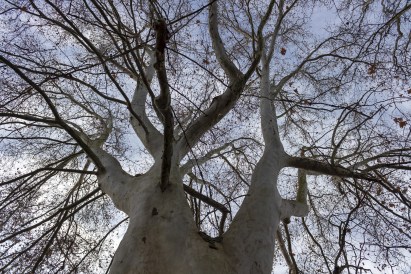
sycamore-tree-4704744_1920I shook my head and pinched my arm, hoping to wake from the nightmare. I winced at the sharp pain. 

“Cassie, can you see me?”

Yes. Can you see me?

“No.”

Silence followed.

She had to be thinking. I could almost see her head cocked to the side, her ponytail dangling, her blue eyes clouded by thought. Why couldn’t I see her? She could see me. She said as much. So why couldn’t I see her? She had to be wondering the same thing.

“Cassie,” I hesitated. “You’re dead.”

Who knew ghosts could cry? Her sobs echoed all around me. The sycamore tree’s branches shook. Some of the leaves pulled free and fell to the ground as if they were green stars dropping from high in the sky. The water in the pond rippled away from the shoreline. I pictured her dropping to her knees, her face covered by her hands, shoulders heaving up and down.

“Cassie?”

I went to the swing, my legs still weak and my insides buzzing. It was much cooler by the swing. I reached for the rope, slid my hand down to where I thought her hand might be. Fingers. I felt her fingers gripping tight to the rope. In that instant I saw her. She faced me, her legs bent in at the knees. One of her shoes was missing. I saw the many stab wounds, her torn dress and bruised face; her split lip; the tears in her eyes. She released the rope, took my hand, and opened her mouth to speak, but said nothing. Instead, she stood and embraced me, putting her head on my chest. I shivered, and my teeth clacked together as her cold body clung to mine. Then I was pulled into her world, her final few minutes of life. She barely saw the man who grabbed her, catching only a glimpse of jeans and old brown work boots before a potato sack was shoved over her head. He dragged her down to Grover’s Pond, Cassie kicking and screaming until he leveled a heavy hand to the side of her head. The rest, the pain, the fear, the very life bleeding from her, I endured as well. I couldn’t pull free and I couldn’t scream. I could only feel.

Then, as if she knew I couldn’t take anymore, she released me.

I fell to my knees. Freezing and scared, I crawled a few feet away, then vomited. Dropping onto my back, I tried to regain some sense of where I was, who I was. Cassie knelt beside me. Her body was a mutilated mass of flesh and torn clothing, but her eyes—even the one swollen badly from a punch to the face, the same punch that had split her lip and broken her nose—held the beauty I had fallen in love with before she died.

I tried to sit up but couldn’t. After several minutes of a silence between us that felt too heavy to bear, I managed to roll over and get to my knees.

“Do you know who killed you?” I asked between deep breaths.

No.

“I’m going to find out.”

How?

“I don’t know.”

It was the truth. I had no clue how I would find her killer, just that I had to, that no one else would be able to.

The next few weeks I spent looking at people’s feet, hoping to catch a glimpse of badly scuffed brown work boots. When I wasn’t searching for her killer, I spent as much time by the sycamore tree as I could. Cassie sat on the swing and I watched it sway forward then back. A couple of times I asked her to take me there, to take me to her last moments again. I felt bad for asking her to do this—she had to relive it so I could be there, so I could try and see something different, or so I could remember those boots. Each time I threw up after revisiting the horror, after seeing the girl I loved raped and murdered.

And each time she pulled away a little more, as if I were killing her all over again.

Almost a year into my investigation, I found her killer. Tommy Tillman—the deputy sheriff. He was young, not even in his thirties at the time.

I found out by accident.

Back then our little town had donation drives for the police department. It was nothing more than canvassing neighborhoods, Jehovah Witness style, but instead of tracts about their religion, the adults received donation cards, and sticker badges were given to the kids. Sometimes they came around in their uniforms, but more often than not, they showed up in normal, everyday clothes. This was done to give the impression the cops in our town were normal, everyday folks, like you and me and Mom and Dad and Grandma across the river and Uncle Earl down at the bar. If people believed the police were no different than anyone else, then they would be willing to give more. It was a trick that worked. Heck, one year Bobbie Joe down on the farm not too far from us cracked open her piggy bank and gave them every penny she had saved up that year.

Tommy Tillman and one of the other deputies—I forget his name—knocked on our door one Saturday morning. Cartoons were on and Dad had let me skirt my chores until later that day. I don’t really remember what I had been doing or thinking, but I remember Momma saying ‘hello’ in her most polite way possible. I got up and walked to the door. She didn’t try to block my view when I stuck my head between her arm and waist. Officer Tillman was there with his best salesman smile on. And that other guy was right there with him, pitching their ‘give to the police of your town’ spill in his best ‘awe shucks’ manner.

I don’t know why I looked down at their feet. They were the law—I had no reason to suspect them of anything. They were supposed to protect us, not hurt us. I glanced down and saw those brown scuffed boots at the end of a pair of blue jean cuffs. Right then there was nothing else in the world. Momma was gone. The house was gone. The other cop was gone. The coming summer was a myth, and I swear, the world could have ended right then and I wouldn’t have known it. I looked up, following the blue jean pants and white T-shirt up to Tillman’s toothy smiling face.

“What’s wrong, kid?” he asked, that salesman voice still trying to make the politician’s pitch. “You look like you saw a ghost or something?”

I shook my head, pulled free of Momma’s arm and backed away. I stumbled, caught myself. I tried not to run, but by the time I was at the bottom of the steps leading to the second floor, I was in full sprint.

I went to bed early that night, telling Momma I wasn’t feeling so good. She checked my temperature, said I felt cold to her. Of course, I did—I had found Cassie’s murderer and there was nothing I could do about it. Contacting the police would do no good. Telling my parents? I thought about it. They wouldn’t have believed me. How many adults actually believe their kids about these types of things? Back then, not many. Instead, I kept an eye on Tillman, watching to see if he would strike again. During that time he didn’t, and Cassie’s death appeared like a random murder. That’s probably how Tillman wanted it to appear.

Dad died two years after Cassie. Mom moved us away, closer to her family in Nebraska. Years passed and seven other little girls, around the ages of eight to twelve, disappeared from around my hometown in the south. None of them were found. I knew who had taken these girls, and more importantly, I knew they were all probably dead. I didn’t find all of this out until I left home at eighteen and headed for a small college in South Carolina—less than a hundred miles from where I had spent the first eleven years of my life.

We still owned the old house and farm, but time and the elements had worn it down. Windows were broken, and a wino had moved in. The inside was a wreck.

Down at the sycamore tree, the rope that had once held the swing was frayed and the swing itself was missing. I got on my hands and knees, searched through the decaying leaves and found it not too far from the base of the tree itself. It was wet, but still solid enough to hold in my hands without it crumbling, to hold close to my heart.

“Cassie?”

I waited, repeated her name and listened. My heart sank. That familiar broken feeling crept into my chest. I had been away too long. She was gone.

Joshua?

Like the first time I heard her voice after her death, I almost ran away, not believing what I heard. At the same time, I thought it was just my desire to see her, to believe she was still there. My emotions ramped up.

Then it came again, soft and hollow, like an echo. Joshua.

My heart lifted.

“Cassie?”

You came back.

“Of course, I did—I never wanted to leave.”

I’ve missed you, Joshua.

The frayed rope swung slightly. I reached out, grabbed it. I saw her. She was still eight, still had that shredded dress on and all those stab wounds. I hadn’t expected that. To be honest, I don’t know what I expected. She died when she was eight. It’s not like she could have aged as a ghost, but part of me thought she would have been the same age as me. It was a ridiculous notion. The dead don’t age a day after they die.

“I’ve missed you too, Cassie,” I said, paused and then blurted out the only thing I knew to say. “I know who killed you.”

You do?

“Yes—and its time he got punished.”

We talked for a while, me and the ghost of the girl I still loved. Then I went back up to the house. The interior was wrecked worse than I thought it was and the remnants of where the bum had slept at one time remained in the corner near the back door. I searched the house, found it empty.

Instead of waiting for the homeless person to come back, I called the police from my cell phone, told them I wanted to speak to the sheriff. Turns out the sheriff was Tillman. An hour later, he met me on the front porch of my childhood home.

“What’s all this about, Mister …?”

“There’s a bum inside my house.”

“This is your home?” Tillman raised an eyebrow. He had changed some during the eight years since I had last seen him. His hair was still dark, but he wasn’t as lean as he had been—good eating had filled his body out. He didn’t wear his sheriff’s badge prominently on his shirt like I thought he would, and he certainly didn’t flash that car salesman’s smile.

“It belongs to my family,” I said. “I want the bum gone.”

“When was the last time anyone lived here?”

“Does it matter?”

“No, I reckon not.”

Tillman walked inside, his thumbs tucked in his belt loops as if he were going to just stroll on in there and have a word of peace with some drunk and that would be that.

“There’s no one here,” he said after searching the house.

“Maybe he went out the backdoor when he heard you pull up.”

He gave me a curious look, a suspicious look. “You said he was in the house.”

“He was, but he might have gone around back.”

Tillman made his way outside and down the steps. He turned around in a half circle, scanning the yard or maybe just appearing like he was. His hands went into the air and he was about to say something when I yelled.

“Over there. He ran behind the sycamore tree.”

“What? Where?”

“The sycamore tree. He ran behind it. I just saw him.”

Some things in life I’ve never been good at: Math. I hated the subject growing up and barely passed every math class I was ever in. Social gatherings. I’ve always been somewhat of a loner. Affection. I’ve only told one person other than my mom that I loved her, and she was dead. Lying. I’m just not good at it. And I think Sheriff Tillman saw right through my attempt at getting him out to the sycamore tree.

If he knew, he didn’t completely let on. He walked slowly out that way, through the tall grass and unleveled ground. He neared the sycamore tree where a picture had been nailed to it. He yanked the photo free.

“Recognize her?” I asked.

He glanced toward me as I swung at him. I caught him below the left ear. He fell to the ground, rolled onto his feet and into a crouch. He drew his revolver, aimed at me. “What do you think you’re doing, boy?”

“Her name was Cassie. You murdered her eleven years ago.”

“I don’t know what you’re talking about, punk, but you’re under arrest for assaulting a police officer.” He spoke the typical cop words in the typical attempt at intimidating me. 

“The other girls—you murdered them, too, didn’t you?”

Full recognition dawned on Tillman’s face. His eyes grew slightly bigger than normal, and then he squinted. A smile—yes, the same smile he used on women to get them to donate money to the police department—appeared on his face. He laughed. “You think you’re smart, kid?”

I shrugged. I don’t know what I was thinking not having a weapon with me. Maybe I thought love would protect me. Maybe I thought I was tougher than I really was. Tillman pointed his gun at me, pulled the trigger. The bullet tore through my shoulder socket, shattering bone and coming out my back. I fell to the ground, blood seeping into the hot earth. Tillman’s shadow loomed over me, the sun behind him. Shading my eyes I saw the revolver a couple of feet from my head. I was going to die, and I was okay with that. Then I could be with Cassie again. For a brief second, I hoped I would be eight as a ghost and not eighteen.

No!

Startled, Tillman spun around. I didn’t see her as clearly as I had before, but Cassie was there, a blur of gray and white. She rushed at him, sinking both of her ghostly hands into his ribs. Tillman fired several times, the bullets striking the ground near his feet but doing no damage to Cassie. His mouth dropped open and his eyes—full of amusement earlier—grew wide in fear. I hope it was the same fear Cassie had felt as he raped and then stabbed her to death.

She held him there as his body shook. Another round was fired from his gun. I think he tried to scream, but nothing came out. Cassie did scream, her voice the same hollow sound, but so much louder, as if there was a microphone to her mouth. Her hands stayed buried in his ribs until his face turned blue and he collapsed, dead at her feet.

Somehow, love did protect me.

I dropped my head to the ground and closed my eyes. I welcomed a death that never came. Instead, I heard Cassie crying for several seconds before the sound faded. I opened my eyes and caught a glimpse of tears in her eyes before she vanished.

Folks around here say Tillman up and left. Turns out another cop had the same suspicions I did and had gathered enough evidence to prove the things he had done. It was enough in the eyes of the townspeople to believe he was guilty even though they haven’t seen him since.

That was nearly four years ago.

I have since moved back into the old family home and have been renovating it the best I can. I hung the swing from the same branch it used to be on. Each day I walk out to the sycamore tree and sit in the shade. I call for Cassie, but she’s gone, this time probably forever. I hope I’m wrong. I hope one day the swing will sway again; that I’ll hear her voice, and maybe, she’ll tell me she loves me one more time.

__________

A prompt-based contest story. The original version was much shorter than the one here. Sadly, I can’t recall what the prompt was, but I can say with certainty the story won that particular challenge.

It originally appeared on the now defunct House of Horrors website back in November of 2009. It can also be found in the short story collection, Southern Bones.

If you enjoyed Beneath the Sycamore Tree, please share this post to your social media pages and help me spread my stories to the world. Thank you, in advance!

A Moment In Life

It’s just a scene in life.

He sits on what they call the top step. It’s really the porch, and like the two steps that lead up to it, it is made of concrete. His feet are on that first step at the bottom. Well, that’s not quite accurate. The right foot is on the step while the left one is planted on the ground beside it where a blueberry bush was once planted but never bloomed. Now it’s just weeds and grass. There are two pillars, one on either side of him, that hold up the roof and ceiling of the covered up section of porch. They, like most of the house, are made of cinder blocks, only these are painted white, while the rest of the house is an odd gray color that was supposed to be blue. 

He wears a pair of ratty black jeans, the left leg with a tear that runs from knee to a couple of inches above the cuff. His shoes are beat up and dirty, having seen better days years ago, but he still wears them when doing odd jobs (or big ones, for that matter) around the house. His shirt is an old white tee with words on the front that are so faded they are no longer legible. If you were to ask him what the shirt said, he will say he honestly can’t remember. Spattered and smeared on his shirt, jeans and arms is white paint. 

He had a hard day. Nothing went according to plan. As he sits there, he realizes the painting of the bathroom had been the easy part of his day, even if his right hand tingled a couple of times—he believes that is from a pinched nerve in his neck. He leans slightly to his right, his head almost on Her shoulder. 

She sits to his right, both her feet firmly placed on the second step—or the middle one if you count the porch landing they both sit on as a step. She is looking at her phone and giggling. Every couple of minutes, she shows him a funny video. Sometimes he laughs. Other times he doesn’t. Her pants are light blue and fit her mostly the way she likes it. She thinks she is overweight. He thinks she is perfect the way she is. There are holes in both knees of her jeans and she wears a pair of sandals that are clearly not flip flops, if you know the difference. He, apparently, does not know the difference. Her shirt is gray and white and not as worn out as his, but it is one of her old shirts so wearing it to do yard work doesn’t bother her. 

Couple SittingHe closes his eyes and knows he can’t keep them that way. If he does, he will fall asleep on her shoulder. Not that she will mind—at least, he hopes she won’t. Yes, he is tired. Yes, the last two days have been difficult and busy, the night before going to almost eleven to finish one necessary project. His body aches and places hurt that he didn’t know could be sore. 

He lifts one paint stained hand and places it on her knee. It’s a movement that takes a lot more effort today than it should. As they sit there, neither one really talking much, he thinks of an old song by John Cougar Mellencamp (just John Cougar when the song came out, though). It is ‘Jack and Diane,’ a little ditty about two American kids growing up in the heart land. He thinks of the last lyric, how Jack and Diane did the best they could. At this moment, as the cool breeze chills their skin and the sun is starting to set off in the distance, he thinks of that song, on those two American kids. And he wonders if Jack ever worked so hard at something, put every ounce of energy into something and still not knew if things were better or worse for his efforts. 

He opens his eyes, lifts his head and stretches his neck. In a minute, he will ask her if she is ready to go inside. She will stand and offer to help him and he will accept. With a little effort, he will stand and they will go inside and the evening will go on like all evenings do for the living. But for right then, he looks at her and knows he is her Jack and she is his Diane, and, yes, they’ve done the best they can.

AJB

3/15/2020

The Definition of You

Dear Women,

Come in a little closer. I want to talk to you. You men can read this as well, and maybe you should.

For every single woman out there, I want to say: don’t let any man or any standard define you. Yes, that is a two part statement and I will explain. If you have a moment to give me, please continue on.

First, don’t let a man define you. YOU are a person. You don’t need a man to make you whole. You need to believe in you, who you are, what you look like, and what you can achieve. YOUR value is not in the opposite sex. YOUR value is in how you view yourself. YOUR value should never be determined by someone else. 

Female outlines with different figuresWhen you look in the mirror, don’t think about what a man wants you to be. Think about what you want to be. Think about what you can do to make you feel great about yourself. Here’s the thing: if you can’t love yourself when it is just you, then how are you going to love yourself if you get with someone and then they leave?
Some men can make you a better person by building you up when you are down, complimenting you when you need one, and pushing you to be a better person, to take care of who you are. But let’s be honest, a lot of men aren’t going to do that. A lot of men aren’t going to put your needs and your feelings before theirs. (Please note: I said a lot of men, not all men, so for you fellas getting all bent out of shape right now, cool your jets. It will be okay.)

On the same coin, but the opposite side, some men can make you a far worse person because they will tear you down and insult you; some will even beat you down and do horrible things to you. They don’t have a gentle touch and their end goal is to control you. Don’t be with that man. Please, don’t be with that man. If you are with that man, leave him. Yes, I said leave him. You don’t need that in your life.

Second, don’t let a standard define you. Don’t let the standard Hollywood and beauty magazines have set be what defines you. You don’t have to look like any of those models in any of those magazines to love yourself. You don’t have to look like a Barbie doll to be beautiful. The Barbie figure is not attractive at all, in my opinion. You don’t have to be a Kardashian or Jennifer Lopez or Ashley Judd to be beautiful. You have to be you, and you have to love you and you have to have confidence in who you are.

Speaking of confidence: Confidence is the sexiest thing a person can have. When a person is confident, she holds her head high, she smiles, she is not afraid to make eye contact with the opposite sex (or the same sex if that is what she is attracted to). When a person is confident, she wears clothes that make her feel good. And here’s the thing about confidence: you don’t have to be five foot four and weigh a hundred and ten pounds to be confident. You can be six foot ten or four foot ten and three quarters, or weigh three hundred pounds. It doesn’t matter. Confidence is sexy.

Girls, young ladies and women, please don’t look at the magazines or Hollywood actresses and say ‘I wish I looked like that.’ Don’t do it. When you say that, you put yourself down. When you say that, you demean yourself. Don’t do it. Love you. Love every inch of who you are. Love every smooth or blemished part of you. Don’t put yourself down by comparing yourself to someone else. Don’t be someone else. Be you. Love you. Respect you.

I have a beautiful wife, both physically and in personality. She is smart and caring. She is sarcastic and loving. She is attractive and sexy. She is determined and stubborn. She is everything I want and more in a woman. And she doesn’t need me. She doesn’t. She can do everything I can and in many cases, she does them better than I do. 

Over the last six weeks, she has been working hard to lose weight. During that time period, I have watched her confidence in herself grow, and that has nothing to do with me. She wanted to do something for her own benefit. She wanted to do something good for herself. Again, that has nothing to do with me. It has everything to do with her loving herself. I listen to her when she talks about what she is doing. It makes me happy to see her happy, so I listen and ask questions. Her confidence is sexy to me. Her confidence makes me smile. It also makes her smile. And that is what matters. 

She doesn’t need me. I’m fortunate she wants me. My point is you don’t need another person to make you love you. You have to love yourself. You have to believe in yourself. You have to have confidence in who you are. It doesn’t matter how tall or short, thin or big you are, what color your hair, your eyes or your skin is. You have to define who you are. No one else can define you unless you let them. Please, love, love, LOVE yourself. 

Until we meet again my friends, be kind to one another.

A.J. 

Voices, The Interviews: B

SPOILER ALERT * SPOILER ALERT * SPOILER ALERT * SPOILER ALERT

Before reading today’s post, I want to tell you about our little project. In the coming months one character from each story in my collection, Voices, will be interviewed by Lisa Lee with Bibliophilia Templum. 

No, this is not your typical interview session. What I want to do is make each interview like a story, one that continues until we reach the end. Some of these are going to be short. Some of them might be long. I don’t know. Like you, I will find out just how long each interview is based on the questions Lisa provides me. I don’t know the questions ahead of time and neither do the characters.

Since this is an interview, I will go ahead and say up front there are spoilers in each session. If you have not read Voices, I urge you to do so before continuing (you can pick up a copy here). If you haven’t read the collection, you have been made aware of possible spoilers. 

One more thing before the first session: if you have read Voices and would like to ask a question of today’s character, leave a comment at the end, and I will see about getting an answer from the character for you. Don’t be shy, ask your questions. You may get an interesting response.

SESSION 6

Lisa takes a deep breath. She has taken quite a few of them through these interviews. She glances down at her notepad and realizes she is only a third of the way through them. She flips the page. The heading at the top simply says “B” in her looping script. The questions are straight forward, but when she turns to her right she sees the young blonde with the wavy hair and blue eyes. She doesn’t appear nervous or even sad like everyone else in the room. She is not angry and Lisa believes if this young lady smiles it will light the room up. 

“Hello, B,” she says.

She is right. The young blonde smiles. It’s not much, but it is radiant. “Hi.”

“Is it just B or would you care to share your name?”

“I go by B only with my boyfriend. It’s kind of our thing. My real name is Becka, as in Rebecca. I really don’t like Rebecca, so Becka to my friends and B to my love.”

“Can I call you Becka?”

“Sure.”

She’s confident, Lisa thinks. More than I thought she would be. This relaxes Lisa a little. After the previous discussion with Jeddy and Mr. Worrywort’s appearance she is still a little shaken. 

“Should we get into this?”

“Sure.”

“You lost a friend.”

“A couple, actually. Dorian and Robert.”

Screen Shot 2018-01-06 at 2.26.45 PMBecka tucks a lock of hair behind her ear. Though she still seems confident and at ease, Lisa sees the slight change in how she sits. Her shoulders slump and she rubs her hands on her jeans.

“I’m sorry.”

“It’s okay,” Becka says. “It’s not your fault.”

“I’ve lost friends myself, so I won’t presume upon your grief.  But … I would like it if you told me about the guilt.”

Now Becka’s demeanor changes a little more. She leans forward in her seat, puts her feet on the bar beneath it as if she is a bird perched on a limb. She rubs her hands together and then looks at the palm of her left hand. 

“Dorian was my best friend.” She smiles. Her eyes hold the distant stare of remembrance. “I met her when I was knee high to a grasshopper, as my grandfather would put it.” She holds her hand down around her ankles as a visual. “We did everything together. You know, thick as thieves. That’s another thing my grandfather said about us. ‘Y’all are thick as thieves.’”

A tear trickles from one eye. She wipes it away, sniffles and continues. 

“I guess I thought we would grow old together. Not just me and H, but Dorian and Robert. We were going to get houses in the same town and we were going to hang out on the weekends and we would be parents together, them watching our little ones and us watching theirs.” 

The breath she releases holds all the sadness her demeanor didn’t show minutes before. 

“We would have been the little old ladies in the knee high socks sitting around playing bingo on Friday nights in one of those parlors where old fogies mingle and compete for a handful of dollars.”

She laughs, wipes away more tears.

“I guess … I guess being there when Dorian died …” her breath hitches and she swallows it down. “And then, you know, Robert … Robert … doing what he did. I guess the guilt was worse for him. He loved her so much. I can’t imagine losing H and trying to carry on with life. I guess that’s why he did what he did.”

She’s nodding as if she is finished with the answer. Lisa waits a couple of seconds. Becka wipes a few more tears from her face.

“You aren’t responsible for what happened.” Lisa hears the words come from her lips and almost shakes her head. She knows how Becka feels—at least she has a very good idea. Experience gives you a clue on the grief life throws at others. She pushes the thought aside. then realizes she knows the answer to the next question. She asks it anyway. “What makes you feel guilt over something you didn’t do?”

She shrugs. Her hands are now between her knees, clasped together like a little girl who has lost her favorite doll. “I was there. We had been drinking. We were all underage. If we weren’t drinking, Dorian doesn’t die and Robert doesn’t kill himself. I participated in my best friend’s death. I might not have held her head under the water, but I didn’t say no to drinking at the river and I didn’t stop her when I saw she was drinking way too much. H tried to intervene, but Robert got mad. I keep thinking if I would have just taken Dorian’s hand and said ‘no more alcohol for you, young lady,’ then she would still be alive and Robert would be too and life would have been hunky dory.”

Lisa looks down at the yellow notepad in her lap. The next question holds her attention. She goes to ask it, then stops. Her heart sinks into her stomach. Hazy memories of friends who have passed on, either by natural causes, accident or their own hands, surface. She can still see their faces, still hear their voices, still see things they did. She feels the tears form in her eyes. 

You don’t want to ask that question, Lisa.

I have to.

Oh come on. You know you don’t have to do anything.

I have to.

No one is holding a gun to your head … or holding your head under the water.

There is something in the voice that makes her sit up. She looks directly at Becka and she knows immediately Mr. Worrywort is there again. This time she feels the anger rise up faster than before. Or holding your head under the water … It’s a dig he couldn’t resist. The devil on her shoulder smirks. She wants to smirk back, but isn’t sure she can. The sadness tugs harder on her heart and she wants to cry, not for herself, but for her lost friends. She believes that is probably how Becka felt—feels—about her lost friends.

She hears a soft laugh. Mr. Worrywort is enjoying himself. She thinks her heart will explode if she holds this next question in. 

It’s best to talk, she thinks. One of the reasons so many people don’t come out of depression is they don’t think they can talk about things. 

She looks at Becka and feels the need to ask the question grow stronger, even as Mr. Worrywort laughs at her, believing she can’t, or won’t, ask it.

“Becka, did you ever think about suicide? Like Robert?”

She looks up from her hands and shakes her head from side to side. “No. Never.”

“Never?”

“Never. I’ve seen what it does to the people left behind. I can’t speak for other people, but for me, that’s not the solution to the problem. I’m not even sure the problem would be how I feel about what happened with Dorian and Robert. I think my sadness was a symptom of the problem. If you only treat the symptom without trying to pull the root from the ground, then it just keeps rolling. It’s a cycle. Dorian died. Robert killed himself because he never allowed himself to truly grieve. He blamed himself for her death just like I did and and just like H did when Robert died. If I would have committed suicide when Dorian died, what would that have done to H? Would that have sent him into a worse depression than he experienced, especially after Robert did that very thing? What about my parents or my baby sister? What would me doing that do to them? I’d much rather not think about those possibilities.”

Lisa tilts her head. Mr. Worryrwort’s laughter ceases. She can feel him sulking. She knows now that he is there, in her, just as Jeddy said earlier. But for now, Becka has quieted him. She looks down at the last question on the notepad and smiles.

“Your remembrance ceremony for Dorian and Robert was beautiful. Your idea?”

“Oh no. That was all H’s. He is a viking at heart and thought a funeral pyre would be a fitting tribute to his best friend. You know, send him out in a blaze of glory.”

Lisa nods. There is a smile on her face. She likes Becka and she can see why H would as well. She says, ?I’m very sorry for your loss,” and moves on to the next page in her notepad. 

To be continued …

Under Pressure…

I have 1484 ‘friends’ on my Facebook page. Whether I know all 1484 of them personally doesn’t matter. At some point we made a mutual agreement to become acquainted. One of us sought out the other one and said ‘hello.’ The other one responded by accepting that ‘hello’ and becoming friends.

Isn’t that how life happens, how friendships are born?

I find it interesting that we view total strangers as friends. I have never actually met, face to face, with probably 1300 or more of these friends. Still, those perfect strangers are my friends. But what I—and more than likely, you—fail to realize is on the other side of the device (where you are reading this right now) is a person. For me there are 1484 people looking back. Of those 1484 people, probably less than 200 of them actually interact with me. I’m okay with that.

Why?

Well, because they are all people and they have lives and cares and worries. They have dreams and ambitions. Some are sick and in need of prayer or comforting words. Others are fine and life is being very good to them right now. But all of them are people.

A little perspective if you will. On my friends list:

There are rich folks and there are poor folks and there are those in between.

There are folks from every state in the United States.

There are folks from England, Australia, Canada, Germany, Russia and, yes, the Middle East.

There are folks who work as lawyers and nurses and teachers.

There are folks who work as bartenders and taxi drivers and in retail stores.

There are folks who work in factories and in restaurants.

There are folks who work in the business of religion and others who work in the business of politics.

There are cops and firemen.

There are single moms and single dads raising their children the best they can.

There are married couples raising their children the best they can.

There are gays, lesbians and bisexuals.

There are straight folks, too.

There are musicians and voice instructors.

There are successful writers, as well as fledgling ones with dreams of writing for a living.

There are readers who love books.

There are Baptists, Catholics, Mormons, Non-Denominationals, Methodists, Nazarenes, Atheists, Agnostics and maybe even a Satanists or two. And yes, there are Muslims, as well.

There are liberals and there are conservatives.

There are folks who like heavy metal music. Others who like rap. Still, others who like classical, and some who like country and some who like bubblegum pop. There are those who like it all.

There are sports fans and there are folks who can’t stand sports.

There are those who love movies and television.

There are those who don’t care much for either.

There are those who love The Walking Dead and Game of Thrones, and those who have never seen the first episode of one or both shows.

There are those who will only drive a Chevy or a Ford.

There are high school friends on here, too.

There are whites, blacks, Asians, and Native Americans.

Why does any of this matter? Simple: all of them are people. People with hopes and dreams, and people who just want to make it home to their loved ones at the end of the day. They, like you and I, have feelings. They, like you and I, have ambitions. They, like most of us, are saddened by events where people are killed recklessly and needlessly because of hate and fear.

During this week where America celebrated its independence, at least seven people died who should still be alive today. The key word isn’t black or cop. The key word here is ‘people.’ Seven people are dead and millions more are angry and some are even enraged to the point of…hate.

Today I sit at my kitchen table having not only celebrated my nation’s independence, but also my birthday. Seven people will never see another birthday. Their families are forever changed, and many of them are mad, not just at those who killed them, but at other people as well—people who have nothing to do with the events that unfolded this week.

There are those who want revenge and those who want to take away someone else’s freedoms and those who want justice now. There are those who will lump everyone into a category because of a few people’s actions. There are those who will scream and demand change, demand our government do something about this.

Here’s the problem with that: change will never come about until we, the people, change our way of thinking and change our hearts. We, the people, are the only ones that can bring positive change. Not our governments and not our laws. The people. The same folks I have mentioned up above can make a change, but in order to do so, we have to change our hearts, we have to learn how to be compassionate again. We have to learn to love our neighbor. If we can have total strangers on a social media site that we call friends, and some of which we come to cherish and possibly even love, then why can’t we do the same to the people we come in contact with every single day of our lives?

I’m reminded of the song Under Pressure, by Queen and David Bowie. At the end they come to the conclusion that it is love that can make a difference in every person’s life. But love is so old fashioned…

And love dares you to care for

The people on the edge of the night

And love dares you to change our way of

Caring about ourselves

The way I see it is, love dares you to look in the mirror, but we don’t want to do that. We want to lay blame somewhere else. We, as a people—not as a nation, as a people—need to step back and look at ourselves, and make a change, starting with ourselves. If we don’t, I fear for myself, my children, my friends, my fellow people. Because, the way I see it is if we don’t make a change in our hearts and our mindset soon, then we will never have true freedom again. We will all be prisoners to fear and rage and hate, and no one will be safe.

This, well, this is how I see it. Until we meet again my friends, be kind to one another.

SC Strong…

I live in South Carolina. In case you haven’t heard, my state hasn’t necessarily had a good year. To be honest, my state hasn’t had the best reputation for years. According to statistics (and who made these statistics up, I don’t know) we are one of the worst in driving, one of the worst in education and have one of the highest domestic abuse rates in the nation. Sometimes I feel like we are viewed as the armpit of the nation.

Sometimes perception isn’t reality.

Let me tell you about the year we have had in four points:

  1. At the beginning of April a black man was shot and killed by a white cop in Charleston.
  2. Just a little over two months later, in the middle of June, a young man walks into a church in Charleston, prays with the worshippers there and then kills nine of them.
  3. The Confederate Flag, having flown on the state house grounds for years, comes down in July.
  4. Here, at the beginning of October, quite possibly the worst natural disaster strikes in the rains and floods that devastated parts of the state. It was termed the 1000 Year Rains.

Yup, it’s been a sucky year for a state that most folks kind of, well, look down on. But let me fill you in on something you may not know, and I’ll use those same four points to tell you.

Point 1: At the beginning of April a black man was shot and killed by a white cop in Charleston. In case you missed it, the whole thing was caught on video by a passerby who witnessed it. Do you know what happened? The cop lost his job and was immediately arrested. Currently he is in jail and probably will be for a long time.

But wait, there is more. Do you know what happened next? Of course you do. The city of Charleston rioted and looted and destroyed the very place they lived. People died and they had to call in the National Guard and…Oh wait. That actually didn’t happen. No, it didn’t. There were no riots. There was no looting. There was no uprising demanding justice. Why? Because the Charleston police were swift in acting and they did the right thing. They didn’t make excuses like so many other departments.

Point 2: Just a little over two months later, in the middle of June, a young man walks into a church in Charleston, prays with the worshippers there and then kills nine of them. The young man’s name is Dylan Roof and he lived just a few miles from where I do in a place I know well. After he was caught the next day he reportedly said he thought about not going through with the shootings, that the church members had been so nice to him.

Hate is a powerful thing and it drove him to follow through with his plans.

Guess what? The riots started then. It was insane. Oh wait. No, they didn’t. Do you want to know what happened next? The families of those killed stood up and said, ‘We forgive him.’ Did you catch that? Instead of spouting hate, they spoke forgiveness. They spoke love. Crazy concept, this forgiveness.

Point 3: The Confederate Flag, having flown on the state house grounds for years, comes down in July. I’m going to be honest with you, this one had me worried. There was a lot of folks for it coming down and a lot of folks opposed to it. And those opposite view points were vocal and vehement. The weeks leading up to the flag coming down were tense. From the office building I work in I can see the state house—it’s less than two blocks away. If I walk outside the front doors and look to my left, I can see the front steps of the capital building where several rallies took place. I’m not going to lie, I was concerned that there would be some fireworks, and I don’t mean the ooohhhh and aaaahhhh type either.

Then it finally happened. Yeah, you guessed it, riots. And a lot of them. There was even bloo—wait, that’s not right. Sure there were some folks that were disgruntled over it, but there was no violence. Nobody was hurt in the taking down of the flag. Well, some were butt hurt, but that’s about it. As a matter of fact, when the KKK and the Black Panthers from OTHER states decided they wanted to come down and make trouble, the state and the Columbia Police Department made no bones about it: if you come here to cause trouble, you will be arrested and you will be prosecuted to the fullest extent of the law.

No violence occurred. No bloodshed. One KKK member became overheated and the image that was plastered all over social media was nothing short of amazing: a black state trooper helping the KKK member. It didn’t matter that this man was part of a hate group, one that hated the trooper’s race.

You see, a lot of us here don’t necessarily see the color of the skin.

Point 4: Here, at the beginning of October, quite possibly the worst natural disaster strikes in the rains and floods that devastated parts of the state. It was termed the 1000 Year Rains.

A buddy of mine, his name is Greg, and he is an amateur weatherman. The entire week leading up to the rains that fell (in some places as much as 20 inches in less than 24 hours), Greg was sending out text bulletins to people on his weather list. He constantly said things were shaping up to be historic. Greg, you are awesome, and thank you for the warnings. All week long I got to see weather maps and hear his thoughts on what could happen. But this is South Carolina. How often do weathermen, professional or otherwise, get it right?

Then it actually happened.

The rains came. The floods followed. Roads were wiped out. Bridges were damaged. Houses were destroyed. Devastation is the only word I can use for what happened. Maybe catastrophic is a better word.

It was crazy. There was mass looting. There were people panicking. There was pillaging. Ummm…no, there wasn’t. But let me tell you what there was: there were men in john boats going down streets that just hours before cars would have traveled along, searching for people in need, pulling people from houses or from their roofs. Police and firefighters and EMS workers and civilians alike were doing their best to save people from harm.

In the aftermath, many people had lost so much, and yes, over a dozen folks lost their lives. But then the most awesome thing happened. Even while it still rained, people began donating money and food and basic items to churches and charities and Harvest Hope. Money donations were given to aid in the recovery. Above all of that, the people of South Carolina banded together. Volunteers came from every walk of life to help those with flood damage, to help them gather up what was left of their stuff and help them move away or help them begin the clean-up. They were there to give hugs and comfort and to say prayers and offer up whatever help they could give. Hundreds of thousands of bottles of water were given out to people who had no water.

It didn’t matter what color you were or what your religious beliefs were or which political party you associated yourself with or even what status you held in the community. What mattered was, do you need help? If so, we’re here for you.

An entire state came together and it was brother and sister and nothing else mattered.

There wasn’t much by the way of looting. From my understanding there were six people arrested for looting. Six. And the government has already said that those six folks will be prosecuted and given the maximum sentence possible. Six people. That’s all.

You know, South Carolina may not be known for much more than our Famously Hot Summers and a few statistics that may or may not matter, but when the chips are down, well, let’s just say other states can take notes on how this fine state that I live in acted swiftly for justice, forgave the brutality of a mass killing, kept the possible uproars and riots at bay and came together when disaster struck.

We’re still recovering. It’s a long road. People are hurting.

I think my buddy, Keith, put it best when we talked about this the other night. “This could be God’s way of unifying us.”

Maybe, my friend.

South Carolina. I was born and raised here. I lay my head down every night here. I met my wife here. I work and contribute to society here. I’m proud to be a South Carolinian.

This is South Carolina. We are SC Strong and that’s something to be proud of.

Until we meet again, my friends, be kind to one another.


It’s a Human Issue

One good thing about having my own blog is that I can talk about any topic I want to. I don’t have to ask for permission to state my opinion. It’s my platform. It’s my voice.

Go back and look at the 250 or so posts that appear on Type AJ Negative and you will see most of them are writing/publishing related. Being a storyteller, that is where a lot of my interests are. But there are other things that appear on here, most of them attempts at humor or life stories.

Today, I want to talk about something that bothers me.

Let me see if I can paint the picture for you:

There’s this guy and he’s taking this kid home. The kid is a little girl who is the friend of one of the guy’s children. You follow me so far? Guy taking little girl home. The girl is eleven.

In the middle of the conversation the girl says something that makes the guy asks a few questions. What is that thing?

“I’ve lost friends before because I’m different.”

“What do you mean?”

“This girl (she said the girl’s name, which I omit here) told this boy (again, omitted name) to try and change my religion.”

“What?”

She repeated the statement.

“Why would she do that?”

“I don’t believe in God.”

That caught my attention. I am a spiritual person. I believe in God. I believe in Jesus. I don’t believe in religion. Believing in God and believing in religion are two entirely different things, in my honest opinion.

“You don’t believe in God?” I asked.

“No. My family is atheists.”

“You’re atheists?”

“Yeah. I’ve never been to church. My family has never been to church.”

“And that girl wanted you to not be atheist?”

“Yeah. I’ve never been to church, but I want to go one day. I may not believe in God now, but I might later.”

There was a lull of silence before I said anything else.

“Well, I tell you what, if you ever want to go to church, let us know, and if your parents are okay with it, we’ll take you with us one day. Okay?”

“Okay.”

So later that night I told Cate about it. Then she said something that really bothered me. Again, no names will be used here.

I told her the story and this is what she said:

“I heard her and the kids talking in there, and some of the kids at school said she worships the devil.”

Let’s stop here. I am going to get on my soapbox for a minute.

I know the little girl who said the things about the other little girl. I know some members of her family, and sadly, I can see them saying something like, ‘if they are atheists then they worship the devil.’

The problem with this thought is it is not true. I know plenty of atheists, and I haven’t known any of them to worship the devil. If they did worship the devil, they would no longer be atheists, but Satanists. See how that works?

The real problem here is that a ten year old said this about an eleven year old and now several of the kids in their class are saying this little girl worships the devil. What? Really?

I am a follower of Christ. I believe He died on the cross for my sins. But—and this is a HUGE BUT—I don’t believe it is my place to condemn someone else for his or her beliefs (or lack of beliefs). Jesus preached love your neighbor, not hate them because they are different. Jesus ate with the sinners of his time and walked with those same sinners and helped those same sinners. He looked on all people with compassion, even the criminal hanging on the cross next to His. He loved people.

He didn’t care if you were Jew or Gentile. He didn’t care if you were black or white or red or brown or yellow or zebra print. He didn’t think less of women or children. He treated them well. He even said, ‘Do unto the least of these and you do unto me.’ (Matthew 25:45)

He loved everyone.

I think Mahatma Gandhi said it best when he said, “I like your Christ, I do not like your Christians. Your Christians are so unlike your Christ.”

There lies the problem with many Christians: the majority of them don’t love everyone. Many of them think they are better than others, that if someone isn’t like them, then they are going to Hell. Do not pass go. Do not collect two hundred dollars. They think being a Christian is a bunch of don’ts and if you mess up once, then you aren’t worthy of Heaven. Many Christians just aren’t very loving. Many of them are not Christ-like to the point of being judgmental. Many don’t teach their children to love one another. That is something that can be taught regardless of your religious or non-religious beliefs.

As a Christian I try to set the example, not with my words, but my actions. You can say you are a Christian all you want, but if your actions and your words present a different image, then it doesn’t matter what you say or do—no one is going to believe you. And if people do believe you, then they are probably going to say something like, ‘if that’s what being a Christian is, I want nothing to do with it.’ By spreading hate, you push people away. By preaching love, you bring people closer.

It’s not just Christians though. The majority of people don’t love others outside of their circle. Many people think they are better than others, and if they don’t look like they do, or make the money they do or drive the cars they do or vote for the politicians they do, then they’re not good enough for them. Many people think they are always right and everyone else is always wrong. It’s a society issue.

The thing with ten and eleven year olds is that most of what they believe they learn from their parents or other adults in their lives. Abusive fathers generally breed children who grow up to be abusive fathers themselves. Racists parents generally raise kids who become racist themselves. It really is a monkey see, monkey do type of thing. Sure, there are plenty of cases where kids made good, even though the parents were kind of crappy to them. My dad is an example of a person who broke the cycle to be a better person than his parents ever were.

Back to the girl. As she said, her family members are atheists, so she is atheist. This is what she has learned, based on how she has been raised. The other girl who started the devil worshipper rumor learned that from someone as well. She may have been misinformed on the topic at some point or drew her own conclusions based on, what? I don’t know. What I do know is she is wrong.

We are all quick to judge what we do not understand. We all have done it. I have. You have. Part of that judgmental attitude comes from fear. FEAR is False Evidence Appearing Real. We let our minds or others tell us what we should believe or say or do. We don’t understand it so we either don’t accept it or we are afraid of it. But something we don’t do that we should do more of is learn about what we don’t understand and make educated decisions based on that education. Don’t just have an opinion. Know the facts.

People, I want to make this clear: I don’t care what religion you are. I don’t care if you worship a god or are an atheist. I don’t care where you are from. I don’t care what your skin color is. I don’t care if you are rich or poor or somewhere in between. I don’t care what your job is. I don’t care if you are single or married or divorced. I don’t care about your political views. I don’t care if you are a woman or a man. I don’t care if you are attractive or unattractive. I don’t care if you are gay or straight. I don’t care if you agree with me or disagree with me. I don’t care.

Do I have to say it again?

But I do care about people. I care about how we treat one another. I care about how we judge one another. I care about respect. I care about whether someone is hurting and if I caused it, how do I fix it. I care about our world and I see it crumbling every day with the self-serving and entitled attitude of so many people. I care about how people lump other people into a category because they are of a certain skin color or religion or political party or income bracket. I care about people.

I will say that again: I care about people.

We are all human. We were all born in the same way. We all have feelings and desires and passions and we all need the same things to live: food, water, a place to live and air. Companionship helps, too. We all have loved at one time and we all want love. Go ahead and deny it if you want, but it’s true.

Honestly, this world makes me sad, and hearing what ten and eleven year old children say about another one because that one doesn’t believe in God saddens me deeply. Where did we forget how to love one another?

This isn’t a Christian or non-Christian issue. This is a human issue. And we have lost a good chunk of our humanity.

Stop fearing and judging what we don’t understand. Don’t just have an opinion. Educate ourselves. Teach our children to be better than we are. And love.

What we forget is we are not the people we are judging—we don’t know what is going on in their lives. We don’t know their situations. One well-placed kind word could make their day better. And one mean-spirited word could crush them.

Until we meet again my friends, be kind to one another…