Our Once Upon A Time (Free Fiction)

Our Once Upon A Time

By A.J. Brown

Once upon a time …

That’s a funny little phrase, but I guess it could be used for everyone, couldn’t it?

Once upon a time she loved me. It was all she knew, all I knew. Our love for one another … But that was so long ago, back when we were young; back during a time where life had already become overwhelming and the only thing that mattered was love.  Real, unadulterated, honest love.  

There used to be wind chimes on the old house in the woods where we escaped to when her Papa was drunk and ornery and in want of a young body to warm himself with. It’s pipe-like bars used to clang together when the breeze blew in off the lake. It made an awful racket, but it was her favorite thing about the shack I still call home. It comforted her while she slept, far away from the worries of her Papa and his ways; far away from the cries of her Mother that could be heard in their house years after her passing.  

Once upon a time, I didn’t know her very well, my little Rose, with her auburn hair and brilliant green eyes. I had seen her in school, her face downcasts and a distant, sad look in her eyes. All I knew is I loved her, from the very first time I saw her walk into Miss Griemold’s class when were in second grade. There was an air about her that lit my heart’s flames and scared me all at once. For weeks and months, I watched her, hoping to get up enough nerve to talk to her. Instead, I kept my distance, far enough so she couldn’t see my heart break each time I saw her.

Once upon a time she cried while sitting on a bench near the playground. Behind her were swings with plastic seats and metal chains, and a metal slide that burned your legs in the summer time if you wore shorts. Her shoulders were slouched, and her hands were in her lap, one of them clutching to a piece of tissue that looked soaked through. 

I approached her, tentatively. I leaned down a little and spoke, “Are you okay, Rose?”

She looked up at me, her eyelids puffy and pink, a bead of snot beneath her nose. She wiped at it with the wet tissue and gave me the best smile she could right then. She nodded but didn’t speak. Deep down inside, I didn’t believe her. I also couldn’t believe myself. I finally managed to talk to her and I couldn’t think of anything better to say other than ‘are you okay’ and it was killing me.  

I turned to leave. That’s when she took my hand and told me to sit with her. My heart skipped several beats and I sat, suddenly feeling like I was in a dream.  

The dream became a nightmare as she told me of her Papa and the things he had done to her. My Rose, my little flower, the center of my universe, had been crushed by one of her own parents. 

I found myself in tears, heart aching and breathless. 

“Don’t go home,” I said, practically begged.

“I have to.”

“No. No, you don’t. If you go home, he’s just going to … to … do those things again.”

“He’ll come looking for me.”

I stared at her. Both of us had tears in her eyes. I think she knew right then that I loved her. 

“Then run away. I’ll go with you.”

“No. No. He’ll kill you.”

“I know a place. It’s a cabin near the lake. We can go there and you’ll never have to see him again.”

people-2562102_1920Once upon a time I hung a wind chime on the eave of the house and Rose smiled—a genuinely happy expression—for the first time since I had seen her walk into class when we were little. It had been less than a month after I spoke to her the first time.  My heart fluttered with excitement and joy.  We both quit school and went to the old shack that my father used to live in before he died.  My mother owned it and said when I was older I could have it.  I was older then, or so I thought, and that shack became our home; Rose’s home.  

Once upon a time a man came to the house. He was big and burly and hair covered his arms and face. His eyes were muddy brown, and he had a thick nose. He was searching for his daughter and had managed to track her to our shack. With shotgun in hand he broke down the door. I tried to stop him by pressing my back to the door, but he got it open, knocking me to the ground as he did. I barely got to my feet before he struck me in the face with the barrel of the shotgun. There was alcohol on his breath and murder in his eyes. He dropped the gun and beat me like the young man I was. At some point during the beating, I passed out. I remember reaching up, trying to grab his leg before darkness took hold and everything was gone.

When I woke, Rose sat on the bed we still had not shared, a damp cloth in her hand, rubbing my battered face. Tears were in her green eyes. I tried to talk but she placed one of her perfect fingers on my lips and she shook her head.

“Rest, my knight,” she said. “He’s gone, and he won’t be back.”

She was right. He was gone, but his shotgun remained and there was only one shell in it. There was a dark stain on the wooden floor of the cabin not too far from where I had fallen and taken the beating her father put on me.

Once upon a time we fell in love, a beautiful flower and her knight. 

Once upon a time seems so long ago.  

Once upon a time I stood next to an old Weeping Willow, thinking about our fairy tale came true. I knelt and kissed the wooden cross I made for her grave. Death came and claimed my Rose after all these years together, plucking her from the garden of life. In my hand I held her favorite wind chime, the one that always comforted her and helped her sleep; the one I hung on the eave of our old house when we moved in. I hung it on a nail I had hammered into one of the limbs of the Weeping Willow.

As I walked away the wind picked up and I heard the hollow racket of the wind chime. A smile crossed my face as I thought, again, of our once upon a time and our happily ever after.

__________

Some stories are sad. Some stories have those moments that make you weep inside. I feel this one has a couple of those moments. But this story wasn’t meant to be sad. It was meant to be happy. The main character in this piece—his name is Robert, though he never mentions it—fell in love when he was in the second grade, at eight or maybe nine years of age. He loved one woman his entire life, and he spent that life with her. That’s a happy thing. That’s a joyous thing. 

The wind chimes at the end, though sad in one respect, is a happy thing for Robert. He hung it in the tree above Rose’s grave, and as he walked away after hanging it, he heard the wind rattle the pipes together. It made him smile. It made him think about how they triumphed, how she had saved his life after he tried to save hers.

This story is another of those prompt based pieces. The prompt was simply: Once upon a time … and go. So, I went and I wrote, and this story is the result.

I hope you enjoyed Our Once Upon A Time. I also hope you will take a minute to like this post, share it to your social media sites and comment. I’d love to hear your thoughts on it.

A.J.


Donate

If you’d like to donate a couple of bucks to a working author, it would be greatly appreciated.

$2.00

His Undoing (Free Fiction)

His Undoing

By A.J. Brown

“Aye, it’s a thankless task, but someone has to do it.”  

The words rolled off Ivan’s lips as if he had spoken them hundreds of times. He ran the blade across the grindstone, dipped it in water and repeated the process, making sure the blade slid across the gray stone at a slight angle. He held the axe up, then shook his head when the sun’s rays winked off the shiny steel.

“That should do fine.”

He leaned the axe against the stone house and looked over to Joseph. The young man’s face was a study in worry. The tips of his brows bunched above his nose, his lips pulled down into a thoughtful frown, his eyes focused on the dirt at his feet.

“Lad, what seems to be bothering yah?”

Joseph’s skin was pale white. His hands trembled. He looked like he would run away at any moment.

“This doesn’t bother you?” Joseph asked, his voice shaking.

“Oh, no, my boy. It’s a handy work not many appreciate, ‘cept for those with an odd tastes and a sick humor.”

Ivan picked up the axe and slung it over his shoulder. “Follow me, Joseph, and I’ll show you how it’s done.”

Joseph hesitated and gave his uncle a weary look. 

“Come, boy. Don’t dally.”

Joseph stood and fell in line behind Ivan. They made their way through town and across the Old London Bridge.  

“Where are we going, Ivan?”

“To the Stone Gateway.”

Joseph stopped in his tracks. An icy finger traced its way along his spine.

“But, Ivan, that is where—”

“Aye, lad, it is.”

“But, then you would be the—”

Ivan stopped, turned to face Joseph and lowered the axe to the ground. “Joseph, yah need not be concerned with what I am—yah need to be moving along and keeping up with me. The king despises tardiness. Especially, when his subjects are present.”

“I thought you just …”

“I just … what, lad?”

Joseph swallowed hard and shook his head. “I thought you only sharpened the blade.”

Ivan let out a laugh that sounded more like a roar. “I do not hone the blade for the executioner. What joy would there be in that? Now, come.”

Again Joseph followed Ivan toward the Stone Gateway. As they neared the entrance, Joseph’s stomach began to curdle. They passed lines of peasants and semi-royalty.  The stone structures on either side of them loomed high in the air, casting shadows on the ancient bridge. The king sat near the foot of the bridge, raised high on a platform.  On the ground beneath him was what looked like a stake, head and arm restraints and a chopping block stained with the blood of those executed before this day. Four men rolled out a large black cauldron on a stone slab with wheels attached to it.

Joseph’s breath caught in his throat for a moment when he saw the many severed heads on stakes lining the road and the fields near the castle. Most of them looked old but had somehow survived the elements and time.  

Ivan looked back with a smile on his face.

“Yah ‘aven’t been to this side of the bridge before, ‘ave yah?”

Joseph shook his head.

london-4115740_1920“Over there. Yah see that ‘ead?” Ivan asked. “That’s William Wallace’s ‘ead. It’s been there for 237 years.”

The head sat on a stake, its eyes missing, and its mouth frozen in an eternal scream.  There was still skin and hair and teeth on it; its tongue still resided behind its teeth.

“This is absurd,” Joseph said in protest. “This is not right, Ivan. We must stop this.”

Ivan looked at Joseph in astonishment. “Don’t let the king ‘ear you, lad. Or you’ll be one of them.” He pointed to the head closest to the king. “That’s Thomas Cromwell. He’s the newest one—only been up for a little over two years now.”

“But …”

A scream arose from the crowd as guards hauled a young man through the people, his hands in shackles. He fought for all he was worth but the guards held him firmly.

“Oy, here we go. Watch and learn, Joseph.”

A man with a shock of white hair on his head and dressed in a long blue coat and pants, stood. He unrolled a scroll and held it in front of him. “Louis Waddle, you have been sentenced to death for crimes against your king and your fellow man. You shall die by the blade and—”

“I did nothing,” Louis yelled.

“Liar.”

Louis gave one guard an elbow to the ribs and kicked a second one. The third one tried to grab him but missed. Louis ran through the crowd to the edge of the bridge, his chains rattling. When he reached an open ledge he jumped, plummeting into the Thames.

“This is an outrage,” Joseph said. “That man was clearly innocent of his crimes.”

“Joseph, close your mouth.”

“No, Ivan,” he said then toward the king he yelled. “This is wrong. It is a sin.”

The king levied a stern look to Ivan, then nodded without speaking. Ivan turned to Joseph, his only nephew, and frowned.

“I’m sorry, Joseph,” he said.

“What do you—”

Ivan struck Joseph with a balled fist, sending him to the ground. The guards grabbed him and carried him to the chopping block. His hands were put in restraints and he was lowered to the ground.

“I’ve committed no crime,” Joseph yelled in protest. 

Two of the guards held his shoulders, keeping his neck against the stone block.

“Ye should ‘ave kept your mouth closed, Joseph,” Ivan said and swung the axe down.

Joseph’s head fell into the basket at the base of the block. Blood sprayed from his neck.  His body twitched several times and his eyes blinked as if in disbelief.  

Ivan picked up the head as one of the guards lifted the stake from the ground. It pained him to place his nephew’s head upon it, but it was what had to be done. With Ivan’s help, the guard lowered the stake and Joseph’s head into the cauldron. They lifted it up and tar dripped off the head.  

Ivan nodded to the guard and several others came over to help him place the stake in the ground.  

“Well done, Sir Ivan,” the king said and clapped loudly. The crowd joined in, their cheers echoing along the bridge.

Ivan looked up at the head of his nephew. Tar dripped down the spike. His mouth was opened in a scream. One eye was open, the socket empty. The other one was closed. His hair clung to his skull, never to blow in the wind. Ivan nodded to the king. 

“Aye, it’s a thankless task, but someone has to do it.”

__________

Like the previous story, this one was written in the Flash Challenge group. The topic was to write a story of an executioner in old England. I took a few liberties with history but tried to keep it accurate as well. Most of us have heard the name William Wallace thanks to the movie Braveheart. Wallace was executed at the Old London Bridge and he was beheaded. His head was dipped in tar and placed on a spike atop the London Bridge. The amount of time his head sat on the spike and on top of the bridge isn’t accurate. 

Thomas Cromwell also died by beheading and his head was tarred and placed on top of the London Bridge, some 200+ years after Wallace’s. 

Obviously, I took a few liberties with dialogue and dialect. 

I hope you enjoyed this His Undoing and that you won’t give me too much grief for making a few changes to history. If you have a minute or two, please like, share and comment on this post. Thank you.

A.J.


Donate

If you’d like to donate a couple of bucks to a working author, it would be greatly appreciated.

$2.00

Imprisoned (Free Fiction)

Imprisoned

A.J. Brown

Dim light shone through air holes in the dungeon’s ceiling. Vlad sat in one corner, the darkness concealing him from his prey. Shallow breaths escaped him occasionally, and he shivered in the cold, clenched his teeth to keep them from clattering.  

The roach appeared in the dusty light. Tentative steps from the shadows led to a quick dart across the room and back into the darkness.  

Vlad shifted his weight, lowering his body into a crouch. With eyes long adapted to the black of the tunnel, he followed the roach’s movements toward the crumbs of molded bread lying near him.  

Again, the roach crawled from the shadows, stopping in the center of a patch of light. It was large—a couple of inches long—its brown shell dirty; long antennae twitched, feeling its surroundings.

Vlad_Tepes_002“Come,” Vlad whispered, cupped and lowered his hands to mere inches above the ground.    

The roach scurried toward him, tickled Vlad’s big toe. Vlad’s breath caught, his skin tingled as the bug crawled beneath his hand. With a quick swipe, he scooped the insect up. It squirmed, legs tickling Vlad’s palm.  

“Little bug. I name you Matthias.”

The roach poked its head from between Vlad’s thumb and index finger. The once proud ruler laughed. “You can’t escape, Matthias. You have sinned against your king. For the crime of betrayal I sentence you to death by impalement.”

Vlad stood and hobbled to the corner closest to one of the air holes. He lifted one of the many slivers of wood he had pulled from the giant door that kept him from escaping.  

A crooked grin split his face as he drove the splinter into the roach’s abdomen. Its legs moved fast, as if running; antennae twitched and its cerci vibrated wildly. Vlad pushed the small stake in further. He imagined the bug screaming, begging for mercy. He chuckled in delight, his chest heaving with excitement.  

Vlad lowered the roach he named after the ruler who imprisoned him, made a hole in the dirt and set the stake’s edge into the ground. In the dim light of the dying sun, he sat, watching the bug—Matthias—twitch and writhe in agony. His eyes glazed over as he scanned the many insects and rats he had impaled, each one given the name of an enemy, each one having died slowly.

He leaned his head against the wall, his eyes fixed on the dying roach, his body quaking in something akin to ecstasy. 

Hours later sleep found him, cradled him in her arms and he dreamed … dreamed of thousands of crying, screaming boyers and princes, women and little children, all of them on stakes, all of them sliding, slowly to their deaths …

__________

Yes, I know this story is a bit twisted, but so was Vlad Dracul, better known as Vlad the Impaler. No, this is not a vampire story. There is no mention of Dracula or any of the legends and myths of him being a vampire. 

This story takes place during Dracul’s time in prison around 1462. He named the roach he caught after Matthias Corvinus, the man responsible for his capture and imprisonment. I thought it fitting that he impaled the bug on a splinter as a mode of twisted enjoyment and hopes that he would do the same thing to his captor one day.

I hope you enjoyed Imprisoned and I hope you like, share and comment on the post. Thank you for reading.

A.J.

Eating Dirt (Free Fiction)

Eating Dirt

A.J. Brown

The ground ate Ronald today.  He jumped from the tree we had climbed, landed on both feet and kept from tumbling to the ground by putting a hand on it to steady himself. 

“Your turn, Gordie,” he yelled up at me. 

I shook my head, not so certain jumping was a good idea. If I landed wrong, I could blow out my knee, break an ankle, or worse, smash my skull. 

“I … I can’t, Ronald. It’s too high, man.”

He laughed. “You’re kidding right, Gordie?”

I shook my head again. “No. It’s really high. I don’t think I can …

He gave me a boo-hoo and pretended to rub his eyes with his hands, “Quit your crying and jump, man.”

“I can’t.” I hated the whine in my voice. I hated feeling like a wimp. But that didn’t stop me from staying put where I was at in the tree, my butt perched against a thick limb, one hand hugging to the trunk.

“Don’t be a chicken, Gordie,” he yelled, as he craned his neck to look up at me. He clucked and strutted in a circle, fingers tucked in his armpits, elbows out and flapping. “Gordie is a chicken. Gordie is a chicken.”

Heat filled my face, shame filled my heart. “Am not.”

“Are too.”

autumn-351489_1920I started down, one foot on the branch beneath me, both arms holding the one I had been sitting on.

“Chickens don’t jump,” he yelled.

I tried not to listen, but he was right. It took all my courage to climb that high in the first place—heights and I never got along, but I had been afraid Ronald would pick on me, or maybe even beat me up if I didn’t climb the tree. He was mean like that. 

Looking down, my head swooned. I thought I would fall, strike a few limbs on the way down and break my head open. My heart fluttered and my stomach rolled. I grabbed a branch with one hand and wrapped my other arm around it.

“I’m not a chicken,” I yelled back, my voice shaky. “I’m just scared.”

“You’re a big, fat chicken,” Ronald yelled back as I lowered myself to the bottom limb. I was about to lower myself further so I could sit on it and drop to the ground from there. Still, breaking an ankle was possible even from only about six feet up. 

Then the ground shifted beneath him. It was like the earth moved under his feet. His eyes grew wide and he looked down. The grass parted and the ground opened up, sucking Ronald in to just below the knees. The ground closed just as quickly, like a teeth biting down on a piece of meat.

Ronald screamed.  

I screamed. 

From where I was in the tree it looked like Ronald had been pulled into the ground by some invisible mouth. I scampered back up the tree, one branch, a second one, third and fourth, until I was back up as high as I had ever been, gawking down as the ground ate Ronald.  By then, he was thigh deep in the shifting dirt and trying to grab a hold of anything to pull himself up.

“Gordie, help me!”

Too terrified to move, I could only watch. Blood appeared in the sand around his thighs and spread outward.

“Gordie, help me, please!”

Waist deep, Ronald reached out as far as he could, clawed at the ground. His hand sunk into the earth, followed by his arm up to his elbow. I climbed higher into the tree, height and I no longer bitter enemies. I closed my eyes and clutched tight to the tree with both arms as I stood on a branch I hoped would hold me.

Ronald’s screams echoed in my ears for several seconds. Then he went silent. I glanced down. Ronald was gone. A moment later, the ground burped. It’s the only thing that makes sense—an earthly burp. One of Ronald’s shoes popped up from the dirt and grass, the shoelace still knotted, a bloody sock lying limp inside it.

Now I sit high in this tree, the ground beneath me; Ronald’s shoe and sock taunting me. I know if I jump down and try to run, the earth will get me too, maybe not as quickly as it ate Ronald—it’s had a dog and two squirrels since then. Occasionally, it burps, the ground shakes and a bone or some fur pop out of the dirt. Then it settles down and waits.

I think I’ll stay here a while. Maybe the ground will go to sleep. Maybe I really am a chicken.

__________

Back in 2010 there was an anthology titled, The Elements of Horror. As the title suggest, all the stories had to be based on an element: Earth, air, fire, water and space. When I saw the call for submissions, I wanted to write a story based on each element. I thought it was plausible seeing how the word count was under 750 words per story. I ended up writing four pieces with the only element missing being space. Two of those pieces were published in the anthology, Eating Dirt being one of them.

I’ve since rewritten a couple of the stories, including the one you read here today. It’s short and simple and I hope you enjoyed Eating Dirt. Also, please comment on the post, like and share it to social media for me. I thank you from the top of my heart.

AJB

Everything I Am (Free Fiction)

Everything I Am

By A. J. Brown

“What can I give you that you don’t already have?” William asked. He stood in the white glow of a streetlamp. His body cast a black shadow at his feet that copied his arms out in frustration gesture. 

She stood in the darkness, outside the circle surrounding him. “Your heart,” she whispered, her voice a soft breeze in his ears. 

“My heart?”

“It’s all I ask.”

“It’s everything I am.”

“Then I want everything you are.”

His shoulders slumped. The shoulders of the shadow at his feet does the same thing. “Someone else already has it.”

“Yes,” she said, “The one who left you?”

William looked down at the shadow trailing from his feet. He nodded as tears slipped from his eyes. Then he turned and walked away. A moment later, the streetlamp winked out.

***

“Love is a treacherous thing,” William said into the empty glass in front of him. A scrim of froth clung to the bottom of it.

“What are you on about?” the bartender asked. He took the glass and replaced it with a full one.

William looked at the older man. He had a bald head, and gray hair in his ears. A dirty dishrag was slung over his shoulder. His white shirt had a stain just below the left breast pocket. It could have been ketchup from a burger eaten years earlier. It could have been blood.

“Love,” William said. “That’s what I’m on about.”

“A sticky subject there,” the old man said. He pulled the towel from his shoulder and wiped the bar between them.

“I guess so.”

“Broken hearted tonight?”

broken-154196_1280William shrugged. “Yeah.”

“Your girl leave you?”

William took a deep breath. Tears formed in his eyes. He swallowed the knot in his throat. “No. I mean, yes.”

The bartender slipped the dishrag onto his shoulder and put his hands on his wide hips. “Did she or didn’t she?”

William licked his lips, then wiped them. “It’s been months since she left.”

The bartender nodded. William picked up the glass and took several deep swallows. It was cold, but not refreshing.

“You need to move on, Mister,” the bartender said. “You only have one shot at this life. Mourning the loss of a relationship will only bring you down. Find another person to give your heart to.”

William laughed, a sound with no joy in it. “That’s the sad thing about all this.”

“What’s that?”

“I did find someone else.”

The old man smiled, showing he was missing one of his lower front teeth. “Then why are you here, drowning yourself in booze and not out with her?”

William ran a finger along the top of the glass several times before answering. “She wants my heart.”

“Everyone wants someone’s heart.”

“You ever give your heart away?” William asked, his finger still running the edge of the glass. 

“Once or twice, I reckon.”

“How’d it work out for you?”

The bartender shrugged, a simple up and down of the shoulders. “The first time, not so well. The second, well, we’re still together, so I guess that one turned out okay.”

“Second time was a charm?”

“You could say that.”

“I should probably leave now and go find her—the second woman, not the first—and give her what she wants?”

“What do you have to lose?”

“I don’t know.”

“Then, what are you waiting for? Give it to her. It’s not like it will kill you to do so.”

William stood and placed a ten on the bar. “Thanks for the ear, man.”

***

William heard her calling even before he made it to Itsover Lane. 

William, why won’t you come to me?

Her voice was haunting and hypnotizing, and was that desire he heard? He wasn’t sure—he hadn’t heard that tone from a woman in what felt like years. Still, he listened to the pull of her voice, to the seductive promise in it.

We can be together, forever, William. Just give me your heart.

William stepped into the road. Just as he did, the streetlamp came on, lighting up the spot where he stood. His shadow appeared at his feet.

“I’m here,” he said, a quiver in his voice.

You came back.

He nodded. 

Are you going to give me your heart, William?

“Yes,” he said and slipped the gun from his waistband. 

Just take my hand and I’ll take care of the rest, she whispered and stepped from the shadows. She wore a black robe with a hood that concealed her face. She stretched out a thin hand.

Tears fell from William’s eyes. His chest was heavy, and he was suddenly very tired. 

Do you give me your heart, William?

“Yes,” he said and took her hand. As he did so, he saw the blade in her hand … 

… and the gun went off.

A moment later, the streetlamp winked out.

________

So often my stories come from singular thoughts I have. In this case, an image of a man with his head down and tears in his eyes popped into my head. It was a black and white picture in my mind. He stood in a white circle, his shadow hooked to his heels. All around him the world was black. Reaching from the darkness was a thin female hand. It was like a comic strip image. Above his head was a thought bubble that simply read, What do you want from me? Another thought bubble appeared, and it read, Everything.

My brain spoke up with a question of its own. What is everything? Well, his heart, his love … his life. 

I sat and wrote Everything I Am that night. After I finished writing it, I realized the story wasn’t so much about love, but about desperation. So often love makes us do desperate things, things we wouldn’t normally do. In the case of William, there wasn’t another woman. He was still heartbroken because of the one who had left him. The other ‘woman’ who lurked in the shadows and had a thin, white hand and a black robe was the only way he believed he could get out of the depression and heartbreak: death. 

It’s a painful story. It’s a painful reminder of the power of love, and the ruin it can bring if things end in something other than happily ever after. 

I hope you enjoyed Everything I Am. If you did, please like the post and leave a comment letting me know you liked it. Also, please share this to your social media pages and help me get my stories out to other readers. Thank you for reading.

A.J.

Flecks of Dead Skin on a Landscape of Red (Free Fiction)

The day was warm and we walked, hand in hand, Kyra on my right, marveling at the window displays as we passed them; her mom, Kate, on my left. The park was down the road from us and Kyra carried a bag of breadcrumbs for the pigeons and squirrels. Still young and excitable, my daughter pointed out various clothes and articles in the window displays and asked to go in some of the stores as we passed them. Her mom smiled and pulled her into a boutique. I stayed outside.  

I crossed the street to where an ice cream vendor jingled a small bell on his cart and yelled about his fresh, hand churned frosted delights.  

“What’ll yah have, mister?” he asked in as charming a tone as his rustic voice allowed him. He was short and squat and had a head full of scraggly brown hair. His face was chubby and he was clean shaven. I thought the smooth face didn’t fit the rest of his rough exterior.

An old, worn poster board beside the cart held a wide variety of ice creams. As I tried to narrow down my selection, he rang his bell and yelled for folks to give his treats a try. 

“Can I get three single scoops of chocolate in cups?” I asked.

“Yah want three scoops in one cup?”

“No, sir. I want three cups with one scoop in each of them.”

He said nothing but gave a quick nod. As he leaned into his cart with a metal ice cream scoop the day took on a dusk feel, though it was barely eleven in the morning. I looked up. An odd sky hung above us, its blues traded for grays; its white clouds shifted into a hue of yellow. If the clouds would have been green I might have reacted quicker believing a tornado would be on us soon. But they were yellow, and an odd shade, almost deep enough to be a mustard color. 

The ice cream man mumbled something. He held the scooper in one hand and a bowl in the other. On the ground by his foot lay a scoop of chocolate ice cream.  

“That’s not right,” he said. But he wasn’t looking at the ice cream on the ground at his feet. He looked up at the sky. His mouth hung open and scooping out ice cream seemed to be the last thing on his mind.

“It’s the end of the world,” one man yelled. I didn’t know if he meant the dropped ice cream or the yellowed clouds above me. When I looked at him, it became obvious. He was older than me by a good fifteen years. His hair gray on the sides and still somewhat dark on top. He had a spotty beard that was full at the sideburns and chin, but sparse along his jawline. His red shirt looked too tight and his shorts seemed too loose. He pointed to the sky with one shaking hand. 

I guess that’s when people panicked. They hurried inside stores, fearful of a storm that was certainly brewing, leaving many of us still outside; still craning our necks to the unusual heavens. It didn’t look like a coming storm at all.  

I looked to the boutique, but didn’t see Kate or Kyra. I didn’t think they knew what was going on outside. I started to go inside and find them; hurry them along. As I walked toward the boutique I looked up again.

Soft purple rays of sunlight filtered through tiny breaks in the clouds. They sparkled like glitter as they cut through the thickening air. The beams shot through as if spotlights were switched on one at a time. Still, I looked on.

city apocalypseI’m not sure when the screams began, but I knew why they had.  People began floating upwards within the rays of the sun. They struggled and screamed and begged for help but what could we do? In seconds they were gone, so many of them all at once, disappearing into the clouds, their cries muffled, then falling silent.  

Murmurs ran through those of us still watching, even as others ran for shelter. It was an eerie moment. I looked from the sky to the buildings then back to the sky. More folks were sucked into the purple rays only to vanish seconds later. The thought of running into a building didn’t strike me as the safest thing. Standing outside also didn’t appeal to me, but at least I could run if I stayed outside. I looked to the boutique. My ladies stood at the glass. Like everyone else they looked to the sky.

The temperature dropped a few degrees, growing cool as I watched on. The flesh on my arms swam with chill bumps. A slight wind picked up and the clouds moved closer to us. The hair on my head blew with the breeze.  Other people headed inside, their whispers of fear carried away on the wind, never to touch my ears.  

My breath came out in a fine mist of white.  

Electricity filled the air and the hairs on my head and arms stood on end. My teeth vibrated. Others seemed to have the same issue. Brilliant shoots of green lightning streaked through the clouds. A low rumble followed and within seconds, the world shook with each bolt, with each thunderclap. It may not have looked like a storm was brewing, but one had arrived. 

I ducked, my hands went over my head, and I ran for the boutique. I reached the door and stopped. It looked too crowded in there. I motioned for Kate to come outside using two fingers as if they were walking. I pointed away from the storm. Kate shook her head and pointed to the sky. Her eyes were big and worried.

Others took to the indoors, leaving only a handful of us to continue without the safety of the modern world’s structures.  

From the yellowed clouds fell what looked like red snow. I put a hand out as it dropped all around me, getting on my clothes and skin and hair; sticking to the ground and soon to cover the world in red. The flakes splatter on my palm. It was rain, not snow. I looked around. Others were doing the same thing, holding their hands out and looking at the red drops of rain. As I stared on, the rain grew harder, soaking us. Red ran down the faces of those of us unlucky enough to still be outside. 

Mixed with the red are other colors, mostly tans and brown. These looked more like snowflakes and I pluck one of the larger pieces off my shirt. I held it in my open palm and stared at it until the wind picked it up and carried it off. Seconds later another one landed on me, then flitted away, fluttering in the increasing breeze.  

“This is—” I started.

“Skin!” Someone else finished. The woman held a piece a few inches wide. She dropped it to the ground as if a bug had crawled up her arm. She shook and jittered, then ran for one of the many stores nearby. But she couldn’t get inside—they were all too crowded, much like the boutique Kate and Kyra were in.

The few remaining sky watchers did the same, bolting toward buildings, their screams of the sky raining blood and snowing skin barely audible over the rumble of thunder and the howl of the wind.  

My hair whipped about my face and I stumbled forward, barely able to hold my ground against the onslaught of the growing windstorm. I peeled a piece of skin off my face, stared at it, then let it go. The growing blizzard of blood and skin picked up. The ground was covered in red. The skin dust blanketed the tops of cars and buildings and benches that lined the street.  

I wondered if this was some type of celestial joke, the world being washed in blood and skin. Then I realized the one man was right. It was the end of the world and we were all going to face it.

Fear seized my heart and my soul screamed for me to run. Panic welled up in me and my muscles twitched with adrenaline. As the world fell before me I knew there was no chance to escape the wrath of Mother Nature or Father Time or a Deity in the heavens we have angered by standing pat and not fleeing the situation. I headed for the boutique, my heart thumping, my skin freezing and the remains of those lifted to the sky earlier falling down around me, on me. 

I tapped on the glass. Kate s stared at me, her eyes full of fear. She mouthed something and motioned for me to get inside. I shook my head and point up the road. I yelled that the store is too packed for me and for us to run.  

The buildings in the distance began to crumble as the clouds turned from yellow to purple and beyond that, black. They shook on their foundations. One after another, they fell to the ground, taking with them those who sought shelter, who thought sanctity was within the walls that we had built. People, many of which appeared to be dead, rose into the sky, pulled along by the beams still poking through the clouds.  

The storm grew heavier. People ran from the coming rage and collapsing buildings. Beyond them the world was dying as electricity danced along the wires. Water and sewage shot from hydrants and manholes and into the air and soaking the world with sludge that mixed with the blood and skin of the dead.  

Those who saw buildings collapse ran from the structures they had hid in. Some of them were sucked into the light, their screams echoed in the beams, their eyes wide, and their hands and legs flailing weightlessly, until they disappeared into the clouds and the blizzard became increasingly violent. I stumbled backward with a strong gust of wind. The blood was at my ankles and rising. The frigid air enveloped me and my once white plumes of breath were tinted pink.

Flakes of thick skin pelted down like ice from the sky. Bits of bone splash in the blood and on the hard surfaces of cars.

“Kate! Kyra, come on!” They were trapped in the mass of terrified people. I grabbed the door and yanked on it. Someone yelled for me to close it, but it wouldn’t shut. The wind pulled it from its hinges and it smashed against the wall of the next store. Glass shattered and the aluminum frame bent and snapped off. They became like spears and the wind tossed them about and cut through several people as they ran, splitting them in half.

Not far from me were the beams of light from a sun I will never see again. Somehow the rays penetrated the clouds. A luminous shaft of light struck down in front of me. To my left the buildings shuttered before collapsing and the people who managed to escape were rising into the air.  

To my right people pushed their way out of the boutique. The window cracked, then shattered. Several people fell through the hole and lay dead or dying on the ground as others trampled them. I saw my girls running. Kyra dropped her bag of crumbled bread.

“Run!” It’s all I could say as the beams of light raced for them. I tried to catch up to them, but they were lifted in the air. I heard Kyra’s screams. Kate looked down, her hands outstretched and her eyes begging me to help them.  

“Kate!” I yell as they rose higher and higher into the sky. “Kyra!”  

Then …

They were gone. 

I dropped to my knees and the sting of icy tears burned my eyes. I cried out and yelled at the top of my lungs. My heart cracked, then broke in half. I shivered as I sat there in a puddle made of dead people. More flecks of skin and hail made of bone pelted down on me. I caught a piece of light-colored skin stared at it, wondering if it belonged to my little Kyra.  

Moments earlier, I wanted to run, to escape the catastrophe before me though I knew it was probably futile. But without my girls I can’t bring myself to flee. Instead, I stand and face the ray moving toward me.  

The light is brilliant. It will engulf me with its soft purple aura and I will leave the ground. Weightlessness will probably fill me. The world cracks and crumbles around me. There is darkness behind the storm and there is nothing from where it came. A cosmic void awaits what’s left of the world.  

I look to the intense clouds. The lightning streaks and thunder shakes the world. The ray is on top of me. I close my eyes and hope for a quick death.

__________

This is one of those stories where I had a title pop into my head and the story followed after. The original version was significantly shorter and poorly written and not thought out that well. This version, though quick with a horrific ending, I wanted to leave open ended. In my head (and yours too after reading this, if you got to this point) I could see the narrator surviving with the end of the world fizzling out before it actually sucked him up and spat him out in the form of blood, skin and fragmented bone particles. The torment in such a scenario would be horrific in and of itself.

I hope you enjoyed Flecks of Dead Skin on a Landscape of Red. If you did, do you mind sharing this post on your social media or telling your friends to come on over to Type AJ Negative and read a few of my stories? I appreciate it more than you will know.

A.J.


Courage (Free Fiction)

Beneath the Sycamore Tree

A.J. Brown

I told Cassie I loved her as I pushed her on the swing that hung down from the tall sycamore at the edge of the field behind my parents’ house. There was a pond not too far away where fishing was good and swimming in the summertime was a rite of passage. It was the perfect scene for any kid growing up in the south.

“What?” she asked and brought the swing to an abrupt stop, her feet kicking up dust as they dragged the ground beneath her. She looked at me with her crystal blue eyes, her head cocked slightly to the side, her light brown ponytail dangling. “What did you say?”

A lump caught in my throat, my palms began to sweat, and tears formed in my eyes. My chest swelled with fear. “I said I love you.”

She nodded as if satisfied, turned around, and placed both hands on the ropes of the swing. “Okay. You can push me again.”

I stood there for a moment, not sure what to do; not sure I liked or disliked her reaction. I had expected more. Like maybe Cassie hopping off the swing, hugging me, and saying she loved me. Leaning forward, I placed my hands on the small of her back and pushed.

I was eight. It was the first—and only—time in my life I knew love and how strong it could be.

She left my house that afternoon, skipping the way she always did, her ponytail swishing from side to side. At the end of the driveway, she turned, cupped her hands to her mouth. “I love you, too, Joshua Turner.”

It was the single greatest moment of my life.

Three days later Cassie was dead, her mangled body found on the other side of our property, not far from Grover’s Pond. Momma told me someone had done something bad to her but didn’t go into details. The truth is—and I found this out some time later—some pervert grabbed her on the way home from Mr. Hartnell’s grocery store the day after our conversation and raped her. He couldn’t leave it at that—violating her and taking her innocence away. He stabbed her sixteen times. I won’t go into the details of where several of the wounds were. You can figure it out on your own.

Cassie—my Cassie—was gone forever.

So, I thought.

I sat at the base of the sycamore the morning after her funeral, head in my hands, tears streaming down my face, heart broken into a million tiny pieces. A picture of her lay between my feet—I stole it off a collage her parents had made for the funeral. She smiled big in the photo, her eyes shining, her hair pulled back in the ponytail she so loved. The sun beat down on the world, promising another hot summer day. My eyes were puffy, and I wiped away a snot runner. I kept hearing her voice in my head.

I love you, too, Joshua Turner.

I guess as far as last words to hear from someone, those were the best types.

Taking a deep breath, I looked up. The swing swayed forward, hung in the air for a second, swayed back. My skin swam with goose bumps and a cold chill came over me. The swing repeated the process.

Before you say it was just the wind, which I’m sure some folks believe, there was no wind. It was as dry and still as any day could be.

I stood. My legs were weak and threatened to collapse beneath me. My hands shook. The swing pushed forward again, then stopped. The branch that held it creaked. Then the swing turned sideways, as if someone were sitting on it and looking back at me.

I inched away, each step taking me further from the tree. The swing dropped back to its normal position. I turned to run and only made it a few steps before I heard her voice.

Don’t leave.

Remember, I was eight. I was terrified. I knew what I heard and who it sounded like, but it was impossible. Still, her voice stopped me, and I couldn’t have run away if the devil were standing in front of me.

“Who’s there?” My voice cracked.

Don’t leave me, Joshua.

My bladder felt heavy. “Cassie?”

Joshua.

My mouth became dry. “Where are you, Cassie?”

I don’t know. I’m scared, Joshua.
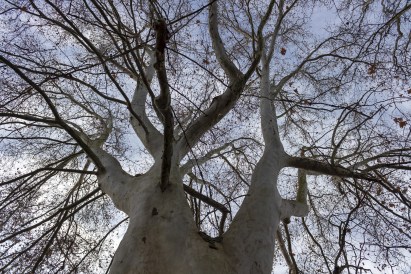
sycamore-tree-4704744_1920I shook my head and pinched my arm, hoping to wake from the nightmare. I winced at the sharp pain. 

“Cassie, can you see me?”

Yes. Can you see me?

“No.”

Silence followed.

She had to be thinking. I could almost see her head cocked to the side, her ponytail dangling, her blue eyes clouded by thought. Why couldn’t I see her? She could see me. She said as much. So why couldn’t I see her? She had to be wondering the same thing.

“Cassie,” I hesitated. “You’re dead.”

Who knew ghosts could cry? Her sobs echoed all around me. The sycamore tree’s branches shook. Some of the leaves pulled free and fell to the ground as if they were green stars dropping from high in the sky. The water in the pond rippled away from the shoreline. I pictured her dropping to her knees, her face covered by her hands, shoulders heaving up and down.

“Cassie?”

I went to the swing, my legs still weak and my insides buzzing. It was much cooler by the swing. I reached for the rope, slid my hand down to where I thought her hand might be. Fingers. I felt her fingers gripping tight to the rope. In that instant I saw her. She faced me, her legs bent in at the knees. One of her shoes was missing. I saw the many stab wounds, her torn dress and bruised face; her split lip; the tears in her eyes. She released the rope, took my hand, and opened her mouth to speak, but said nothing. Instead, she stood and embraced me, putting her head on my chest. I shivered, and my teeth clacked together as her cold body clung to mine. Then I was pulled into her world, her final few minutes of life. She barely saw the man who grabbed her, catching only a glimpse of jeans and old brown work boots before a potato sack was shoved over her head. He dragged her down to Grover’s Pond, Cassie kicking and screaming until he leveled a heavy hand to the side of her head. The rest, the pain, the fear, the very life bleeding from her, I endured as well. I couldn’t pull free and I couldn’t scream. I could only feel.

Then, as if she knew I couldn’t take anymore, she released me.

I fell to my knees. Freezing and scared, I crawled a few feet away, then vomited. Dropping onto my back, I tried to regain some sense of where I was, who I was. Cassie knelt beside me. Her body was a mutilated mass of flesh and torn clothing, but her eyes—even the one swollen badly from a punch to the face, the same punch that had split her lip and broken her nose—held the beauty I had fallen in love with before she died.

I tried to sit up but couldn’t. After several minutes of a silence between us that felt too heavy to bear, I managed to roll over and get to my knees.

“Do you know who killed you?” I asked between deep breaths.

No.

“I’m going to find out.”

How?

“I don’t know.”

It was the truth. I had no clue how I would find her killer, just that I had to, that no one else would be able to.

The next few weeks I spent looking at people’s feet, hoping to catch a glimpse of badly scuffed brown work boots. When I wasn’t searching for her killer, I spent as much time by the sycamore tree as I could. Cassie sat on the swing and I watched it sway forward then back. A couple of times I asked her to take me there, to take me to her last moments again. I felt bad for asking her to do this—she had to relive it so I could be there, so I could try and see something different, or so I could remember those boots. Each time I threw up after revisiting the horror, after seeing the girl I loved raped and murdered.

And each time she pulled away a little more, as if I were killing her all over again.

Almost a year into my investigation, I found her killer. Tommy Tillman—the deputy sheriff. He was young, not even in his thirties at the time.

I found out by accident.

Back then our little town had donation drives for the police department. It was nothing more than canvassing neighborhoods, Jehovah Witness style, but instead of tracts about their religion, the adults received donation cards, and sticker badges were given to the kids. Sometimes they came around in their uniforms, but more often than not, they showed up in normal, everyday clothes. This was done to give the impression the cops in our town were normal, everyday folks, like you and me and Mom and Dad and Grandma across the river and Uncle Earl down at the bar. If people believed the police were no different than anyone else, then they would be willing to give more. It was a trick that worked. Heck, one year Bobbie Joe down on the farm not too far from us cracked open her piggy bank and gave them every penny she had saved up that year.

Tommy Tillman and one of the other deputies—I forget his name—knocked on our door one Saturday morning. Cartoons were on and Dad had let me skirt my chores until later that day. I don’t really remember what I had been doing or thinking, but I remember Momma saying ‘hello’ in her most polite way possible. I got up and walked to the door. She didn’t try to block my view when I stuck my head between her arm and waist. Officer Tillman was there with his best salesman smile on. And that other guy was right there with him, pitching their ‘give to the police of your town’ spill in his best ‘awe shucks’ manner.

I don’t know why I looked down at their feet. They were the law—I had no reason to suspect them of anything. They were supposed to protect us, not hurt us. I glanced down and saw those brown scuffed boots at the end of a pair of blue jean cuffs. Right then there was nothing else in the world. Momma was gone. The house was gone. The other cop was gone. The coming summer was a myth, and I swear, the world could have ended right then and I wouldn’t have known it. I looked up, following the blue jean pants and white T-shirt up to Tillman’s toothy smiling face.

“What’s wrong, kid?” he asked, that salesman voice still trying to make the politician’s pitch. “You look like you saw a ghost or something?”

I shook my head, pulled free of Momma’s arm and backed away. I stumbled, caught myself. I tried not to run, but by the time I was at the bottom of the steps leading to the second floor, I was in full sprint.

I went to bed early that night, telling Momma I wasn’t feeling so good. She checked my temperature, said I felt cold to her. Of course, I did—I had found Cassie’s murderer and there was nothing I could do about it. Contacting the police would do no good. Telling my parents? I thought about it. They wouldn’t have believed me. How many adults actually believe their kids about these types of things? Back then, not many. Instead, I kept an eye on Tillman, watching to see if he would strike again. During that time he didn’t, and Cassie’s death appeared like a random murder. That’s probably how Tillman wanted it to appear.

Dad died two years after Cassie. Mom moved us away, closer to her family in Nebraska. Years passed and seven other little girls, around the ages of eight to twelve, disappeared from around my hometown in the south. None of them were found. I knew who had taken these girls, and more importantly, I knew they were all probably dead. I didn’t find all of this out until I left home at eighteen and headed for a small college in South Carolina—less than a hundred miles from where I had spent the first eleven years of my life.

We still owned the old house and farm, but time and the elements had worn it down. Windows were broken, and a wino had moved in. The inside was a wreck.

Down at the sycamore tree, the rope that had once held the swing was frayed and the swing itself was missing. I got on my hands and knees, searched through the decaying leaves and found it not too far from the base of the tree itself. It was wet, but still solid enough to hold in my hands without it crumbling, to hold close to my heart.

“Cassie?”

I waited, repeated her name and listened. My heart sank. That familiar broken feeling crept into my chest. I had been away too long. She was gone.

Joshua?

Like the first time I heard her voice after her death, I almost ran away, not believing what I heard. At the same time, I thought it was just my desire to see her, to believe she was still there. My emotions ramped up.

Then it came again, soft and hollow, like an echo. Joshua.

My heart lifted.

“Cassie?”

You came back.

“Of course, I did—I never wanted to leave.”

I’ve missed you, Joshua.

The frayed rope swung slightly. I reached out, grabbed it. I saw her. She was still eight, still had that shredded dress on and all those stab wounds. I hadn’t expected that. To be honest, I don’t know what I expected. She died when she was eight. It’s not like she could have aged as a ghost, but part of me thought she would have been the same age as me. It was a ridiculous notion. The dead don’t age a day after they die.

“I’ve missed you too, Cassie,” I said, paused and then blurted out the only thing I knew to say. “I know who killed you.”

You do?

“Yes—and its time he got punished.”

We talked for a while, me and the ghost of the girl I still loved. Then I went back up to the house. The interior was wrecked worse than I thought it was and the remnants of where the bum had slept at one time remained in the corner near the back door. I searched the house, found it empty.

Instead of waiting for the homeless person to come back, I called the police from my cell phone, told them I wanted to speak to the sheriff. Turns out the sheriff was Tillman. An hour later, he met me on the front porch of my childhood home.

“What’s all this about, Mister …?”

“There’s a bum inside my house.”

“This is your home?” Tillman raised an eyebrow. He had changed some during the eight years since I had last seen him. His hair was still dark, but he wasn’t as lean as he had been—good eating had filled his body out. He didn’t wear his sheriff’s badge prominently on his shirt like I thought he would, and he certainly didn’t flash that car salesman’s smile.

“It belongs to my family,” I said. “I want the bum gone.”

“When was the last time anyone lived here?”

“Does it matter?”

“No, I reckon not.”

Tillman walked inside, his thumbs tucked in his belt loops as if he were going to just stroll on in there and have a word of peace with some drunk and that would be that.

“There’s no one here,” he said after searching the house.

“Maybe he went out the backdoor when he heard you pull up.”

He gave me a curious look, a suspicious look. “You said he was in the house.”

“He was, but he might have gone around back.”

Tillman made his way outside and down the steps. He turned around in a half circle, scanning the yard or maybe just appearing like he was. His hands went into the air and he was about to say something when I yelled.

“Over there. He ran behind the sycamore tree.”

“What? Where?”

“The sycamore tree. He ran behind it. I just saw him.”

Some things in life I’ve never been good at: Math. I hated the subject growing up and barely passed every math class I was ever in. Social gatherings. I’ve always been somewhat of a loner. Affection. I’ve only told one person other than my mom that I loved her, and she was dead. Lying. I’m just not good at it. And I think Sheriff Tillman saw right through my attempt at getting him out to the sycamore tree.

If he knew, he didn’t completely let on. He walked slowly out that way, through the tall grass and unleveled ground. He neared the sycamore tree where a picture had been nailed to it. He yanked the photo free.

“Recognize her?” I asked.

He glanced toward me as I swung at him. I caught him below the left ear. He fell to the ground, rolled onto his feet and into a crouch. He drew his revolver, aimed at me. “What do you think you’re doing, boy?”

“Her name was Cassie. You murdered her eleven years ago.”

“I don’t know what you’re talking about, punk, but you’re under arrest for assaulting a police officer.” He spoke the typical cop words in the typical attempt at intimidating me. 

“The other girls—you murdered them, too, didn’t you?”

Full recognition dawned on Tillman’s face. His eyes grew slightly bigger than normal, and then he squinted. A smile—yes, the same smile he used on women to get them to donate money to the police department—appeared on his face. He laughed. “You think you’re smart, kid?”

I shrugged. I don’t know what I was thinking not having a weapon with me. Maybe I thought love would protect me. Maybe I thought I was tougher than I really was. Tillman pointed his gun at me, pulled the trigger. The bullet tore through my shoulder socket, shattering bone and coming out my back. I fell to the ground, blood seeping into the hot earth. Tillman’s shadow loomed over me, the sun behind him. Shading my eyes I saw the revolver a couple of feet from my head. I was going to die, and I was okay with that. Then I could be with Cassie again. For a brief second, I hoped I would be eight as a ghost and not eighteen.

No!

Startled, Tillman spun around. I didn’t see her as clearly as I had before, but Cassie was there, a blur of gray and white. She rushed at him, sinking both of her ghostly hands into his ribs. Tillman fired several times, the bullets striking the ground near his feet but doing no damage to Cassie. His mouth dropped open and his eyes—full of amusement earlier—grew wide in fear. I hope it was the same fear Cassie had felt as he raped and then stabbed her to death.

She held him there as his body shook. Another round was fired from his gun. I think he tried to scream, but nothing came out. Cassie did scream, her voice the same hollow sound, but so much louder, as if there was a microphone to her mouth. Her hands stayed buried in his ribs until his face turned blue and he collapsed, dead at her feet.

Somehow, love did protect me.

I dropped my head to the ground and closed my eyes. I welcomed a death that never came. Instead, I heard Cassie crying for several seconds before the sound faded. I opened my eyes and caught a glimpse of tears in her eyes before she vanished.

Folks around here say Tillman up and left. Turns out another cop had the same suspicions I did and had gathered enough evidence to prove the things he had done. It was enough in the eyes of the townspeople to believe he was guilty even though they haven’t seen him since.

That was nearly four years ago.

I have since moved back into the old family home and have been renovating it the best I can. I hung the swing from the same branch it used to be on. Each day I walk out to the sycamore tree and sit in the shade. I call for Cassie, but she’s gone, this time probably forever. I hope I’m wrong. I hope one day the swing will sway again; that I’ll hear her voice, and maybe, she’ll tell me she loves me one more time.

__________

A prompt-based contest story. The original version was much shorter than the one here. Sadly, I can’t recall what the prompt was, but I can say with certainty the story won that particular challenge.

It originally appeared on the now defunct House of Horrors website back in November of 2009. It can also be found in the short story collection, Southern Bones.

If you enjoyed Beneath the Sycamore Tree, please share this post to your social media pages and help me spread my stories to the world. Thank you, in advance!

Courage (Free Fiction)

Courage

A.J. Brown

Carrie rounded the corner and came to an abrupt stop. Several kids—older than her, she thought—ran toward and by her, most of them looking back. She didn’t need to ask what was going on or why everyone was running. She could see.

Patrick Mason held his lunch box in front of him as a shield, Spongebob on the lid. His green eyes were big ovals full of tears. His bottom lip trembled, and a whine came from his throat. His back was pressed into the corner, his left shoulder taking a poking from one of Marty Hatfield’s meaty fingers. The big bully towered over him, his long brown hair hanging along the sides of his face. His shirt and pants were a matching black and a chain ran from his back pocket to a belt loop on his hip. 

“You watch where you’re going, wimp,” Marty growled. He leaned down until his nose was inches from Patrick’s. “Do you understand me or are you too dumb for that?”

Patrick didn’t move. Neither did Carrie. She stared at the bully and the victim, her eyes as big as Patrick’s, her hands clutching tight to the straps of the little pink book bag on her back. Her heart pounded. She wanted to turn, to hurry around the corner in hopes that Marty wouldn’t see her.

That hope fled when Patrick’s eyes shifted from the bully to her. Marty turned in her direction. His brown eyes were slits, and his lips pulled down in an angry frown.

“What are you looking at, pigeon toes?” he yelled. Spittle flew from his mouth.

Though Patrick didn’t speak, his eyes begged, Please help!

“Nothing,” Carrie said, shaking her head quickly. She’d seen this type of thing layout before. Angry monster and weak victim. Family life had showed her that scenario all too often. Interfering with the monster meant attracting it’s wrath. 

“That’s right, little girl. You haven’t seen a thing. Get out of here.”

Carrie shook her head and retreated the way she came. She half hobbled, half ran, her feet pointed in, as they always had. She rounded the corner and continue along the hall, her heart in her throat, fear tapping her on the shoulder until she reached the exit and pushed on the door. It opened with a loud, metallic clank and she burst through it and started down the steps, her legs carrying her as fast as they would go. Halfway down, she stopped. Her breaths came in labored gasps, her heart thump thumped, and tears fell down her cheeks. She leaned over, her hands clutching tight to her knees.

“I’m safe,” she said between breaths. “I’m safe. He didn’t … he didn’t …”

Carrie looked back at the door so suddenly she almost pitched sideways. That would have been bad. With at least seven more steps to the bottom, the fall would have been painful and worse, she believed, than Marty Hatfield smacking her once or twice. The door was closed. There was no Marty there. He hadn’t had second thoughts about the little girl who saw him beating up the special needs kid who didn’t bother anyone.

“I’m safe,” she said and took a deep breath.

What about Patrick?

She shook her head. “He’s not my problem.” 

Carrie made her way down to the sidewalk, got a few feet onto the lawn before she stopped again.

She recalled his wide eyes, the message in them: Please help. He was scared, and she left him with Marty Hatfield. “I can’t help him. Marty’s much bigger than me, and he is mean. I’m not mean. I’m just … me.”

But Patrick is little and … and …

Carrie looked back at the school. Its red brick structure looked uninviting. The steps looked like a long white tongue; the doors like a giant mouth, hungry for little girl flesh. She thought the halls were the monster’s throat and Marty waited in its belly to finish off what the teeth of the giant beast didn’t. A shiver traced up her spine, sending chill bumps along her arms, legs and neck.

“There’s nothing I can do.”

lockersCarrie looked down at her feet, ashamed for leaving the kid behind, but terrified of the bully who had everyone else running, too. Her toes pointed inward. Her shoes were heavy clod hoppers, the insoles soft foam pads to support her high arches. She hated that she had been born with ‘defected’ ankles and legs. She was a  ‘pigeon toed brat’ as her dad put it once when he was in an alcohol fueled grumpy mood.

Defected. 

Pigeon toed.

She frowned. If the only thing wrong with her were a couple of turned in feet and she got picked on for it, how much worse was it for Patrick, who was small for his age, frail in some eyes, painfully shy and who often found it difficult to talk?

Can’t someone help him?

With that thought came a second, more powerful one. You’re someone.

“But … but …”

Carrie’s shoulders sagged. Her conscious was right. No one else would help Patrick. Everyone ran. But she had seen him cornered by Marty, had seen that fat finger poking into Patrick’s shoulder, had seen those sad green eyes begging for her to help him.

She looked up to the sky as tears tugged at her eyes. White tufts of cotton hung in the canvas of blue. An  airplane flew by high enough she couldn’t hear it. “I’m only ten,” she said. Her eyes remained on the sky, on the airplane that quickly faded from view, as if waiting on something from high above to tell her ‘it’s okay, Carrie, don’t worry about Patrick, he’ll be all right.’ No voice came, and deep inside she knew Patrick wasn’t going to be all right.

“Okay. Okay.”

Carrie took a deep breath, let it out and wiped at her eyes. She started back toward the school. At the steps, she looked up into the mouth of the beast, never minding she was already on its tongue. She took the steps one at a time, reached the landing and then the door. The handle was cool in her sweaty palm.

Another breath.

I can’t do this, her mind screamed. Her father would have left Patrick to his own devices. He would have called him a little wimp who needs a good beating to right his ship. She hated her dad. He had been a bully, just like Marty.

“I have to,” she said. “No one else will.”

She opened the door and took several steps up the hall, her shoes clopping hard on the floor. Carrie looked down at the black and white shoes, the heavy soles and toes made it impossible to walk quietly. She sat down, unlaced them and pulled them free. With a shoe in each hand, she hobbled up the hall, her toes pointed in, her hips and shoulders swaying with each step.

She heard crying, even before she reached the corner. No doubt Marty had hit Patrick by now. Her heart sank into her stomach. Her skin felt cold. Her breaths were sharp and quick.

The sound of a hand on skin stopped her short of the corner. Her heart stopped right along with her feet. More crying came, and one strangled word was mixed in there, “Please.”

“Please what!?” Marty yelled.

“Please.”

“Please what?!” Another slap came. 

“Please.”

“Please what?” Marty yelled again.

Her breath came back to her and she forced herself to round the corner. When she did, her stomach knotted and she thought she would throw up.

Marty stood over Patrick, his hands clutched into fists. Patrick’s lunch box lay open on the floor, its contents spilled out. Patrick lay in the fetal position, his hands over his head, but not doing a good job of covering it. His bottom lip bled and there was a red hand print on the side of his face.

“Please,” Patrick said.

“Please what!?” Marty raised his fist.

“Please stop!” Carrie yelled.

Marty turned. His face was red, but Carrie didn’t think he was embarrassed. Maybe surprised, but not embarrassed. She thought he looked joyful, like her father had when he beat her mom. “Look at you,” he snarled. “Little pigeon-toed girl coming to save the special needs kid?”

Anger raced through her veins. Heat filled her face and ran into her neck. Her heart sped up. The look of fear she saw on Patrick’s face was the same as the one on her mom’s before … before she fought back, before she finally did something about the monster terrorizing them. “Leave him alone,” she growled.

Marty stepped over Patrick and glared at Carrie. His hands were still clutched into tight fists. “What if I don’t?”

She didn’t know how to answer that question. She just knew to act, and she did. With all the strength she could muster, she slung one of her heavy shoes at Marty. This time surprise bordering on shock appeared on his face. The heavy heel of the shoe struck him in the chest, knocking the wind out of him. He stumbled backward. His feet bumped into one of Patrick’s legs. His arms pinwheeled as he tried to keep his balance. He fell, landing hard on his bottom. His head struck the wall. Both hands went up to the back of his skull.

“Get up, Patrick,” she said and tottered over to him. She held one hand out. He took it and stood. He looked down at Marty, who still lay on the floor holding his head. “It’s okay, Patrick. He’s not going to hurt you anymore.” To Marty she said, “Are you?”

“I’ll get you for this,” Marty said. All of the intimidation he exuded seconds earlier was now gone.

Carrie thought of her dad, of her mom and the fear she experienced because of him. She knew Marty meant what he said and he could be even more dangerous now. But he had been bested, by a girl at that. He would threaten her, but that was all he would do. She knew this as surely as she knew her dad would never lay another hand on her mom. 

“No, you won’t,” she said and took Patrick’s hand. “You’re going to leave me alone, and you’re going to leave him alone. You’re going to leave everyone alone. ‘Cause if you don’t, they won’t find you, just like they won’t find my dad.”

Marty’s eyes grew large. There was now fear in them. His jaw hung open and one hand still rubbed the back of his head. 

“Do you understand?”

Marty shook his head slowly. 

“Let’s go, Patrick,” Carrie said. 

The two rounded the corner and left the building without looking back. Outside, she wiped his mouth with the sleeve of her shirt.

“Thank you,” he said, his voice soft. It was the first time she had heard him talk.

Carrie smiled, shrugged her shoulders and tussled his brown hair. “You’re welcome.”

Like her mom, Patrick no longer looked scared.

__________

This story was based on a simple prompt: Courage. It was a contest entry, one of several thousand entered for one monetary prize. Sadly, this piece didn’t win the story, but that is okay. I got a cool story about a bully being stopped in the act of terrorizing a smaller kid. 

If you enjoyed Courage, please like, share and comment. I truly appreciate it.

She Had Fangs (Free Fiction)

She Had Fangs

A.J. Brown

She had fangs. I noticed them when she smiled at Billy from across the bar. 

“Yo, you see that?” Billy asked after slapping my arm. His eyes, that had been dulled by alcohol a few seconds earlier, lit up with possibility. “She wants me, Jordy.”

“Are you sure about that?” 

“She smiled at me, man, and I know that type of smile.”

“Really?”

“Yeah, that’s a woman who wants a man, and I’m that man.”

“Did you see her teeth?”

“Oh, I saw them, Jordy. Teeth like that can …”

“Teeth like that can what?” the woman said, her voice soft and sultry and inviting.

We both jerked our heads toward her. I don’t know about Billy, but I didn’t hear her walk up. I didn’t even feel her there until she spoke. 

“Umm …  umm …” Billy stammered. I understood why. From a distance she was attractive and sexy—a trick alcohol often played on your mind. Up close, she was breathtaking. Her skin was pale, and against the backdrop of the dimly lit bar, it almost glowed. Her blue eyes were almost a smokey gray and her lips were full and smooth and kissable. She wasn’t petite, but had more of a full figure, one that Marilyn Monroe would have been envious of, and her green dress clung to every Monroe-like curve.

“Would you like to find out what these teeth can do?” she asked Billy. One of her hands touched his chest, the nails on the long fingers painted a dark shade of purple. 

“I’d love to know what those teeth can do.” He had a stupid smile on his face, showing off his yellow stained teeth. 

Vampire 2She took his hand, pulled him from the bar and pressed her body against him. Their lips touched and she kissed him for several long seconds. I’m not going to lie and say I felt a little jealous. I didn’t. I was a lot jealous. My chest tightened as I watched her kiss that bum, Billy, a womanizer if there ever was one. He would bed her, thank her, maybe even drop a twenty on her nightstand, get dressed and leave her in the bed wondering how she managed to let him in her life. Then he would come back to the bar and talk about his conquest. I hated him.
“Come on,” she said and led Billy through the bar and toward the back door. A moment later, they were out the door and into the night.

I sat at the bar, beer in hand, shaking my head. What did she see in him? How could she even want him? Billy didn’t even like curvier girls, preferring the taller, thinner ones. I took a swallow of my beer. It tasted stale. I set the glass on the bar and dropped a five beside it. I lifted my hand to order another one, then stopped. Her teeth … they had been long and sharp, as if she had fangs.

I stood fast. The stool shot from beneath me and clattered on the hardwood floor. The barkeep said something, but I missed it. I made my way through the bar and out the back door. 

The air gripped me in its cool embrace, just as she gripped Billy in her pale arms. I felt the chill run up my spine, but a heat stir below my belt. She had Billy pinned to the wall, her mouth buried in his neck. Billy’s eyes were glazed over and his mouth hung open. The palms of his hands were flat on the red brick wall. 

“Hey!” I yelled.

Her head lifted up and she stared at me. Blood dribbled down her chin and landed on her dress. My breath caught and that heat grew more intense; my jealousy skyrocketed. 

She grabbed him by the hair with one hand and smiled at me. “Do you want some?”

I nodded. It was as if I was hypnotized by the scene in front of me. 

“Come and get some, then.”

I walked toward her, my feet not quite dragging on the ground, but not being picked up and put back down either. I reached them in seconds. She smiled. I smiled back. She turned Billy’s neck, showing me where she had bitten him. I lowered my mouth to his wound and drank.

She had fangs. So did I.

AJB

__________

I don’t write many vampire stories. When I started writing vampires were the subject matter I liked the most. However, vampires with feelings and sparkly vampires kind of ruined them for me. I hadn’t written a vampire piece in over fifteen years when this little idea came to mind. I don’t know if I will write many more fanged stories, but I kind of enjoyed this quick piece.

If you enjoyed She Had Fangs, please like, comment and share on social media so others can read it. I truly appreciate it.

When We Were Kids (Free Fiction)

When We Were Kids

By A.J. Brown

“Remember when we were young and we used to walk on the stones in the stream?”

Brandon had asked that question as they walked along the very stream he spoke of. They were no longer kids and walking outside at any time during the day was more dangerous than ever before. Colby found that thought ironic, considering the state of the world before. 

“Yeah, I remember,” he said. “And when we got tired of walking on the stones, we tried to catch crawdads.”

Brandon laughed at that. It was a sound Colby hadn’t heard in a long while. He had heard screams and yells and crying from people as they died, ran, or ran then died or suffered from that thing called mourning when someone—or everyone—they loved was dead. But laughter was something that sounded foreign in these days. Colby looked at his longtime friend and couldn’t help but smile. 

“What?” Brandon asked.

“You laughed. I haven’t heard laughter since …”

“Since Micah died,” Brandon finished.

“Yeah.”

They were silent for a few minutes as they walked the stream, coming up on the wide section a short footbridge spanned across. On the other side of the bridge was a path that led through a length of trees that opened up into a park where no kids played anymore. Micah died at least a month earlier, but Colby could have never told you exactly when—time wasn’t measured in days and nights anymore, but in minute by minute. He closed his eyes, shook off the thought his friend’s death. 

Brandon stopped. Colby looked back at his friend, at the deeply tanned skin, the hair much longer than it had been when this all started and in need of washing (like the rest of his body), his clothes covered in dirt, blood and who knew what else. He looked, as Colby thought everyone who was still alive probably looked, like the homeless of before. “What’s wrong, Brandon?”

“I wish we were kids again.” He stared at the water, at the stones they had walked across in another life. 

“Yeah. Me too.”

“Life was so much easier back then.”

“Everyone was still alive back then.”

“Yeah, that too.”

More silence followed, then ended when Brandon started for the water.

“What are you doing, man?”

“We can’t be kids again,” Brandon said. His green eyes seem to shine as he looked back at Colby. “But that doesn’t mean we can’t try to have a little fun. Heaven knows we could use some.”

STREAMWith that said, he dropped his pack to the ground, his baseball bat landing beside it. He stepped from dry land onto one of the stones. It wobbled under his foot and Brandon shifted his weight to remain upright. His arms went out, his hands extended, making him look like a stationary airplane. His other foot went onto a flat stone that barely stuck out of the water. Brandon looked back at Colby with a smile that could have belonged to a six-year-old. “You coming?”

Though he knew it was dangerous—anything other than paying attention to one’s surroundings was these days—but Brandon was right. They needed some fun, needed something to make them feel less like the world was ending and more like they had a reason to continue living. 

Colby went to the edge of the stream, dropped his pack and the crowbar he kept in hand. The water was murky and brown and not like it was when they were kids, when you could see the bottom of the stream, the sediment, the rocks, water plants, minnows, and yes, crawdads. The water was cloudy. Though he could see the stones and the mud on them, he didn’t like that he couldn’t see much more than that. Still, he stepped on one of the rocks, pushed on it for good measure to make sure it was sturdy, then put all his weight onto it. He found another stone, this one with a touch of green moss growing along the edges that stuck out of the water. Then he was stepping from that one to another one, his arms out very much like Brandon’s.

For a few minutes, Colby and Brandon, friends since the first grade, and possibly the last two people alive in their world, were kids again. They laughed. Their feet slipped from time to time, getting submerged in the water before they could get back on the stones. For a few minutes the world was right. 

Colby turned around when he heard the startled ‘whoa,’ from Brandon. He saw his friend’s arms pinwheeling, his eyes wide, as he tipped backward, his left foot slipping out from under him. He landed in the stream with a loud crash, water splashing up and coming back down. Then Brandon laughed. 

“DId you see that?” Brandon asked, still laughing. 

“Are you okay?”

“Yeah, man. Nothing like being a kid ag—“

Brandon’s laughter came to a sudden stop. His mouth opened but he didn’t scream. From out of the water came his arm. 

Colby saw the blood before he heard Brandon finally scream. His forearm was missing a chunk of flesh and blood gushed from the wound. Behind Brandon came the corpse that had been hidden by the murky water. It’s bloated head lulled on it’s shoulders. The rest of its upper torso was waterlogged and the same shade of brown as the muddy stream water. It made no noises—the dead’s vocal chords died right along with their bodies. But it bit down on Brandon’s shoulder, sinking its sharp teeth through the wet shirt and pulling it’s head back, ripping cloth and flesh away. 

“No, no, no, no!” Colby yelled and forgot all about trying to stay on the stones. He ran and splashed his way to dry ground, scrambled up the embankment to where Brandon’s pack was. He picked up the aluminum baseball bat with the dented barrel and ran back to the stream. He waded in as Brandon tried to shove the corpse away, but shock and the sudden loss of a lot of blood made him sluggish and unable to pull free. 

A second corpse appeared from the woods. It wore a long sleeve work shirt and what Colby thought was a green pair of pants and heavy workbooks that didn’t seem to fit it’s withered feet. It didn’t so much as walk as it dragged it’s feet across the ground. Somehow, it didn’t fall. 

“No,” Colby whispered to himself as he waded through the water, the bat raised above his head. He brought the barrel down on the muddy corpse. Its head split open with a sickening pop. It fell back into the water, but didn’t sink right away. Colby turned to Mr. Work Clothes, knowing if he stopped to pull Brandon from the stream, he was as good as dead as well. 

Colby met the corpse near the edge of the water. He swung the bat at its knees and Mr. Work Clothes fell onto it’s side. The bat went above Colby’s head again and came down with all the force he could muster. The skull ruptured with a similar gross crack. One eyeball shot from its socket and landed in the water with a plop. Colby swung the bat down several times, screaming as he did so.

The bat slid from his hands when he turned back to the stream to see Brandon floating in the water, his face to the sky, eyes open and blank. Tears filled his eyes and the strength left him. Colby’s legs gave way and he stumbled a few feet before he crumpled to the ground, landing on the soft grass of the embankment. 

Colby cried for several minutes, his last friend in the world now dead and soon to be one of the walking corpses that had killed everyone else. 

Then, as if a sudden realization swept over him, Colby rolled onto his knees. He grabbed the bat and stood. “I can’t let him change.” His voice was hoarse from crying and his eyes were blurry and the lids puffy from tears. He looked at the bat and shook his head. 

Colby didn’t cross the stream by hopping from stone to stone. He went to the bridge, crossed over the water and went to his pack. In the front pouch was the .22 and it was fully loaded. He dropped the bat, took the gun from the pack and took the slow and somehow very long walk (though it was only fifteen or so yards from where he stood to where Brandon floated) to the edge of the stream. 

He didn’t want to step back into the water. As he had feared, they didn’t pay attention to their surroundings and one of them ended up dead, and soon to be undead if Colby didn’t hurry. 

No other corpses came out of the water when Brandon fell in or when I splashed around.

The thought should have been reassuring, but it did little to calm his nerves or set his mind at ease as he stood on the embankment, staring. 

If you don’t hurry, he’s going to change and then you’ll really have issues, won’t you?

Issues was a nice way to put it. The freshly dead were faster, stronger and more limber than the stiffs that teetered on falling with each step they took. They were harder to put down—their skulls seemed harder, at least. No knife will do for the fresh ones. 

“Okay. I’m going.”

Colby stepped into the water, his nerves on edge, his head moving from side to side as he searched the water for anything that might move. At one point, his foot struck a submerged stick, dislodging it. It floated to the surface and Colby screamed, fired two shots at where he thought a head should be. When he saw it was a stick, he laughed nervously as his heart beat rapidly. 

“Get it together,” he said and waded through the stream. He reached into the water, grabbed the back of Brandon’s shirt and started back for dry ground. Once there, he started to slide his hands beneath Brandon’s armpits, then stopped. “All he would have to do is turn his head and then you’re as good as dead.”

Colby looked at the gun in his right hand, then down at his friend. He put the barrel to Brandon’s temple. “I’m sorry, buddy,” he said, closed his eyes and pulled the trigger. The bang sounded like an old party favor they would get as kids—a simple cork-like pop that seemed to echo in a world where noise had become almost obsolete. It was followed by the sound of something striking the water; the bullet, he thought. Brain and skull, as well.

Colby tucked the gun in the back of his belt and grabbed Brandon beneath the armpits. He pulled him to dry ground, then sat beside him.

“Hey, Brandon,” he said. “Do you remember when we dug that grave for Micah?” He nodded, knowing that Brandon didn’t remember. As a matter of fact, he didn’t remember anything at all, and he never would again. “Yeah, well, I’m going to dig another one, so, you know, don’t go anywhere. Okay?” Absentmindedly, he patted Brandon’s leg.

The crowbar was all he had to dig with. He used the claw end to loosen the ground and pulled clumps of dirt out by hand. After what felt like hours, though it had been not even forty minutes, he had a shallow grave dug out right next to the stream, a place of their childhood, one that, at least Colby hoped, Brandon had found some joy and fun at before death claimed him. He pulled his friend’s body to the hole, careful to step into it and drag him along before setting him down gently. 

Covering the hole was easier and took far less time to finish. Colby covered his friend’s body from feet up, ending with his head. He stood, took the baseball bat and drove the barrel into the dirt near where Brandon’s chest was. 

“Rest in peace, my friend. I’ll never forget you.”

Colby took one last look at the grave before grabbing both his and Brandon’s packs and his crowbar and walking away from the stream toward the town they had avoided by following the water. As day gave way to night, Colby sought out refuge in the back of a car that would have been considered old in the before. The owner was long gone, but a blanket had been left behind. Colby covered up and used the two packs as pillows. 

Colby closed his eyes, but before falling asleep he said, “Hey, Brandon, remember when we were teens and we took our girls to the old drive in movies in Monetta? Yeah, me too.”

AJB

__________

In the little town of Cayce, South Carolina, where I grew up is a small park near the police department. There is a stream that runs along the outside of it, a growth of trees separating the stream from the actual park. That is where this story takes place.

When I was a kid, me and a couple of buddies would go down to Guignard Park (not the same park, but yes, still in Cayce) and wade in the water or climb along the rocks and try to keep from falling in. It is here where we would go crawdad hunting. Me and my buddy, Clark, once caught 38 crawdad’s in there and one of them was huge and mean.

For this story, I combined the two parks–the location from one, and the catching crawdads from the other, to create the scene and events of this story. And, if you are wondering, yes, Brandon was based on my buddy, Clark.

(If you enjoyed When We Were Kids, please share this post on social media and help me spread my stories to the world. Thank you!)