Voices, The Interviews: Stephanie (Part 2 of 2)

If you have not read the first part of this interview with a book character, then please follow this LINK to catch up. Please, keep in mind, this interview contains spoilers, so if you have not read Voices, a collection of short stories, please consider doing so before continuing. You can find Voices HERE.

Lisa had known as well, but …

“Did you plan what you were going to do or …”

“I planned the entire thing. I planned it right down to me dying. If it went wrong, at least I would be dead … and free. If it went right, we both would be dead. It went partially right. He died. I …” Stephanie holds up her arms, shows Lisa the long scars that run from wrists to elbow. “… didn’t.”

She had guts to do something about her situation, Lisa.

Scary GIrl KnifeThe voice of Mr. Worrywort is back, but this time the dripping malice it had before is gone. In this voice is the childish taunt of a scared school yard bully, one that knows when he gets home, his dad is going to do so much worse to him than he could ever do to a third grader with a lisp or who wore glasses or, Heaven forbid, who came from a poor family who couldn’t afford to by him decent clothing and he had to wear the same jeans multiple times a week. 

Lisa pulls her legs up the best she can, but the pain in them and in her hip and her back are too much. One of her knees feels loose, as if it will pop out of place. She lets her legs slide down, but this time not crossing them, afraid her ankles might dislocate if she did so. Her shoulders shake and her chest heaves as a sob tears from her.

“I couldn’t do it,” Lisa says. “I couldn’t do what you did. I wanted to, but I …”

And the realization comes to her, furious in its intent. “I still want … I still want to kill him, but …”

But he is already dead and has been for nearly two decades. In the darkest part of her heart, she hopes he suffered and he died a miserable, lonely and hurting man. She hopes he is suffering now in whatever afterlife there is, be it Hell or something else. If it is Hell, she hopes there is a special place for men who rape helpless little children. In her mind she sees him, bent over a smoldering rock as a line of demons takes their turns with him, doing to him what he did to her. This makes her smile, but it doesn’t take away the truth that she wished she had killed him. That would have been more satisfying for her. 

“I admire your conviction,” she says as she thinks about the light fading, fading, fading from her step father’s eyes, until, finally, it winked out all together. She never got to see that, never got to experience the unadulterated joy of watching the very man who ruined everything about her life die. It angers her. It makes her clench her hands into tight fists. Heat runs up her chest, into her neck, then high on her cheeks. 

“How did it feel, Stephanie?” she says suddenly. “How did it feel to end his life? To end his miserable, worthless existence? How did it feel!?” Her teeth are clenched now and she is not asking a question, but demanding an answer. This is no longer about Stephanie. She thinks it is no longer about any of the characters of a freaking book. It’s been about her the entire time. It’s always been about her. But … but … but …

Stephanie smiles. It is something so haunting and full of despair, Lisa believes the answer will not be what she hopes it will be. “It felt like rebirth,” Stephanie says. “It felt like I was cleansed of … of him.”

Lisa feels her own smile forming. It is something she believes looks similar to Stephanie’s, but now she can feel it, now she understands why Stephanie did it. And she longs to have been able to do to her stepfather what Stephanie did to Carson. 

Maybe I can, she thinks. Maybe …

Go ahead, Mr. Worrywort says in that smooth used car salesman voice. Go ahead and invite him into your head. 

“I think I will,” she responds. “I think I will!”

Even if it’s dangerous?

“Especially because it’s dangerous.”

You won’t do it. You can’t do it. The taunt brings with it laughter.

“Shut up!” she screams and turns on her bottom. A sharp pain races up her hip and into her spine but she pays it no attention at all. She looks at the shadow along the wall, at the thing taunting her this entire time. “Shut your stinking mouth!”

Then she looks back at Stephanie, her eyes burning with anger and full of a lust she has never felt before. “Did it help? Did it help at all?” There is desperation in her voice. 

Stephanie hasn’t moved from her spot on the floor. She looks at Lisa with what can be considered pity. “Yes and …”

Screen Shot 2018-01-06 at 2.26.45 PMLisa doesn’t hear the ‘no.’ She only hears the ‘yes,’ and then she grits her teeth tightly together. Some of the characters she interviewed had gone through such terrible things. They all had something in common, something Lisa didn’t have: Revenge. Spencer made a deal with the shadow people and they took Sarah and her boyfriend instead of him. They had picked on him and taunted him, and even tricked him, but in the end, he had gotten the last laugh. Nothing carved his father up with a broken beer bottle, using the very thing his father had thrown at him when he was little. It had shattered and given Nothing his first scar. Sweet Claire shot her dad to death at the biggest awards show of the year. She had acted out the very things she had gone through at his hands, and somehow, she won an award for it. Dane took it a little further than that when she killed her uncle who abused her and then killed every head doctor who came her way, every person who tried to reach her. And poor Brian, who was big for his age and whose father neglected him and his siblings. No, Brian was nothing like his father. Lewis got revenge as well, though not against someone who directly caused him pain. No, he only murdered the man his Michelle had married after she divorced him while he was in prison. It wasn’t jealousy that made him do it, but Michelle’s busted face. Then there was Cody, whose brother Jake, knew the truth about their mother, though with his scrambled brain, he could never really say what that truth was. But it wasn’t their mother Cody got revenge for. It was little Jenny Harris, who died outside of her apartment door, thanks to the brutal rape their father had committed on her. 

And, of course, there was Stephanie, who had been raped by her best friend, a guy she loved, but hadn’t been able to tell at that point. She killed him. She had been courageous and killed him, and she felt good about it. Lisa believes if she asks the young lady if she regrets murdering Carson, the answer will be ‘no.’

What if someone would have stopped each of these people when they first started? What if Nothing’s mom would have left her husband after the beer bottle incident? She wouldn’t have died and Nothing wouldn’t have suffered the way he did. What if Jenny Harris’s mother hadn’t rented the poor child out to one of the drug dealers that first time? Maybe Jenny wouldn’t have died so horribly and alone. What if Michelle didn’t give into her father’s demands to divorce Lewis after he went to prison? Would things have been different? Of course they would have. What if Brian’s father … What if? What if? 

What if you would have killed John when you were old enough to do so? Mr. Worrywort asked, his voice holding the condescending tone of a prosecuting attorney with the defendant on the stand. He wouldn’t have met the other woman. You know, the one with the young daughter? You know you weren’t the only one. Oh no, that man had the lust in him and only little girls could quell it. 

Lisa’s heart sinks as she thinks of that little girl. She never stood a chance. She looks to the door, the one she entered through what feels like ten years ago. She wills it to open. She wills it to do so with a burning hatred in her heart. She wills it, not only to open, but for the very man who started the vicious cycle of rapes and sexual assaults to come strolling through, even though he has been dead nearly two decades. 

Come on, Lisa. Do it. Go kill old dead John.

John! That’s right. All this time she had tried to visualize him, to make him as real as the other characters currently in her head. His name was John and he wasn’t a big guy, but still a giant to a little girl who hadn’t reached first grade yet. 

You can’t do it, Mr. Worrywort laughs. You can’t do it, just like before. You can’t kill him. You’re too scared of him. You’re nothing but a coward.

Something inside of Lisa snaps. “I can and I will,” she growls. Though it hurts her to do so, she rolls onto her knees. The left one wobbles, but she doesn’t wait for it to dislocate or hyperextend. She grabs hold of her seat and pushes up, praying her elbows or wrists don’t buckle with the added pressure. Her arms shake as she does this. Her legs tremble with the effort of standing after being seated on a hard floor for the last few minutes. She gets to her feet and stares hard at the door, even as her body trembles with pain. 

“Walk through the door,” she growls. 

The doorknob clicks and the door opens. In steps a man who hasn’t aged a day, much less one who has died and whose body has probably rotted down to bones with skin like parchment wrapped around them. He is somehow shorter than she recalled. His glasses are thick black plastic with thick lenses that make his blue eyes appear almost as black as his hair. 

She will never be able to recall where the broken bottle came from, but it is there, in her hand. Lisa lets out a hateful scream and runs toward John, the man who has tormented her her entire life. He tries to back away, to turn and run back out the door, but it slams shut. Though her legs and hips and arms feel like they are going to come apart at any moment, she doesn’t let it stop her. The growl tearing from her throat matches the anger in her heart, mind and soul. 

Lisa reaches him as he lets go of the knob. He turns and his eyes are wide and there is no blue to be seen in them behind the thick lenses. She drives the broken bottle downward. John raises an arm to protect himself and the jagged glass rips through his blue uniform shirt, gashing his arm and drawing a crimson spray that splatters against the light yellow wall behind him. 

John backs away, his face no longer that of a predatory monster, but of a scared man, one who knows his bad deeds have caught up with him. Lisa slashes at him again, this time connecting with an outstretched hand. Three of his fingers open up and tip backward. Lisa sees none of this and drives the bottle at him again, this time catching him in the shoulder. John stumbles backward, strikes the wall and falls, leaving a swath of his blood behind.

Lisa, feeling young and spry and moving like a woman in her late teens with no pains in her joints, drops onto John. She slams the bottle down, striking him over and over in his chest, shoulder, stomach, anywhere his arms aren’t trying to block. She doesn’t hear his screams or his pleading. Her brain blocks out all noises. She doesn’t need that nightmare playing over and over in her head. The bottle strikes John’s face. A piece of green glass breaks off in his cheek. 

John tries to shove her away, but manages only to doom himself. Lisa lifts the bottle high above her head and brings it down into the side of his neck. The bottle rips through the vulnerable skin and tissue there, spraying blood on her body and face. He coughs several times. A fine mist of blood and saliva fills the air around them, then falls to the floor like red rain. His shredded hands fall away and his body relaxes against the floor. 

Broken HeartHer breaths are hard and painful. A million pins poke at her legs, hips, back, shoulders, elbows and even her fingers. She stands, slips in the blood, but catches herself on the wall. Any other time and that slip would have sent her to the floor, with one or more dislocations in her hips and legs. Her chest heaves up and down and the look on her face is nothing shy of insanity. It is a look she feels and she likes it.

“Walk through the door,” she says again. The world that was is now gone. She feels heat boiling up from the depths of the Hell parts of her her life has been. 

The door clicks and opens again and a tall man. clean shaven and wearing the bewildered expression of someone who has been in a coma and has just woken. His hair is brown and she knows him right away as Claire Edgecomb’s father. The front of his dress shirt is a blossom of red and his face holds the pale, pale skin of someone who has lost a lot of blood. 

She lifts her hands and in them are guns. She points them at him. 

“No.”

Lisa turns. Standing at her chair is Claire and she is shaking her head. 

“He is mine,” Claire says and lifts her own gun. It is something she has held before and it belongs in her hand. She pulls the trigger. The blast is loud and the center of her father’s chest opens up again. He spins in a macabre pirouette and strikes the wall near where John lays dead. He bounces off the wall and falls to the floor.

Claire lower the gun, and from somewhere else in the room comes the words, “Walk through the door.” 

Like before, the door opens and in walks Cody and Jake’s Dad, but there is no Cody or Jake. Instead, there is Jenny Harris and her torn and broken body. She clutches a huge knife in her little hands. She appears behind him and brings the knife across the backs of his knees. Face first, he falls and clutches at his legs, his screams are loud at first, but end quickly when Jenny brings the knife down on his back.

Again, the words, “Walk through the door,” comes and Nothing’s Dad enters the room. Then comes Dane’s tormentor, her uncle who thought little girls were his playground. Followed by him are the duo of Sarah and Bobby, there bodies mangled masses of flesh, their faces ripped and torn. Brian’s dad appears next, limping, his face sagging on his busted skull. 

Brian walks toward him, a bloodied hammer in hand. He cocks his head but doesn’t raise the hammer. He only stares at the man who had been his father once upon a time on the pages of a book, one where violence seemed to rule each story. 

“No, son,” Lewis says. He steps up beside Brian and takes his hand. “You’ve done your deed. No need to repeat it.”

Brian gives a simple nod, then drops the hammer. It clatters on the floor, one that had vanished while Lisa exacted a measure of revenge on the man who first touched her in a way he should have never done. 

Lisa is breathing much too hard for her liking and there are no longer guns in her hand, but the broken bottle she used on John. The adrenaline that had coursed through her blood earlier is now gone and the pain, true and raw, inches its way along the nerves of her body. She stumbles, weak and exhausted, hoping to get to her seat before she collapses to the floor and suffers the very real possibility of broken bones. 

I’m not going to make it. I’m not going to make it.

Her hands go out in front of her. Not that they will do much good. A fall on this hard floor would surely break bones in her hands and wrists, at the very least. She tilts forward and braces herself for the pain she is about to be in.

It is Stephanie who catches her and keeps her from the devastation of the fall. She holds her up, balances her the best she can, then helps Lisa to her seat. Her muscles ache and she lets out weak breath after weak breath. She closes her eyes. She wants to be done with this. The interviews have opened so many memories and let out so many … voices. She shakes her head and wishes herself back to the room where the writer waits for her return. When she opens her eyes, the room is still there. Lisa lets out a laughing sob. 

“I can’t leave until it is finished,” she says. Her voice sounds so far away, as if it belongs to someone else and she is not in this broken body, but outside of it, watching, watching, watching. 

“Until what’s finished?” Stephanie asks. 

Lisa turns to the young woman who looks at her with a frown that holds more sorrow in it than before they began talking. “This,” she says and lifts her aching arms as if to say, ‘look around you.’

She realizes then that she has one more question for Stephanie. She sits up in her seat the best she can.

“Stephanie, did you learn to trust men again?”

Stephanie doesn’t answer the question. Instead, she poses one of her own. “Did you?”

Lisa laughs. “Did I?”

“Yes. Did you learn to trust men again?”

Lisa gives a slow shake of her head. It’s an easy question to answer, but one burdened by the truth and sadness of it all. “Not completely, no.”

“Then maybe I can help.”

Lisa and Stephanie both look to the young man—well, younger than Lisa, but older than Stephanie. He has a sheepish smile on his face, one that says ‘you can trust me,’ though Lisa doubts that very much.

“How can you help me?”

“I know a place and I know a person.”

Free Fiction Friday–Rite of Passage

Rite of Passage

(The family and I took a trip one spring break to St. Augustine, Florida. It was a fun trip—at least I think it was. I don’t know what the kids thought. They might have a different definition of fun. You would have to ask them to find out if they enjoyed themselves or not.

We took I-26 toward Charleston and then I-95 toward Savannah, Georgia. I-95 took as all the way to St. Augustine. Shortly after we crossed into Florida, Cate saw a man sitting in a lawn chair by the interstate. He had a drink in one hand and seemed to be staring off at nothing. She pointed the man out to me.

Over the next few minutes, I jotted down a few notes, mostly about the man’s appearance. Then I wrote the word ‘Why?’ Why was he there? Why was he sitting in a lawn chair with a drink in his hand? What was he staring at? Well, he’s staring at ghosts,A.J., my mind chirped. Of course, he was. Over the course of the next couple of days I wrote Rite of Passage, mostly at night when everyone was going to bed in the hotel we stayed at.

Some stories you just fall in love with. For me, this is one of them. The reality for Jake Eberly is he was not long for this world and he knew the parade of ghosts was an omen of death, in this case, his own. He faced his mortality and he was ready to move on, to join the rag tag band of journey folk. But not before letting his grandson see the rite of passage.)

____________________

The truck slowed almost a full two hundred yards before it needed to. Jake Eberly held the steering wheel tight, his old hands hurting, the knuckles white. They would be sore later. His arthritis would flair up worse than it ever had. He licked his lips and his breath hitched. Jake swallowed dryness. He pulled off the road, coasted to a stop, and killed the motor.

“Grandpa, why are we stopping?”

Jake looked to the passenger’s side where his oldest grandchild, Camden, sat. He wasn’t an Eberly like him, not in name at least. His mother was Jake’s only child. She married a Hartnett. The bloodline might carry on, but in time it will be nothing more than an infinitesimal amount and the Eberly name will be no more. 

Staring up at him was a good looking kid. Hazel eyes stood out against his creamy white skin; his hair blond and his lips very much like his mother’s. At ten, he was older than Jake was when he was brought here, to the place he now parked.

“We’re here,” he said.

“Where?”

Jake looked out the windshield, then out both side windows. “Here. Now, help me get the chairs out the back.”

Jake opened the door as a semi went by and rocked the truck on its tires. He got out and held back a grimace as the raw pain of Cancer punched him in the gut. He didn’t think he had much time left. Maybe the end of the day. Maybe tomorrow. He was weak and tired and the pain that stabbed at his stomach constantly made him want to throw up. After today, after getting the boy home, he thought he might just lie down one last time and never get up. He looked over at Camden. “Come out this side, Son.”

Camden scooted across the seat, slid from it and closed the door behind him. They went to the back of the truck. Jake put the tailgate down. 

“Grab those, Camden,” he said and pointed at two folded lawn chairs. “I’ll get the table and the cooler.”

The table was nothing more than a square fold up card table, one that had sat in the basement of the old house on South Street since he, himself, was a young boy. Camden grabbed the two lawn chairs, one in each hand, and Jake grabbed the table. 

“Come,” Jake said and went to the front of the truck, his legs weak, and his insides being gnawed at by a disease only death would cure. He set up the card table, pushing down on it to make sure it wouldn’t topple over. With a nod of satisfaction, he looked to Camden. “Let me have one of those, if you don’t mind.”

Camden dropped one on the ground and unfolded the other. He set it down in front of his grandfather. Jake saw pride in his eyes. He couldn’t help but smile. The young boy set the other chair on the opposite side of the table, and then went back to the truck. A minute later he returned with a beat up red and white IGLOO cooler. He set it on the table. 

“Have a seat, young man,” Jake said, reached into the cooler and pulled out two sodas. He handed one to Camden, set the other on the table, then placed the cooler on the ground beneath it. He picked his soda up and sat down. His legs seemed to sigh in relief, but the biting in his stomach continued. He popped the top and took a long swig, letting the carbonated water both burn and chill his throat on the way down. 

“What are we doing, Grandpa?”

The kid looked at him with the curiosity of any young child, something he gathered most kids had at that age, one he certainly had. “We’re sitting down, having a drink.”

“Is that it?”

Jake gave a small smile. He understood impatience quite well. “We’ll probably talk some, but mostly, we’ll wait.”

“Wait for what?”

Another smile was followed by Jake taking a swallow of his soda. He wiped his lips with the back of his hand. “You’ll know it when you see it.”

Camden shook his head. There was no smile on his face, but more of a disappointed frown. He picked up his soda, popped the top and drank from it. 

They sat in silence, grandfather and grandson, both in their own world of thoughts, both probably seeing things far differently than the other. Though Jake didn’t know what Camden was thinking, he had a good idea. He, too, had sat on the other side of the card table between them, when he was only eight. His grandfather, known to him as Gramps, had brought him here in his old Ford back in 1952. ‘We’re going for a ride,’ he had said, and that is what they did. They stopped on the side of the road, back before it became I-95. It was just another road back then, and only two lanes at that. There were more woodlands and less traffic. Sitting by the road with a jug of water between young Jake Eberly and Gramps was as boring as watching paint dry. He would have rather done the painting than sit and do nothing. He told Gramps as much. Gramps gave him a nod, placed his yellowing ivory pipe between his lips and puffed on it. Gramps was patient with him then, just as Jake would be patient with Camden now.

GHOSTSLike Gramps before him, Jake stared off across the busy roadway and spoke words he remembered as if he had just heard them. “I reckon this isn’t much fun.”
“No, Sir, it isn’t.”

“It wasn’t much fun when my grandpa brought me here either.”

Camden looked at him with his big hazel eyes. He was his momma’s boy for certain. “Then why are we here?”

“It’s a rite of passage, Cam,” Jake said.

“A rite of passage?”

“Yup.”

“What is that?”

Jake smiled again. It was a good question, one he didn’t think to ask when his time had come to be here. Even so, he knew the answer.

“My grandfather brought me here when I was a kid. His grandfather brought him before that and his grandfather did the same before that.” He took a deep breath. The explanation, he believed, only got harder from here. “A rite of passage is like a point in someone’s life, much like graduating high school or getting married. They’re important moments in life. Like birth. And death. This … this is one of those moments.”
“Sitting by the road drinking pop?”

Jake laughed at this, then took another swallow of his soda. He smacked his lips, said nothing and stared straight ahead. Cars, trucks, an occasional motorcycle and quite a few semis sped by, most of them doing well over eighty. Occasionally, Camden would let out an exasperated huff that Jake ignored.

“Grandpa, can we go?”

“Not yet, Camden.”

“I’m bored.”

“I’m sure you are, but …”

“I want to go,” Camden said firmly. His brows were creased downward, just as his lips were. His eyes held an angry storm in them. He stood and started for the truck. 

“It’s not time to go, yet.”

Camden turned around. His drink was still in one hand, but some of it had sloshed out of the can. “I don’t care, Grandpa. This is dumb. I could be at home, watching tv or playing video games, or I don’t know, doing anything but sitting here bored out of my mind, watching cars go by.”

“Camden, sit back down.”

“No. I want to go home. I thought we were going to do something fun, or just do something. We’re sitting here, doing nothing.”

“We’re slowing down, son,” Jake said. “We’re smelling the roses, so to speak.”

“The only thing I smell is smoke from the trucks going by. If I would have known this is what we were going to do, I wouldn’t have come.”

Jake set his drink on the table. With quite a bit of effort, he stood, even as his insides burned and grumbled. His shoulders slumped. Children weren’t what they were when he was a kid. They were more impatient and intolerant of things. They were less respectful and more argumentative. As he looked at his grandson, Jake realized something he hadn’t before. Maybe it isn’t the kids who are different. Maybe it is the adults who changed. He gave a simple nod. Yes, that’s it, he thought. And he, like so many others, had changed. 

“Okay, Cam …”

Then, as if time knew it was running out, across the road Jake saw what he came to see.

“There,” he all but shouted and pointed.

“What? Where?” Camden asked. “I don’t …”

Then they both grew quiet. The world around Jake Eberly didn’t matter at that moment. The rot in his gut that had grown worse over the last few months was nonexistent. His smile, something that had been forced a lot over the last year or so, was as real as it had ever been. 

“Grandpa …”

“It’s okay, Camden. Just watch.”

And they did.

From out of the woods came a young man. He wore a white button-down shirt and black pants held up by suspenders. His hair was brown, long and pulled back in a neat ponytail. He held one arm up above his head and slightly out in front of him. In his hand was a lit lantern that gave off no light at all. A rag tag processional of people followed, dressed in clothes Jake thought Camden had never seen outside of a movie, and maybe not even then. The women wore long dresses, and most of them had their hair up in some manner of a bun. The few children wore long pants, mostly browns and blacks, and button-down shirts tucked neatly into their waist bands. Some of the men wore long pants and long shirts; some of them carried muskets and wore floppy hats. 

“Grandpa, who are those people?”

“They are who we’ve been waiting on.”

“There’s something wrong with them.”

“What is that?”

“I don’t know, but …” Camden’s voice changed, as did the direction of his words. “Are they going to cross the street?” There was alarm in his words.

“They most certainly are, Camden.”

“But they’ll get hit by a car.” His voice rose with each word. 

“Just watch.”

The ghostly procession neared the interstate. 

“Hey!” Camden yelled. He stood beside the card table and waved one hand frantically, trying to get their attention. “Hey! Stop! Don’t cross the street!” 

The people neither looked left or right before the man with the lantern stepped off the grass and onto the shoulder and then into the road. 

Camden screamed as a semi rumbled by, going through the young man in the lead. Jake looked down at him to see his hands over his eyes and his back turned to the dead coming toward them. 

“It’s okay, Cam,” he said. 

“No! It’s not. That truck just hit that guy and …”

“It didn’t hit him,” Jake interrupted. 

“Yes, it did. I saw it.”

“You saw the truck go through him.”

“It hit him and …” His shoulders shook, and Jake heard the tears in his voice.

“No, Camden. The truck went through him. Cars can’t hit ghosts.”

“Ghosts?” 

“Yes. Ghosts.”

By the time Camden looked back up, the young man leading the parade of dead had made it to the center of I-95. From that distance, Jake could see his face was ashen and his sockets were sunk in. He looked more like a corpse than a ghost. When he looked back at Camden, the young boy’s eyes were wider than he had ever seen them. Jake didn’t think he was scared, but maybe awestruck by what he saw.

“Are they really ghosts?” Camden asked, his voice dreamy, as if he had just awoken from a long nap. 

“Oh yes. They are the ghosts of your ancestors.”

“My ancestors?”

“Your family—all the members of the Eberly clan who have died are right there.”

The young man was now halfway across the lane closest to them. His hair was dark, and his bottom lip hung open. His eyes were distant, as if he didn’t see them. Several vehicles went through him as they went along their way to wherever they were going. The drivers didn’t seem to notice the ghosts as they sped by. 

Jake looked at his grandson. His eyes were still wide, and his mouth worked up and down as if he were trying to say something but couldn’t find the words. He looked like he wanted to run away. The hand holding the soda can shook badly. His breath came in sharp, terrified bursts. His shoulders still shook, and his cheeks were wet from the burst of tears a few seconds earlier.

“It’s okay, Camden. They won’t hurt you.”

“Are you sure?” His voice quivered.

“I’m as sure as you’re standing there right now.”

“Grandpa …”

Jake sidled over next to him, put one arm around him and rested the hand on his shoulder. Camden wrapped both arms around his grandfather’s waist and buried his face in his side.

“No, Camden. Don’t look away. You may never get to see this again, and if you do, it won’t be for a long time.”

He felt the boy’s face shift from in his side to toward the road, but the kid’s arms still latched tight around him. By then, the leader was in front of them. Jake pulled Camden to the side and let the procession of spirits pass by and through the card table. One by one, men, women and children walked by, their eyes forward, never slowing for the last of the Eberly’s and his grandson. 

As the final ghost made his way across the busy interstate, the strings on Jake’s heart gave a tug. With cane in hand, his grandfather made their way toward them. Hanging from his mouth was the old ivory pipe he used to smoke. Jake remembered his mother asking if anyone had seen it after Gramps died. No one had—and no one ever did after the day Jake and Gramps visited the side of the road.

Tears formed in Jake’s eyes as he recalled being here as a kid and not knowing that would be the last time he saw his grandfather alive. The next time Jake saw Gramps, the old man lay in a coffin in the foyer of the church his grandparents attended. If he would have known then what he knew now, he would have hugged his grandfather tighter that last time; he wouldn’t have complained about watching paint dry; he would have made sure to say, ‘I love you,’ even if it wasn’t the cool thing to do. 

“Gramps,” he said as the elder Eberly reached them. Like the others, he didn’t stop. Unlike the others, he turned his head just enough to look at Jake. 

Not much longer, Jake, he whispered. He puffed on the old pipe, nodded and continued through the table and into the trees behind them. 

Jake didn’t know how long he stared into the woods after the dead were gone, but it was Camden who pulled him free of the trance he had been in. 

“Grandpa, are you okay?”

Jake took a deep breath and let it out. His chest shuddered and the pain in his stomach had come back. He fought the urge to double over and grab his midsection. He nodded and said, “Yes, Camden, I’m okay.”

“You’re crying.”

Jake wiped his eyes and then his nose. “Sometimes it’s okay for a man to cry.”

“Like now?”

“Yes, like now.”

He took one last glance at the trees. The remnants of the dead were gone, but he knew that wouldn’t be the case forever. They would be back. And so would he, most likely on the other side of the road. He rubbed Camden’s head. “Let’s get you home,” he said. 

Camden grabbed the cooler and made his way to the back of the vehicle. Jake reached down for the soda he had been drinking. The can held icicles all around it. He picked it up, felt the freezing cold on his fingertips. He squeezed the can. It was hard like ice. He set the can on the ground by the road and folded up the card table. By the time he was finished, Camden was back and closing the chairs. 

With everything in the bed of the truck, they got in, both doing so from the driver’s side. Jake turned the key and the motor rolled over, caught and rumbled to life. He put it in gear, looked in the side mirror and eased onto the interstate. He glanced in the rearview mirror at the can he had left behind. It didn’t matter that it would be gone when he came back. Like all the grandfathers before him, he left a little piece of himself behind, a little piece of familiarity so when Camden came to watch the parade of ghosts in the later stages of his life, he would remember the day he came here as a young child. 

Jake Eberly took the first exit, circled back across the overpass and entered the interstate going in the opposite direction they had come. He didn’t look to the side of the road when they passed. With a tearing pain in his gut, he drove, hoping he would get the boy home before the pain grew too intense. 

“Grandpa?”

“Yes, Camden?”

“Was that your grandfather—the one who spoke to you?”

Jake licked his lips, nodded and said, “It was my Gramps.”

“What did he mean by not much longer?”

Jake let out a long breath. “You’ll understand soon enough. Let’s just leave it at that, okay?”

Camden didn’t respond. He just turned his attention to the world passing outside the truck. 

At Camden’s house, he let the young boy out and talked with his mother for a minute or two. They exchanged their goodbyes. When he started to get into the truck, Camden went to him. He put his arms around Jake’s midsection and squeezed. It was everything Jake could do not to grimace and let out a groan from the pain. 

“I love you, Grandpa.”

“I love you, too, Camden.”

The boy held on for a few more seconds, then let him go. When he looked down at Camden, there were tears in his eyes. 

“It will be all right, Camden,” Jake said and patted him on the shoulder. 

“I’ll come see you.” He wiped his eyes. “I’ll come see you.”

“I know you will,” Jake said, and then his grandson, with Eberly blood running through his veins, but not carrying the same name, stepped back. 

Jake got in the truck and smiled. A minute later he drove off. In the rearview mirror he saw the boy waving. He stuck his hand out the window and returned the wave. The boy held his soda can in the other hand.

(Rite of Passage appears in the mammoth collection, Beautiful Minds, which you can find HERE.)


The Final Run-A Short Story

The Final Run

“You’re toast, Jack.” 

____________________

“You wanna run?” the small voice called out. Squinted eyes sat above a perk nose, his lips in a tight line below it.

“Do you ever give up, Lee?”

“Nope,” Lee said, sniffled back nonexistent snot. “So, do you wanna run?”

***

Oh, man, this isn’t good. 

Crashman Jack had seen the lid of the box come off and the two large faces peer in. They were mostly shadows with the light of the hanging sun behind them. He knew what those two faces meant. A run was about to happen. Then he tumbled, head over heels, until he landed on the floor amongst all the other Lego blocks, plenty of them covering him. He tried to push the pieces away, to free himself from beneath the rubble of plastic, but couldn’t.

The least they could have done was put my helmet on.

***

Crashman Jack“I’ve got Crashman,” Lee said and shifted through the brightly colored bricks until he found the Lego figure. He plucked Crashman—a character he had made from Lego figures from other sets—from the pile, and then frowned. “Where’s his helmet?”

“Right here,” Jimmy said, holding it in his palm. 

“Give it to me,” Lee said and reached for it.

Jimmy, the older boy by a couple of years, closed his hand before Lee could get the plastic black helmet. “No. You got to pick the driver. I get to pick the helmet.”

“But that’s Crashman Jack’s helmet.”

“Not this time. I’m giving it to the Terminator.”

***

The Terminator? You’ve got to be kidding me. He’s racing the Terminator?

Crashman turned his head slightly, trying to see the two brothers. He had a good view from where he stood on the floor. Fortunately, Lee, who always chose Crashman, stood him up facing the blocks. The Terminator stood across the room, right next to where Jimmy sat building another monster dragster. He was a “two-block” taller than Crashman, thanks to the added piece to his midsection. Jimmy had also colored his face purple with a marker and drew blood running from his mouth. The Terminator wore Crashman’s helmet.

“You’re toast, Jack,” the Terminator yelled.

Crashman said nothing, but his black line smile creased downward. He turned his head and looked on in horror at the dragster Lee was building. Long thin pieces were connected by other thin pieces. Bricks of fours and eights hung off the frame. Wimpy, small wheels adorned both front and back; there was no tail fin to make the car go straight and no bumper to protect the front of the makeshift dragster. One hit from anything Jimmy built, and the car would explode.

I’m doomed.

Laughter came from across the room. Crashman looked at his opponent. The Terminator’s purple face held a crooked smile; his eyes slits. One black hand was raised near his head.

“Thanks for the helmet, Crashman,” he said. “Not that you’re ever going to need it again. Not after this run.”

This has got to stop.

***

Lee heard something. A whisper, maybe? At first he just shook his head, not sure he heard anything at all. He picked up a flat piece, flipped it over and stopped. The voice came again.

Lee, listen to me, Crashman said. Take apart your car and start over. You’ll never win with that thing. You’ll be wiped out and the Terminator will win … again. He wanted to add, ‘and I’ll lose my head,’ but bit back the words.

Lee shook his head and glanced around the room. Jimmy sat cross-legged near the door, his back to Lee, head down. Lee opened his mouth, clamped it shut. Jimmy wouldn’t have spoken to him—at least not nicely. He never did when they were going to run. Too much was on the line: Legos, helmets, mini-figures and sometimes allowances. No, Jimmy hadn’t spoken, at least not to Lee.

Shaking his head, he looked down at the fragile dragster in front of him. That’s not going to work. I can’t beat Jimmy with a stick dragster. Thoughts of how to build a better car spun in his head.

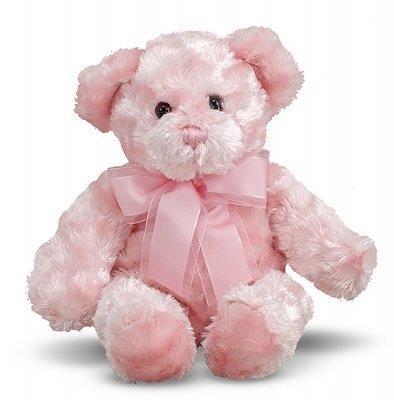
60053-0000-xx-12-1Bigger wheels for the front; even larger ones for the back; a bumper made of four-block pieces and reinforced by a long flat strip on the front; a cab for Crashman to sit in; a tail fin made with a jet tail; a stronger frame made from a wider flat piece, four spaces across and at least twelve spaces to the rear.
Lee stood, walked over to a shelf and grabbed a second box. 

“What are you doing?” Jimmy asked.

“I need some extra parts,” Lee answered and sat back down with his back to Jimmy. After dumping the spare Legos on the floor, he sorted through them, found what he needed and began to build. After several minutes of agonizing and scrutinizing his creation, Lee picked Crashman up and set him in the seat. 

“We’re not losing this time, Crashman,” he said.

***

I have a steering wheel.

Crashman smiled at his new ride. Never had Lee built anything so sturdy. The front wheels were large, the back ones wide. There were Lego plates criss-crossed along the bottom and top that held larger plates together. The front had a bumper made of black bricks, a smooth flat piece stretching its width. The white jet tail had been placed at the back just in front of two yellow cylinders that Crashman thought were boosters. Along the middle section of the dragster were blocks and cylinders put together to form a motor. He sat in a gray seat, a windshield in front of him. 

And he had a steering wheel.

***

“You ready?” Jimmy asked.

Lee turned and nodded. “Let’s run.”

Jimmy set the timer on the old stove clock his mother had given them. It was their go signal. At the sound of the long beep the boys would release the cars, rolling them to their destination, smashing them into each other. The first car to lose a wheel or a driver was the loser. Lee had never won.

They swept the remaining Legos out of the way and went to either side of the room. They both made car engine noises, Jimmy being much louder than Lee, as always.

Inside the cab of his new car, Crashman peered over the steering wheel, his thin line eyes creased into arrows of determination; a scowl covered his face. He wore no helmet.

Across the way he could see the Terminator, his smug expression replaced with concern.

Raise the stakes, Crashman whispered.

“Winner takes both cars,” Lee said without hesitation. The moment he said it he wanted to take it back. He clamped a hand over his mouth, his eyes wide.

“That’s fine,” Jimmy said. “I need more Legos, anyway.”

The clock beeped and both boys rolled their cars as hard as they could toward each other. 

Crashman held his steering wheel tight as his car propelled forward. Normally, his ride was bumpy, the front tires not high enough off the ground to keep the front end from dragging. This time, the tall wheels left plenty of clearance and the drive was smooth and straight—no chance of Crashman going sideways and getting T-boned. The wind whipped by him, the windshield keeping it mostly out of his face. The collision was violent, probably the most brutal one he had ever been involved in. His car rocked as a piece of the bumper snapped off and he went sideways. The car spun, then flipped over. Several more pieces of Legos popped off, sent soaring through the air. The dragster landed on its side, one back wheel still spinning.

***

Lee let out a scream as he looked down at the car he had created. He had been certain he would win with this one. It was almost as if Crashman had willed this car to him, for him to build … and it had failed. 

***

Crashman lay on the floor, not moving, not blinking. A slight pain danced where his shoulders and head would have been connected. In his plastic Lego back and running through to the front, another pain pulsed. His midsection had broken in half, the legs severed from the torso. Crashman’s eyes focused on his body, on the two broken pieces he could see.

His thin painted eyes focused in on the wreckage of the two cars. Just beyond the carnage lay the severed head of the Terminator. His helmet—Crashman’s helmet—had popped off and lay only inches from the two shattered cars. The Terminator’s scarred head faced him, his mouth a black line, his eyes twin ex’s.

Did I win? he thought and closed his eyes.

When he awoke, he sat on a shelf near Lee’s bed. The room was dark except for a white night light. He turned his head, moved his hands and legs. Though he hurt, his body was in one piece again. And on his head sat his helmet. 

(You can find The Last Run along with 59 other short stories in the massive collection, Beautiful Minds by going here.)

Unknown Boy, Aged Four or Five

My 2018 Christmas story. I hope you enjoy.

Marcia looked out the windshield at the throngs of people standing outside the toy store. It wasn’t seven in the morning yet and people lined the sidewalk and stood in the parking lot six and seven deep. She took a heavy breath. There was no way she would find what she wanted with this many people here. 

She shook her head. She flipped her hair back over her shoulders and let the breath out. 

“I should have done this sooner.”

But she knew she couldn’t. It had to be on this day. It had to take place on Christmas Eve.

Marcia opened the door, got out of the car and closed the door back. She walked toward the crowd, stopping when she heard the murmuring excitement of rabid shoppers as the electronic doors opened and they began the mad rush for toys. People pushed forward, as if they tried to pack the store on the corner of Mall Drive. 

“We’re going to be like sardines in there,” she whispered. 

After most of the patrons had gone inside, Marcia made her way to the doors, took another breath, bracing herself for the craziness she was about to face, and stepped inside. 

It was as bad as she feared it would be. People pushed by one another without bothering with an ‘excuse me,’ or a ‘pardon me’ or anything even close. Some folks with buggies had no problems bumping into others to get them out the way. She thought there might be a couple of fights as some customers gave dirty looks or snappy, sarcastic remarks. 

Marcia made her way by most people, detouring in and out of aisles where the crowds were the worst. Though she walked and shuffled nonstop, it still took her twenty minutes to get to the back of the store where the stuffed toys were. Thankfully, there were only a handful of people back there, in the section that boasted the toys that weren’t highly sought after and worthy of being fought over. She thought it a shame that so few people thought their children might like one of the plush bears, dogs, rabbits and kitty cats. 

She frowned. The pickings were thinner than usual. All of the rabbits and doggies were gone. There were still a couple of kitty cats, but none that screamed ‘buy me.’ The small teddy bears were mostly the same, each one a solid color (either white, brown, tan or gray) with a bowtie around its neck, glass eyes, pink stitched nose and mouth. She shook her head and stood straight; her hands went to her hips. She rummaged the shelves until she came across a pink teddy bear and plucked it from the pile. She thought it was right for one of the two gifts she needed. Still, there was the other one, the one she knew would be harder to pick.

Marcia left the aisle and went to the next one over. No stuffed animals. The next one over from that one also held no stuffed animals. Neither did the other two. She backtracked and looked at the original aisle of misfit animals. She dropped to her knees and rummaged through the various teddy bears. Just as she began to give up, Marcia saw it, the animal that called to her, that said, ‘I’m the one.’ She reached for it, pulled it free.

It was a white lamb. Its eyes sparkled blue. Its lips and nose were the same pink stitched type as on the teddy bears, but on the tips of each foot was a split hoof. Its tail was a curly-q and the fur was fluffy and soft. Marcia hugged it and knew it was the one.

Pink_Teddy__19550.1386245092.490.588She didn’t mind standing in line for almost an hour. She didn’t mind putting the purchase on her credit card. She didn’t mind sitting in traffic for another hour, trying to get out of the mall area. She didn’t mind that she got home well after lunch. She didn’t even mind that she would have to get up early again the next day to make the two hour drive to Hope, South Carolina, a little do nothing town on the edge of the nowhere. She was happy. She found the toys she hoped to find.

It was cold when she arrived in Hope the next morning. She drove through the little town, across the overpass and down a road with sleepy houses on either side. She made a left and drove a couple of blocks. Then she made a right and pulled through the large entrance and onto the dirt road that ran between graves older than her grandmother, who was in her upper eighties. She continued along until she came to a grassy area along the side of the path where she pulled over and parked. 

“Come on,” she said and grabbed the lamb. It was colder out in the open cemetery on Christmas day than it had been in the parking lot of an old toy store the morning before. She zipped her coat up and her body gave a shiver. Marcia crossed the lawn, passing gravestone after gravestone, touching some as she went. Finally, she stopped near a chipped headstone with the carving of a square wooden wagon on it. Just below the wagon was the word UNKNOWN BOY. Below the name was a presumed age: AGED FOUR OR FIVE. 

The first time she came here was eleven years previous. Her little sister, Donna, was six then and her hair was pulled back into a ponytail that bobbed when she walked. Her green eyes dazzled and she had been excited to go on one of Marcia’s Christmas traditions, this time to the little cemetery in Hope. 

Donna had a fake flower in one hand and she gripped Marcia’s hand with her other one. 

“Why are we here?” she asked in all of her innocence.

“One of the things I do at Christmas is I go to a cemetery. I take a flower with me. Then I search the headstones for a name or a grave that I think would like a visitor. I place the flower on the grave and tell the person, ‘Merry Christmas.’”

“Why do you do that?”

“Because everyone should receive love on Christmas day.” That wasn’t the total truth, but it was really all Donna needed to know. She didn’t need to know that a friend of hers does something similar at the cemetery where her father is buried, only telling the dead, ‘Someone loves you’ instead of ‘Merry Christmas.’

“Oh.” Donna stood, staring at her flower for a minute. Then she looked up with that wide-eyed innocent look of hers. “Can I pick the grave?”

“Sure,” Marcia responded. “Go. Find the lucky person.”

Donna hurried toward the rows and rows of graves. She searched, diligently, pondering each stone, though she couldn’t really read the names. She asked questions about the ages of each person. Then she came across the stone with the wagon on it. “What does that say, Marcia?”

“Unknown boy. Aged four or five.”

“He doesn’t have a name?”

“I guess not.”

“And he was four or five?”

“I guess so.”

“What does that mean?”

“I guess they didn’t know who the boy was and they thought he was maybe four or five years old.”

“That’s younger than me.”

“It is.”

Donna looked at the flower again, then placed it at the base of the headstone. “Merry Christmas, Unknown,” she whispered, and patted the top of the stone three times gently. 

As they walked back to the car, Marcia holding tight to Donna’s little hand, her sister looked up and asked, “Can we come back next year, but bring him a toy instead of a flower?”

Marcia nodded, smiled. “Of course.”

That’s what they did. On Christmas Eve the next year, they went to the toy store—the same one Marcia has gone to since. 

“What type of toy would you like to get him?”

“A stuffed animal.”

“A stuffed animal it is, then.”

“But it can’t be just any stuffed animal. It has to be the right one.”

Like when searching the graves the year before, Donna took her time searching for the right toy, the right stuffed animal, and when she had, her eyes shimmered and her smile was as bright as it had ever been.

That was a long time ago, and so much has changed since the first year Donna went with her and now. She stood in front of Unknown with the lamb in her hand and tears spilling down her cheeks. Her heart hurt, but she thought it would break later. She knelt, set the lamb in front of the headstone, said, “Merry Christmas, Unknown,” and then stood straight again. She tapped the top of the headstone gently three times. When she took a deep breath this time, she let it go with a rattle and a sob. 

Marcia tucked her hands into her pockets, protecting them from the cold. She hunched her shoulders and walked away. When she reached her car, she looked back, saw the little ghost of a boy standing at his grave. He was pale and his hair was black. He wore a white button-down shirt and dirty black pants. His eyes held bruised bags beneath them. He was holding the lamb in his arms. When he looked up, he raised his hand in a wave. 

Marcia’s breath caught in her throat, but her hand lifted and her fingers moved in a slight wave. She watched as the boy faded, leaving behind the stuffed animal where she had placed it. She got into her car and looked at the stuffed bear on the passenger’s seat. She would make the drive home now, this time to a different cemetery, one with a grave still not a year old. She would go and sit next to it, ignoring the cold. She would set the pink teddy bear on the grave and pat the headstone gently three times. Then she would say, “Merry Christmas, Donna.” 

And she would cry …

AJB

12/23/2018

Voices, The Interviews: Brian

SPOILER ALERT * SPOILER ALERT * SPOILER ALERT * SPOILER ALERT

Before reading today’s post, I want to tell you about our little project. In the coming months one character from each story in my collection, Voices, will be interviewed by Lisa Lee with Bibliophilia Templum. 

No, this is not your typical interview session. What I want to do is make each interview like a story, one that continues until we reach the end. Some of these are going to be short. Some of them might be long. I don’t know. Like you, I will find out just how long each interview is based on the questions Lisa provides me. I don’t know the questions ahead of time and neither do the characters.

Since this is an interview, I will go ahead and say up front there are spoilers in each session. If you have not read Voices, I urge you to do so before continuing (you can pick up a copy here. If you haven’t read the collection, you have been made aware of possible spoilers. 

One more thing before the first session: if you have read Voices and would like to ask a question of today’s character, leave a comment at the end, and I will see about getting an answer from the character for you. Don’t be shy, ask your questions. You may get an interesting response.

SESSION 10

She is tired. Her body sags. Her legs are weak. Lisa wants to take a nap, to go home and be done with these interviews. Yes, she knows it’s not time to be done, but some of these conversations have been intense and that tension has worn on her body, on her mind, and maybe even on her soul.

The cut on Lisa’s arm isn’t too deep. It bleeds, but not like it could have. She sees the blood that spilled down her arm and is dismayed by how bright the red is, or rather, how much of it there is.

“Excuse me, Ma’am,”

She turns her eyes to the young boy standing in front of her, his arm extended, a white kerchief in it. He is a big boy, probably quite big for his age. His eyes hold a distant stare in them, though he looks directly at her. 

“You’re bleeding.”

“Thank you,” Lisa says and takes the handkerchief. 

The boy nods, turns and lumbers back to his seat. She is amazed at how soft and gentle his voice is, especially being such a big boy. No, he’s not fat, just big and tall with sweet eyes that seem too innocent for any wrong doing, especially … Lisa shakes her head. She knows who he is, just as she has known most of the characters.

“Hello Brian.”

“Hi,” he responds. 

“Can we talk? Is that okay?”

“Sure.”

“First, let’s talk about your grandparents.”

“Okay.”

“You love your grandparents, don’t you?”

“Yes, Ma’am.”

“How long have you lived with them?”

Brian looks up at the ceiling. Lisa does, too, and she stares at where Dane’s family once tried to come through.

“Well, I’m ten now, and I’ve been with them since I was four. So that’s …” He holds up his fingers, then counts backwards silently, until six fingers remain. “Six years.”

Screen Shot 2018-01-06 at 2.26.45 PMThat’s a long time, Lisa thinks. “Do you like living with them?”
He nods. It’s a quick jerk of the head. “Yeah. Their place is clean.”

“Clean?”

“Yeah.”

“What do you mean?”

“There’s no bugs, and they don’t smoke, so the house doesn’t stink.”

An image appears in Lisa’s mind. It’s of a boy lying in bed in the middle of the night. On the bed is a large roach. It crawls along the cover and then onto the exposed skin of the young boy. She shivers, pushes the thought away.

“Do you like going to church with grandparents?”

“Yeah.”

Simple, quick answers. As Lisa looks at him, she sees there is no need for him to think up an answer. He’s as honest as they come, and the responses he gives her are genuine.

“Do you get along with your brother and sister?”

“My sister is cool, but my little brother is a butthead.”

Lisa smiles at this. So matter of fact. Brian seems to be okay with the conversation and she doesn’t want to turn it toward something he might not like, but what’s the point of interviewing someone if you can’t ask a tough question or two?

“Brian, tell me about your daddy.”

His expression doesn’t change. The look in his eyes doesn’t waver. No gray cloud comes over him. He speaks as he has for all the other questions.

“He’s my dad.”

“Is there anything about him you wish to talk about?”

“No. He’s just my dad.”

“The pastor at your grandparents’ church said the things your daddy did were … evil. Was your daddy a bad man?”

He shrugs. “He was lazy.”

“Did your daddy do other things that were … bad?”

“I guess. The people came and said we had to leave the house and live with Grandmomma and Granddaddy. Aunt Norry said they don’t do that unless there is a problem.”

“Was there a problem?”

“I don’t know. I guess.”

“Sweetie, where’s your momma?”

“She sleeps a lot. She’s always asleep.”

Lisa doesn’t know what that means, but she hopes it doesn’t mean she had passed away.

“Brian … do you think you were doing God’s work when you … when you killed your daddy?”

“I didn’t kill him. He was already dead.”

This strikes her as profound. The boy in front of her doesn’t believe his father was even alive when he took the hammer to him. He was lazy, so he was dead. Or maybe he died when Ben and his siblings were taken from him and his wife. 

“Brian, are you anything like your daddy?”

Again, no change in his expression. “No, not really. Do you think I’m like him?”

“No, I don’t think you’re like your daddy at all.”

Brian nods again.

“Thank you, Brian.”

“You’re welcome.”

To be continued …


Voices, The Interviews: Spencer

SPOILER ALERT * SPOILER ALERT * SPOILER ALERT * SPOILER ALERT

Screen Shot 2018-01-06 at 2.26.45 PM.pngBefore reading today’s post, I want to tell you about our little project. In the coming months one character from each story in my collection, Voices, will be interviewed by Lisa Lee with Bibliophilia Templum. 
No, this is not your typical interview session. What I want to do is make each interview like a story, one that continues until we reach the end. Some of these are going to be short. Some of them might be long. I don’t know. Like you, I will find out just how long each interview is based on the questions Lisa provides me. I don’t know the questions ahead of time and neither do the characters.

Since this is an interview, I will go ahead and say up front there are spoilers in each session. If you have not read Voices, I urge you to do so before continuing (you can pick up a copy here). If you haven’t read the collection, you have been made aware of possible spoilers. 

One more thing before the first session: if you have read Voices and would like to ask a question of today’s character, leave a comment at the end, and I will see about getting an answer from the character for you. Don’t be shy, ask your questions. You may get an interesting response.

SESSION 1

The doorknob is cold to the touch. Lisa let her palm linger as she takes a deep breath. She closes her eyes and gathers her thoughts. Beyond the door are the people she was sent to talk to, to interview. 

“You can do this,” she says and takes another deep breath. Forcing a smile, she turns the knob and opens the door. 

A room with gray walls and dirty white tiles greets her. The lights overhead are fluorescents and casts dim shadows into the corners where she imagines cobwebs cling to the ceiling and spiders caress the carcasses of dead bugs before eating them. There’s not much in the room. A brown piano along the right wall, its ivory keys yellow and its ebony ones having lost their luster. A table sits to her left, complete with clear plastic cups containing water and various juices. There are no snacks to be seen. 

In the center of the room are sixteen folding chairs, each one upholstered with cushions a shade of yellow out of the seventies. Stuck to the backs of each chair is a sticker that says Holly’s Mortuary. Fifteen of them form the shape of a U and are occupied. One of them—the one in the center—is not. 

Lisa doesn’t focus on any one of the fifteen people waiting for her, each one in their own little world, recalling the stories of their lives, possibly in vivid details, possibly through hazy clouds of the thing we call forgetfulness. Women. Men. Children. They all turn and look at her when the door closes with a click that is too loud in her ears. Her smile falters, but not for long. She forces it back in place, straightens her shirt and walks toward what she calls The Fifteen. She reaches her chair, turns and sits down. 

Scanning the room, she takes in the blank stares, resentful faces, some even with a touch of sadness filling their eyes. She settles on one individual, a young boy in his mid-teens and a pimple on the side of his face. She considers him for a moment. He is not fat, but he is not thin either. Most would call him chubby, something she knows bothers him. He stares at the floor, at his shoes. One of them is untied, the loose ends frayed

“Spencer,” she says and waits for him to look up. When he does, she sees the circle of gray beneath his eyes. “Hi.”

He says nothing, but he does frown, an expression that reminds her of Eeyore from the Winnie the Pooh cartoons. “I understand you are a good student. Is that right?”

He looks at her with those sad eyes.

“Well? Are you a good student?”

Spencer nods. It’s a jerky sort of motion. “Yes … yes, ma’am.”

Lisa smiles. It’s a start. “Good to hear, Spencer. So, what do you do for fun? Any hobbies? Extracurricular activities?”

Spencer shrugs. “I … I don’t know. I umm … There is this place I hang out at sometimes. It’s called The Game Room and it’s … it’s where my friends and I play games. You know like Munchkin and Magic, the Gathering.”

“Interesting.” She stares at the boy. She wants to go easy on him, lob some painless questions his way so he can hit them out of the park. She doesn’t want to scare him, to make him any more nervous than he already is. 

You’re not here to be his mother, she thinks. Time to take the kid gloves off.

“Spencer, what scares you?”

photo-1504401774599-1b5378bfaae3His head jerks up. His eyes are wide. His bottom lip quivers. Lisa suddenly feels sorry for him, but she knows she can’t turn back now.
“Umm … what?”

“What are you afraid of?”

He licks his lips and then wipes his nose. He takes several deep breaths. “Umm …”

“It’s okay, Spencer. This isn’t the outside world. No one’s going to judge you here.”

“I’m scared of shadows.”

“Shadows?”

“Yes, Ma’am.”

Lisa points to one of the darkened corners behind him. “Like those shadows?”

He shrugs. 

“Is there something in the shadows, Spencer?”

He nods. His eyes focus on the corner closest to the door. 

“Are the shadows … bad?”

He looks back at her. His lip no longer trembles and his voice is soft. “Sometimes.”

It’s Lisa’s turn to nod. Her gut tells her she isn’t going to get much more out of him about the shadows. She switches gears. “What about pretty girls? Are they bad?”

“Sometimes.”

“What about pretty girls named Sarah?” 

Spencer stiffens. He looks down at his hands, then back up at Lisa. “Yes.”

“You fell for the pretty girl trap, didn’t you?”

His frown deepens. He gives a nod, but says nothing.

Lisa shakes her head. “What makes teenage boys fall for the pretty girl trap?”

“I didn’t know it was a trap. She was … was so pretty and she needed help with one of her classes and she invited me over. I just wanted to help her out.”  

“Did you really think it was a study invitation?”

Ten seconds pass and he says nothing. Another fifteen follows. “I thought she liked me. I hoped she liked me. No girl has ever liked me before. No girl has ever shown me any attention before, and she … she acted like she liked me.” His voice holds agitation in it, an edge that Lisa didn’t think she could get from him. She reverses gears this time.

“So, the shadows …”

“They’re not just shadows,” he snaps. “They are shadow people and they don’t like humans. They kill. They eat. They don’t like me.”

“But they didn’t kill you?”

He laughs. “No, they didn’t.”

“Why not?”

“Well, they killed Bobby.”

“And Sarah?”

He shrugs. 

“Did you let the shadow people harm Bobby and Sarah?”

The corners of Spencer’s mouth turn up slightly. “I didn’t let them harm Bobby and Sarah. I just let them take them. It’s Bobby and Sarah’s fault they got hurt.”

“Okay. How do you feel about letting the shadow people take Bobby and Sarah?”

Another shrug. “I don’t feel anything.”

“Do you think they deserved it?”

Spencer smiles fully now. It is a haunting expression. His eyes become darker. He isn’t looking at his hands now. He is looking straight at Lisa and his face is glowing. He laughs, a sound that is disturbing to hear. “Oh, yes. They deserved it. I just wish I hadn’t been too scared to watch.”

He sits back in his chair, puts his hands on his knees. “Is that all, Ma’am?”

“Yes,” Lisa says. 

“Can I go now?”

“Yes. You can return to the page now.”

Spencer stands, nods at Lisa. He doesn’t look at any of the others in the room. A moment later he stands at the door and glances back. His eyes are sad again. “Come,” he says and motions toward one of the corners untouched by light. A shadow pulls itself from the darkness and creeps along the top of the wall, staying in the unlit areas until it reaches the door. Spencer opens it. The shadow passes over the door jamb with an angry hiss and disappears before Spencer steps through and closes the door behind him.

To be continued …


No Saving Grace–A Hank Walker Short Story

For those of you who enjoyed the struggles of Hank Walker in Dredging Up Memories, I give you this short story.

[[SPOILER ALERT: The next part of this introduction may contain a spoiler about Dredging Up Memories. If you plan on reading it, I would skip this introduction. If you have read it, then continue on. END SPOILER ALERT]]

This piece takes place during one of the moments of Dredging Up Memories where Hank has been drinking. This is after he finds out Jeanette has died and he has lost Humphrey. This also takes place before he meets Hetch, during one of the many black out moments where Hank loses time and all memory of what happened.

I do ask two favors: if you know someone who would like this addition to Hank’s story, please share it with them. Second, please leave me a comment and let me know if you would like more of these ‘forgotten moments’ of Hank’s life.

Enough talk. I hope you enjoy No Saving Grace.

No Saving Grace

Ay A.J. Brown

He wanted to save them. He wanted to save all of them. In the end, he couldn’t even save himself.

***

They approached in a stumbling heap of rotting bodies, their groans like cries of pain. They appeared listless, as if following some unseen force, drawing them up the dirt path and toward the man standing in the opening at the mouth of that path. Hank had his weapons of choice, a machete slung on his back and a Smith & Wesson .357 in his hand. It held eight shots. It wasn’t enough, but that’s what the machete was for. He also had a bottle of whiskey in the van. Right then, he wished he had taken a swig before he left stepped out of the vehicle, but he hadn’t. His mouth was dry, as if he had been chewing on cotton balls for a few days.

The sun was just coming up in the horizon, painting the world with purples, pinks and oranges. He could see it peeking out from behind the dead. He thought it fortunate he could see them through the encroaching daylight. If he wasn’t able to see them, the chances of taking them out slimmed greatly. It was somewhat oddly beautiful, the way the bodies seemed to have an orange aura around them. If they didn’t mean to eat him, he could have stood there until the sun was fully in the sky and enjoyed the odd beauty of the dead in its rising glory.

“Come on,” he whispered as they came.

Though the Smith & Wesson held eight shots, it only had seven bullets. He had fired one off into the pack to get their attention moments earlier.

Their attention?

Sure. There was only one reason a bunch of deadbeats surrounded anything these days: a living person (or people, if the dead were so lucky, which they often were). He had heard the screams. Whoever was in the car was still alive, but may not have been for long—the dead, they had a way of piling on to the point of windows shattering inward. The constant pressure of weight on glass was like a boiler—eventually things would blow and the living in the vehicle would be dead soon enough, become food for the biters.

He waited, his gun held tight, one hand over the other.

And they grew closer and closer by the second. From where he stood, he watched them lurch forward. Their moans became louder. He squinted, focusing in on the closest of the dead. At that moment he didn’t see them in the color of life. The brilliance of the sun faded and he saw them in gritty grays and whites and blacks, the blood on their skin and clothes like dark shadows. The circles beneath their eyes were like black hollows. The hair on their heads were various shades of grays with the blondes being the lightest. He thought maybe the rising sun aided in the gray tones, but that was probably just in his head. The same as he wished this whole mess was just in his head and he would wake up in the morning and everything would be okay.

Everything would be okay.

His family wouldn’t be dead. His friends wouldn’t be dead. His neighborhood wouldn’t be … wouldn’t be what? Overrun by the dead?

“That’s not going to happen,” he whispered. “This is real life.”

He steadied the gun.

Seven shots. That’s all you have before it’s machete time.

A deep breath taken and released slowly through slightly parted lips. The nod was imperceivable, but it steadied his nerves.

“You want to see the sun rise,” he said and pulled the trigger. The boom of the .357 was loud, the kickback powerful. The face of the biter closest to him exploded—a woman at one time, probably in her early thirties. He could have been wrong. The dead decomposed faster than people aged and she could have been in her twenties or maybe in her sixties, though he doubted that. The back of her head blew out. The force of the bullet sent her backwards, her feet coming off the ground and her hands flying up as she fell.

At the beginning of The End Times, Hank Walker would have probably felt guilty for what he had just done. He may have even apologized. He certainly would have taken the time to bury the dead after ending their ‘second lives.’ Not anymore. Not now. Not after everything that had happened. Now, he took aim at another biter, this one another woman of indiscernible age. Her head disappeared with the blast. She spun around, striking a tree just off the path before falling to the ground.

He took the next four shots, one right after the other, each one finding its home splitting open the skulls of the dead. He slid the gun into the back of his pants. The barrel was hot. He felt that heat through his underwear, but he didn’t pull the gun free. There was only one bullet left … just in case …

Hank pulled the machete free and started down the path to the few remaining biters. He swung the machete at their gray, gaunt faces, severing their heads and splintering their skulls. As he did so, he thought of his wife and son and brothers and father and his best friend. And he swung the machete harder, slicing through bone and skin and brains, his anger rising with each of the dead he took down.

Until they were no more.

He spun in a slow circle, his arms weakened, his legs tired, his breath labored, his chest heaving. There were tears in his eyes as he looked at the bodies on the ground. The dead … he shook his head.

“No.” Hank closed his eyes, opened them to his dead family littering the path, missing most of their skulls. Over there was Davey Blaylock. Down the center of the path was Lee. By the tree was Karen. The two bodies lying together, one on top of the other were Pop and Bobby. Jake was not too far from them, his hand missing three fingers, as if he had tried to ward off the machete. At the beginning of the slew of bodies was Jeanette, her head turned into a canoe, her long blonde hair stained with dark blood verging on brown and bits of brain and skull. There were others—so many others—but they didn’t matter.

Hank’s head spun. His stomach churned. He dropped the machete and fell to his hands and knees. Though there was little in his stomach, he vomited it up. It spattered on the ground in front of him and onto his hands. Some of it splashed back onto his face. Sweat spilled off of him. His face and neck were flushed red with heat. Hank coughed and closed his eyes. He shook his head, almost violently as the tears spilled from beneath his eyelids. He dropped onto his bottom and scooted away from the dead. HIs back struck a tree. He sat there for several long minutes, his heart shattered, his mind confused, his chest hurting. He could use a drink—maybe even the entire bottle back in the van.

When he looked up, his eyes were blurry. He wiped the tears away and reluctantly looked back at the bodies. He frowned, the confusion sinking its claws in deeper. The dead were still there, but they were no longer his family. They were no-name corpses that had one time been someone’s brothers and sisters and mothers and fathers and children. Though that should have relieved him from the guilt of feeling like he had killed his entire family, it didn’t. It did nothing to alleviate the fact that he was all that was left of the Walker clan.

He used the tree to pull himself up from the ground. It was rough, but it was real. It was tangible. Once standing, he held onto the tree, feeling its bark beneath his hands. It grounded him, bringing him back to the reality of his world.

Hank took the few steps to his machete and picked it up. He was thankful it hadn’t landed in the vomit. He slid it back into the sheath hanging on his back. Then he remembered what he had been there for: to save whoever was in the car from the biters.

He turned around and headed up the path.

“Hey, it’s okay,” he called. “The coast is clear. The biters are dead.”

He reached the side of the car and looked in. Three of the windows had been busted out, either from the weight of the dead pushing in or the car already had broken windows. A biter leaned half in, the car, but it didn’t move. There was a hole in its back. Hank pulled the biter from the broken window and dropped it to the ground. A piece of hanger wire jutted from one eye socket. Blood had ran onto it from the ruptured eye.

He looked back at the car. The door had a hole in it—one created by a Smith & Wesson .357. His shoulder sagged. The man that had been screaming inside the car was dead. Blood oozed from between fingers that had clutched at the wound in his chest.

I must have hit him when I …

He shook his head again. The man in the car was dead. He had been young, probably not even thirty. He had been young …

A finger twitched.

Young or not didn’t matter then. Hank wasn’t sure if he even saw the finger spasm, but part of him believed he had. He watched, concentrating on the fingers of the man’s right hand. He realized with an almost certainty that the man shouldn’t turn if he hadn’t been bit. But did he truly know this? Had he seen someone who hadn’t been bitten or sick become a biter?

The index finger moved again. Then his hand jerked, followed by his arm. His eyes opened and his head moved from side to side, as if trying to figure out where he was. Hank believed he was doing just that, trying to figure out where he was, what had happened to him.

A moan came from the man and he seemed to sniff the air. He turned his head toward Hank and bared his teeth. He tried to sit up in his seat.

Hank pulled out the gun. He check the chamber. Yup, one left.

“I’m sorry,” Hank said and put the gun through the window. He pulled the trigger. The sound was deafening. The kickback caused his hand to jerk hard enough it struck a piece of broken glass. Blood instantly spilled from a wound that was deeper than he realized at first. But Hank didn’t really notice it—he stared at the dead man in the car, a good chunk of the top of his head missing. Splattered against the interior of the car were his brains, some hair and a lot of blood. But more than that, he saw the wound on his hand—a clear piece of flesh was missing between his thumb and first finger on the opposite hand that had twitched earlier.

Hank thought to pull the guy from the car, to bury him right beside it, maybe along the path where that car had stopped. It was the least he could do. Hank rounded the car, but stopped at the driver’s side door.

“What does it matter?” he asked. “He’s dead—he’ll never know he wasn’t buried.”

Besides, he thought, he was dead anyway. I just put him out of his misery.

He turned and walked away from the car. His heart sank as he went up the path. It opened to a cottage where three of the dead stumbled around. He didn’t bother being quiet. He unsheathed the machete and split the skulls of the two men and one boy near the open door. Then he stepped inside.

Hank looked around the cottage. He found a few cans of beans and a half empty bottle of water. He also found the bodies of one woman and a baby. They were in a bed and a crib. A bullet to the head ended their lives. On the end table next to the bed where the woman lay dead, was a picture. The couple had been happy. The baby had been asleep in the woman’s arms.

The man had been the guy from the car.

Hank’s shoulders slumped. He wiped his dry lips with the back of one shaking hand. He stared at the picture for what seemed like minutes, but had really been over an hour. When he finally set the picture down, he left the cottage and went back up the path. There was a biter near the car, standing at the front of it as if waiting to see if the man was going to try and run. Any movement would send the biter into motion. Hank didn’t give the old man a chance—he brought the machete down on the top of his gray and dirty head. The biter collapsed to the ground.

It took him a few minutes to get the man from the car and over his shoulder, and it took him over an hour to get back to the cottage. In the house, he laid the man’s body next to what he assumed was his wife. He went to the crib and gently lifted the dead baby from it. He placed the child between Mom and Dad and pulled the sheet up over their heads.

Hank Walker left the house, locking and closing the door behind him. He took with him the beans and the water, and slowly made his way back up the path again. He passed the car on the path and the biters he had slaughtered. Eventually, he came to his van, crawled in and closed the door. He didn’t turn the key in the ignition right away. Instead, he stared out the dirty windshield.

The baby had been a boy. The woman had been a blonde. The man had dark hair, and at one point blue eyes. The house had been nice, but not too big for a family of three. It had been practical. All of it reminded him of his own family, of his own home. But all that was gone. Jeanette was dead. Bobby … he had no clue if he were alive.

Hank reached over to the passenger’s seat. He plucked up the bottle of whiskey, took the cap off and took a deep drink. The alcohol burned his throat and warmed his chest and stomach. He looked at the bottle. It still had over two thirds of the light brown liquid in it.

I shouldn’t drink this, he said. I’ve drank too much lately already.

In the end, he turned the bottle up again, forgetting what he shouldn’t do and doing what he thought he would regret. He wanted to save them. He wanted to save them all. In the end, he couldn’t even save himself.

An Excerpt From Susie Bantum’s Death

Good afternoon Faithful Readers,

Today I want to give you a taste of my newest story. This is the beginning of Susie Bantum’s Death.

I hope you enjoy.

***

She smoked the cigarette like it was the last thing she would ever do. Within three minutes of lighting it and a dozen or so steady puffs, she had dwindled it down to the filter. She flipped the butt away. It landed just by the shoreline of the flowing river. What remained of the red cherry was nothing more than a smoldering black pit with gray smoke pluming up from it.

It wasn’t the last thing she did. No, that thing was the run and jump into the raging river head first. That was odd for a couple of reasons. One, the river had swollen and had risen up the banks over the last three days, thanks to the week of rain the state had received. It was just a reprieve, a lull in the constant downpour that allowed her to take the walk to the river from her little home just up the hill from it in the village. Two, she was fully clothed and what most people would call sound of mind. The papers would say that was not a sound of mind thing to do, jumping in the water, fully clothed during what would be a flood just the next day.

They would be right. It was not what sound of mind folks did. But then again, Susie Bantum was a nobody and nobodies don’t matter to the somebodies of the world.

There were two witnesses who saw Susie take the leap to her death. The first of these was an old man, Marcel Declerque. He had been walking his dog when Susie went by him, her head up, eyes focused forward.

“She looked intense,” he would tell the police, but that wasn’t quite true. Sure, she was focused, but what was taken as intense was nothing more than Susie’s determination to get to the river, to … end it all.

“I only noticed her because Jerry barked at her,” Declerque told the police. Jerry was his fourteen year old German Schnauzer with bad hearing and bad eyesight. For Jerry to even notice her told his owner the woman was ‘just bad news.’

“She kept talking to herself, as if there was someone with her, but there wasn’t. I thought she was a couple laughs away from the funny farm until she jumped into the water.”

The other witness was a kid, aged ten, who had gone down to the river to skip rocks, but he couldn’t find any stones because the water had risen so high.

“I’ve been stuck inside for six days,” Bartholomew Winslow said. “You can’t watch but so many episodes of Spongebob before you get bored. It’s the same thing over and over. Spongebob is annoying, Patrick is dumb, Squidward is, well, he’s Squidward. It gets annoying after a while, you know? And that woman made them all look sane. She walked by me, carrying on a conversation as if she were with someone.”

The police weren’t interested in Winslow’s cartoon stories or Declerque’s dog tales. They only wanted facts and those were Susie smoked a cigarette and then jumped into the river, “where she was swept away like a trailer home during a tornado,” as Declerque put it.  And if it was true that Susie was talking to herself, having a conversation, as the kid put it, then maybe she really had been a few laughs away from the funny farm.

It was Henry Killmander who investigated the case. Not that he was a cop or a detective, or really anyone other than someone who had read about the case in the paper and seen the reports on the nightly news. Henry Killmander lived three houses down from Susie Bantum, and “she wouldn’t just up and kill herself like that,” he told the police. As with events of this nature, “it’s an open and shut case,” the detective said to Killmander before he folded his little black notebook up and tucked it in his pocket. He left with a wave and a “good day, Mr. Killmander.”

And that was that. Case closed. End of story. Move along little doggie, nothing to see here. But that was not good enough for Henry. No, Henry knew Susie and he knew she wouldn’t have just jumped into the river and taken her own life.

***

If you enjoyed the first two pages of Susie Bantum’s Death, please let me know in the comments section below.

Until we meet again my friends, be kind to one another.

A.J.

Apply Within: Short Story Submissions Are Like Job Applications

When he woke this morning, the sun was shining in his face. He cracked an eye and realized, ‘holy cow, I actually got some rest.’ It was a rarity for him. Sleep had not really been a friend of his. She liked to tease him, tell him she was ready for him to come to bed, big boy. Then when he did, she would leave.

This frustrated the guy—let’s just call him J. for now.

So, he would stay awake, often staring into the darkness, wondering if he could count how many times the shadows seemed to shift in the room.

At any rate, when he woke up late for a change, his head wasn’t in its usual state of fogginess. No, it was somewhat clear, not quite like a bright, sunshiney day clear, but more like a glass at a restaurant. It may be clean, but there are still specks on it.

As he lay in bed, still not quite ready to get up—he was already late in doing so, at least his mind told him as much—he pondered. You see, J. is somewhat of a writer. He likes to tell stories and he likes for people to hear/read those stories. But, lately, those stories haven’t been getting read. Probably because he hadn’t been submitting much, and those places he did submit to weren’t accepting much of his work. Yeah, they were saying, ‘great story,’ and ‘we really liked this piece,’ but in the end, many of them were still rejecting the work.

Bummer.

The problem for J. is it wore on his confidence, and he began to lose the one important thing all writers need: a desire to write.

Then came the thought he had been having for a while. Why write? Why do I even want to try anymore?

But wait, another thought came to him. It made more sense than giving up. It made a lot of sense indeed.

‘Why don’t I just start over?’

The previous night he had updated his publishing credits on his blog and realized they had dwindled in recent years. Again, not submitting a lot doesn’t help with that. But, maybe, just maybe, he needed to send some work to a few different places than he had been. Why not try and get his name back out there like he used to?

No, he’s not a big fan of For the Love markets, but if some of them took reprints, he could see submitting to them again. But what about some of the other markets that don’t offer pro rates? Pay is pay, isn’t it?

Yes, he liked that idea. It wouldn’t pay as well, and some wouldn’t pay much at all, but an acceptance and some money and exposure would do his psyche some good. Don’t you think?

‘But am I settling?’ he wondered.

Legit question.

He didn’t believe so. Here is what he told himself:

‘You have to start somewhere. You can still submit to the big dogs, but don’t forget about the smaller ones. Those are the ones that can help you get back into the game.’

Here’s the thing, sometimes you have to step back, and reevaluate the game plan. Sometimes you have to be willing to start small and work your way back up the ladder. It’s like a new job. Most folks start at the bottom and have to work and work and work their way to a promotion. Writing is the same way.

So, here he is, J.—err, A.J.—and he is applying for jobs in the short story world. Hopefully, he’ll get a few callbacks. He may even post what he sends and when and whether or not the stories get accepted, and even the comments.

It’s time to crack some knuckles and get back to work.

~CRACK~

Ouch.

No, he probably shouldn’t crack anything on his body these days.

Until we meet again, my friends…

Broken Shells

Mazzy wanted to walk on the beach.  I thought she was crazy.  I’ve always thought she was a little nuts, anyway.  It was bitter cold—twenty-six degrees, and it was well after noon, so the temperature wasn’t going to rise much, if any at all.  The sun was as high in the sky as it would go before making its descent back the other way.  The wind blew off the ocean, dropping the temperature another ten or so degrees.  We had tried the beach earlier, but that gust whipped her blond hair about her head.  It cut through my coat and sweater and the t beneath it. It made my face hurt and my nose run and my body oh so cold.  We gave up then after only a few minutes.

Still, Mazzy wanted to walk on the beach.

‘Why?’ I asked.

‘I want to look for shells.’

‘Shells?’

‘Yes.  Seashells.’

‘I know what you mean.  Why do you want to look for them now?’

‘We can add them to your collection.’

With that, I donned my long shirt, my sweater and jacket.  She pulled on only a thin coat, not enough to keep the chill from her skin, much less the wind from her bones.

‘You’ll be cold,’ I said.

She regarded me with pale blue eyes that hid a truth in them that I didn’t see.

It didn’t take long to get to the beach.  My hands shoved deep into jean pockets, I still shivered, even with the layers I wore.  Mazzy gave no indication she was cold at all.

There were clouds rolling in, brought by the wind.  A threat of rain hung in the air.

‘We shouldn’t stay out long,’ I said.

‘You can always go back,’ she remarked, knowing I wouldn’t leave her.

For the next hour we picked up shells to add to a collection I had started years before, when I was only a child of six.  I picked up one with frozen fingers, dropped it back to the sand, and plucked it up again.  By then the sun was setting behind the darkened clouds, casting a purple hue in the sky.  I stared at the piece for a moment, before flipping it into the incoming tide.

‘Why do you throw back the broken ones?’ Mazzy asked.  In her hand she held the curved piece of a shell—it was just a piece, and nothing more.

‘It’s broken—it’s not worth anything.’

Again, she regarded me with those pale blue eyes.  They were sadder than I had ever seen.  She held up her piece, turned it over in her hand.  ‘Is that how you see them?  Just broken pieces that have no meaning.  Pieces so insignificant you can’t see the beauty in them?’

‘There is no beauty in broken things.’

She frowned, turned her head down and whispered, ‘A shell is like a life—fragile and easily broken.  Each one should be looked at for what it is: once something beautiful before the world destroyed it, before people destroyed it.’  Then she dropped the broken shell back to the sand, and turned away from me.

I wanted to chase after her, but I couldn’t.  Even if it had been a hot sunny day, my legs would not have moved, and my voice certainly couldn’t be bothered to speak up when I needed it to most.  It was the single biggest mistake of my life.

I looked to the sand.  The piece of shell was there.  I bent, picked it up and had a hard time standing upright, thanks to the cold that had seeped into my bones.  With the dying sun sinking further into the horizon, I caught a glimpse of the purple edge of the shell, the way it turned red, then pink.  It was a beautiful fragment of something much larger.  It was like Mazzy, and in that moment I understood her grief.

Life had been cruel to her, but she kept going, kept putting one foot in front of the other…at least until then.

‘Mazzy,’ I called, but she was gone.  I looked up the beach in the direction she had gone, but didn’t see her.  I saw shoe prints in the sand that led to the water.  You can figure it out from there, right?  I don’t need to go into all the details of how I called her name until I was hoarse, or that I ran into the water up to my knees, even as the tide rolled in harder and harder, pushed along by the bellowing wind, or how her body washed up on the shore three days later, bloated and blue and nipped at by hungry fish, or how I cried until no more tears would come and still my heart lay shattered in millions of tiny pieces.  Or do I?

All that really matters is Mazzy is dead, and I can’t help but believe part of it is my fault.  The words I said echo in my skull, haunting me daily, keeping me awake until the early hours of morning.

There is no beauty in broken things.

I was wrong.

Mazzy was a broken shell, but she was beautiful in her own special way.

I once had a collection of seashells.  They were whole and carefully cleaned and sat in boxes in my closet.  They were beautiful.  They still sit in their boxes, but I haven’t added any to them since Mazzy left.  Now I walk the beach in search of the beauty of broken shells…