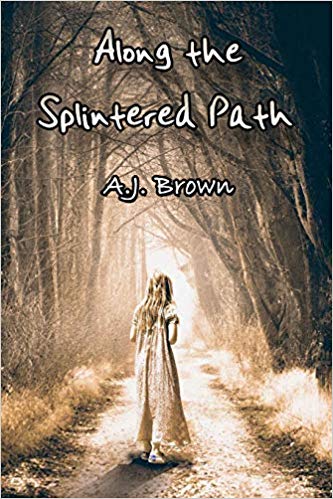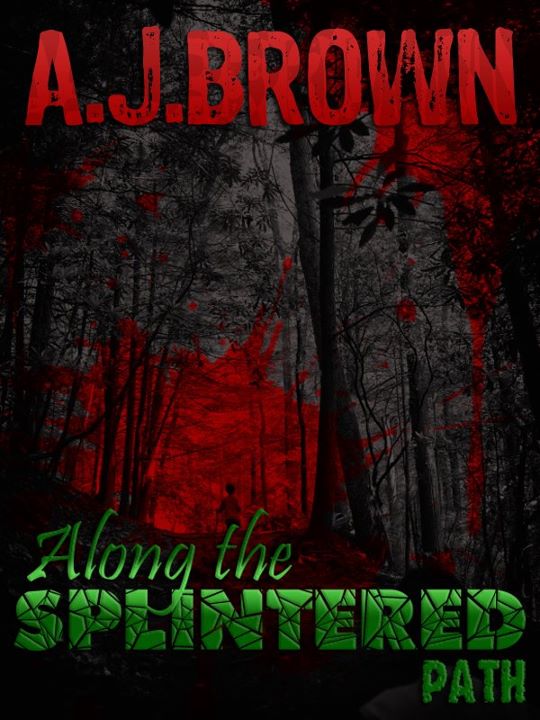
Book Spotlight: Along the Splintered Path

Along the Splintered Path was released in 2012 by Dark Continents Publishing. It was my first experience, as a writer, having a publisher take a chance with my stories to the extent of releasing a short collection of them. For me, it was a massive learning experience. Sure, I had worked with editors and publishers before but on a single story basis, not a book focused solely on me. It was, to be honest, a little intimidating. I don’t know why—David Youngquist and his team were outstanding to work with. With Tracy McBride doing the editing, and being patient with me, especially given I had pneumonia during the editing phase.  

I will be completely honest here, the hardest part of the entire process was coming up with the title for the collection. I had no clue what to call it. Several weeks passed before my friend, Paula, came up with the title in a chat room.  

Why not call it Along the Splintered Path? 

It made complete sense to me. Each of the main characters had a prickly past of sorts. From Phillip, who lost his job, home and family and was living on the streets when his story started, to James, who was trying to save his marriage only to learn there was no saving it and ending up in a broken situation—in more ways than one—to Kyle and Kenneth, whose splintered childhoods were dominated by an angry father with a quick temper and a woodshed. 

Below is the synopsis for Along the Splintered Path

Life is a winding road. It turns and twists and forks and sometimes it comes to a dead end. It can narrow. It can widen. Sometimes, the road is short, while other times it goes on for miles. Sometimes the road is full of potholes. Other times it is smooth, and the ride is joyful. The road might be paved, or maybe it is a dirt road or a barely visible footpath.   

Each road—each path—we take leads us further on our journey. One road can lead to fortune and fame and another one can lead to ruins. Which road you take doesn’t guarantee you reach the destination the way you intended.  

What happens when you take a wrong turn? What happens when you follow the wrong path?  

Along the Splintered Path takes you on a journey of right and wrong, of paths chosen and lives altered. Come along as A.J. Brown tells us three stories of souls splintered by the events of life. How do they overcome those events, or do they overcome them at all? The answers could be the difference between sanity and madness. 

From Starburst Magazine: 

A.J. Brown’s debut novella presents three short stories of moralistic caution, human failings, and dark, unrelenting horror. He has a fresh, unique voice that brings the characters to life with a skill and experience that makes this a real page turner all the way to its deliciously macabre ending. 

So, this guy knows how to write. 

In Phillip’s Story, a tramp discovers a bag of money that changes his life, but in a series of flashbacks we learn that the money has a violent history littered with carnage and death. But in a wonderful twist we see seeds of hope spring from its bloodied past. Phillip’s Story is worth the cover price alone, which by the way is a modest £1.98. 

Round these Bones is a grim survival story of a man who after a bitter split with his partner takes a plunge off a cliff in his car. He lives, although injured, and realises that he won’t be able to make it back to the road without help. Which is a problem, because it’s the grip of winter and it’s cold – oh, so cold. Then he notices the hut: his once slim chance to make it through the night. But the hut isn’t what it seems, and the horror is only just beginning… 

The Woodshed. There’s something to be said about saving the best for last. This is the craft at its absolute best. An evil has infested the heart of a family, and can Karl break the cycle of violence. 

There are more reviews, and you can read them at Amazon or just go to Type AJ Negative and read them.  

To David Youngquist and his staff at Dark Continents Publishing, thank you for that opportunity. It gave me the belief in myself I needed to eventually put out books of my own. 

To you, the readers, if you have never read this collection (or any of my works outside of this site, hop over to Amazon and pick up a copy. If you have read it, and haven’t already done so, can you leave a review on Amazon or even here on the Along the Splintered Path Page

Thank you for popping by and reading my words. I hope they don’t bore you and are, at least, entertaining. 

Until we meet again, my friends, be kind to one anothere. 

A.J. 

About That First Person Perspective…

My newest work in progress is a story told in the first person perspective. I know I don’t need to tell most folks what the first person perspective is, but some may not know, so: the first person point of view is told using ‘I’ or ‘We’ and is, essentially, the narrator telling the story and being an integral part of it (my definition, not Websters).

I enjoy first person stories, but so many other folks, including editors, do not. Why is that? Honestly, I’m not sure. Maybe the use of ‘I’ is used a bit too much in these stories. I know there have been many pieces that I have read where ‘I’, and not the story itself, became the complete focal point. Yes, in first person the story is about the ‘I’ or the ‘We’, but it shouldn’t be the sole focus. If it is more about the narrator and less about what the narrator is saying, or the story he/she is telling, then the ‘I’ becomes redundant and annoying.

It’s hard to write a first person piece and not use/over use the ‘I’. But with practice, you can make that ‘I’ less about the narrator and more about the story. When I first wrote the story, The Woodshed it was all about the narrator, all about his plight with the monster that was his father. That’s not a terrible thing—the story was about a young man, Kyle, who couldn’t escape his past—but the way I told it made the ‘I’ the focal point and not the story. Every other sentence was me, me, me, me. The story was lost on the narrator.

I rewrote The Woodshed numerous times before coming up with the version published in 2012 in the short story collection, Along the Splintered Path. (Yeah, a little bit of shameless self-promotion there.)

After the rewrite, the story sounded much better. Take a look:

We lived in the back woods of the North Carolina Mountains. Our property extended as far as the eyes could see and our legs could carry us. Trees surrounded us in every direction and there was a pond down the hill and around the bend. It was pretty country for those who lived there. If you were a stranger it was just as dangerous as it was beautiful. Father made sure that anyone and everyone knew the land was ours, running off trespassers with his shotgun, warning them to “stay off my land,” and “if I see yah again I’ll bury yah where I shoot yah.”

Those were the lucky ones.

Once I was under the porch burying my penny jar when a stranger pulled his jeep alongside the house. He got out and started up the steps. Before he could reach the door Father greeted him with his old shotgun, the one he called Babe.

You can tell right away that the story is first person, but you can also see the narrator is moving the piece along, and not hung up on himself. Sure, he mentions ‘us’ and ‘our’ and begins to tell about this one incident, buy you immediately know they live out in the country and that, during that one incident, he is under the porch and a stranger has just pulled up in a jeep. You get a sense of direction.

Writing first person is nothing more than telling someone about something that happened to you. A first date. A speeding ticket. Applying for a job. However, you can’t just make it about YOU. In first person, you have to also make it about the reader.

It’s easy to tell a story when standing by the water cooler or talking on the phone to someone who knows you. There are details that are not needed in those cases. However, when writing a story and telling it to complete strangers, you have to do it a little differently. I call it the “Picture This Mentality.” Just because you can see it in your head, doesn’t mean the reader can. You have to help them picture it.

This goes back to the old school way of writing. Back before the advances in technology brought us cars and planes and television and the internet (oh my!) writers delved into the details of stories. If you lived in America, there was a good chance you had no clue what Africa looked like or what England was like. There was a good chance, unless you were a soldier, that you had no clue what being in the trenches in a war was like. So the writers of that time gave the readers great details in order for them to picture the story.

Writing in a manner that gives the readers a good image (yet not an overdone image) helps the readers fall into a story, helps them get to know the narrator a little more without that person talking explicitly about themselves.

Whenever I go into the PTM, I state simply: ‘Picture this, if you will.’ From there I set up the scene and then go into the story. It allows me to describe to the reader in enough detail (again, without drowning them in descriptions) the scenery and what is going on so the story can come more alive. It also helps me to take the focus off of the ‘I’.

Still, a lot of folks don’t like these types of stories. Though I took a guess with the last bit of rambling, I have another thought on it. Bear with me for just another minute.

In my newest work in progress, my main character is an older black male who is from the south and who spent eight years in prison back in the seventies. He’s not a dumb guy, and he keeps to himself for the most part. He speaks in a dialect that is not heavy southern, but is dialect, none-the-less. His grammar is not perfect—far from it—but I wanted to make him as realistic as possible, so he talks the way he talks.

I can hear all the editors out there cringing now.

Let’s back up a step: I’m a notoriously slow reader. I like to picture what is happening and I like to get into the characters’ heads. I like to see it from their eyes, feel it through their skin, hear it with their ears, smell it with their noses, and taste it with their tongues. If they are hurting, I want to be in there with them and feel that pain. So, when I read, I am slow about it, because I really dive into the water, so to speak.

When I read a first person story, within the first couple of pages, I try to get into character, much like an actor. I try to put myself in the narrator’s shoes and the voice in my head reading the story to me, becomes someone else’s (like an audio book, I guess). It is the voice of the character trying to assert itself in the telling of the story. By doing that, I become part of the story and it makes those first person pieces so much more enjoyable.

Do readers do that? Do editors do that? Am I the only person who does that and does it make me some kind of weirdo?

If you have never tried to form an image and a way of being for a character in a first person story, then give it a try, especially if you don’t like that type of narration. It may help you come to enjoy it. Maybe not. But it never hurts to give it a shot, right?

Before anyone writes me nasty comments (and please feel free to if you wish to have a conversation on the subject), allow me to say that this is me speculating on possible reasons why many folks don’t like this perspective. This is not something researched and I didn’t do any surveys. These are just my thoughts on the subject. ‘Nothing more,’ sayeth the Sparrow.

I’ve always enjoyed writing in the first person perspective. If something in this blog helps you come to enjoy reading that point of view, then that’s awesome. If not, well, that’s okay as well. At any rate, I have a story that needs to be worked on and it’s time to get into character.

Until we meet again, my friends…