Concepts

With every book I’ve put out, I have always added notes at the back of the book or at the end of each story. I’ve always loved when authors do this, but so few do. To me, this is like getting an inside look at the process of coming up with a story. It’s a sneak peek into the mind of the author. 

Sometimes there’s not much to the process at all. It can be as simple as overhearing something someone said (as is the case for Digger’s Lament, written in 1999). Or it can be as complicated as seeing something, not knowing exactly what your mind is thinking, but absolutely knowing there is a story there (as is the case for a picture of a woman playing the piano near a railroad track as it appeared on the front page of the New York Times one day in the summer of 2023 which led to the story, Face the Music). Sometimes the idea can come from a picture a child drew (as is the case for On the Rails, based on a picture of a colorful train my daughter drew with people beneath it). It could be something disturbing or funny or maybe even worrisome that you witnessed (as is the case with Cassidy and Owen’s Cemetery For Almost Dead Things). The inspiration could have come from a song (which are the many cases for most of the stories I wrote in and around 2007). The inspiration could come from a real life tragedy (as every story I have written on September 11th has been since that day in 2001).

Amy Winehouse once said in an interview these words: “Music is the only thing that will give and give and give and not take.”

That’s powerful. I agree with her that music gives and gives and gives and never takes. I don’t agree it is the only thing that does that. I believe stories give and give and give and don’t take. Both of them are art. Both of them are created from nothing and become something. Both of them involve words and if a story is done right, it is like a song without music. Every song is rooted in something the creator saw or felt or heard or something that touched him or her. It’s personal. Every story is exactly the same. The creator saw or heard or felt something that moved him or her to create a fictional world from it. It’s a beautiful thing.

When I read about where a story comes from it’s as if the author is telling me these things—me, not you or anyone else. Me. It’s like he’s saying, ‘Hey, buddy, let me tell you how this story came to be.’ I get excited. No one else may care about this thing. But I do. 

Every story, no matter how short or how long, has a background, it has roots in something. It has its own life. And I like to share that life with you.

So, here we are, on this website, me getting personal with you about how my stories come to be. I hope you’ll stick around. I hope you’ll read these pieces. I hope you will comment and have a discussion with me about them. I hope I don’t bore you with them. That would be tragic. 

Thank you.

A.J. 

Don’t Snoop

The following is a memory that was triggered when I made a sandwich to take to work with me. 

*

“Don’t snoop,” Grandmomma always said when I was being nosey or poking around in places I had no business poking around in. “Don’t snoop.”

My grandparents lived in an old two-story house in what some call the mill hill and others call the mill village. I called it home. I spent a large chunk of my childhood there, running the streets with my brother, for the most part. Occasionally, other kids would show up, them, like us, visiting their grandparents for the weekend or the summer or Christmas or Easter break or whenever Mom and Dad needed a break. There were only a handful. Tony. Wayne. David. Bryce. David B. Bryce was the only mainstay for a while, his family living in the corner house of the same street my grandparents lived on. He moved away when I was nine or ten. I can’t remember. David B. was the next to leave, though not by his own will. Getting hit by a car and dragged a short distance before getting untangled beneath it isn’t exactly your own will. Wayne and David—it seemed I knew three sets of brothers with that combo of names—showed up the least of the bunch. Then their grandparents moved away and so did they. Leaving Tony, myself and my brother … and the Barnett brothers, but we steered clear of them and when we saw them coming, we all ran the other way. 

I spent a lot of time with my granddad, playing marbles, watching the Braves on television, walking down to the McDonald’s from time to time for an egg mcmuffin, or heading to Brown’s Grocery for whatever he needed and the occasional bag of candy and coke in a small glass bottle. Those same bottles we collected and took back to Brown’s for money. I cut the grass and cleaned the yard from time to time, all things outside. 

When it came to the inside, that was all Grandmomma, and even trying to help clean from time to time was considered snooping. 

Still, we snooped when we could. I don’t know why, but I think it is something all children do, and many adults as well. We’re curious, people are. We go to a house we’ve never been to and suddenly have to use the bathroom, which may be true. A lot of people peek into the medicine cabinet just to see what’s there. It’s a medicine cabinet, what do we think we will find besides, I don’t know, medicine?

Grandmomma’s house was laid out fairly simple. A living room when you walked in the front door, a bedroom directly off to the left, the door always closed. There wasn’t really a hallway, but small area directly beyond the living room that opened into what could be considered a large dining room. To the right of the dining room was a walk-in closet or a pantry. To the left was a small kitchen with a stove and sink to the right, a table and chairs to the left, and like every other kitchen in America, cabinets for plates, bowls, glasses, canned goods, perishables and whatever else went in kitchens. A small black and white television sat on the counter. Off the dining room was another door. When you opened it, the door to the left was the bathroom. Stairs led up to the second floor where two large bedrooms sat, separated by a small walkthrough closet. There were lots of places to snoop. There was also the back porch with Granddaddy’s various tools and what nots and the metal shed that I thought had been built rusty but somehow remained upright. 

Snooping at Grandmomma’s house wasn’t easy. You had to be almost ninja-like. Well, not really, but we were kids and kids aren’t exactly known for their stealth. Grandmomma had to either be outside, in the bathroom or asleep for us to snoop successfully. Even then we had to be quick. 

There was a piece of furniture in the living room that had a drawer in it and two doors at the bottom. I only ever opened those doors once—there were only boring things like books and papers down there. The drawer was wide and long but not very deep. Still, it held things like jewelry and coins and other trinkets little boys wouldn’t be interested in. The only time I ever stole money from my grandparents came from that drawer. Two case quarters, as Granddaddy would put it. They never said they knew I stole the quarters, but I think they did. I mean, I explained it away when I came back from Brown’s with a little more than what a quarter would buy back then by saying I returned a couple of bottles. Still, I think they knew otherwise. I never looked in that drawer again while they were both alive. It was only after they had passed, when we were cleaning out their house, that I looked in the drawer and recalled stealing two case quarters. 

The bedroom off the living room was rarely a good idea. Though there was a bed and dresser and two small end tables in the very small room, it was mostly used for storage. Getting in and out of there quietly and quickly was next to impossible. Snooping in the pantry was easy. That was the one place Grandmomma or Granddaddy would send us to get some canned or boxed good. The only thing remotely tempting was the rack of clothes to the right of the door when you walked in. There were always boxes hidden by the clothes. Still, if they didn’t send us in there, we had best not be in there. And they always knew we had snooped. I didn’t understand how they knew, but over time it dawned on me. There was a pull string for the light. We would pull it when we entered the pantry, but not always when we left. If that light was on, we gave ourselves away. 

The bathroom was a bathroom, and yes, the medicine cabinet contained various medicines, none of which interested me, though I can’t say the same about my uncle, but that’s a different story. 

The upstairs was tricky. Several things had to happen for us to snoop up there. First, my uncle had to be away. That was his domain and if he caught us up there, he was a bear—a mean one. Second, both grandparents had to be outside. Then we had to pretend we were going to the bathroom, quickly bound up the steps (which made so much noise it made bulls in China closets look quiet). I always preferred the room on the right—my uncle didn’t sleep in that one. There always seemed to be something neat in there, from his guitars to his girly magazines. He also hid his drugs in various places in both rooms and the small walkthrough closet that never seemed to have a light that worked. I didn’t like the walkthrough closet and I spent as little time in the upstairs as possible, always afraid our uncle would come home and be a mean bear. Whenever we got caught up there by Grandmomma we told her we were just going up the steps so we could slide down on our bottoms. It was a good lie. It really was. Not that it worked, but it was the one we used the most.

That brings me to the kitchen drawer—yes a specific one. It was to the left when you walked into the kitchen and the last one along that counter. In it were various things a little boy could find interesting. Red and green rubber bands that kept the newspapers rolled up when the paper man came by and tossed them out his window and into the yard; many colorful twist ties that held bread wrappers shut. Yellow and green seemed to be the color that was most popular, with an occasional red, white, or black thrown in there. Bobby pins that were used to hold Grandmomma’s hair back. They were also useful for putting on the front part of a paper airplane to give it weight and steady the plane so it would fly longer and farther. There were measuring cups I never saw Grandmomma use. There were pennies and bottle caps and glasses so old the lenses were tinted brown. Sewing thread, needles I poked myself with more than a handful of times, and wooden pencils sharpened with a knife, not a wall or electric sharpener. Grease pencils with a piece of thread near the tip you pulled so the paper would peel, and the tip of the pencil would get bigger. I loved those grease pencils. 

The drawer was a wonderland of junk that always fascinated me. It’s also the drawer that was never off limits. It wasn’t snooping if I went in that drawer to get a rubber band or a bobby pin for an airplane. It was a safe drawer. And it was the one I loved the most. 

Like everything in life, good and bad things alike, everything comes to an end.

After both my grandparents passed away, I went “home” for the last time and helped clean some of the house out. I went back to that drawer and opened it with the reverent awe of a six-year-old. As I looked in the drawer, tears filled my eyes. It had already been emptied. I looked at the bare drawer and recalled the rubber bands and twist ties and bobby pins and thread and needles … and grease pencils. My heart cried. I did, too.

I took a deep breath, wiped my eyes, and composed myself. My brother and I made our way up the stairs for the last time. He pointed out and even showed my mom where her brother—our uncle—hid his drugs in places in the wall, by the heater, in the crawl space in the ceiling of the walkthrough closet. At the top of the steps, I sat down. I thought bout sliding down those steps on my bottom. I didn’t. 

The other day I was making a sandwich to take to work with me. I pulled the yellow twist tie from the almost empty package of bread and set it on the table. I always give the dogs the last three pieces of bread, the two end pieces and one other piece (three dogs, three pieces of bread). We call it bread butt day for the dogs. They love bread butt day. 

I tossed the empty package in the trash and picked up the twist tie. It was mangled, as twist ties tend to become once they are used. I looked at it and thought about the drawer in my grandparents’ kitchen for the first time since the last time I saw it empty. I walked over to the drawer next to the sink, opened it and dropped the twist tie in there. I smiled, heard my grandmomma whisper, “Don’t snoop,” in my mind’s ear and closed the drawer.

5/19/2023

AJB

Losing …

We lose people in life. Every day, we lose people. Sometimes they leave our lives by moving away, getting other jobs, getting mad and cutting us off. Sometimes … we lose them in death. 

Sometimes people lose us. It happens. We move or get another job or get angry. Or maybe we just lose contact. We mean to get together, say we will, but never do. 

We lose people. It’s the way of life. Sometimes it’s hard. Sometimes it’s painful. Sometimes it brings a sense of relief. 

We lose people. 

In the end everyone loses everyone else. Again, that’s life.

Sometimes … sometimes we lose ourselves. And that’s the real tragedy. Sometimes we change to fit the needs or desires of others, not because we want to change, but because we want other people to like us and to accept us. We trade our individuality for acceptance. We trade who we are for who someone wants us to be. 

Change is good and bad. For the right reasons, it is good. For the wrong ones, well … you get the picture, right? I don’t have to paint it here for you, right? 

If you make changes for your own betterment, then you’ve either figured out a few things in life or you are on your way to figuring it out, to figuring out who you are as an individual. If these changes are going to make you a happy person, a better version of who you are, then good for you, rock the casbah and all that jazz. But if those changes aren’t going to make you happy, aren’t going to improve your life in some way, and are only because you want to impress or get noticed by others, in the long run, you’re going to be miserable. That’s when you lose yourself. 

Don’t lose yourself—it’s all you truly have in life; who you are, who you want to be, who you will become, and how you will be remembered when the world loses you.

Space Available

I live in South Carolina. I have worked in downtown Columbia since May of 1990. It’s nuts to see that thirty years have passed since May 29th of that year. A lot has changed. I’ve gotten older, gotten married, raised two kids, released fourteen books and had over 200 stories published in various online and print publications. I’ve blown out my knee, had pneumonia, had a heart scare and a few other things that could be considered life altering events. I’ve lost many friends and some relatives to the eternal sleep. I’ve had some good times and I’ve had some bad times. That is the way of life.

On that Tuesday in 1990, my boss at the time, a young woman named Sheri who was not much older than my twenty years, told me, and I quote: “Go across the street and tell them you want a short, sweet blonde.”

I smiled because, in truth, I really did want a short, sweet blonde. Or, really, any blonde. But that is besides the point.

I left the office, went across the street and stepped into the little mom and pop cafe known as The Lunch Box (established in 1980). When I walked in, I saw two small tables with two chairs each, one directly to the left of the door and one directly in front of me along the wall. A glass refrigerator stood behind the table in front of me. Inside were various salads, banana pudding, and boiled eggs. To the left of the refrigerator was the entrance to the cooking area. That opening wasn’t but maybe thirty inches wide. A counter spanned from there and formed an L that ran the entire left side of the area just beyond the table directly to my left. 

Behind the counter was a short, round woman. Her name was Vickie. She was pleasant and funny, but also a no-nonsense woman. Making sandwiches was another woman, Eleanor. It turned out, they were sisters and they were the owners of The Lunch Box. Next to her was a young man named, Todd. 

I walked up to the counter. There was a young woman in front of me who had just ordered her food. Two people walked in after me and stood in line behind me. 

“Can I help you?” Vicki asked.

“I hope so,” I said. “I need a short, sweet blonde.”

The girl who ordered before me smiled, almost embarrassingly, for me. Vickie also smiled in amusement. I probably should have phrased my request differently. 

“A small coffee, with cream and sugar,” Vickie said and rung up my order. She gave me the coffee shortly after, and she was still smiling when she did so.

That was the first time I had stepped foot in The Lunch Box. Over the next twenty-nine years of my life, I would go there quite often for my breakfasts and lunches. I loved their chili cheeseburgers before switching to their hotdogs with chili and cheese and mustard, no onions, please. 

I got to know Eleanor and one of her sons. I became friends with Vickie and was even treated to her one of a kind creation, The Vickie Special. 

For almost forty years, The Lunch Box had been a mainstay on Lady Street in downtown Columbia. During that time period, Vickie passed away from cancer but Eleanor remained, running the place with a welcoming smile and a conversation. 

In early April of this year, as places all across the world were closing their doors temporarily due to the coronavirus, The Lunch Box did the same. I must admit, I was concerned that the doors would remained closed. 

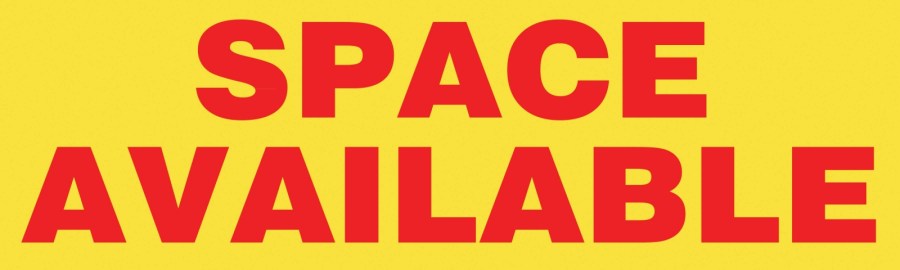
Today, I walked to the post office on Marion Street. On the way back, I walked down Lady Street and went right by The Lunch Box. The front door had been busted out during the race riots in May. There was a piece of board where the glass had been. On the window to the left was a sign that simply said, Space Available.

I stood there for about thirty seconds looking at the sign. I shook my head, saddened by the absolute realization that The Lunch Box would not be coming back. I last ate a couple of hotdogs from there about a week before they closed the doors. This was a sad moment for me, and I’m sure many people in the area will be as saddened.

I think back to Vickie’s amused smile when I told her I was looking for a short, sweet blonde and I can’t help but feel a piece of my life—one thirty years in size—is now gone forever. I think about Eleanor and her asking how I was doing, then how my marriage was going, then how my kids were doing, then how my writing is going. I’m going to miss that place, it’s friendly atmosphere and people.

To Eleanor, to Vickie, to Todd, to all of those who have worked there and brought us good food that wasn’t expensive, as well as smiles and real conversations, thank you for all the great years you gave us. God bless you all. I’m sure I can speak for all of downtown Columbia, you will be missed greatly.

Until we meet again my friends, be kind to one another.

A.J. 

A Note About Closing The Wound

If you’ve read my book, Closing the Wound, then you know several things right off the bat. First, this story would not have happened if not for a friend calling me early one Saturday morning and asking this question: What happened that night? You also know I went and had breakfast with this friend and we talked for a long time while sitting at a Denny’s. You also know Closing the Wound is a true story, at least as true as my memory recalled it. 

coverIt had been a while since I had seen that friend. His name is Chad and we were (and still are, though we don’t see each other often enough) good friends.I ran into Chad at my daughter’s graduation. He was there for another student, but he got to see my girl walk across that stage, too. Afterwards, we talked, as friends tend to do. We said, ‘Hey, we need to keep in touch,’ as friends tend to do, though often they don’t. 

Before we went our separate ways, I told him about Closing the Wound and his part in the story. A couple of days later, he purchased the digital book. When he finished reading the story, he didn’t leave me a review. Instead, he sent me an email. After reading it, I asked him if I could share it with the world. With his permission, I give you Chad’s letter to me.

Dear Jeff,

It is just passed midnight and I read “Closing The Wound”.  I thoroughly enjoyed reading it from your perspective.  Like you, I have somewhat boxed those memories away to be opened only one time a year, Halloween.  The book itself is very well written, it’s what’s between the front and back (that) really mattered to me.  It did dredge up a lot of memories.  I am still a bit hazy on our conversation that day, I do recall us talking about that night just can’t quite piece it all together.  It has been 24 years ago and after reading the book, a lot of those forgotten details and memories have crept back into my mind, which is a good thing.  I never want to forget those days no matter how horrific they were at times.  Each piece is somewhat of a building block of who we have become. Back to the book, you have a gift Jeff, you are a master story teller and writer.  I do not use those terms lightly either.  When I was writing, I had a similar style, but I can’t focus long enough to eat a sandwich let alone write a book!   LOL!  You have always had that gift, you can say you’re a natural at it. 

 I know we haven’t kept in touch over the years and meeting at the graduation was very refreshing to say the least.  I like how you write in the book to not live in the past.  There are somethings that I have been apart of where I too, ask could I have done something differently to alter the outcome.  I suppose we can all agonize over those questions, but questions don’t change events concerning the past.  I have struggled with Chris’ death, well at least once a year, yes it still haunts me.  I know he was tormented and I understood his struggles to a degree.  I truly believe he is in Heaven and no longer has those feelings of loneliness, depression and the desire to belong.  I still see his face when he was with all of us.  He admired you so much because you were such a good friend to him.  Like me, you helped alter some of his life Jeff.  His life ended at a very young age, but perhaps that’s how it was meant to be.  We can ask questions of “what ifs”, but I remember the best days with him was when we were all together hanging out.  Those are the days that I remember the most.  Yes, I remember that picture of us at the rest area off of I-77 in between the snack machine bars.  I had so much fun back in those days! 

 I leave you with this my friend.  After reading the book, I couldn’t help but to go back 25 years ago and think how you have helped so many people.  I know you are a little rough around the edges but that’s ok, sometimes it takes course sandpaper to get the splinters off of some of us knuckleheads!  But seriously, as time rapidly marches forward and our own families grow before us, take stock in your life and the people you have influenced.  I know for me, my family may not be here if it weren’t for you.  God uses us in different ways and He used you and a number of others from that church to save me from myself.  I suppose some emotions have been awaken from 25 years ago, but I just remember how happy Chris was with us, in a way we were his family besides his aunt and sister.  This Halloween let’s start a tradition at go and visit him and remind ourselves of the good days. 

BoyThank you for all you have done for me Jeff!  You are and will always be one of my best friends. 

 Keep in touch buddy! 

 PS: Do you remember his sister’s name or know of her whereabouts? 

 Chad *********

After reading this, I sat back for a while, just staring at the words, not really thinking in clear thoughts, but in pictures. Pictures, like the first time I met Chris at a church work day; like the time I saw him at the South Carolina State Fair just weeks before his death; like the hundreds of teens in a standing room memorial service; like finding his grave for the first time after not visiting for so long; at learning my sister’s husband new Chris and has his own theories of what happened that night. All of them were snapshots into the memories that I—that we—dredged up.  

Chad said some nice things to me, but the one that keeps coming back is this: He admired you so much because you were such a good friend to him.  Like me, you helped alter some of his life …

I wish I would have done more, been a better friend (despite what Chad said, I always think I could have done more), knocked the block off the punk who influenced him in the direction that ultimately cost him his life. 

Here’s my questions to all of you: Do you know someone who might need someone to talk to? Do you know someone who might be heading down a path of destruction? Is there someone you care about who is doing something you think maybe he or she shouldn’t, but you are afraid to mention it because you think it will hurt their feelings?

Here’s one more question: Does saving a life mean more than hurting someone’s feelings to do so? 

The story of my friend, Chris, in Closing the Wound, is just the tip of the iceberg. The story goes so much deeper and cuts down to the bone when I think about his life and death. I honestly don’t know if there is more I could have done, and that brings me guilt from time to time. Even so, I did some good in his life, and clearly, in Chad’s life. 

Sometimes our guilt overrides everything else. It torments us to the point of forgetting all about the good in our life, the good we have done. Chad is one of those good things. He reminded me of that. Now, I remind you: think about someone you have helped in some way. How is their life better because of you? Yes, take credit for that in your heart. Say, I did something great for someone and I helped someone and that person is in a better place because of me. Don’t let guilt ruin you. 

Until we meet again my friends, be kind to one another.

A.J.

If you would like to pick up a copy of Closing the Wound, you can find the digital version on Amazon, or you can get the print version directly from me (signed of course) by contacting me at 1horrorwithheart@gmail.com.

When Is the Right Time?

I started a story recently, one that has been difficult to write.  No, I’m not struggling with the plot or the characters or any of that other stuff that can make writing like wading through an ocean full of muddy waves and crocodiles.  It’s the subject matter that is difficult.  Many men won’t understand this, but any woman who as been through a miscarriage will.  And there is my dilemma, the story is—as you have probably guessed by now—about a woman having a miscarriage.

I wrote the first dozen or so pages without having the first clue as to how a woman would deal with, or even the symptoms of a miscarriage.  That, in and of itself, was not a wise idea.  So, I put a call out to my friends on Facebook, asking anyone who was willing to answer questions to contact me.  Please.  Several very helpful women and one gentleman contacted me, willing to offer up any information I needed.  Two of the women, in particular, went into the details of their miscarriages.  What I learned was sad and tragic and so hard on the women, and yes, the man who responded, as well.

I learned so much I didn’t know and I’m glad I asked for the help.  Now, the story that has begged me to write it for a couple weeks now will, not only be written, but will be written accurately.  It will, I have no doubt, be one of the most emotionally charged pieces I have ever written.  As it should.

Everyone I spoke to said that their miscarriages happened years ago.  I found this interesting.  There were no recent accounts of miscarriages discussed.  Does that mean time really does heal all wounds?  No, I don’t think so.  Though time doesn’t heal all wounds, the edge of pain seems to ease up after a while, and that dulling of pain is, in many ways, a type of healing.

This has made me think harder about a subject I have often thought about in the past:  How long should a writer wait before writing about a true to life tragedy?  Let me be a little more forward here:  How soon after an event like 9/11 or Sandy Hook or Hurricane Sandy can a fictional story be written based on the events or similar events?  It was a long while before I read a story based on the events of 9/11.  It’s been a year, and I have no doubts that any fictional piece about shootings in any school (like King’s novella, Rage) would not be received very well right now.

I’ll be honest, when 9/11 happened, I sat up that night handwriting a story titled, Allegiance.  I’ve never typed it, but I remember the way I felt when I wrote it   The news was on and it was late and I was tired, but I couldn’t pull myself away from the scenes of the planes crashing into the building and the towers falling.  I remember one scene from early in the day, where one of the planes had tore through one of the towers and there were a few people standing in the gaping hole the plane had left behind.  I have often wondered if any of those people made it out of the building.  There’s another image from the newspaper of a man hurtling to his death, having jumped from the building instead of facing the possibilities of burning alive or being crushed when the towers fell.

Forget being a writer for a moment.  As a person, I wondered what I would do in that same situation.  Would I have jumped?  Would I have stood at that hole looking out?  Would I have had enough sense to say, ‘we need to get out of here, now’?  What would it have been like to have been in that stairwell, trying to get to the bottom while firemen tried to make their way up?  What were the firemen thinking as they rushed to their deaths?  I’ve always thought about these things, but other than the one story I wrote the night of the attacks, I’ve never written another piece on it.

Sandy Hook happened a year ago.  I can’t begin to imagine the grief those parents and family members felt—still feel, now.  But what was Adam Lanza thinking when he walked into that school and started shooting adults and children alike?  What was going through his head that could make him do this?

What about the Boston Marathon bombing?

What about the Tsunami that hit Asia?  Or the typhoon that recently struck the Philippines?

What about…

How about when?  When is it okay to write a fictional story based on these events or similar ones?  My next question would be why is it not okay to write about them when they happen?  While the events are fresh in your mind, while the pain of it all is still stinging the heart?  Is it insensitive to write about these things when they happen?  Why?

My answer to this is simple:  It is okay to write about them when you’ve had a chance to digest them, when the information is all out there, when you feel your heart strings being tugged in that direction.  In other words, I think it is okay to write about them when you, the writer, feel it is okay for, you, the writer, to write about them.  All I say is be respectful to those folks who endured the tragedy at hand.  If you show respect for the subject, then by all means, write away.  One other thing:  if it is something that can happen, that has happened, then it is a real, tangible thing that you can feel.  If that is the case, then write about it in your own special way.  But be respectful and write nothing disparaging.

I’ve never written about Sandy Hook—I have two children in public schools, and have yet to be able to create a story about something so very close to my own heart.  I may never write about something with that particular storyline.  I’m not certain I can.  The time may never be right for me to write such a story.

I’ve always invited people to comment, to discuss anything on Type AJ Negative.  I do so today, as well.  Tell me, writers, when do you feel it is okay to write about real life tragic events?  Tell me, readers, how long do you wait before picking up something about those real life tragic events?  Why do you feel the way you do?  What do you consider appropriate in addressing these tragedies?

I think it is up to each individual on when the time is right, but you may have a different opinion.  I want to hear it.  But for now, I must go.  I look forward to your thoughts, and until we meet again, my friends…