Voices: The Interviews: Stephanie (Part 1 of 2)

SPOILER ALERT * SPOILER ALERT * SPOILER ALERT * SPOILER ALERT

Before reading today’s post, I want to tell you about our little project. In the coming months one character from each story in my collection, Voices, will be interviewed by Lisa Lee with Bibliophilia Templum. 

No, this is not your typical interview session. What I want to do is make each interview like a story, one that continues until we reach the end. Some of these are going to be short. Some of them might be long. I don’t know. Like you, I will find out just how long each interview is based on the questions Lisa provides me. I don’t know the questions ahead of time and neither do the characters.

Since this is an interview, I will go ahead and say up front there are spoilers in each session. If you have not read Voices, I urge you to do so before continuing (you can pick up a copy here). If you haven’t read the collection, you have been made aware of possible spoilers. 

One more thing before reading: if you have read Voices and would like to ask a question of today’s character, leave a comment at the end, and I will see about getting an answer from the character for you. Don’t be shy, ask your questions. You may get an interesting response.

SESSION 14 

Part 1

She is breathless and heartbroken. The little girl never had a chance in life. How she made it as long as she did before her death is nothing short of a miracle in Lisa’s eyes. But it hurt. Yes, it hurt Lisa to talk to this little girl the way she did. A part of Lisa—a part so deep down inside it made her soul ache—hated how she had to pull the answers from Jenny. Another part, the part of her that was not just deep down inside, but a part she keeps hidden from most people who know her, realizes Jenny was like her when she was a child: sweet and innocent until ….

Until it was taken from me.

Screen Shot 2018-01-06 at 2.26.45 PMHer heart shatters and she leans forward in her chair. Her arms go around her stomach. Nausea swims in her belly and pushes upward toward her throat. Tears form again in her rimmed red eyes. She feels like she has been crying for more than a couple of hours. 

It’s been days, weeks, months and years … so many years. 

Remembering life as that little girl, first with the innocence of life and the future, then … then with the pain and the skewed view of self worth (or a lack there of) made her ache worse for this poor child. Without warning, Lisa suddenly hates the writer, the one who asked her to do these interviews, to talk to the ones whose voices controlled them until they either conquered or gave in. She rocks in her seat, not caring if any of these … these … ghosts see her. Though she knows they are not truly ghosts but people from the Land of Make Believe; that they came from the pages and will return when they are finished, she absolutely knows in her heart they are spirits, and each one of them experienced their own form of torture, their own Hell. She hates the writer for peeking into her heart and into the spaces where so few have gone and where her innocence died. She hates him as strongly right then as she ever hated anyone. 

That’s irrational, she thinks as she rocks in her creaking chair, as she clutches her stomach and prays no vomit will come. But is it? Is it irrational to hate someone who only wrote a book about people and the bad things they do or that happen to them? Is it rational to hate someone who asked a question that led to another one and another one? Is it irrational to hate someone who didn’t make her relive the painful events of her past, but yet somehow she did? Is it? Is it? Is it?!

She doesn’t believe so, even as the hate subsides a little, even as the pain in her heart that fills her very body and soul tells her it is okay to hate him. That has to be directed at someone or it will eat her up. 

It’s not his fault. She fully believes this. He didn’t do anything to her. He didn’t twist her arm. He didn’t do … what others had. 

The hate falters and she sags in her chair. She wants nothing more than to close her eyes and …

No! No! Nononono! I have to see this through. I have to. If not for me, then for her. 

Her? 

Yes, her. 

As if she had spoken her name, the young lady is there, sitting, not on her chair like the others, but on the floor. Her head is down and she wears a pair of gray jogging pants and a plain white T-shirt. It could have been her dad’s or a 

(best friend’s)

boyfriend’s. Lisa knows better. She wouldn’t wear a man’s shirt—not one that belonged to a man anyway. Not after …

Lisa takes a deep breath. She is going to do something she knows she will pay for dearly later. She scoots to the edge of her seat. The thought of kneeling onto the floor makes her joints hurt. The act of doing it is far worse. She eases herself down to the floor. It is cool on her bottom and she knows that might be the only time for the remainder of the day, and maybe even days to come, that she feels anything other than pain. Still, she sees the young lady and hopes it will be worth it.

No pain, no gain, she thinks. Her inner self shakes her head and rolls her eyes. Behind her Mr. Worrywort chuckles. She tunes him out the best she can and gets onto her hands and knees. The first crawling step forward sends slivers of pain into her left knee, thigh and hip. The next one does the same to her right leg. By the time she reaches the young lady sitting on the floor, her head still down, her hair dangling and covering her face, the lower part of Lisa’s body is on fire. Joints and muscles scream their indignities at her, and when she lets herself fall onto her bottom, she lets out the first of many long, agonized  breaths. 

It takes a couple of minutes for her to compose herself, but when she does, she looks to the young lady she now sits beside. She reaches a hand out, then stops. She drops it back down. 

“Stephanie,” she says in her best motherly voice. “Stephanie, are you in there?”

Of course she’s in there, Lisa. She just might not want to come out and socialize. 

She knows this to be true. She’s been where Stephanie is now—in her own head, replaying the events that led her to do what she did. She not only feels violated by what happened to her and by who was involved, she also feels guilty for what she did. Once upon a time, Lisa was in that head space, and sometimes, she believes she still is. But the strength to kill someone, to seek out and take full revenge on someone who had hurt her, Lisa doesn’t know completely. Sure, she played out multiple scenarios in her head, but she could never go through with the act. For that, she feels weak and maybe even unworthy to talk to Stephanie.

Lisa reaches her hand up again. This time she touches the young woman’s hair. It is in need of washing and it doesn’t sit on her fingers like it should. She pulls a few locks of hair away from Stephanie’s face and tucks it behind her ear. “Stephanie. My name is Lisa, and I’ve been where you are. I know what you are feeling.”

Stephanie doesn’t move at first. She only stairs down at her hands.

“Stephanie, I have a secret I want to tell you.”

Lisa swallows. She closes her eyes and lets the moment flow through her. She leans in, places her lips near Stephanie’s ears and whispers, “I was raped, too. Several times.”

Stephanie slowly looks from her hands to out in front of her. Then, she turns her head and stares directly at Lisa. Her green eyes aren’t dull like Lisa thought they would be. They glisten with tears in them. 

“Hello, Stephanie.”

“You were raped?” Her voice sounds weak, or maybe it had been asleep and had only woken seconds earlier. 

“Yes. Several times by men I trusted.”

 “I’m sorry.”

“Me too, but I can’t change what happened to me. I couldn’t do what you did. You’re very brave. I admire what … admire your … Um … I admire your strength.”

“I wasn’t strong.”

“Oh, but you were. You are.”

Stephanie shakes her head. The hair Lisa had tucked behind her ear falls away and drops to the side of her face. “I wasn’t brave.”

“But you …”

“The dead helped me.”

“The dead helped you?”

“Susannah. She told me I wasn’t dead, yet.”

“Susannah?”

“Yes.”

“The dead girl?”

“Yes.”

“So, Stephanie, um, how did you find Susannah’s grave?”

“I went to die,” Stephanie said. “I wanted to be over the pain and guilt and the feeling of being nothing but meat to someone.” She laughed a mournful laugh. “I guess I deserved it, you know. I brought this on myself and … and … I … I guess she found me there.”

“Susannah found you?”

“When I was walking through the cemetery. She … she called me.”

“Called you?”

“Called me.”

Lisa understands this. She lives in a house near a graveyard and often feels the need—not the want, but the actual need, as if the very threads of her sanity depends on it—to walk through it, touch some of the headstones, have conversations with those who no longer have family to visit them. She understands the calling Stephanie speaks of, and she is jealous of the young lady. Where was the dead when she needed them all those years ago? Where are the dead now?

Broken Heart.jpg“A lot of people are afraid of graveyards,” Lisa says. “They find them … spooky. Scary. You and I know they … they are not so scary. But you are not afraid of them. Of cemeteries. Why not?”

“The dead can’t hurt me,” Stephanie responds. “Only the living can.”

So true. So very true.

Lisa realizes right then that her notepad is laying on the floor by her seat. All the questions she meant to ask Stephanie were on a page with the young lady’s name at the top of it. The notepad is facedown and several of the pages are skewed. It’s the notepad that makes her change the subject to something she is curious about. She thinks of Dane, the girl with the fear of numbers. A male head doctor played a prominent role in her story. He had a yellow notepad similar to Lisa’s. Stephanie’s therapist …

“I can’t help but wonder: how did you get stuck with a male therapist? That had to be … to be …” She pauses for several seconds, then continues. “How did that happen?”

Stephanie shrugs. “They didn’t think a woman would understand what happened to me? Or maybe she couldn’t be, I don’t know, unbiased because she was a woman? Or maybe they thought I was dangerous? I don’t know.”

“Are you dangerous”

Stephanie says three words in a voice so firm and resolute that Lisa completely believes her: “Not to women.”

Lisa thinks back to after she had been attacked, assaulted … whatever people want to call it these days. To her, it was, and always will be, rape. It had been an unwelcome and unwanted violation of her body. And it didn’t happen just once. She had been like a magnet for bad men, starting at an age far earlier than most. She tries to block out the bad things done to her before she turned six. She doesn’t try to block out her friends, what a few of them had done to her one night when it was her and a bunch of the boys and the boys wanted what she had but didn’t offer to them. She doesn’t block out her ex-husband, a man she loved at one point and who she thought loved her. She feels every touch, every insult, every violation and the anger she felt years before (and even sometimes now when she thinks on it like she is right then), comes rushing back. 

“They should have never put you with a male therapist,” she growls.

Another shrug, but this time Stephanie doesn’t say anything.

“It was unfair to you. I bet he didn’t get it, did he?”

Stephanie looks at her with big doe eyes. It’s as if she sees something in Lisa she hadn’t just moments before. “He was a man.”

Lisa is shaking her head now, almost furiously. Her bottom lip is tucked under her top teeth. Her nostrils flair. “Did he ever get to where he understood?”

“No.” Stephanie is looking down at her hands, at the crescent moon scars her own nails left behind after so many times of digging them into her own palms.

“Of course not,” Lisa snaps, then stops. Stephanie’s eyes are wider now. Lisa’s voice is softer when she speaks next. “Sorry. I guess I knew the answer to that question already. And the truth is how could he? How could he  ever understand? Unless he was raped, he wouldn’t. No man would.”

She closes her eyes and tries to focus on Stephanie, to push her own sorrows and anger aside and asks the tough questions, questions she might already know the answers to.

“Stephanie, I don’t want to sound like an insensitive shrink, but please, if you can, tell me, how did you feel when you realized it was him? Carlton? Your friend! How did you feel when you knew you’d been betrayed by someone you trusted? How did you feel about that? That initial feeling when you knew, you knew …” Lisa realizes her questions came rushing out of her and with that same vehemence as the hate in her own heart. Behind her—no, all around her—she hears the gleeful laughter of Mr. Worrywort. He is no longer just some shadow on the wall or a figment of one man’s imagination. He is very real and very much in her head. He is getting to her and … and … she is not in the least bit concerned about getting him out of her head.

Deep breath, Lisa. Deep breath.

(Take all the deep breaths you want. It’s not going to help.)

Deep breath. Deep breath. Deep breath.

I’m sorry. Um, Stephanie, how did you feel initially? When you remembered your rapist was your friend?”

Stephanie’s head shakes, as does her hands. She clenches them into fists and Lisa knows if the young woman had fingernails they would be sunk down to the quick into her palms and the crescent moon scars would have been reopened. Her jaw clenches and her breaths are quick and shallow.

“Stephanie?”

“I broke,” she says and looks at Lisa. Her eyes are puffy from crying. Her face is stained with tears. “I broke. My heart. My soul. My … my entire world died. He wasn’t just my best friend, but I … I … loved him. I mean, I loved him.” She’s crying hard now. Snot trickles from her nose. Her face is pulled down and her eyes are almost completely closed.“I wanted to tell him, but I didn’t think he loved me. I thought we were just going to be friends, and I was okay if that was what he wanted. But … but … he wanted something else. He wanted it and he took it and … and … and …” 

The next words she speaks are illegible and she sniffs up the snot on the edge of her lip. She wipes her nose and mouth with the back of one hand and then rubs it on her jogging pants. She inhales, releases it, inhales again. She does this several times until she is composed enough to continue. 

“He beat me. He didn’t just rape me. He beat me. Me! His best friend. He beat me like he never had any feelings for me, like I was a stranger and he knew nothing about me, my dreams, what I wanted out of life. It was like he never knew how much I truly cared about him.”

She wipes her eyes with the balls of her palms. “I hate him, now. I hate him so much.”

Lisa nods. She understands this all too well. Though she had been raped several times, she only truly hated one of the men who did the deed: her stepfather. He was the one who first touched her when she was a child, long before she developed anything that remotely looked feminine, other than the area between her legs. It was that area he wanted, that area he took. 

It wasn’t until later, after the other rapes, after her ex-husband took what he wanted while she slept, that she sought one on one therapy. The women’s group she had attended did little for her except maybe make her feel less like a survivor and more like a victim, something she tried hard to not be, not to become. Yet, she had become that very thing. 

“It’s the victim mentality,” the therapist said. She was a mousy woman, slight of build with short gray hair and glasses that hung off the tip of her nose. She held a yellow pad in her lap as she sat behind a desk, not in a chair, cross-legged with hose coming up to her knees. “You are still with your husband because you have a victim’s mentality. Your only worth is in being a victim. You don’t want to escape your situation. Without it, you are, essentially, nothing in your mind. Until you change that, Lisa, you will always be a victim and never be a survivor.”

She wanted to change. She wanted to no longer be the victim, but …

“All of this stems from being raped as a little girl. If that doesn’t happen …” the shrink looked down at her, over her glasses like a professor about to give a troubled student a flunking grade. “… you probably never get raped by anyone. But what happened to you when you were a little girl defined you, who you were, who you are and who you will be.”

Her mind is racing now. Heat feels her body and that horrid nausea is back. After that visit to the therapist, she quit going. All the years leading up to that, she had treated the symptoms, but never got to the root cause of the problem. Now she knew where it had its roots and all she wanted to do was …

“When did you decide to end him?” Lisa asks. 

Stephanie gives Lisa a look of stunned amazement. It is clear she didn’t expect the question, but it was out there and Lisa hopes she will answer it. 

“The very moment I realized he raped me. I knew I would kill him.”

Lisa had known as well, but …

To be continued.

Human Touch: A Sneak Peek

It’s truth time. At the beginning of the year, I considered no longer writing. I don’t want to say I considered quitting, but I did. This consideration has happened more and more over the last couple of years, which is alarming. I love writing. I love creating characters and putting them in tough situations. I love hearing from the readers. I love the experience of writing and events and panels and podcasts and speaking engagements. So, to have these thoughts as often as I have had them completely bothered me. 

I contacted my editor, Larissa, and for a couple of hours we chatted through PMs until we got to the root cause of everything. I won’t go into all the details here, but it has a lot to do with why I write. I write because I love the process, and I had fallen out of love with it. That is the bottom line. Yes, there is a LOT more to it, but that is what it boils down to. My marriage with words was on the rocks and I had to figure out a way to fix it, and if I couldn’t, then it would be over. 

So, Larissa and I came up with this idea. I told her about a story concept I had that was completely out of my comfort zone. She said, “You should write it.”

I didn’t want to. I made a few excuses as to why I shouldn’t write it. When I say it is out of my comfort zone, I mean it is waaaaaaay out of my comfort zone. However, it was the reasoning behind writing the story that made me finally break down and say, “okay, I’ll give it a shot.” What was that reasoning: Write a story I have no intentions of getting published. Write it because I want to. Write it in hopes of rekindling that flame. 

I started writing it on January 29th of this year. It was slow going at first, but then it started to build up steam and I began looking forward to getting back to the story of Charlie Massingale and Dani Overton. It currently sits at a little over thirty-two thousand words with plenty of story left to go.

So, today, I thought I would give you, my faithful readers, a little peek at the first couple of pages of the story that kept me from no longer writing. It is called Human Touch, and boy, is it outside of my comfort zone. I hope you enjoy. If you do, please consider liking and commenting on this post, and sharing it. Oh, and this is completely unedited, so I am aware there are probably some mistakes in here. 

Here we go:

The coffee shop was quiet. The few people talking did so in whispers as if they were in a library and the librarian was an ancient old bitty with blue hair, triangle lensed glasses and a mallet behind her back. Talk too loudly and get a smack to the head that you might not wake up from. Charlie liked it that way. 

It wasn’t like the Starbucks down the street that garnered most of the coffee drinking public who were willing to spend their money on their favorite caffeinated drink. No, this was a little mom and pop place, not owned by a mom or a pop, but a woman in her mid-thirties who married, divorced, and had no children that he was aware of. She spent her mornings and most afternoons behind the counter of the Coffee Dee-Light serving the regulars, like Charlie, with a smile and a bottom line price that should have competed with Starbucks, but somehow didn’t. 

“Hey, William,” she said as she wiped her hands on a green apron tied around her waist. On her blue shirt were words in a dull yellow cursive script that read, But First Coffee. Her blonde hair was pulled away from her face and held in place by a rubber band. It’s not that she had a lot of hair—she always kept it shoulder length or shorter—it’s just she wanted the hair out of her face and didn’t want any loose strands ending up in the coffees she made. “What’ll you have today?”

“Oh, I guess I’ll have the usual, Dee.”

“A large black coffee with two creams on the side coming right up.”

“Thank you, Ma’am,” he said, set a five on the counter and scoped the shop for a place to sit. He was in luck. His usual spot in the corner under a fake sconce that lit that area in an off white glow sat empty. The table beside the flower cushioned chair was just large enough for his coffee and a book. He walked over and set the pack on his shoulder in the seat, the universal sign the seat was now occupied, then returned to the counter where his coffee and two cream packets awaited him, along with just under three dollars in change.  Charlie picked up the coffee and creams, but left the change.

He glanced back once as he walked back to his seat. Dee shook her head, then scooped up the change and placed it in the cash register. Charlie nodded, but a smile fell just short of appearing beneath his thick beard. He removed his bag, set it by the chair, then sat. The coffee went onto the little table, along with the two creams. One by one, he poured the cream into the coffee, let the black turn a dark brown, but didn’t bother with stirring it in. He took a sip, smacked his lips and nodded.

“I get your seal of approval today?” Dee yelled from the counter. 

“Yes, Ma’am.”

Charlie pulled a book from his pack, an obscure thing most people probably hadn’t heard of. He put a finger where the bookmark was and then opened it to the page he stopped on the night before. He began reading about the capers of a boy whose father had left him and his mom in the middle of the night, like a thief, taking all they had, and the struggles they went through. So far, he liked the book. He liked it quite a lot. He wondered, not for the first time, why the author of that particular story couldn’t manage to get noticed by one of the bigger presses. 

Cates Coffee CupHe was ten pages further along and half a cup of coffee gone when the person walked up and stopped directly in front of him. He didn’t have to look up to see it was a young woman. The green dress and bit of legs he could see while not looking away from the book told him as much. 

“Excuse me, sir,” the woman said. She sounded tentative, unsure of herself, as if she might be trying to talk herself out of doing something stupid, but possibly exhilarating. 

Charlie looked up. The woman who stood before him wasn’t tall, but she wasn’t short either, maybe six inches shy of six feet. Long brown hair fell down her shoulders and her green eyes sparkled as if she were in awe of something magnificent. Though her smile was tentative, Charlie had a feeling that when she felt confident, it was probably radiant.

“Can I help you?” Charlie asked, lowered the book, but held it open. It was his way of saying I’ll humor you for a couple of seconds, but after that it’s back to reading.

“Are you …” she hesitated. Yeah, she thought herself silly for being there. Charlie could see this easy enough in the way her lips pinched together and the way she shuffled from foot to foot as if she needed to pee. “Are you Charlie Massingale?”

“Who?” 

“Charlie Massingale?”

He shook his head. “I’m not familiar with the name.”

“Really? You’ve never heard of Charlie Massingale?”

Oh, he had heard of him, all right. As a matter of fact, he knew him quite well. “Is that a bad thing?”

“Well, if you like good stories and great writing, yes.”

“So, he’s an author?”

“Yes, Sir,” the young woman said. 

“I’m no author,” Charlie said and started to lift the book. He didn’t know if she would get the hint, but he hoped she would. These days being anonymous and unknown is how he liked it. Having someone recognize him came as a surprise. Since growing the beard out, no one recognized him, not even an old friend, who he had walked by one afternoon when he went home for a weekend—completely unintentional. Though he did a double take after he passed her, she hadn’t flinched or gave any clue that she recognized him. He had smiled then. He wasn’t smiling behind his beard now.

Her shoulders slumped, “I guess not,” she said. “I just … I could have sworn you were him.”

“What would give you the impression that I’m this Charlie whatever his name is?”

“Massingale,” she said and slid a purple book bag from her shoulder. She unzipped the middle pouch, reached inside and pulled a book from it, then slipped the bag back onto her shoulder. She opened the book to the back cover dust jacket. Beneath the author’s name and bio was a picture of a man with brilliant blue eyes and short, dark hair. He was holding a book in his hands and sitting in what looked to be a comfortable cushioned high back chair, much like the one Charlie sat in right then. His right leg was crossed over his left and instead of looking at the book, he looked directly into the camera. The photographer took the picture, even though the man wasn’t smiling.

Charlie remembered the day it was taken. It was a promo picture for Diane’s Story, his seventh novel. He had been twenty-eight when that picture was taken and he had already released the seven novels (with another one on the way) and half a dozen short story collections.

“Everything about this picture screams you,” she said, closed the book and held it to her chest with both arms wrapped around it. 

The Scarring, An Excerpt

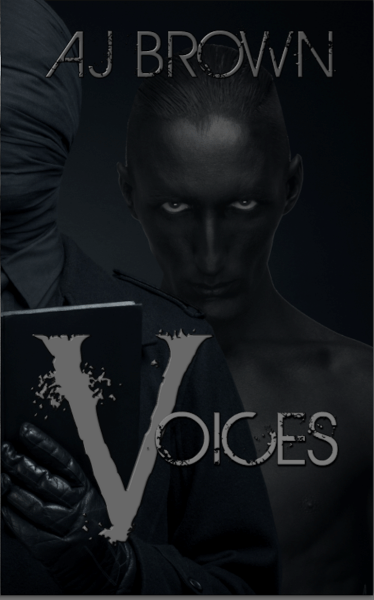
Screen Shot 2018-01-06 at 2.26.45 PMThe following is an excerpt from The Scarring, one of fifteen stories in the collection, Voices. You can find Voices on Amazon here, or you can contact A.J. Brown directly at 1horrorwithheart@gmail.com if you would like an autographed print version of the collection.

The Scarring (an excerpt)

On the bed lay the drunken man, his eyes wide and bloodshot. They darted from side to side. His mouth opened and closed like a fish out of water, but he only managed a few strangled croaks. His arms and legs were bound to the bedposts with ropes. He was as naked as the day he came into the world.
“Do you hate?”

“Yes.”

###

The first scar came at the age of eleven, courtesy of an angry father and a bottle of whiskey. He had ducked when the old man threw the bottle. It shattered against the wall, slivers of glass spraying back at him, along with the remainder of the caramel-colored liquid.

Voices Promo 1 The ScarringHe probably wouldn’t have been scarred if only small pieces of glass had pricked his skin. If not for the old man’s follow-up to the bottle toss, he would have been just fine. But the old man chased the broken glass like a beer at a drinking party, and the smack to the back of the head was unseen. He—Nothing was his name—went sprawling backward, hands out behind him, a heavy sting on the side of his face. A gash appeared from mid-forearm to elbow when he landed among the shattered glass.
Nothing bled. He cried, and as he did so, his father wailed on him, telling him to “clam it up, boy, or I’ll clam it up for you.”

Mom stitched him up with a sewing needle and thread as thick as fishing line. Nothing wasn’t sure which was worse, the initial slice of skin by glass or the constant poke of the needle and tug of thread.

The skin puckered over time, leaving a pink welt of flesh that grew as he grew, never shrinking, and a constant reminder …

Voices, The Interviews: Jenny

SPOILER ALERT * SPOILER ALERT * SPOILER ALERT * SPOILER ALERT

Before reading today’s post, I want to tell you about our little project. In the coming months one character from each story in my collection, Voices, will be interviewed by Lisa Lee with Bibliophilia Templum. 

No, this is not your typical interview session. What I want to do is make each interview like a story, one that continues until we reach the end. Some of these are going to be short. Some of them might be long. I don’t know. Like you, I will find out just how long each interview is based on the questions Lisa provides me. I don’t know the questions ahead of time and neither do the characters.

Since this is an interview, I will go ahead and say up front there are spoilers in each session. If you have not read Voices, I urge you to do so before continuing (you can pick up a copy here. If you haven’t read the collection, you have been made aware of possible spoilers. 

One more thing before the first session: if you have read Voices and would like to ask a question of today’s character, leave a comment at the end, and I will see about getting an answer from the character for you. Don’t be shy, ask your questions. You may get an interesting response.

SESSION 13: JENNY

… With that said, Danny stands, picks up his chair, and takes it back to where he originally was. He sits, and Lisa turns her attention to the notepad once again. She flips the page, and her breath vanishes. The name at the top of the sheet makes her stomach turn. Angry moths flutter about inside, and she suddenly wants to throw up. Lisa stares at it and realizes she is getting very close to the end of the interviews. There are just three people left, two of which she knows could be the most difficult of them all. 

As she sits, staring at the name at the top of the page, written in her hand, she knows when she looks up, the interviewee will be in sight, just as all the rest of them have been. 

“Go ahead,” the silky wet voice comes from beside her left ear. A cold finger traces down her arm, leaving a white line in its wake, until it runs out of skin and touches the paper. The finger tapping it is charcoal black with a long pail nail on its end. “Go ahead, Lisa. Look up. Have a chat with little Jenny Harris, the dead girl.”

She shakes her head. This is too much. This is way more than she bargained for. There is too much … too much …

“Too much what?” Mr. Worrywort whispers. His tongue slithers from his mouth and licks the side of her face. Though it is as dry as sandpaper, she imagines it leaving a slimy residue behind. 

“Too much pain in this room.”

Mr. Worrywort lets out a whistle. It is not shrill and high-pitched, but low and as mournful as the sound of a train in the middle of a cold night. It’s haunting, and her body jerks from the shock of it. He laughs, a throaty sound that scares her. And that is something she wishes she could control: her fear. It is also something she doesn’t believe she is going to be able to get hold of right away. The shock of Mr. Worrywort’s gleeful voice shakes her badly. “Not enough pain,” he says, his voice like dry leaves rubbing together.

Not enough? she thinks. You’ve got to be kidding.

“Look, Lisa. Look at …” he pauses, as if he doesn’t know what he wishes to say. “Look at herrrrrr.”

Mr. Worrywort taps the pad on Lisa’s lap. She glances at it: Jenny.

Lisa looks up. There, in one of the chairs is the waif of a child, too thin to be healthy, her clothes dirty and her eyes sitting in the deep hollows of her sockets. Her bottom lip is chapped and cracked, and her skin is like ivory. A skirt covers her thighs, but Lisa can see her knees are bruised, and is that blood along the inner parts of her calves? The little girl looks down at her hands, turns them over. Her fingers are brittle sticks, the fingernails cracked and dirty.

Lisa opens her mouth to speak, but finds she can’t. Her mouth is dry, and her tongue feels much too large. The girl looks up, and Lisa’s tongue almost shrinks to the back of her throat. The eyes are void of any shine and hold the glazed over look of someone who is no longer among the living. 

Lisa lets out a long breath and forces herself to speak. “Hello … hello, Jenny.”

The little girl says nothing. 

“No one will hurt you here,” Lisa coaxes. “I won’t let them.”

Still, Jenny doesn’t speak. She doesn’t move. She doesn’t blink. She is as still as a … as a corpse. She imagines if she was to touch Jenny’s skin it would be cold and stiff.

“Can we talk, Jenny? Is that okay?”

Jenny finally moves her head, slightly cocking it to the side.


“I want you to be okay with it. I’m not going to force you to do anything. Okay?”

“Okay.”

Lisa barely hears Jenny’s voice. It is not more than a whisper and sounds like it hurts for her to speak. 

“Are you sure you want to talk to me?”

She nods, a simple dip of her head, down, then up. “Yes.”

“Okay, Jenny.” Lisa looks down at the notepad. Her stomach rumbles and she truly believes she is going to throw up right there, just let it all out onto the floor between herself and Jenny. When she doesn’t vomit, she proceeds. “Remember when you were nine, and those boys saw your momma give you to the bad men? Was that the first time?”

Her head moves slowly to the left, then the right, then back to center. “No.”

Lisa’s heart sinks into her stomach, joining the angry black moths and the sour milk threatening to come up.

“So, there were other times?”

Jenny nods.

“Do you know how many times she gave you away like that?”

Again, left, right, center. “No.”

Lisa licks her lips. “Do you know how many times there were after the time the boys saw you? Do you remember?”

“No.”

“She’s not going to talk to you, Lisa.” Mr. Worrywort says. He is still standing behind her. His hands settle on her shoulders.

Lisa stiffens. She doesn’t take her eyes off of Jenny, who is now looking, not at Lisa, but beyond her, behind her, to the shadow of a man standing over her. 

“Jenny, are you going to talk to me? You said you would, but so far, you don’t seem to want to.”

“Yes.”

“Are you sure?”

“Yes.”

Mr. Worrywort’s hands falls away from Lisa’s shoulders. 

“Okay.” Lisa swallows the nothing in her mouth. “Did your momma ever tell you why?”

Screen Shot 2018-01-06 at 2.26.45 PM“Why what?”

“Why she gave you to those men?”

Jenny shrugs. The breath she takes is visibly deep and when she releases it, something in her rattles. Tears form in her dead eyes.

“It’s okay, Jenny. You don’t have to say. You don’t—“

“Momma likes men. She doesn’t like me.”

“Then why didn’t she give herself to the men if she liked them so much?”

“They don’t like her.”

“But they like you?”

One side of Jenny’s lips inch up in a sad, haunting smile. She doesn’t answer the question. She doesn’t need to. The sour milk and angry moths begin to give way to a hot anger of her own. 

What is wrong with some people?


Lisa licks her lips. “How did your momma treat you other than that? Other than giving you to the bad men?”

The terrible smile remains and the dead stare seems to grow more distant, something Lisa doesn’t believe, even though she sees it. 

“The men weren’t the bad ones. Momma was the bad person. She gave me to them for her powder.”

“Her powder?”

Jenny nods. “She sniffed it on the kitchen table.”

“Oh … her powder.” Lisa’s eyes are wide. She had a feeling that is what Jenny meant, but it didn’t register, not right away. Once it did, that anger boils up like lava in a volcano threatening to erupt.

“Quite the wretch, her momma,” Mr. Worrywort says. The cheer in his voice makes Lisa want to stand and punch him as hard as she can. To do that would mean she would have to look at him, face to face, woman to … whatever he is. She isn’t quite ready for that, but she has a feeling if she wants to get out of here with her sanity after the interviews are over, she is going to have to look him in his 

(dead)

eyes. She shudders at the thought and turns all of her attention back to Jenny. She notices the little girl’s skin has changed. The pale white has given way to a tinge of gray. The blood she thought she saw on Jenny’s inner calves is more visible on the hem of her dress, and has it dripped onto the floor beneath her feet?

“Jenny, did your momma know Jake and Cody’s dad had you?”

The smile falters. “Yes.”

“Did she give you to him, too?”

Jenny nods.

“Some people will do anything, Lissssaaa.” 

She ignores the hateful voice behind her the best she can, even as her skin crawls and the hairs on the back of her neck stand on ends. “Can you tell me what happened? You don’t have to, but I would like it if you could.”

“He hurt me. He … hurt me.” 

Jenny’s hands are trembling. The nails on her fingers have become a light purple and her skin has grown a darker shade of gray, almost like the color of ash in a fire pit.

“Oh, you’re going to make her suffer, aren’t you? I’m going to enjoy this.”

Lisa’s hands clench into fists as the heat on her face intensifies. She relaxes them, tries to remain calm, and stares at Jenny. She can see the torture in the poor child’s eyes, even if they are void of any other emotion. Death has a way of showing people the last visages of life before it fades out, and what Lisa sees on Jenny’s face is fear mixed with the pain of being ripped open in her soft spots by a horrible man and allowed to do so by an even more horrible woman. 

“It’s okay,” Lisa blurts out. “You don’t have to say what happened. I have a feeling I know already.”

Jenny opens her mouth to speak and the tendons in her jaw creak. Both sides of her lips where bottom meets top cracks, but no blood spills from the wounds. Lisa closes her eyes, opens them and is staring at the notepad. She looks back up at the now decaying little girl and tries to hold herself together in hopes of getting through the last couple of questions. She’s not sure she’ll be able to without going absolutely mad with heartache.

“Your … your spirit got trapped after …” Lisa can’t keep a clear thought in her head. Everything runs together. “… it got trapped after … after what happened after … after it was over …”

Mr. Worrywort laughs, high-pitched and full of joy. He has fallen away from her, but still close by. Lisa feels desperation rising in her heart. Not only is her skin humming, her stomach quivers and both of the heels of her feet bounce up and down, her toes feeling numb from the pressure on them.

“Do you remember that, Jenny? Do you remember being trapped?”  

“Trapped?”

“Yes! Trapped! Do you remember being trapped after you died?!”

Mr. Worrywort’s laughter suddenly ceases. Lisa can feel him staring at the back of her head. He—like herself—probably didn’t expect her to tell Jenny she had died, but she had, and now all she can do is watch the little girl and hope she will respond.

“I remember pain and crying and his nasty breath as he did … things … to me. I remember screaming for him to stop. I remember being slapped and …” her voice grows louder and her words begin to come out faster as she speaks, even as she stares at her no longer shaking hands. “I remember the burn of a cigarette on my stomach. I remember the pillow on my face. I remember wet and sticky and sweat and …” Still, her words grow faster and the center of her bottom lip cracks and the skin around the edges of the sides of her lips begins to tear. “I remember walking through the apartment and reachingforthedoorknobandleaving. Irememberfallingasleepagainstthewallanddreamingeverythingoverandoveragainandwantingtowakeup …”

Lisa’s face is streaked with tears and her lips are pulled down in a frown so sad and so long, she fears she will never be able to smile again. Behind her, Mr. Worrywort is clapping his hands and shouting like a mad preacher giving the gospel of hellfire and brimstone and all the bad little boys and girls are going to go to Ha-yell!

Jenny stops. As suddenly as she started, she stops. She looks at Lisa with her now white-filmed eyes. “I couldn’t wake up,” she whispers.

Then there is silence. Jenny’s body sags, as if all the life that had ever been in her is now truly gone. Mr. Worrywort’s clapping stops, but he is still there. She can feel him. Lisa’s sobs end with a sniffle and a deep breath. 

“But Jake set you free … remember? When … when he killed his dad.”

Jenny’s face holds the tattered ruins of innocence lost. Her head lulls on her shoulders for several seconds before her neck seems to gather strength. She looks up at Lisa and her lips are no longer cracked and splintered. Her skin is not ashen, but back to a light shade of gray, almost as if she is reverting back to the way she was when she first appeared.

Lisa is careful when she asks the next question, but she feels it is necessary. “Jenny, do you hate your mother?”

The once sad smile became wide, showing glints of grayed teeth. She doesn’t respond, but Lisa knows the answer. She supposes she always knew.

“What would you say to her if you could?”

Jenny’s dead, glossed over eyes stare straight at Lisa and she says one word. “Nothing.”

Voices, The Interviews: Danny

SPOILER ALERT * SPOILER ALERT * SPOILER ALERT * SPOILER ALERT

Before reading today’s post, I want to tell you about our little project. In the coming months one character from each story in my collection, Voices, will be interviewed by Lisa Lee with Bibliophilia Templum. 

No, this is not your typical interview session. What I want to do is make each interview like a story, one that continues until we reach the end. Some of these are going to be short. Some of them might be long. I don’t know. Like you, I will find out just how long each interview is based on the questions Lisa provides me. I don’t know the questions ahead of time and neither do the characters.

Since this is an interview, I will go ahead and say up front there are spoilers in each session. If you have not read Voices, I urge you to do so before continuing (you can pick up a copy here: HERE). If you haven’t read the collection, you have been made aware of possible spoilers. 

One more thing before the first session: if you have read Voices and would like to ask a question of today’s character, leave a comment at the end, and I will see about getting an answer from the character for you. Don’t be shy, ask your questions. You may get an interesting response.

SESSION 12

Screen Shot 2018-01-06 at 2.26.45 PMShe had not been ready for the final words Lewis said to her before looking down at his leathery hands and seeing tear drops strike the floor between his feet. He takes a deep breath and leans back in his chair. He gives a dismissive wave and shakes his head. He doesn’t have the heart to go any further.

Lisa’s mouth hangs open and she shakes her head from side to side, not knowing what to say. She wants to get up from her seat and give him a hug, but that won’t happen. 

Laughter comes from her right. Mr. Worrywart bends down beside her, his shadowy face just inches from hers. She can smell his fetid breath, feel the heat from it on her cheek and neck. “Way to go there, Lady,” he says in his smooth, sinister voice. “You’ve done went and made him cry.”

Lisa swallows hard. Though she disagrees with him, she also thinks he is right. Lewis was bound to cry at some point between his story and his interview. He doesn’t feel guilt about anything he’s done. He is lonely and had been since he found out his Michelle divorced him while he was in prison. Her questions—her final question—and his answers—his final one, specifically—was the straw that broke the camel’s back. It cracked the dam and tears were bound to flood his face as he thought about being alone for the rest of what was left of his life.

“I didn’t cause this,” she says.

Mr. Worrywort laughs again. “Sure, you didn’t.”

“I didn’t.”

“You didn’t what, Ma’am?”

Lisa turns at the sound of someone else’s voice. The man kneeling in front of her has kind eyes and dark hair, peppered with white streaks. Though his face doesn’t hold a lot of wrinkles, making him appear younger than he probably is, his eyes hold an age and wisdom in them that is unmistakeable. A half smile is on his lips, and Lisa knows instantly he can be a charmer when he wants to be.

“I … umm … I don’t know,” she says. The world around her shrinks a little. Her face grows hot. 

“You look a little upset,” the man says. He glances at Lewis, who has his hands between his knees and his eyes to the floor. “I guess I understand. The old man got a little emotional there.” 

“Yeah, he did.”

“It’s okay, Ma’am. We all have those moments where someone else’s life affects us.”

Lisa smiles, takes a deep breath, smiles and says, “Hello, Danny.”

“Hello.”

“Do you prefer Danny or Coach?”

“Well, I guess it doesn’t matter. All the kids called me ‘Coach,’ but no one outside of baseball ever has.”

“Then Danny it is, if that is okay with you?”

“Absolutely.” Danny stands straight, walks to his chair, picks it up by the metal back, and sets it in front of Lisa. He sits down, crosses one ankle over his knee, and places both hands on that ankle. He smiles and nods to her. “Do you have some questions for me, Ma’am?”

“I do.”

Lisa looks down at her notepad, turns the page and reads the one word at the top: COACH. She looks up at Danny and asks the first question. “Being dubbed ‘Coach’ is a respected honor where I’m from. You must have done great things with those kids.”

DSCN1640Danny shrugs in an aww-shucks manner. “I wouldn’t say I did anything great. I just listened to them, their words, their body language. Kids are fairly transparent when they are young so reading them is easy. It’s when they become teens that you really  have to pay attention to what they are saying. Being a coach isn’t about winning. It’s about teaching; it’s about showing these young people how to become young adults and then young men and women and how to respect themselves and others. Show them respect, and they are bound to respect you back.”

“Well, if we can get right to it, how old were you the first time you saw The White?”

Danny rubs his hands together as if he is cold. His brows crinkle as he thinks. “I guess I was in my early teens the first time it happened. I got really sick—bad headache, an odd dazzle in my eyes that were similar to the washed-out spots on old film reels. I was sitting in the dugout. My dad was the head coach of that team. It was the championship game. I remember that easily enough. I had a hit on three at bats and made an error in the top of the inning that got me benched for a defensive replacement. I was pissed. I couldn’t believe my own dad would take me out of the game because I made an error.”

“There was this kid on the other team—his name was Scott Hall—and he was the team’s star. He struck out to end the game. I’ll never forget the look on his face—or the half look, I saw mostly white where the left side of his face should have been. I remember the intense pain bloom behind my eyes. I remember sitting on the dugout’s concrete floor, my head in my hands and crying like a baby. My dad thought I was upset that he benched me. I was, but that wasn’t why I was crying. One look at my eyes and they knew something was wrong.

“We won the game. While everyone else went out for pizza and ice cream, Dad’s treat, I went home and went to bed. Six days later, Scott Hall came up missing. A few years passed, and some kid named Reed Baker decided to dig a hole at the ball park. He found Scott’s body.

“So, I would say that was the first time the White came on. I just didn’t know it.”

“You mentioned thinking it was a migraine. Do you get migraines often?  More specifically, have you been diagnosed with migraines by a doctor?”

“Yeah, clinically the types of migraines I get are called ocular migraines. They start in the eyes and within twenty minutes or so, if I don’t take any medicine, they become full blown explosions in by head. It sucks, and when one comes on, I can never tell if it is the White or just a normal migraine, at least until I see the white wash over someone’s body. Then I know.”

“Can we talk about Coach Davis for a minute?”

“Sure.”

“To be blunt, Coach Davis did not seem like a nice man or a good person. Tell me about why you were so driven to try to save him when you knew trying to save people had not worked in the past.”

DSCN1668“There’s always a first time for everything, right?” Danny pauses. “Peter wasn’t such a bad person. He was just a bad coach. He wanted to win more than anything else. He was a lot like the guy who coached Scott Hall. His name was Barry Windstrom. I don’t remember much about him—I never played for him—but what I do remember is he yelled a lot on the field, but off of it, he was supposedly a kind man, wouldn’t harm anyone. Turns out, he was the person who killed Scott Hall. 
“There was good in Windstrom. There was good in Peter. Most people just didn’t get to see it because they saw his on field antics, specifically on the day he died, and that is what they remember about him. 

“Besides, if I didn’t try, I would have to live with the ‘what if I would have tried to help him?’ thoughts running in my head. Guilt is a horrible thing, and I didn’t want any unnecessary guilt.”

“You were shot for your trouble. You could have been killed. How do you feel about that?”

“How do I feel? Well, it told me to stop waiting around for life to happen. I had spent the majority of my kids’ lives coaching them. My wife divorced me, and I went into a small bout of depression. When I came out the other side of it, I told myself I wouldn’t ever date again. That was a mistake. I let one thing, one person, change how I viewed an important aspect of my life. When I got out of the hospital, I went back to the ball field and sought out an old friend, a team mom, and I stopped wasting time wishing I had married her instead of the woman I chose to be the mother of my children. It gave me an appreciation for life.

“On the other end of that, a good man went to jail. I’m not happy about that.”

“I can’t help but wonder why this manifests as White when other people who report similar, um, abilities describe it differently.  Where do you think this ability to see when people are near death comes from?”

“Head trauma,” Danny says matter-of-factly. “At least for me. A couple of days before I saw Scott Hall, I had been hit by a pitch.” He touches a spot above his left ear. “Right here. I walked it off. That’s what we did back then. Right after the championship game, my parents took me to the doctor. There’s a dent in my skull where the ball hit. The doctor claimed that is where the migraine came from, and I chalk it up as the reason I still have them and why I see the White.”

“That makes sense. Does it frighten you?”

“Every time.”

“So, how do you think you will handle it going forward?”

“The same way I always have. If there is a chance I can help them, maybe alter the course of their life so they don’t die, then I’ll do what I can. It’s a burden, but I have to try, right?”

“I guess so, Coach,” Lisa says. “Thank you for your time.”

“And, Lisa, whatever is there, that voice you are hearing right now, it can’t harm you. It won’t. I think it is scared of you. I think it knows the only way to get to you is to taunt you.”

“Can you see him?” Lisa asks. 

“Oh yeah. But he can’t see you—not the real you. It only sees what you allow it to see.”

With that said, Danny stands, picks up his chair, and takes it back to where he originally sat. He sits, and Lisa turns her attention to the notepad once again.

TO BE CONTINUED …

From Somewhere

For those who don’t know me, I’m a funny guy, as in funny ha ha. I like to tell jokes and I say quite a few inappropriate things at inappropriate times but draw laughs while doing so. There have been folks who have said I should have gone into comedy instead of writing, or that I should write comedy. When it comes to writing, the hardest two things to do (in my opinion) are to scare people and make people laugh. I prefer scaring people.

However, I love comedy—good comedy, and I don’t feel there is enough of it out there. One of my favorite standup comedians is Gabriel Iglesias, better known as Fluffy. If you’ve never seen Fluffy, look him up on Youtube and you’ll find a large sample size of his work. Netflix recently released a special titled, One Size Fits All, filmed in Houston, Texas. I watched this special recently and laughed—a lot.

Near the end of the special, Iglesias made a statement that made me pause the show. He was talking about the beginning of his career twenty years earlier when he said: “Everything comes from somewhere.”

That may not seem groundbreaking, but then he went into the beginning of his career, where he got his start. According to Fluffy, it was in this couple’s garage and then at a little club in California. The couple attended many of his shows, bringing friends with them. They were important to him—so important he flew the couple to Houston so they could attend the taping of the special. 

Though Fluffy used the term ‘comes from somewhere’ when referring to where he got his start, I believe he meant, everything has a beginning, or everything starts somewhere, or possibly, everyone comes from somewhere. 

As a writer, I remember very clearly the first story I wrote, where the idea came from and how I felt when I finished writing it. Here is my beginning:

Early in 1993 I began having a nightmare that repeated itself almost nightly for months. The first time I had the nightmare, I woke with the typical heart thumping, out of breath feeling of an especially bad dream. I remember not wanting to go back to sleep after I woke because I thought I would have the nightmare again. I eventually dozed and slept the remainder of the night with no issues. The next night the dream returned, followed by the one after that and so on. 

For several months, I had the nightmare and got to where I would go to bed later and later, hoping I would be so tired I wouldn’t dream at all. No dreams meant no nightmares. It didn’t work.

One day someone asked me why I looked exhausted. I explained the nightmare. She told me that next time I should write the nightmare down after I have it. Supposedly, on advice from his physician, a famous writer did that after having a recurring nightmare. The story goes that the writer had the nightmare soon after visiting the doctor and then sat and wrote the original draft. Long story short: the author supposedly never had the nightmare again. 

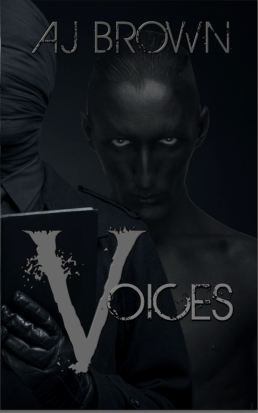
Chuckie Manuscript.jpgWith that in mind, that night I placed a notepad and pen by the bed. When I woke after having the nightmare again, I grabbed the pad and pen and spent the next several hours hand writing what I could recall. By the time I was done, I felt as if I had exorcised a demon. Who knows? I might have.
Though I’ve never been a great sleeper, I laid down and slept through the rest of the night and then slept well the next one also. 

A few days later, I sat at a computer and typed out the first short story I ever wrote outside of school. I titled it, Chuckie. When I was finished, I read over the story. I thought it was good. What did I know? 

But there was so much more to it than just thinking it was good. I enjoyed telling the story, creating the two main characters, Chuckie and Alex. I thoroughly enjoyed the cheesiness of it—it had the distinctive bad humor feel of A Nightmare on Elm Street. I found that for the first time in my life, I had enjoyed writing something. The writing bug had bitten me and it itched. I had to scratch it and scratch it and scratch it. 

I’m still scratching it.

I hand wrote Chuckie in June of 1993. I typed it a couple of days later. Since then, I’ve written over one thousand stories. No, you did not read that wrong. In fact, I’ve written 1060 stories. Honestly, I thought that number would be higher—it feels like it should have been. 

Let’s go back to Fluffy for a minute. “Everything starts from somewhere.” He is right. I began writing in 1993 while sitting in my bed on a hot June night. That’s the where and the when.

Two things before I finish. First, Chuckie is a bad story. It’s cheesy and poorly written. It’s lame and the action is typical horror movie action. Second, I warn you now: I am posting Chuckie at the end of this blog. Read it at your own risk. It is completely unedited and raw and … bad. Do you understand what I’m saying here? The first story I ever wrote is MASSIVELY BAD. You’ve been warned.

The point to this post? Everyone starts somewhere. Often, those starts result in an accomplishment that isn’t too great, but it is still an accomplishment, and that can lead to other accomplishments of much more significance. I hope my start, which was bad, led to something better you have come to love.

As always, until we meet again my friends, be kind to one another.

A.J.

Okay, last chance. You can turn back now, click that X in the corner and move along as if this post is over. Don’t blame me if you read the utter dreck that follows this sentence.

CHUCKIE

(completely unedited)

By A.J. Brown

A good night’s rest is all Chuckie Benson wanted.  Lately, though, it seems he can’t get a decent hour’s rest without dreaming about someone; someone who has been dead for seventeen years.  

Lightening flashes suddenly outside, interrupting the stillness of the night.  A loud clap of thunder follows quickly, shaking him from his troubled sleep.  As he sits up bolt right in his bed Chuckie screams.  

“Another nightmare,” he tells himself, “Just another nightmare.” 

The storm outside is a violent one.  The wind bending trees and snapping power lines to the ground.  The rain, coming down in the same direction the wind is blowing, is mixed with hail stones the size of golf balls.  The sky is pitch black with no sign of stars or the moon.  Bolts of lightening streak from the sky followed by the explosive sound of thunder.

Ring. . . ring. . . Chuckie jumps at the sound of the telephone ringing.  Standing up, he answers it quickly.  

“Hello.  Hello, is anybody there?”

“Remember me Chuckie boy?” came a cold and almost sarcastic sounding voice from the other end.  “Come on Chuckie boy, you’ve gotta remember me.”  

Chuckie sat on the edge of the bed, his tan complexion turning white.  He breaks out into a cold sweat, and his mouth begins to feel dry.  He hasn’t heard that voice in seventeen years. 

“Who. . . who is . . . is this?”

“Ah. . . Come on Punkin, you know who I am, or has the last seventeen years made you forget?”  

Chuckie tried to keep from screaming from the fear that was overcoming him.  He put one hand over his mouth, and his eyes grew large as tears swelled up in them.  He tried to muster up the courage to speak but could only manage a few slight whimpers.

“What’s wrong Chuckie, cat got your tongue?  You know what tonight is don’t you Chuckie boy?” the voice was growing meaner with every word.  “Look out the window, Chuckie boy, I’m coming to get yah.  This time I’m taking you with me.”  

“Alex!  Alex, wait!  What is tonight?  Alex?  Alex?” Chuckie cried as the receiver went dead.  He stood up in a panicked hurry, dropping the receiver to the floor.  Quickly he ran to the window of his apartment.  The complex overlooked the J.C. Recreational Center in which there were half a dozen phones by the building.  Pulling the curtains back, Chuckie looked down toward the phones, only to see all six of them on fire, and what looked like a person trying to get out of one of them.

Chuckie hurried to put on a pair of socks, and blue jeans.  He stepped into his slippers, ran out the door and down the eight flights of stairs to the lobby.  He ran out the main doors and out into the storm, which had calmed down to a steady rain.  Chuckie stared at the phone booths by the recreational building.

“It’s impossible!  They can’t be on fire, it’s pouring out here.” he says aloud.  The man in the phone booth was slouching in the cramped area.  He was no longer trying to get out.  Chuckie picked up a rock by the road and threw it at the phone booth, shattering the hot glass.  Pulling off the shirt he had slept in, Chuckie ran to the phone booth, and grabbed for the man, pulling him out and away from the fire.  He patted the man down with his shirt to distinguish the fire, and hopefully save the man’s life.  

“He’s dead.  Damn it, he’s dead!” Chuckie yelled in an agonizing voice.  

“Run, boy.  He’s coming to get you.” the man surged upward as he spoke in a haggard voice, grabbing Chuckie’s arm with his burnt hands.  Chuckie tried to get free, but the man’s grip was too strong.  “Run Chuckie, run.  He’s coming back.  He’s. . . coming back.”  The man’s grip loosens as he lays backwards, dead, on the concrete, his eyes still wide open.  As Chuckie went to close the man’s eyes he sees a face in them.  It’s the face of another man; it’s Alex’s face.  

As he ran back to his apartment the storm began to pick up again.  The winds were getting stronger, the rain fell harder, and the lightening seemed to touch ground with each flash.  

Chuckie remembers Alex Morrison.  Alex was known in town as a trouble maker.  He had been arrested several times for beating up the old folks in town and then setting them on fire, but since his father was the town sheriff, Alex always managed to get off with a probation of some sort.  He was a mean kid with an evil smile who liked to hurt those weaker than him.  He once bragged that they probably wouldn’t let him into Hell because he was too mean. 

Alex was nineteen when he died.  Chuckie was eleven.  Alex had tried to rob the Benson’s house one night, while they were away.  He didn’t expect them to come back while he was still there.  Mr. Benson confronted Alex.  Alex pulled out a gun and shot both of Chuckie’s parents.  He then looked at Chuckie with an evil grin.

“Go ahead, Punkin, I’ll give you a fair chance to run.”  Alex had said.  

Chuckie ran around the staircase and hid in a hide-away closet.  Trying not to cry he listened and hoped Alex would leave.  

“Come out Chuckie boy.  I got a surprise for yah.”  Alex had laughed.   Alex laid the gun down on the staircase as he went over to the back window.  “Well, if you won’t come out, I guess I’ll have to flush you out.”    

From the hide-away by the staircase Chuckie could see Alex walking away, without the gun in his hand.  He looked around and saw the gun sitting on a step on the staircase.  Running from his hiding spot Chuckie grabbed the gun and ran back to the hide-away.

“Hey Chuckie boy, you know what we’re having for dinner?  We’re having roast beef!”  Alex yelled as he set fire to the back room curtains.  He turned to get the gun and Chuckie was waiting for him.  He sprang from his hiding place with the gun pointed at

Alex.  Bam!! Bam!!  Two bullets plunged deep into Alex’s chest and he hit the floor.  Chuckie dropped the gun and ran out the house.

Alex struggled to stand up.  He kept yelling at Chuckie to come back and help him.  Alex never made it out of the house before it was engulfed in flames.

The whole town mourned the death’s of Bill and Maria Benson at their funerals, but no one appeared at Alex’s funeral, not even his father. Thunder snapped Chuckie out of the past and back to the present.  He went to the bathroom and started to wash his face in the sink.  “This is to unreal.”  he whispered to himself. 

Glancing up into the mirror Chuckie was faced with the gruesome sight of Alex’s face staring back at him.  

“Don’t put the coffee on, Chuckie, we’re not staying!!” boomed the evil reflection in the mirror.  

“Ahhhh!”  Chuckie yelled as he stumbled backwards out of the bathroom and into the hallway.  He grabbed his keys and ran out the door slamming it behind him.  

Chuckie was panic stricken as he cranked up the car.  “The cemetery.  His body is in the cemetery.  I’ll find his tombstone and prove he’s dead.”  He proceeded to drive to the Greenlawn Cemetery with the eerie feeling of someone watching him.  As he approached the graveyard, he looked into the rear view mirror; Alex was in the back seat.  Chuckie swerved off the road, crashed through a gate, and into the cemetery, where he came to a stop at a grave that had been recently dug.

Chuckie scrambled to get out of the car, falling forward as he opened the door and landing in front of the tomb stone that was in front of the newly dug grave.  Looking up, Alex was standing in front of him.  

“Take a look Punkin; look at the tombstone, it’s yours.”  Alex sneered with an evil laugh.

Chuckie looked around.  The cemetery was dark and there were no lights to be seen.  Haunting trees overhung throughout the graveyard.  The night was pitch black and the storm had ceased.  The ground was wet and muddy from the rain, and there was a very distinct odor in the air.  

Chuckie mumbled under his breath “What’s that smell?”

“That’s me. . . ” Alex said “We don’t have deodorant in Hell, Chuckie!”  Alex’s tone of voice was now sadistic, and very evil sounding, and his laugh was as cold as any Chuckie had ever heard.  “Now look at the damn tombstone!”  Alex yelled angrily.

Chuckie slowly stood and turned toward the grave site while watching Alex.  Looking down he read the tombstone, and then fell to his knees again.  “Charles Alen Benson.  Born February eighth,1963; Died September 13, 1991.”  Tears streamed from his eyes, as he looked at the tombstone then at Alex.

“Ah, you’re not going soft on me, are you Chuckie?”  Alex sneered.

“But you’re dead.” he cried as he stood up.  “You’ve been dead for seventeen years.  I can prove. . .”

“I know you can prove it!” Alex interrupted.  “All you have to do is find my grave, right?  Well, go ahead and look for it. It won’t be hard to find, Chuckie–it’s the one on fire.”  Alex was yelling and pointing toward the south side of the grave yard.  “You know what’s over there, don’t you, Chuckie?  That’s where they bury the people like me.  On the Darkside, Chuckie.  Nobody goes over there, not even the dead.  I’m the only one over there, nobody else!  I’ve been there for seventeen years, rotting away, while you’ve been enjoying your life, Chuckie!  You’ve never even come to visit me.  Go ahead, prove to me that I’m not really here.”

Chuckie slowly walked to the grave that Alex had pointed to. The grave was on fire, just as Alex said it was.  Chuckie shielded his eyes as he got close enough to the tombstone to read it without getting burned.  The tombstone stated:  “Alex Vann

Morrison, August 22, 1955 to September 13, 1974.”  

“You’re. . . ” Chuckie started.

“DEAD!”  Alex finished.

Chuckie looked at Alex and for the first time that night he saw exactly what Alex looked like.  Alex was, indeed, dead.  What was left of Alex’s skin was charred a deep black and flaking somewhat.  The right side of his face was completely void of skin while the left side had patches of skin left on it.  He was missing his right eye, and his left eye was of a deep purple color.  He had no nose and no ears, little patches of hair on his

head stood out like a sore thumb, apparently most of it had been burned off in the fire.  His clothes were burnt but still intact, and his shirt had two holes in it, and what looked like dried blood.  There was a lot of decaying flesh still left on his body, with the exception of his hands and forearms, which were all bone.  The glow of the flames off of the grave made Alex look even more horrifying as he moved toward Chuckie.

“What’s wrong Chuckie, don’t you like my rugged good looks?” 

Chuckie stared at Alex in disbelief, as tears streamed from his eyes.

“It’s time, Chuckie.  It’s time to go home.”  Alex sneered as he moved closer.

“Please stay back.  Leave me alone.”  Chuckie pleaded as he backed away from the tomb.

“You still don’t know what tonight is do you?” Alex said in a childish voice.  “It’s the seventeenth anniversary of my death, Chuckie, and now you’re going to join me.  Tonight, Charles Benson, you shall join me in Hell!”

Chuckie started to run, trying to get away from Alex.  

“You can run, but you can’t hide Chuckie.”  Alex was laughing vehemently now.

Chuckie ran out of the cemetery and toward town.  He ran for what seemed like forever.  Finally, he stopped on the Dunbar Street Bridge, which leads back into town, and looked around to see if he could see Alex anywhere.  

“I must have lost him.” he said with a sigh of relief as he looked back toward the cemetery.  “No, he’s here somewhere. . . I gotta keep running. . . get some help.”

As Chuckie turned to head back toward town, there stood Alex.  Alex was on fire from head to toe.  Swiftly he grabbed Chuckie by the neck and hoisted him off of his feet.  

“Last time you saw me I was on fire, Chuckie!  It gave me a hell of a heart burn!”  Alex yelled as he held Chuckie in the air, his grip on Chuckie’s throat tightening, the fingers sinking into the flesh drawing droplets of blood.  Chuckie pried at Alex’s hands, trying to break the grip somehow, so he could breath.  The flames from Alex’s body were burning against Chuckie’s clothes and skin.  Chuckie’s eyes were growing wider as he felt faint.  “Say ‘Good night’ Chuckie, it’s time to go to sleep.”  Alex said as he tightened his grasp on Chuckie’s throat, sinking his long bony fingers deep into his flesh, and snapping Chuckie’s neck, drawing a flow of blood.  Chuckie stopped struggling and his body went limp and his hands fell to his side.  Alex stood and laughed as he held Chuckie’s lifeless body by the throat, blood running down his bony arm.

“I’m sorry to be such a pain in the neck, Chuckie, but I really must be going.”  Alex said as he threw Chuckie’s limp body over the edge of the bridge, then turned and walked off in to the night.  

The storm had picked back up and was worse than before. Lightening flashed and hit trees, splitting them in half.  Thunder boomed as if it was a bomb explosion going off.  

“Noooo!!”  Chuckie yelled as he sat up in bed, sweat pouring off of him.  It was eight thirty and the alarm on his clock was ringing; it was Saturday, September 13, and time to get up. Chuckie got out of his sweat soaked bed.  

“Another nightmare. . . it seemed so real.”  he said to himself breathlessly.  

Chuckie took a long shower to relax.  He looked in the mirror, still shaking his head and trying to figure out why the nightmare had been so real.  

Knock. . . knock. . . knock. . . knock. . . knock.

Chuckie jumped at the sound of the door; “That must be Jessica, she’s early.”  he thought to himself.  He finished drying off and rapped the towel around his waist as the knocking grew more insistent.

“Hold your horses, I’m coming.” Chuckie yelled as he opened the door.  

“Remember me, Chuckie boy?”

AJB

June 29, 1993

Voices, The Interviews: Lewis

SPOILER ALERT * SPOILER ALERT * SPOILER ALERT * SPOILER ALERT

Before reading today’s post, I want to tell you about our little project. In the coming months one character from each story in my collection, Voices, will be interviewed by Lisa Lee with Bibliophilia Templum. 

Screen Shot 2018-01-06 at 2.26.45 PMNo, this is not your typical interview session. What I want to do is make each interview like a story, one that continues until we reach the end. Some of these are going to be short. Some of them might be long. I don’t know. Like you, I will find out just how long each interview is based on the questions Lisa provides me. I don’t know the questions ahead of time and neither do the characters.

Since this is an interview, I will go ahead and say up front there are spoilers in each session. If you have not read Voices, I urge you to do so before continuing (you can pick up a copy here: If you haven’t read the collection, you have been made aware of possible spoilers. 

One more thing before the first session: if you have read Voices and would like to ask a question of today’s character, leave a comment at the end, and I will see about getting an answer from the character for you. Don’t be shy, ask your questions. You may get an interesting response.

SESSION 11

“That be a good child,” said the old black man sitting almost directly across from Lisa. He’s hunched forward, elbows on his knees. In his hands is an old cap, folded almost in half. His fingernails are yellow and his hands look like those of a man who had done hard labor his entire life. In truth, he had, and sometimes still does, even though he is well into his seventies. 

“Hello, Lewis,” Lisa says.

“Hello, Ma’am.” He nods appropriately. His voice is deep and holds a rasp in it. 

“How are you today?”

“I’m fine, Ma’am. You?”

“I’m not sure yet. I’ll let you know when we’re done here. How’s that?”

Lewis nods. “That be fine, Ma’am.”

“Lewis, I would like to be candid for a moment, if that is okay?”

Sad Woes of the Trashman“Yes, Ma’am. I ain’t got nothin’ to hide, so you go on ahead and be … what’s that word you said?”

“Candid?”

“Yes, Ma’am. You go on ahead and be candid.”

“You seem like a really good man.  A hard worker.  A caring person. So … Why …? What made you think it was acceptable to steal another person’s car?”

“Umm … I ain’t never said it was accep’ble. It ain’t. I just, well, I wanted my Michelle to be happy. You know, not regret marryin’ a man of my color. You know her pappy wasn’t all too keen on us gettin’ together.” Lewis takes a breath, lets it out in a long, sad sigh. “I reckon I was scared she would leave me, so I stole the car for some money. I didn’t do it out of malice or spite. I reckon I went and took it out of love.”

“Love?”

“Yes, Ma’am.” He shakes his head. His hands twist the cap a little. “Love makes you do some bad things. Stupid things.”

Lisa nods. “Yes, I suppose it does.” She pauses, then says, “It must have been degrading to be called ‘boy’ and, um, other things by the policemen.”

“I reckon so, Ma’am, but back then that’s just the way things were. Boy was the least insultin’ thing I was called by any white man back then.”

“You endured a lot in prison, Lewis.”

He shrugs. “Yes, Ma’am.”

“How did you keep your composure when they killed Marvin Jackson?”

Lewis shakes his head and twist the cap some more. “It ain’t all that hard when you want to stay alive. I was ‘fraid they was goin’ to kill me, too, so I just did what I hads to do to stay on this side of the ground.”

“That’s a smart way of looking at things.”

“It’s the only way in prison, Ma’am.”

“And you went to prison because of your wife, right?”

“Oh no, Ma’am. I went to prison ‘cause I was stupid and wanted to impress my Michelle. If I had just been me …” he shrugs again. “things might’ve been diff’rent.” 

“You obviously loved your wife very much.”

“I still do. Though she’s dead and all, I still love her.”


“Is it fair to say you loved her so much you have no remorse for killing her second husband?”

“That wasn’t no husband, Ma’am. He was a monster. I just saved her from the monster. That’s all.”

“What about when you killed the other man?”

“Well,  I reckon that was self-defense, Ma’am.”

“After everything you have been through, can you tell me why you decided to turn yourself in to the police?”

Lewis sits silent for a few seconds. Then a few more. He looks up with tears in his eyes. “When you ain’t got nothin’ you need somethin’ to hold onto. Somethin’ like structure. And prison has structure. Besides, I ain’t long for this world, Ma’am. Ain’t nothin’ worse than dyin’ alone.”

TO BE CONTINUED …

(The wonderful artwork for The Sad Woes of the Trash Man was provided by the amazing Troy Rider.)

Voices, The Interviews: Brian

SPOILER ALERT * SPOILER ALERT * SPOILER ALERT * SPOILER ALERT

Before reading today’s post, I want to tell you about our little project. In the coming months one character from each story in my collection, Voices, will be interviewed by Lisa Lee with Bibliophilia Templum. 

No, this is not your typical interview session. What I want to do is make each interview like a story, one that continues until we reach the end. Some of these are going to be short. Some of them might be long. I don’t know. Like you, I will find out just how long each interview is based on the questions Lisa provides me. I don’t know the questions ahead of time and neither do the characters.

Since this is an interview, I will go ahead and say up front there are spoilers in each session. If you have not read Voices, I urge you to do so before continuing (you can pick up a copy here. If you haven’t read the collection, you have been made aware of possible spoilers. 

One more thing before the first session: if you have read Voices and would like to ask a question of today’s character, leave a comment at the end, and I will see about getting an answer from the character for you. Don’t be shy, ask your questions. You may get an interesting response.

SESSION 10

She is tired. Her body sags. Her legs are weak. Lisa wants to take a nap, to go home and be done with these interviews. Yes, she knows it’s not time to be done, but some of these conversations have been intense and that tension has worn on her body, on her mind, and maybe even on her soul.

The cut on Lisa’s arm isn’t too deep. It bleeds, but not like it could have. She sees the blood that spilled down her arm and is dismayed by how bright the red is, or rather, how much of it there is.

“Excuse me, Ma’am,”

She turns her eyes to the young boy standing in front of her, his arm extended, a white kerchief in it. He is a big boy, probably quite big for his age. His eyes hold a distant stare in them, though he looks directly at her. 

“You’re bleeding.”

“Thank you,” Lisa says and takes the handkerchief. 

The boy nods, turns and lumbers back to his seat. She is amazed at how soft and gentle his voice is, especially being such a big boy. No, he’s not fat, just big and tall with sweet eyes that seem too innocent for any wrong doing, especially … Lisa shakes her head. She knows who he is, just as she has known most of the characters.

“Hello Brian.”

“Hi,” he responds. 

“Can we talk? Is that okay?”

“Sure.”

“First, let’s talk about your grandparents.”

“Okay.”

“You love your grandparents, don’t you?”

“Yes, Ma’am.”

“How long have you lived with them?”

Brian looks up at the ceiling. Lisa does, too, and she stares at where Dane’s family once tried to come through.

“Well, I’m ten now, and I’ve been with them since I was four. So that’s …” He holds up his fingers, then counts backwards silently, until six fingers remain. “Six years.”

Screen Shot 2018-01-06 at 2.26.45 PMThat’s a long time, Lisa thinks. “Do you like living with them?”

He nods. It’s a quick jerk of the head. “Yeah. Their place is clean.”

“Clean?”

“Yeah.”

“What do you mean?”

“There’s no bugs, and they don’t smoke, so the house doesn’t stink.”

An image appears in Lisa’s mind. It’s of a boy lying in bed in the middle of the night. On the bed is a large roach. It crawls along the cover and then onto the exposed skin of the young boy. She shivers, pushes the thought away.

“Do you like going to church with grandparents?”

“Yeah.”

Simple, quick answers. As Lisa looks at him, she sees there is no need for him to think up an answer. He’s as honest as they come, and the responses he gives her are genuine.

“Do you get along with your brother and sister?”

“My sister is cool, but my little brother is a butthead.”

Lisa smiles at this. So matter of fact. Brian seems to be okay with the conversation and she doesn’t want to turn it toward something he might not like, but what’s the point of interviewing someone if you can’t ask a tough question or two?

“Brian, tell me about your daddy.”

His expression doesn’t change. The look in his eyes doesn’t waver. No gray cloud comes over him. He speaks as he has for all the other questions.

“He’s my dad.”

“Is there anything about him you wish to talk about?”

“No. He’s just my dad.”

“The pastor at your grandparents’ church said the things your daddy did were … evil. Was your daddy a bad man?”

He shrugs. “He was lazy.”

“Did your daddy do other things that were … bad?”

“I guess. The people came and said we had to leave the house and live with Grandmomma and Granddaddy. Aunt Norry said they don’t do that unless there is a problem.”

“Was there a problem?”

“I don’t know. I guess.”

“Sweetie, where’s your momma?”

“She sleeps a lot. She’s always asleep.”

Lisa doesn’t know what that means, but she hopes it doesn’t mean she had passed away.

“Brian … do you think you were doing God’s work when you … when you killed your daddy?”

“I didn’t kill him. He was already dead.”

This strikes her as profound. The boy in front of her doesn’t believe his father was even alive when he took the hammer to him. He was lazy, so he was dead. Or maybe he died when Ben and his siblings were taken from him and his wife. 

“Brian, are you anything like your daddy?”

Again, no change in his expression. “No, not really. Do you think I’m like him?”

“No, I don’t think you’re like your daddy at all.”

Brian nods again.

“Thank you, Brian.”

“You’re welcome.”

To be continued …


Voices, The Interviews: Mr. Worrywort

SPOILER ALERT * SPOILER ALERT * SPOILER ALERT * SPOILER ALERT

Before reading today’s post, I want to tell you about our little project. In the coming months one character from each story in my collection, Voices, will be interviewed by Lisa Lee with Bibliophilia Templum. 

No, this is not your typical interview session. What I want to do is make each interview like a story, one that continues until we reach the end. Some of these are going to be short. Some of them might be long. I don’t know. Like you, I will find out just how long each interview is based on the questions Lisa provides me. I don’t know the questions ahead of time and neither do the characters.

Since this is an interview, I will go ahead and say up front there are spoilers in each session. If you have not read Voices, I urge you to do so before continuing (you can pick up a copy here: https://www.amazon.com/dp/B07BJ73QP9). If you haven’t read the collection, you have been made aware of possible spoilers. 

One more thing before the first session: if you have read Voices and would like to ask a question of today’s character, leave a comment at the end, and I will see about getting an answer from the character for you. Don’t be shy, ask your questions. You may get an interesting response.

SESSION 2: Mr. Worrywort

Lisa takes a deep breath. She didn’t expect the defiant tone in Spencer’s voice. She didn’t expect him to sound as if he enjoyed what happened to Sarah and Bobby. She wonders, very briefly, if Spencer knows Sarah didn’t die. Oh, Bobby had and he had suffered greatly before doing so, but Sarah still lives and is currently housed in the Century Falls Mental Institute, a place surrounded by brick walls that span twenty feet from the ground. One could try to climb it, but with no foot or hand holds and the top laced with razor wire, no one is getting in or out that way without paying a painful price. 

She releases the breath and looks around the horseshoe shaped chairs. Fourteen are occupied. The one where Spencer had sat seems, to her, to have never had anyone occupying it. The cushioned yellow seat appears bland compared to the others. The brown of the metal legs are lighter than the others. Lisa shakes her head. 

It’s all in my head.

The faces of the other fourteen individuals in the room are turned in every direction except toward her. One of them … one of them looks different. She cocks her head to the side and stares at him. She doesn’t recognize him from the character sheet she had been given before arriving. 

“You,” she says. 

The man she speaks to flinches, but doesn’t look up.

“Excuse me. Who are you?”

“That is Mr. Worrywort, Ma’am.” 

Screen Shot 2018-01-06 at 2.26.45 PMTo her right a man whose skin is like mahogany sits forward in his seat. His elbows rest on his knees and his hands are clasped together as if he is about to pray. He looks as if he has worn life on his shoulders and the weight is pulling him down. 
“Mr. Worrywort?”

“Yes’m.”

“How do you know that, Sir?”

The old man smiles. His teeth are yellow and there is only a twinkle of hope in them. “We all has a bit of Mr. Worrywort in us, Ma’am. It’s our thinker.”

Chet! her mind screams. The sudden realization strikes her and she knows the questions she needs to ask.

“Mr. Worrywort?” she asks. 

This time the man looks at her. His features are plain, almost nonexistent. She studies him for a few seconds. She sees his eyes and nose and even his lips, but she can’t make any of them out. She knows that later when she tries to recall anything about him, she won’t remember. 

Sometimes, remembrances are not good, she thinks, then wonders if the voice in her head is her Mr. Worrywort, or in this case, a Mrs. Worrywort. She licks her lips and speaks again. 

“Are you still willing to speak with me?

He nods. 

“Thank you. I will keep this short. Okay?”

Another nod.

“You are the inner voice of Chet, right?”

This time he shrugs, then nods. “I suppose so.” His voice is monotone, flat, a voice she won’t remember. 

“Is ‘inner voice’ the correct title for you, or do you prefer something else?”

She hears him take a deep breath. When he releases it, his words come with it and there is a touch of resignation in them. “That’s what some people call us. Others say we’re this thing called a conscience.” He makes invisible quote marks in the air, using two fingers on both hands to do so. “Some people see us as a devil or an angel who resides on their shoulders. However, most people call us demons, and use us as excuses for why they do bad things or do nothing at all. Chet calls me Mr. Worrywort because I try to warn him when he is about to make a bad decision.”

“I’m getting the feeling you don’t care much for Chet.”

He smiles. This she sees. It is plain … nothing worth remembering. “I care quite a bit for him. After all, without him, I do not exist. I’m like a rudder on a boat meant to steer the vessel on its course and out of trouble. Some people’s rudders are broken. They are tired or even lazy. They’ve given up on their vessel, so they let them float in the waters, near the rocks, into storms. I … I don’t do that. I do my best to steer him clear of bad actions.”

Lisa’s lips purse for a second, maybe two. “Do you feel like Chet listens to you more or ignores you more?”

“He …” Mr. Worrywort pauses. “He used to.”

“Used to?”

“Yes, before he married that woman.” There is anger in his voice, a true emotion, though some might say it’s not a real feeling at all, but a secondary one, something easily controlled and is never truly felt. 

“You mean Kay?”

“Yes, she is who I’m talking about.”

“Interesting.”

absolutely-ideas-hercules-folding-chairs-i-have-destroyed-scribblings-in-the-dark“It’s not interesting!” he yells. The room shakes. The characters in the other chairs are all looking at him now. Some of them look fearful, while others look bored or amused. “She’s going to get us killed one day. She’s almost gotten us killed a couple of times, but the last time … the last time was the worst. ‘Let’s take a trip,’ she said. ‘It will be fun,’ she said. ‘If it snows I’m sure we can find something to do.’ She said that all flirty-like, knowing Chet wouldn’t—couldn’t!—resist her. It was snowing! I hate driving in the snow. But Chet wouldn’t listen, you see. Chet was all, ‘okay, Babe,’ and she almost got us killed.”

“I don’t see how she almost got you killed, Mr. Worrywort. Chet made a decision—it was his choice.”

“He ignored me because of her! If not for her, we wouldn’t have been in that situation.”

“I see. So, since he married Kay, he ignores you more and more. Is that what you are saying?”

His arms are crossed over his chest now. His legs stretched out and crossed at the ankles. “Yes, that’s what I said. If he would have just listened to me when his friend offered to ‘hook them up’ we would never have to deal with the things she does and the danger she puts us in.”

She nods and shifts the conversation slightly away from Kay. “How do you feel when he ignores you?”

Mr. Worrywort laughs. It is much like Spencer’s and something she feels is a sign of a deteriorating conversation. His chair creaks when he sits up. There is a frown on his face that appears to have been carved into his nonexistent features. “How do you feel when someone ignores you?”

Her first thought is, I ask the questions. She doesn’t say that. Instead, she answers him. “I don’t like it.”

“You don’t like it?” Another of those angered laughs comes out. “I hate it. I loathe it. How can you ignore someone who is always right?”

“But, are you really always right?” It is out before she processes it. Again, she wonders if her inner voice came up with that one.

Mr. Worrywort says nothing right away. He appears to be thinking on it, or maybe stewing about the truth. 

“When it comes to Chet, I am always right. Always.”

“I think Chet would beg to differ with you there.”

A black cloud of anger hovers on Mr. Worrywort’s face. His breaths are loud, in/out, in/out, the sound of a freight train chugging along the tracks. 

“What do you know? What do you know about me or Chet or anything for that matter?”

Lisa smiles at this. Though she doesn’t want conflict she thought there could be some before arriving there that morning. The subjects are touchy and the characters have been through more in a span of four to twenty thousand words than the average person goes through in a week. But this guy … she knows exactly what this guy is. She has come across his type many times in her life.

“I know you are manipulative. I know you get angry when you don’t get it your way. And I know you are selfish and self serving and don’t have Chet’s best interests in mind.”

“His interest is the only thing I have in mind!”

“No, Sir. Your interests are what you have in mind. You are afraid to live. Kay is not and she has shown Chet not to be afraid to live, to laugh, to love and to care. Maybe you should take a lesson from her inner voice, or maybe your own.”

“I don’t have an inner voice! None of those like me do.”

“Maybe that’s your problem. Maybe you need one.”

“I’m done here,” Mr. Worrywort says. He stands up in a hurry. The chair pushes back, tilts on its back legs and falls over, folding in on itself. Mr. Worrywort turns, shoves the fallen chair with one foot. It scrapes across the tiled floor. He doesn’t go to the door. Instead, he hurries to one darkened corner and fades into the shadows.

Lisa stares to where he went. One thought enters her mind. I can see why he might be called a demon …

To be continued …

Oh Come All Ye …

They’re all dead. The whole town. Not a living person to be found.

Hank leaned against the truck, a cigarette between his lips. He wasn’t much of a smoker, but he might not see another day, so why not? The first cigarette he had ever smoked made him lightheaded. It gave him one hell of a coughing fit, as well. The second wasn’t much better, but at least it didn’t take his breath away.

Strike that off the bucket list, he thought and flicked the cigarette away. It tumbled end over end and landed in the snow with a hiss and a light plume of gray smoke and white steam.

He coughed again, but not from smoking. No, this was from the infection. He was sweating from the fever and his eyes watered. Scratches were on his arms, neck and face. Blood had dried on a few of the deeper wounds. His leg throbbed, but at that point, he no longer cared. What he did care about was taking out the biters shambling along the dirt road.

They didn’t seem to notice him. He blamed the infection for that. If he weren’t dying, not being noticed by the dead would be a good thing, but now, as his body threatened to shut down and turn him into one of those creatures, he wanted to be noticed by them. He wanted them to see him coming.

A biter lurched passed him, her grayed hair disheveled, skin sagging from either old age or decay … or both. What Jeanette would have called a housedress barely hung from her shoulders, the flower print speckled with crusted blood.

“Hey lady,” Hank said and reached for the axe next to someone else’s truck he had been leaning against. She turned, not just her head, but her entire body, and seemed to look through Hank. If she would have actually noticed him, she would have seen the stocking cap on his head, the fuzzy white ball hanging from it. She may have even wondered why he wore such a thing if it wasn’t Christmas. Hank didn’t know if it was actually Christmas. Again, he didn’t care.

He hefted the axe in both hands and took a few quick, almost lunging steps. He swung it as hard as his weakening muscles allowed. The top of the woman’s head shattered beneath the blade and she crumpled to the ground. A halo of brownish red blood formed beneath what remained of her head.

“Merry Christmas, lady.”

Hank wiped a spatter of thick blood from his face and then reached into the pick-up truck. He mashed the horn and held it for several seconds. The biters along the streets and in the yards of the small community where he thought he would die turned and began their awkward trundle toward him.

Hank coughed hard, the action tearing at his chest. His stomach cramped and released and then he spat out a string of yellow phlegm, streaked red with blood. It was time and he was tired. Beyond that, he was pissed. He tapped the front fender with the bloodied blade and gave a sickly smile. As the first of the dead approached him, he raised the axe and began to sing.

“Oh come all you biters, come and get your head split …”