Don’t Snoop

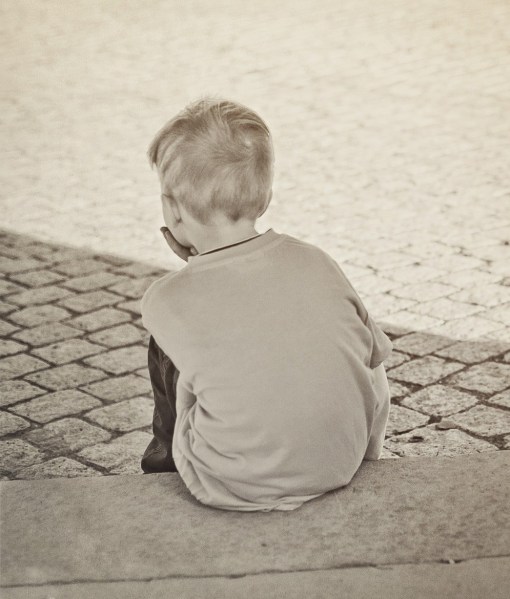
The following is a memory that was triggered when I made a sandwich to take to work with me. 

*

“Don’t snoop,” Grandmomma always said when I was being nosey or poking around in places I had no business poking around in. “Don’t snoop.”

My grandparents lived in an old two-story house in what some call the mill hill and others call the mill village. I called it home. I spent a large chunk of my childhood there, running the streets with my brother, for the most part. Occasionally, other kids would show up, them, like us, visiting their grandparents for the weekend or the summer or Christmas or Easter break or whenever Mom and Dad needed a break. There were only a handful. Tony. Wayne. David. Bryce. David B. Bryce was the only mainstay for a while, his family living in the corner house of the same street my grandparents lived on. He moved away when I was nine or ten. I can’t remember. David B. was the next to leave, though not by his own will. Getting hit by a car and dragged a short distance before getting untangled beneath it isn’t exactly your own will. Wayne and David—it seemed I knew three sets of brothers with that combo of names—showed up the least of the bunch. Then their grandparents moved away and so did they. Leaving Tony, myself and my brother … and the Barnett brothers, but we steered clear of them and when we saw them coming, we all ran the other way. 

I spent a lot of time with my granddad, playing marbles, watching the Braves on television, walking down to the McDonald’s from time to time for an egg mcmuffin, or heading to Brown’s Grocery for whatever he needed and the occasional bag of candy and coke in a small glass bottle. Those same bottles we collected and took back to Brown’s for money. I cut the grass and cleaned the yard from time to time, all things outside. 

When it came to the inside, that was all Grandmomma, and even trying to help clean from time to time was considered snooping. 

Still, we snooped when we could. I don’t know why, but I think it is something all children do, and many adults as well. We’re curious, people are. We go to a house we’ve never been to and suddenly have to use the bathroom, which may be true. A lot of people peek into the medicine cabinet just to see what’s there. It’s a medicine cabinet, what do we think we will find besides, I don’t know, medicine?

Grandmomma’s house was laid out fairly simple. A living room when you walked in the front door, a bedroom directly off to the left, the door always closed. There wasn’t really a hallway, but small area directly beyond the living room that opened into what could be considered a large dining room. To the right of the dining room was a walk-in closet or a pantry. To the left was a small kitchen with a stove and sink to the right, a table and chairs to the left, and like every other kitchen in America, cabinets for plates, bowls, glasses, canned goods, perishables and whatever else went in kitchens. A small black and white television sat on the counter. Off the dining room was another door. When you opened it, the door to the left was the bathroom. Stairs led up to the second floor where two large bedrooms sat, separated by a small walkthrough closet. There were lots of places to snoop. There was also the back porch with Granddaddy’s various tools and what nots and the metal shed that I thought had been built rusty but somehow remained upright. 

Snooping at Grandmomma’s house wasn’t easy. You had to be almost ninja-like. Well, not really, but we were kids and kids aren’t exactly known for their stealth. Grandmomma had to either be outside, in the bathroom or asleep for us to snoop successfully. Even then we had to be quick. 

There was a piece of furniture in the living room that had a drawer in it and two doors at the bottom. I only ever opened those doors once—there were only boring things like books and papers down there. The drawer was wide and long but not very deep. Still, it held things like jewelry and coins and other trinkets little boys wouldn’t be interested in. The only time I ever stole money from my grandparents came from that drawer. Two case quarters, as Granddaddy would put it. They never said they knew I stole the quarters, but I think they did. I mean, I explained it away when I came back from Brown’s with a little more than what a quarter would buy back then by saying I returned a couple of bottles. Still, I think they knew otherwise. I never looked in that drawer again while they were both alive. It was only after they had passed, when we were cleaning out their house, that I looked in the drawer and recalled stealing two case quarters. 

The bedroom off the living room was rarely a good idea. Though there was a bed and dresser and two small end tables in the very small room, it was mostly used for storage. Getting in and out of there quietly and quickly was next to impossible. Snooping in the pantry was easy. That was the one place Grandmomma or Granddaddy would send us to get some canned or boxed good. The only thing remotely tempting was the rack of clothes to the right of the door when you walked in. There were always boxes hidden by the clothes. Still, if they didn’t send us in there, we had best not be in there. And they always knew we had snooped. I didn’t understand how they knew, but over time it dawned on me. There was a pull string for the light. We would pull it when we entered the pantry, but not always when we left. If that light was on, we gave ourselves away. 

The bathroom was a bathroom, and yes, the medicine cabinet contained various medicines, none of which interested me, though I can’t say the same about my uncle, but that’s a different story. 

The upstairs was tricky. Several things had to happen for us to snoop up there. First, my uncle had to be away. That was his domain and if he caught us up there, he was a bear—a mean one. Second, both grandparents had to be outside. Then we had to pretend we were going to the bathroom, quickly bound up the steps (which made so much noise it made bulls in China closets look quiet). I always preferred the room on the right—my uncle didn’t sleep in that one. There always seemed to be something neat in there, from his guitars to his girly magazines. He also hid his drugs in various places in both rooms and the small walkthrough closet that never seemed to have a light that worked. I didn’t like the walkthrough closet and I spent as little time in the upstairs as possible, always afraid our uncle would come home and be a mean bear. Whenever we got caught up there by Grandmomma we told her we were just going up the steps so we could slide down on our bottoms. It was a good lie. It really was. Not that it worked, but it was the one we used the most.

That brings me to the kitchen drawer—yes a specific one. It was to the left when you walked into the kitchen and the last one along that counter. In it were various things a little boy could find interesting. Red and green rubber bands that kept the newspapers rolled up when the paper man came by and tossed them out his window and into the yard; many colorful twist ties that held bread wrappers shut. Yellow and green seemed to be the color that was most popular, with an occasional red, white, or black thrown in there. Bobby pins that were used to hold Grandmomma’s hair back. They were also useful for putting on the front part of a paper airplane to give it weight and steady the plane so it would fly longer and farther. There were measuring cups I never saw Grandmomma use. There were pennies and bottle caps and glasses so old the lenses were tinted brown. Sewing thread, needles I poked myself with more than a handful of times, and wooden pencils sharpened with a knife, not a wall or electric sharpener. Grease pencils with a piece of thread near the tip you pulled so the paper would peel, and the tip of the pencil would get bigger. I loved those grease pencils. 

The drawer was a wonderland of junk that always fascinated me. It’s also the drawer that was never off limits. It wasn’t snooping if I went in that drawer to get a rubber band or a bobby pin for an airplane. It was a safe drawer. And it was the one I loved the most. 

Like everything in life, good and bad things alike, everything comes to an end.

After both my grandparents passed away, I went “home” for the last time and helped clean some of the house out. I went back to that drawer and opened it with the reverent awe of a six-year-old. As I looked in the drawer, tears filled my eyes. It had already been emptied. I looked at the bare drawer and recalled the rubber bands and twist ties and bobby pins and thread and needles … and grease pencils. My heart cried. I did, too.

I took a deep breath, wiped my eyes, and composed myself. My brother and I made our way up the stairs for the last time. He pointed out and even showed my mom where her brother—our uncle—hid his drugs in places in the wall, by the heater, in the crawl space in the ceiling of the walkthrough closet. At the top of the steps, I sat down. I thought bout sliding down those steps on my bottom. I didn’t. 

The other day I was making a sandwich to take to work with me. I pulled the yellow twist tie from the almost empty package of bread and set it on the table. I always give the dogs the last three pieces of bread, the two end pieces and one other piece (three dogs, three pieces of bread). We call it bread butt day for the dogs. They love bread butt day. 

I tossed the empty package in the trash and picked up the twist tie. It was mangled, as twist ties tend to become once they are used. I looked at it and thought about the drawer in my grandparents’ kitchen for the first time since the last time I saw it empty. I walked over to the drawer next to the sink, opened it and dropped the twist tie in there. I smiled, heard my grandmomma whisper, “Don’t snoop,” in my mind’s ear and closed the drawer.

5/19/2023

AJB

A Toast To A Friend

If you’ve read my novella, Closing the Wound, then you know it is about the real events of the death of a teenage boy on Halloween night in 1995 here in South Carolina. Our friend, Chris, loved Halloween. It was his favorite day of the year. 

So, in honor of our friend, on Halloween, Cate and I will go visit his grave. We will take candy bars with us and we will toast his life and his love for Halloween, then we will eat the candy. It’s our way of paying tribute to a young man who died far too soon. It’s our way of remembering him. 

Cate and I went for coffee this evening and as we sat and drank our drinks at an awesome place in Cayce called Piecewise (it’s on State Street, down the road from B.C. High School if you want to pay them a visit), we talked about Chris and something we would like to do, or rather, something we would like you to do. At some point during the month of October, please take a couple of hours and visit the grave of a family member or a friend (or even a stranger). Take with you some candy, toast that person, talk about that person, eat your candy. 

So often when someone dies, we go to the funeral, maybe go to the burial, then … we forget about them. Life is too precious to forget someone that was a part of our lives. Instead of forgetting them, let them live on in our lives. Remember them by taking a moment, here in October, the month of Halloween, my friend’s favorite day of the year, and celebrate them. 

Yes, I am probably going to post this here and there and everywhere over the next few weeks as Halloween grows closer. Yes, you will also see more posts about Closing the Wound this month than before. I think his story is one that should be told, should be read. It was my way to cope with his death and a way for him to live on through the written word. 

Until we meet again, my friends, be kind to one another.

Happy Halloween.

A.J.

A Note About Closing The Wound

If you’ve read my book, Closing the Wound, then you know several things right off the bat. First, this story would not have happened if not for a friend calling me early one Saturday morning and asking this question: What happened that night? You also know I went and had breakfast with this friend and we talked for a long time while sitting at a Denny’s. You also know Closing the Wound is a true story, at least as true as my memory recalled it. 

coverIt had been a while since I had seen that friend. His name is Chad and we were (and still are, though we don’t see each other often enough) good friends.I ran into Chad at my daughter’s graduation. He was there for another student, but he got to see my girl walk across that stage, too. Afterwards, we talked, as friends tend to do. We said, ‘Hey, we need to keep in touch,’ as friends tend to do, though often they don’t. 

Before we went our separate ways, I told him about Closing the Wound and his part in the story. A couple of days later, he purchased the digital book. When he finished reading the story, he didn’t leave me a review. Instead, he sent me an email. After reading it, I asked him if I could share it with the world. With his permission, I give you Chad’s letter to me.

Dear Jeff,

It is just passed midnight and I read “Closing The Wound”.  I thoroughly enjoyed reading it from your perspective.  Like you, I have somewhat boxed those memories away to be opened only one time a year, Halloween.  The book itself is very well written, it’s what’s between the front and back (that) really mattered to me.  It did dredge up a lot of memories.  I am still a bit hazy on our conversation that day, I do recall us talking about that night just can’t quite piece it all together.  It has been 24 years ago and after reading the book, a lot of those forgotten details and memories have crept back into my mind, which is a good thing.  I never want to forget those days no matter how horrific they were at times.  Each piece is somewhat of a building block of who we have become. Back to the book, you have a gift Jeff, you are a master story teller and writer.  I do not use those terms lightly either.  When I was writing, I had a similar style, but I can’t focus long enough to eat a sandwich let alone write a book!   LOL!  You have always had that gift, you can say you’re a natural at it. 

 I know we haven’t kept in touch over the years and meeting at the graduation was very refreshing to say the least.  I like how you write in the book to not live in the past.  There are somethings that I have been apart of where I too, ask could I have done something differently to alter the outcome.  I suppose we can all agonize over those questions, but questions don’t change events concerning the past.  I have struggled with Chris’ death, well at least once a year, yes it still haunts me.  I know he was tormented and I understood his struggles to a degree.  I truly believe he is in Heaven and no longer has those feelings of loneliness, depression and the desire to belong.  I still see his face when he was with all of us.  He admired you so much because you were such a good friend to him.  Like me, you helped alter some of his life Jeff.  His life ended at a very young age, but perhaps that’s how it was meant to be.  We can ask questions of “what ifs”, but I remember the best days with him was when we were all together hanging out.  Those are the days that I remember the most.  Yes, I remember that picture of us at the rest area off of I-77 in between the snack machine bars.  I had so much fun back in those days! 

 I leave you with this my friend.  After reading the book, I couldn’t help but to go back 25 years ago and think how you have helped so many people.  I know you are a little rough around the edges but that’s ok, sometimes it takes course sandpaper to get the splinters off of some of us knuckleheads!  But seriously, as time rapidly marches forward and our own families grow before us, take stock in your life and the people you have influenced.  I know for me, my family may not be here if it weren’t for you.  God uses us in different ways and He used you and a number of others from that church to save me from myself.  I suppose some emotions have been awaken from 25 years ago, but I just remember how happy Chris was with us, in a way we were his family besides his aunt and sister.  This Halloween let’s start a tradition at go and visit him and remind ourselves of the good days. 

BoyThank you for all you have done for me Jeff!  You are and will always be one of my best friends. 

 Keep in touch buddy! 

 PS: Do you remember his sister’s name or know of her whereabouts? 

 Chad *********

After reading this, I sat back for a while, just staring at the words, not really thinking in clear thoughts, but in pictures. Pictures, like the first time I met Chris at a church work day; like the time I saw him at the South Carolina State Fair just weeks before his death; like the hundreds of teens in a standing room memorial service; like finding his grave for the first time after not visiting for so long; at learning my sister’s husband new Chris and has his own theories of what happened that night. All of them were snapshots into the memories that I—that we—dredged up.  

Chad said some nice things to me, but the one that keeps coming back is this: He admired you so much because you were such a good friend to him.  Like me, you helped alter some of his life …

I wish I would have done more, been a better friend (despite what Chad said, I always think I could have done more), knocked the block off the punk who influenced him in the direction that ultimately cost him his life. 

Here’s my questions to all of you: Do you know someone who might need someone to talk to? Do you know someone who might be heading down a path of destruction? Is there someone you care about who is doing something you think maybe he or she shouldn’t, but you are afraid to mention it because you think it will hurt their feelings?

Here’s one more question: Does saving a life mean more than hurting someone’s feelings to do so? 

The story of my friend, Chris, in Closing the Wound, is just the tip of the iceberg. The story goes so much deeper and cuts down to the bone when I think about his life and death. I honestly don’t know if there is more I could have done, and that brings me guilt from time to time. Even so, I did some good in his life, and clearly, in Chad’s life. 

Sometimes our guilt overrides everything else. It torments us to the point of forgetting all about the good in our life, the good we have done. Chad is one of those good things. He reminded me of that. Now, I remind you: think about someone you have helped in some way. How is their life better because of you? Yes, take credit for that in your heart. Say, I did something great for someone and I helped someone and that person is in a better place because of me. Don’t let guilt ruin you. 

Until we meet again my friends, be kind to one another.

A.J.

If you would like to pick up a copy of Closing the Wound, you can find the digital version on Amazon, or you can get the print version directly from me (signed of course) by contacting me at 1horrorwithheart@gmail.com.

Closing the Wound

Some stories are harder to write than others. They take on a different meaning, a different feel. The emotional grind of killing off a character or breaking up a relationship between two lovers or two friends or even family members to further a story along, can be taxing on the writer. That grind amps up when the story is either based on real events or are the actual events themselves.

coverThat leads me to my first nonfiction book, Closing the Wound. The people in the book are not just characters, but were, at one point, living, breathing human beings and part of my life in one way or other. The events are not figments of my imagination, but the truth how I remember it. I say as I remember it because time has a way of distorting things. It can turn the eight inch bass a fisherman caught when he was twenty into a six foot marlin at the age of fifty-three. It can take the task of reeling that bass in, feeding it some line, pulling the rod back, reeling, reeling, reeling into an epic battle for survival between man and beast. Time has a way of sneaking up on us and blurring the edges of reality and fiction, sometimes to the point we don’t know which is fact and which is make believe.

When I sat down to write Closing the Wound, I was very careful about those facts and falsehoods. I recounted the events over and over how I remember them. I thought about the people, all of whom the names were changed, and the roles they played in this chapter of, not only my life, but theirs and the main topic of this story, a young boy—no, young man—who died far too soon, taken from this world by another person. I thought about how folks who know about these events might feel about them being rehashed so many years later. I thought about how some of the people are portrayed. 

I thought hard on just who is telling the story. And this was the sticking point for me. Everyone has their versions of events, from as close to factual as you can get to the downright outrageous. For me, these are the facts as I recall them. The key to this entire story is it is my recollection. I didn’t seek out anyone else in the telling of this story. I used the facts and my memory to tell it. If someone else wishes to tell this story in their own manner, from their own perspective, then have at it. But for me—and for you—this is my story. 

Before I go, I want to talk about the cover. It’s a rusty lock on an old door. It symbolizes that this story is over for me. I have closed the doors on it and have locked them. It symbolizes that there is nothing left to tell; I have poured my soul out and I can’t pour anymore.

I hope you will consider coming along with me on the journey to the end of this story. If you do, I hope you will consider leaving a review as well. Those things are important to us little guys.

If you would like to pick up a digital copy of Closing the Wound, you can do so by going here.

If you would like to pick up a physical copy of Closing the Wound, you do so by going here.

As always, thank you for reading, and until we meet again my friends, be kind to one another.

A.J.


No Saving Grace–A Hank Walker Short Story

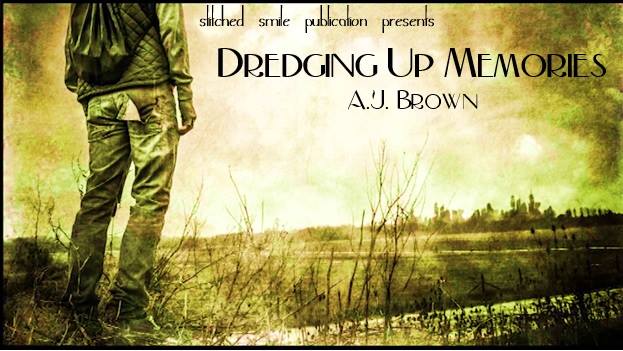
For those of you who enjoyed the struggles of Hank Walker in Dredging Up Memories, I give you this short story.

[[SPOILER ALERT: The next part of this introduction may contain a spoiler about Dredging Up Memories. If you plan on reading it, I would skip this introduction. If you have read it, then continue on. END SPOILER ALERT]]

This piece takes place during one of the moments of Dredging Up Memories where Hank has been drinking. This is after he finds out Jeanette has died and he has lost Humphrey. This also takes place before he meets Hetch, during one of the many black out moments where Hank loses time and all memory of what happened.

I do ask two favors: if you know someone who would like this addition to Hank’s story, please share it with them. Second, please leave me a comment and let me know if you would like more of these ‘forgotten moments’ of Hank’s life.

Enough talk. I hope you enjoy No Saving Grace.

No Saving Grace

Ay A.J. Brown

He wanted to save them. He wanted to save all of them. In the end, he couldn’t even save himself.

***

They approached in a stumbling heap of rotting bodies, their groans like cries of pain. They appeared listless, as if following some unseen force, drawing them up the dirt path and toward the man standing in the opening at the mouth of that path. Hank had his weapons of choice, a machete slung on his back and a Smith & Wesson .357 in his hand. It held eight shots. It wasn’t enough, but that’s what the machete was for. He also had a bottle of whiskey in the van. Right then, he wished he had taken a swig before he left stepped out of the vehicle, but he hadn’t. His mouth was dry, as if he had been chewing on cotton balls for a few days.

The sun was just coming up in the horizon, painting the world with purples, pinks and oranges. He could see it peeking out from behind the dead. He thought it fortunate he could see them through the encroaching daylight. If he wasn’t able to see them, the chances of taking them out slimmed greatly. It was somewhat oddly beautiful, the way the bodies seemed to have an orange aura around them. If they didn’t mean to eat him, he could have stood there until the sun was fully in the sky and enjoyed the odd beauty of the dead in its rising glory.

“Come on,” he whispered as they came.

Though the Smith & Wesson held eight shots, it only had seven bullets. He had fired one off into the pack to get their attention moments earlier.

Their attention?

Sure. There was only one reason a bunch of deadbeats surrounded anything these days: a living person (or people, if the dead were so lucky, which they often were). He had heard the screams. Whoever was in the car was still alive, but may not have been for long—the dead, they had a way of piling on to the point of windows shattering inward. The constant pressure of weight on glass was like a boiler—eventually things would blow and the living in the vehicle would be dead soon enough, become food for the biters.

He waited, his gun held tight, one hand over the other.

And they grew closer and closer by the second. From where he stood, he watched them lurch forward. Their moans became louder. He squinted, focusing in on the closest of the dead. At that moment he didn’t see them in the color of life. The brilliance of the sun faded and he saw them in gritty grays and whites and blacks, the blood on their skin and clothes like dark shadows. The circles beneath their eyes were like black hollows. The hair on their heads were various shades of grays with the blondes being the lightest. He thought maybe the rising sun aided in the gray tones, but that was probably just in his head. The same as he wished this whole mess was just in his head and he would wake up in the morning and everything would be okay.

Everything would be okay.

His family wouldn’t be dead. His friends wouldn’t be dead. His neighborhood wouldn’t be … wouldn’t be what? Overrun by the dead?

“That’s not going to happen,” he whispered. “This is real life.”

He steadied the gun.

Seven shots. That’s all you have before it’s machete time.

A deep breath taken and released slowly through slightly parted lips. The nod was imperceivable, but it steadied his nerves.

“You want to see the sun rise,” he said and pulled the trigger. The boom of the .357 was loud, the kickback powerful. The face of the biter closest to him exploded—a woman at one time, probably in her early thirties. He could have been wrong. The dead decomposed faster than people aged and she could have been in her twenties or maybe in her sixties, though he doubted that. The back of her head blew out. The force of the bullet sent her backwards, her feet coming off the ground and her hands flying up as she fell.

At the beginning of The End Times, Hank Walker would have probably felt guilty for what he had just done. He may have even apologized. He certainly would have taken the time to bury the dead after ending their ‘second lives.’ Not anymore. Not now. Not after everything that had happened. Now, he took aim at another biter, this one another woman of indiscernible age. Her head disappeared with the blast. She spun around, striking a tree just off the path before falling to the ground.

He took the next four shots, one right after the other, each one finding its home splitting open the skulls of the dead. He slid the gun into the back of his pants. The barrel was hot. He felt that heat through his underwear, but he didn’t pull the gun free. There was only one bullet left … just in case …

Hank pulled the machete free and started down the path to the few remaining biters. He swung the machete at their gray, gaunt faces, severing their heads and splintering their skulls. As he did so, he thought of his wife and son and brothers and father and his best friend. And he swung the machete harder, slicing through bone and skin and brains, his anger rising with each of the dead he took down.

Until they were no more.

He spun in a slow circle, his arms weakened, his legs tired, his breath labored, his chest heaving. There were tears in his eyes as he looked at the bodies on the ground. The dead … he shook his head.

“No.” Hank closed his eyes, opened them to his dead family littering the path, missing most of their skulls. Over there was Davey Blaylock. Down the center of the path was Lee. By the tree was Karen. The two bodies lying together, one on top of the other were Pop and Bobby. Jake was not too far from them, his hand missing three fingers, as if he had tried to ward off the machete. At the beginning of the slew of bodies was Jeanette, her head turned into a canoe, her long blonde hair stained with dark blood verging on brown and bits of brain and skull. There were others—so many others—but they didn’t matter.

Hank’s head spun. His stomach churned. He dropped the machete and fell to his hands and knees. Though there was little in his stomach, he vomited it up. It spattered on the ground in front of him and onto his hands. Some of it splashed back onto his face. Sweat spilled off of him. His face and neck were flushed red with heat. Hank coughed and closed his eyes. He shook his head, almost violently as the tears spilled from beneath his eyelids. He dropped onto his bottom and scooted away from the dead. HIs back struck a tree. He sat there for several long minutes, his heart shattered, his mind confused, his chest hurting. He could use a drink—maybe even the entire bottle back in the van.

When he looked up, his eyes were blurry. He wiped the tears away and reluctantly looked back at the bodies. He frowned, the confusion sinking its claws in deeper. The dead were still there, but they were no longer his family. They were no-name corpses that had one time been someone’s brothers and sisters and mothers and fathers and children. Though that should have relieved him from the guilt of feeling like he had killed his entire family, it didn’t. It did nothing to alleviate the fact that he was all that was left of the Walker clan.

He used the tree to pull himself up from the ground. It was rough, but it was real. It was tangible. Once standing, he held onto the tree, feeling its bark beneath his hands. It grounded him, bringing him back to the reality of his world.

Hank took the few steps to his machete and picked it up. He was thankful it hadn’t landed in the vomit. He slid it back into the sheath hanging on his back. Then he remembered what he had been there for: to save whoever was in the car from the biters.

He turned around and headed up the path.

“Hey, it’s okay,” he called. “The coast is clear. The biters are dead.”

He reached the side of the car and looked in. Three of the windows had been busted out, either from the weight of the dead pushing in or the car already had broken windows. A biter leaned half in, the car, but it didn’t move. There was a hole in its back. Hank pulled the biter from the broken window and dropped it to the ground. A piece of hanger wire jutted from one eye socket. Blood had ran onto it from the ruptured eye.

He looked back at the car. The door had a hole in it—one created by a Smith & Wesson .357. His shoulder sagged. The man that had been screaming inside the car was dead. Blood oozed from between fingers that had clutched at the wound in his chest.

I must have hit him when I …

He shook his head again. The man in the car was dead. He had been young, probably not even thirty. He had been young …

A finger twitched.

Young or not didn’t matter then. Hank wasn’t sure if he even saw the finger spasm, but part of him believed he had. He watched, concentrating on the fingers of the man’s right hand. He realized with an almost certainty that the man shouldn’t turn if he hadn’t been bit. But did he truly know this? Had he seen someone who hadn’t been bitten or sick become a biter?

The index finger moved again. Then his hand jerked, followed by his arm. His eyes opened and his head moved from side to side, as if trying to figure out where he was. Hank believed he was doing just that, trying to figure out where he was, what had happened to him.

A moan came from the man and he seemed to sniff the air. He turned his head toward Hank and bared his teeth. He tried to sit up in his seat.

Hank pulled out the gun. He check the chamber. Yup, one left.

“I’m sorry,” Hank said and put the gun through the window. He pulled the trigger. The sound was deafening. The kickback caused his hand to jerk hard enough it struck a piece of broken glass. Blood instantly spilled from a wound that was deeper than he realized at first. But Hank didn’t really notice it—he stared at the dead man in the car, a good chunk of the top of his head missing. Splattered against the interior of the car were his brains, some hair and a lot of blood. But more than that, he saw the wound on his hand—a clear piece of flesh was missing between his thumb and first finger on the opposite hand that had twitched earlier.

Hank thought to pull the guy from the car, to bury him right beside it, maybe along the path where that car had stopped. It was the least he could do. Hank rounded the car, but stopped at the driver’s side door.

“What does it matter?” he asked. “He’s dead—he’ll never know he wasn’t buried.”

Besides, he thought, he was dead anyway. I just put him out of his misery.

He turned and walked away from the car. His heart sank as he went up the path. It opened to a cottage where three of the dead stumbled around. He didn’t bother being quiet. He unsheathed the machete and split the skulls of the two men and one boy near the open door. Then he stepped inside.

Hank looked around the cottage. He found a few cans of beans and a half empty bottle of water. He also found the bodies of one woman and a baby. They were in a bed and a crib. A bullet to the head ended their lives. On the end table next to the bed where the woman lay dead, was a picture. The couple had been happy. The baby had been asleep in the woman’s arms.

The man had been the guy from the car.

Hank’s shoulders slumped. He wiped his dry lips with the back of one shaking hand. He stared at the picture for what seemed like minutes, but had really been over an hour. When he finally set the picture down, he left the cottage and went back up the path. There was a biter near the car, standing at the front of it as if waiting to see if the man was going to try and run. Any movement would send the biter into motion. Hank didn’t give the old man a chance—he brought the machete down on the top of his gray and dirty head. The biter collapsed to the ground.

It took him a few minutes to get the man from the car and over his shoulder, and it took him over an hour to get back to the cottage. In the house, he laid the man’s body next to what he assumed was his wife. He went to the crib and gently lifted the dead baby from it. He placed the child between Mom and Dad and pulled the sheet up over their heads.

Hank Walker left the house, locking and closing the door behind him. He took with him the beans and the water, and slowly made his way back up the path again. He passed the car on the path and the biters he had slaughtered. Eventually, he came to his van, crawled in and closed the door. He didn’t turn the key in the ignition right away. Instead, he stared out the dirty windshield.

The baby had been a boy. The woman had been a blonde. The man had dark hair, and at one point blue eyes. The house had been nice, but not too big for a family of three. It had been practical. All of it reminded him of his own family, of his own home. But all that was gone. Jeanette was dead. Bobby … he had no clue if he were alive.

Hank reached over to the passenger’s seat. He plucked up the bottle of whiskey, took the cap off and took a deep drink. The alcohol burned his throat and warmed his chest and stomach. He looked at the bottle. It still had over two thirds of the light brown liquid in it.

I shouldn’t drink this, he said. I’ve drank too much lately already.

In the end, he turned the bottle up again, forgetting what he shouldn’t do and doing what he thought he would regret. He wanted to save them. He wanted to save them all. In the end, he couldn’t even save himself.