Forbes West: An Interview

nighthawks-atthemission-king-styleSometimes you meet someone who has a different viewpoint than most folks. The viewpoint can sometimes be bad and sometimes be good. It can also be refreshing. One of those viewpoints I find refreshing belongs to Forbes West, a writer, producer and a podcaster. 

When I sat down to do this interview with Forbes, I honestly didn’t know what to expect, but I quickly learned this is someone I like, someone who shares similar viewpoints as I do about writing. Y’all sit back and have a coffee, soda or brew and let me introduce you to Forbes West.

AJB: Okay, for starters, let’s talk about you. Who is Forbes West, the person?

FW: I’m nobody. I’m a tramp, a bum, a hobo. I’m a boxcar and a jug of wine, and a straight razor if you get too close to me. Or a person who is fond of using Charles Manson quotes to respond to texts.

AJB: Fan of Charles Manson?

FW: Am I a fan of Manson? Nope, but he’s the King Emperor of bat shit crazy things to say. Too bad his musical career never took off because he decided to kill a celebrity or otherwise he’d be the most quotable man on the planet.

AJB: He still could be one of the most quotable men on the planet. He definitely has some unique views.

FW: Unique is a good term. Covers a lot of ground.

I’m just a guy who lives and works in California, who’s been lucky to still be married and I get to live part time here in the USA and Japan. My wife is Japanese, we own a home in Shizouka prefecture, and I write novels and produce films.

AJB: You said you live part time in Japan and USA. I’m sure there are a LOT of differences between the two countries. What, from your experience, are the biggest differences between the two?

FW: Biggest differences is freedom vs community. That’s not to say one is better than the other. They aren’t. There’s pros and cons to both. But in California, which my wife loves, she can do whatever she wishes to be. She can strive for the stars. She can be creative and fun and hang out with people with massively different backgrounds with little to no judgment. You can be whoever you can be. In Japan, there’s a sense of being in a real community, where people ask you how your day has been, where bicycles can be left on the sidewalk without a chain, where your neighbors look out for you and people who know you can’t speak the language take a moment to speak yours. Safety, stability, cleanliness, and order. You can walk down any street and know people are looking out for you and actually care.

AJB: Wow, that sounds the way things used to be here where I live when I was a kid. That is, honestly, the way the world should be. Look out for one another.

Just out of curiosity, which do you prefer?

FW: I honestly don’t prefer either one. I love California and Japan. I think California has the ability to do so many random things. And again, everyone has different backgrounds, different views, and seem to be living in peace. I love the multiculturalism there and seeing people from radically different backgrounds.

AJB: I love that mindset, Forbes.

FW: My wife prefers it as well. Japan has many wonderful things, to be honest. Food, culture, and the most kind people I have ever met. But, its one thing to visit and go around Japan. To live there, it can be very oppressive at times. The companies control everything, and its not unheard of to know people working 80 hours a week, with only 40 hours paid, and to have the most verbally and emotionally abusive bosses overhead. The social pressure is enormous.

AJB: Wow. That’s crazy.

FW: So in a lot of ways, it is like the 1960s of the USA. Sure, there are real communities (which is a terrible thing we’ve lost) but the everyday B.S. can be overwhelming. It’s like California and Japan are opposite ends of the spectrum.

AJB: How did you come to be able to travel back and forth between the two countries?

FW: Well, we’ve been lucky and fortunate that my wife works as a Professor for a college, so she doesn’t have the year long schedule, and my schedule is also flexible. We own a home in Japan so there’s no additional costs besides airplane tickets. So in the winter and in the summer we travel back.

AJB: Man, I think that would be a blast,  and something to look forward to during the year.

Let’s switch gears for a second and talk business.

FW: Sure thing.

AJB: You are a producer of films and a writer and a podcaster. Which of those came first and which one do you find to be the most difficult?

FW: Films. Podcasting is just pure fun but films are incredibly difficult. Even producing and putting together a short film was the most difficult thing I have ever done. It’s a true battle—and on many fronts—accounting, getting people together, finding locations, money, story, etc. etc.

AJB: I would think the films would be the most difficult as well. You said Podcasting is just pure fun. What makes it fun? Is this something that you can say, ‘hey I’m going to do this and we’re going to have a blast?

FW: Pretty much. I’ve met some great people (Jon Frater, Michael Bunker, Rob McClellan, Nick Cole, Christopher Boore, and Todd Barselow) and just getting together with them and shooting the shit has been epic. Authors, editors and publishers getting together, especially with the intellect involved, and everyone has a great sense of humor—its’ been a blast. Interviewing with them, talking about issues, etc, all been great.
Oh and Jason Anspach. He’s a jerk but he knows it, he’s mentioned last on purpose. He knows why.

AJB: Sounds like doing a podcast allows you to be free and easy going and pretty much talk about whatever it is you want to discuss.

FW: Exactly. And thank God we live in a day and age where you can do this and just launch it all in a day

AJB: I’ve always wanted to do a podcast, and from what you have said, I think that desire may amp up a little.

Of the three, producing, podcasts, and writing, which came first?

FW: Writing. Just writing. I taught myself over the years while I was getting my Masters degree in political science. I started trying to write bad screenplays, awful novels, and started to turn it around. Writing to me, has always been like preparing for a marathon. There’s a ton of creative people out there, but you have to learn how to really just keep the energy up to finish what you started.

AJB: That is a very good point. Writing is very much like a marathon, and so many people give up because they get stuck instead of trying to see a way to fix where they became stuck.

You said you taught yourself over the years. Can you explain what you mean by that?

FW: Well, I read a lot of how to write a screenplay books, I read old screenplays (like the original Robocop and others, there’s a few sites out there that have copies and pdfs for you), and I just sort of tried every night to write up something.

I love stories, I love telling stories, and I just wanted to make something up that I would see on tv or on the big screen

After a while, I drifted into writing novels. Due to the freedom of the format—screenplays are somewhat limited in certain senses.

AJB: In what ways are screenplays different than novel writing?

FW: Screenplays have to focus on the visual image- you can’t just “show the thoughts” of a character, it has to play out in realtime in a way an audience can understand. You can’t have true introspection with a character with a screenplay, you don’t have that sense of jumping into someone’s skin. That’s the biggest difference for me

AJB: I can see that. I can definitely see that.

Your first novel is Nighthawks at the Mission?

FW: First one, yes. It was self-published, published with one publisher, and just recently re-published a few days ago with three new short stories.

AJB: So you originally self published Nighthawks at the Mission and then it was picked up by a publisher and re-published?

FW: That’s correct

Originally self published in 2013

AJB: Great. Congratulations on getting picked up.

Since you originally self-published Nighthawks at the Mission, can you tell me what the difference is between self publishing a book and having a publisher publish a book?

FW: Marketing. Really, just the ability to market the product. A person can easily have a great idea, get it well edited, have a kick ass cover. But the ability to market the book itself without real support from those who just know how to market, that’s the rub. Amazon has an amazing system to get your stuff out there, but Amazon doesn’t publicize a single thing. So if you don’t have a full time person working with you to really get your stuff out there, it’s not gonna happen. You could be that person, but the set of skills needed to do so is usually not found with the person who can write. It can happen, but its extremely rare.

AJB: Man, isn’t that the truth?

Okay, I want to shift gears  again. Outside of writing, producing and podcasting do you take yourself more seriously or less seriously than when you are creating?

FW: More seriously. Writing is my life, but it’s a lot of fantasy happening. I feel like when I’m writing or doing what I do, I think its pure fun in the end. The exasperation I get or the stress is the stress of trying to win a ball game or beat a video game. It’s not the same as dealing with office politics b.s. The stress is a much better stress to deal with.

AJB: Agreed. I guess that would make doing the podcasts even more fun—there’s no pressure in it.

You have to be creative to be in these fields. How do you view creativity and the act of creating a movie, a book or a podcast?

FW: I think creativity is something where you basically go with your subconscious. Whatever pops into your head. Whatever odd idea you may have. Whatever just bubbles up. I think most of the time people are actively limiting their creativity—that people worry too much about being embarrassed, or they want to do what is currently popular, and they want to find something that should be “profitable” instead of just letting their imagination run wild. You have to really try to make yourself go into a dream like state to make true creativity happen. You have to shed your ego a bit.

AJB: Well, dang! That is exactly how I feel about creativity.

So, with that in mind, with letting yourself get to that creative place, do you tend to follow the rules or just say ‘screw it’ and do your own thing?

FW: I don’t try to follow the rules. I think that, especially as a writer trying to break out, doing so will just make my work fall to the wayside. We live in a post-modern age; everything under the sun has been done and been read and/or viewed. You have to really try and stretch to do something different. And I think I did that with Nighthawks at the Mission.

AJB: Tell me about Nighthawks at the Mission.

forbes-west-cover-artFW: Nighthawks is my answer to the young adult field. It’s set in a world just like our own, but with one wrinkle—there’s a portal to another planet that opens twice a year in the South Pacific, and that planet has a resource that allows anyone to have paranormal/magical abilities. A young woman, sick of her life in SoCal, decided to become one of the many settlers there after her boyfriend screwed her over. She’s not a hero, she’s not the best person, but she does her best when dealing with the stresses of life on another world and living this post-modern colonial life with an alien species and a growing terrorist threat.  My character, Sarah Orange, reacts to these things realistically and many times badly. The book strips the bark off the usual YA tropes and turns them on their head, and we see a real person in a very fantastical setting prove herself

AJB: That sounds like a great storyline.

FW: Thank you!

AJB: With you stripping the bark off the usual YA tropes, do you feel you accomplished something unique with the book?

FW: I believe so. YA books always have the same protagonist. The story may be different, but the protagonist always is the same. Always trying to be the hero, always tough, always generous, always right, etc. etc. Mine isn’t. She’s a fuckup. She’s greedy. She’s angry. She’s selfish. She numbs her pain with drugs and alcohol. She’s foolish. She accidentally does the right thing. She’s very human. That’s the big difference between her and the others from Twilight, Harry Potter, The Hunger Games, etc.  It seems like a real person.

AJB:Twilight…meh…

That is the trick, isn’t it? When the rubber meets the road, the whole thought is to have a believable character and a believable storyline. If you can capture that you have a great chance of capturing the audiences’ attention.

Okay, Forbes, I’ve kept you for a while, and I greatly appreciate your time, but I do have one or two more questions. The first of these is based on something I hear from a lot of authors. Many of them tell me their spouses or significant others do not really care what they do or they don’t support them in their desires to write, tell stories and get published. How does your wife feel about all of your creative endeavors?

FW: She loves it. She’s been the biggest cheerleader. She was the one who got me into it. We were dating at the time and I told her that I sort of liked writing, but really I wanted to do politics (hence my degree). She told me flat out that she wanted to hear more about what I write and that I had a voice and from that point on was always getting me books on writing, and sort of pushing me towards writing. She just flat out said “Writing’s a helluva lot cooler than politics.” I ignored her for a while about that, but in the end, I think she was damn right.

JB: I like your wife. She is definitely right! My wife is the same way, always pushing me to keep doing the one thing I love to do: tell stories.

Okay, where can we find Nighthawk at the Mission?

FW: http://forbeswestbooks.com/nighthawks-at-the-mission/

JB: Well, that was easy.

Normally, folks will ask, what advice do you have for others out there. I want to go in the opposite direction. What would you tell other authors, film makers, or really any artists, NOT to do?

FW: Not to do the same thing everyone else is doing and not to do the most popular thing. Don’t just rehash old material. Take a moment and think it out. Have you seen this idea more than 5 times in different formats? Are you just doing this because the same stuff is out there in the world? Then don’t bother. Your crew, your actors, your readers, and yourself will be bored. And you’re gonna work really hard on something that doesn’t mean a damn thing in the end.

JB: Preach it, Forbes.

Before we go our separate ways for now, is there anything else you would like to add in that we have not discussed?

FW: I don’t think so at the moment.

AJB: Thank you, Forbes. You are one cool dude.

FW: Thanks man! Thanks for having me.

You can check out Forbes at his website here: HERE


C Is For Competition

Today’s blog is brought to you by the letter C as in C is for Competition.

I’m all for competition. I am very competitive, to say the least. I hate losing at anything. You won’t see me let anyone win at something—if I lose, then my opponent beat me. It wasn’t given to him or her. They won. That is important for people to understand. I am not going to let you win.

Having said that, I want you to understand something: if you are a writer, you are not my competition. Let me repeat it just in case you missed it: If you are a writer, you are NOT my competition. If you think I am your competition, then just know your opponent isn’t playing.

Let me explain as briefly as I can: The reader pool is dwindling every day. I actually had someone come to the library where a convention was taking place and say, “I don’t read much.” Seriously? At an author meet and greet. Okay, that is the first problem writers face. The second one is that if a reader doesn’t read in your genre, then that pool shrinks even more. A lot of times this makes writers a little antsy. Why? It’s hard to get readers in a world where there are fewer and fewer of them.

Now, for the third problem: I have noticed over the last few years that some writers view other writers as their competition. It’s as if they say, “If that guy or gal has a nice following, what can I do to get that same following, and if I can’t get that following, how can I take some of it?” They see the dwindling reader pool and think I need to get every one of the readers and no one else can have any. And if they can’t get the reader? Well, they start playing mean.

I’ve seen writers become friends with other writers and then stab them in the back to get ahead, or use a well placed and intentionally misleading sentence on social media and then leave it for everyone else to get outraged over. Then come the flame wars where arguments escalate to personal attacks and downright childish behavior. I’ve seen writers get in good with groups, get what they need or want from them and then disappear from the group. I’ve seen people outright steal from others; their ideas, their titles, their actual words (and those folks, above all else, should be ashamed of themselves). I’ve seen memes directly attacking authors by name (and a good many of those memes are vile in their content).

The mindset is if I can make it look like I am the victim, then the readers will like me and not them. Or worse, if I can make it look like I am the victim, then the other writers will side with me and we can shame him or her out of the business. The less writers there are the better chance I have of getting more readers. That is a bad way to look at things.

It’s also called playing dirty. For a lack of a better term, it’s cheating. But sometimes you just need to cheat, right? Wrong. I’ve always found more satisfaction in doing things the right way, than by cheating your way into something. I have quit teams in sports over their willingness to cheat. I’m a firm believer in if you have to cheat to win, then you were never good enough to compete to start with.

Listen to me. I am not competing for anything in this business. I’m not competing with or against other writers. Period. I’m not competing for readers or for publishers. I’m not going to throw anyone under the bus or try to screw anyone over. To me, it is not worth it. Like I said, I am competitive, but if I have to do something wrong to someone to get ahead, I would rather not get ahead. I’m also not going to glad hand people to get ahead. I want publishers to want my work because my work stands on its own, not because they are friends with me. With that said, I’m not in a competition with you. I will let my writing speak for itself.

I want readers. You do, as well. Why compete against each other? Instead, why not help each other? Why not share each other’s work on social media and with friends? Why not get to know the writers you are trying to compete against? You might be surprised; you might actually like your ‘competition.’

The bottom line is we all want the same thing: readers. Here’s something else you need to understand: readers can enjoy more than one person’s work. It’s true. A reader can like your work and mine. And guess what? If your work is better than mine, then the reader may like your work more, and that’s not about competition. That is about writing a good story. So why not let your work and your ethics speak for themselves instead of trying to one up or cheat someone who probably doesn’t know they are competing with you?

Until we meet again my friends, be kind to one another.

B is for Big Time

Today, we talk about Big Time, as in B is for Big Time.

If you know me at all, then you know I am a huge fan of a local band here in Columbia called, Prettier Than Matt. Over the last year or so, my wife and I have seen them perform over two dozen times. Recently, they released a new CD titled, Better Left Said. It’s great. You should check it out. But PTM isn’t what this piece is about.

Stick with me for a minute because something Jeff Pitts (of PTM) said in an interview made me stop, rewind it back and say, ‘can you repeat that,’ to which he did because I had rewound it. The statement was in regards to the first single off the new album. Here it is:

“I think if you are going to push a single properly, even if you are not necessarily a big band, you need to treat yourself like you are a big band.”

For the sake of this, let me rewind this back so you can read it again:

“I think if you are going to push a single properly, even if you are not necessarily a big band, you need to treat yourself like you are a big band.”

After listening to that statement a few times I sat back and stared out into Nothingville for a while. Essentially, he was saying, you have to act like you belong with the big boys and girls out there. You have to take yourself seriously enough to say, ‘I’m going to do this right and it’s going to be amazing.’ You can’t look at yourself as the low man or woman on the totem pole. You have to believe that you are Big Time, even if you only play to three people on the side of the road one day.

Profound.

I contacted Jeff to see if I could use the statement and change it around to fit my needs a little. Being the total awesomeness that he is, he said sure, go ahead. That lead to an a-ha moment for me. Here it is:

“I think if you are going to push a book properly, even if you are not necessarily a big named author, you need to treat yourself like you are a big named author.”

Mic drop. Walk away. There’s nothing else to see here; nothing else to say…

Wait. Let pick the mic back up. We’re not done yet.

As a writer, I’ve been doing it all wrong. I’ve been saying, here I am and hoping people will notice me. That’s the wrong mindset. The right mindset is saying, here I am and expecting people to notice me. If a person approaches an endeavor with the attitude of I’ll give it a go and if it doesn’t work, oh well, then most of the time it’s not going to work. Oh well.

No. No. No. No. NO. NO. NO! NO! NO!!!!!!!

NO!

Listen. If you want to get anywhere in this business you need confidence in yourself. You need to say: ‘Self, I am Big Time.’ Even if you aren’t, tell yourself you are. Believe you are. Strive to become what you want to be by having the confidence to believe in yourself. I tell people all the time, if you don’t believe in yourself, no one else will. People follow others who exude confidence, even if their confidence is made up and only in their heads.

But, really, this isn’t about following leaders. It’s about following dreams, and if you are going to do that, then you need to believe you can accomplish that dream. Treating yourself like you are  Big Time can go along way to realizing that dream.

But what is Big Time? Well, if you are a writer, it is being able to make a good living off of your words. It is name recognition. It’s having someone say, ‘aren’t you the guy who wrote the book?’ And then it is you being able to say, ‘Yes, I am that guy.’ You’re not going to get to that point by just hoping things will happen. You have to make them happen, which means you have to work.

If you know me, then you know I don’t care much for lazy people. Lazy people don’t generally make it in this business because, simply put: this business is a lot of work. Making it happen requires doing more than just talking about it. It is doing it. It is managing your time wisely and getting the most out of it.

Big Time takes effort, but it also takes desire and passion. Have you ever noticed folks who are passionate about something generally go all in? When you are passionate about something you go full tilt, guns blazing, and you throw everything you have into it. Passion will drive you to do a lot of things you didn’t think was possible. Like, write a story, then edit it, then re-edit it and then re-re-edit it before researching a market for it. Then submit it and wait (be patient, this process takes a while) and then hopefully get picked up. Then there are the edits the publisher does and the marketing and more marketing and even more marketing. It’s not easy, but if you want to be Big Time then you are going to have to go all in. All or nothing, Baby, and that is the bottom line.

If you want to be Big Time then do things that make you feel Big Time. And don’t be a wall flower. This is your work. Sell it. Sell you. Make people want to buy your books. Put the time in to make them good, but also put the time in to promote them. Develop a strategy and go out and put that strategy in motion. You are the biggest supporter of you. Remember that. If you aren’t supporting your cause, then no one else will.

Here’s something else to remember: be yourself, be genuine. Don’t be like everyone else. Don’t be like your idols. Don’t be a cookie cutter writer. Instead, break the mold and do things your way. Literally, think outside of the box. You have to set yourself apart from everyone else. Write differently. Market differently. Be different. How do you do all of that? That’s not for me to say. Everyone has to figure it out on their own and in their own timing. However you do it, just do it. Most importantly, do it right. Don’t rush things just because you want to get something published–it is better to have one very good work out than ten subpar works. Quality is always more important than quality. Do it right from beginning to end.

You’ve heard this term before, but if you want to be Big Time, you really do have to go big or go home. For me, well, I’m all in and I’m going big. Why? Because Big Time is calling me.

Until we meet again my friends, be kind to one another.

A is for Accessible

After doing the post, L is for Lazy, I realized that there are so many more topics I could do with this particular format. I had already figured out at least four others I wanted to tackle. Sitting back and thinking on it, I came to the conclusion that I should have started at the beginning of the alphabet and worked my way down. I didn’t. Oh well. Live and learn, right?

Today I would like the letter A to bring you today’s topic. In other words: A is for Accessible. Let’s look at this for a couple of minutes.

Accessible is defined as easily reached, easily understood, easily, approachable, susceptible, easy for the physically challenged to use and observable from another world. I don’t know where that last one came from, but it’s in there. What we are going to focus on is the approachable aspect of accessible. Sticking with the definitions here, approachable is defined as not aloof and not difficult to talk to or meet with.

One of the easier parts of writing is talking about your work to folks who want to know about it. If you are too shy or too afraid to talk about your work, then this may not be the business for you, because if you start to get somewhere with your writing, folks are going to want to talk about, not just your work, but you as well. They are going to want to get to know you, the person, as well as you, the writer.

It’s inevitable and it can be a good thing…or a bad one.

I love when someone ask me a question about one of my stories or about the writing process or even about me as it pertains to my work. I enjoy telling them about myself and where a story came from. Years ago I couldn’t do that. I thought it was bragging, and that was something I was raised not to do. I have since come to realize it isn’t bragging if you can back it up. Most folks who brag about themselves can’t back it up. When it comes to writing, I am finally at that point where I feel I can finally put my money where my mouth is.

Though I have come to be able to talk about myself, my work and where I am at with it, it wasn’t until last year at the Cayce Festival of the Arts that I became acutely aware that what I say and what I do greatly affects me, the writer, the person, the brand. And yes, you are a brand, like it or not.

What I realized is if I don’t learn how to talk about myself, and do so with confidence, then very few people are going to buy my work. But it’s not just talking about me. It’s cultivating a relationship with the readers. It’s being on social media and interacting with them. It’s shaking hands and smiling for pictures at events. It’s signing books or pamphlets or bookmarks or even a shirt someone is wearing. It is caring about them, and no, that doesn’t mean caring to gain something. It is genuinely caring about your readers. Because here is the thing: if you don’t care, they will know. And if you are fake, they will know that, too. You have to be real, not real fake.

I want people to read my work. I want people to know who I am and to say, ‘hey, that guy is a great writer, and he is so cool, too.’ I want my readers to understand that I am just like them. The only difference is I write some pretty cool words and form them into stories.

If you’re a writer and you don’t talk about yourself or your work, then you aren’t going to go very far. You have to put in the work to get anything out of it. That means making yourself accessible to readers–also known as fans–and giving them a reason to want your work. What sets you apart? Why should I care? Why should I buy something from you? Give me a reason to support you with my money and my time and my word of mouth. The only way to do that is to be accessible.

Are you on social media? Get to know the people on your friends list or the folks that you follow. Do you have a blog? Give the readers something to look forward to. Give them a free short story or a teaser to an upcoming book. Do you have a website? Change the content of it as frequently as you can, no less than once a week. Do things for the readers. It’s hard, but with a bit of work and dedication and honesty, you will find that more readers will seek you out and more folks will want to know you, and hopefully that turns into sales.

On the same token, if you are a jerk or if you respond negatively to a bad review or comment made about you or your work, then that news will spread like wildfire and those same readers you wanted will vanish in a hurry. It is a difficult line to toe because we are human and we have feelings and when someone says something negative about us or our work, then we get defensive. We get mad. We get rude. And then we say or do something that kills our brand. Think I’m kidding? I’ve seen it happen over and over. And it’s not pretty.

Being accessible doesn’t mean letting folks take over all of your time or tell you how to do what you do best. Being accessible is about being able to relate to readers and connecting with them. It’s letting them see a small part of you, the part that helps them make up their mind if they like you or not, and in return will take a chance on your work.

If you are a writer, being accessible is part of the business—a necessary part. With social media being the engine that drives the car, it is easier to be accessible now than ever before. What are you waiting for?

Until we meet again my friends, be kind to one another.


L is for Lazy…

This blog is brought to you by the letter L. Rebel LDoes that take you back? If you know the reference then you, sir or ma’am, might be awesome.
Sesame Street was one of my favorite shows when I was growing up. That and The Price Is Right could keep me entertained all morning. If you have seen the show, then you know that many of the skits on it had to do with that letter (or whatever the number of the day was). In this case we’ll make the number of the day 1. Why, because this is the first blog in a series.

Let me go ahead and apologize right now. Some folks might get upset with some of what I am going to say. If so, well…yeah, it is what it is. Here is something that is a truth about writers: we don’t tend to speak our minds completely when writing our blogs or tweeting or Facebooking. Some of us don’t want to offend readers or other writers, and others of us just don’t care who we offend and sitting in front of a monitor or mobile device makes it easy to be who we are not. Then there are those that have that happy medium, in which they can speak the truth in a manner so eloquent that even if it is offensive it doesn’t come across that way. This is a hard place to get to. Those are the ones who can balance out being real and honest, yet not offend people. Unfortunately, I am not one of them.

So, let’s get to this.

L is for Lazy. There. It’s out there. Lazy is defined (as an adjective) as unwilling to work or use energy.

Lazy is often used for someone who just won’t do anything, even if it will benefit that person. Here is another truth: a lot of writers fall into this category. I did not say all, and I did not say a majority of writers. I said a lot of writers fall into this category. If you aren’t one of them, then none of this applies to you. However, if you are one of them, maybe you should listen up.

First, let me clarify something. I am not a well-known writer. I have my fans and I have my roadies and I have folks who may or may not like my work. They may be few (or they may be many, I don’t know), but they are loyal. Since I am not a King or a Koontz or a Patterson you may not want to listen to me. You may not think that what I have to say matters since I am not of the ranks of the masters. If that is the case, just go ahead and click the X in the upper right hand corner. I’ll wait.

Now that everyone is done clicking the X, I hope there are some of you still out there willing to hear me out.

So, you are a writer. Great. So, you have a computer hard drive full of stories. Great. So, you want people to read them. Great. Where are you getting the readers from? The reading pool is dwindling, so where are you getting them? More importantly, how are you getting them?

For the sake of argument, let’s say you get a book published by a publisher. In order to get to that stage, you’ve done a little bit of work already. You’ve written a story. Hopefully, you cleaned it up. You researched the market for a publisher. You submitted it. Then you waited (and that is hard to do). Your story got accepted (Yay You!). Edits were done. I hope you approved or disapproved (some, if warranted) them. Then you approved the cover art, right?

Screeeeek

Stop. Before the book was published did you promote it at all? Did your publisher promote it? Did you tell your friends and family? Did you contact the local newspaper and see if they would do a piece on it? Did you post it on Facebook and Twitter and Instagram and Pinterest and…and…and…all of the other social media platforms you could find? Did you try things like Thunderclap? Did you have an online book release party? Did you generate buzz for the book?

You didn’t? Okay. Well, that’s unfortunate, but hey, you can still salvage your sells.

Your book has been published now. How are you promoting it? One post on social media a week? Well, that’s a start. What about blogging? What about a website? What about Facebook groups and author take overs? What about trying to get on podcasts or have interviews done on local radio shows? How about trying the local paper again? What about the library? Many libraries like local authors. How about book conventions or festivals?

Have you done any of these? If not, you’re killing your book, your publisher and your career.

‘But it’s the publisher’s job.’

Well…yes and no. Yes, the publisher should promote and market your book. That is part of how they do business. They should have a marketing plan that goes beyond Facebook. They should also work with you, the author, on this marketing plan so that it fits both parties’ needs. So, yes, it is the publisher’s job.

It is your job as well. Here is why: it is your book and your book will only be as successful as you make it. First you have to write a good book, have it edited (not by yourself), and get it published. But then the work really begins. Promoting your own work is vital to the success of your book, and in turn, you. If you want to leave it up to the publisher to do all of the marketing, go right ahead. Unless your publisher has some big bucks there is a good chance the publisher can only reach so many.

This is where you come in. This is where you cannot be lazy. You have social media. Use it. Don’t spam people, but use social media to post pictures of the cover, links so people can purchase the book, write blogs, not just for you, but for other writers’ blogs. If you just do one thing a day it will help get your name out there and get the book out there.

You think I’m nuts, don’t you? Well, look at it this way: say you want a job, so you go out and you put in an application at one place and then you wait for that one place to call you and say, ‘hey, you’ve got the job.’ Unless your resume is phenomenal and you are great in that field, chances are you’re going to be waiting around for a long while. You either don’t really want a job or you are very confident in yourself. Most of the time it’s the former of the two.

In order to get a job, you’re not just going to put in one application. You’ll put in several and then you will follow up with the jobs that you applied to. Eventually the people at a place of employment is going to say, ‘hey, this person keeps contacting us, maybe they really do want a job.’ By constantly saying, ‘her I am,’ the employers eventually notice you. If you don’t do that, most of them don’t notice you.

If you don’t market your own books, how do you expect readers to find you? If you don’t say, ‘here I am’ how do you expect people to know you have written a book?

Look at it this way: The readers are your employers. You wanCookie monster Lt to get a job with them as their author of choice. You have to put in the application (that would be the story, and getting it published is the resume). Then you have to let them know you are seriously interested in the job. This requires you to do something besides write. This requires you to not sit on the sidelines while the publisher does all of the marketing. Because here are two truths: 1: Some publishers do not market their writers. It’s counterproductive, but it happens more than we think. 2: If the publisher has ten books out, then that publisher is marketing and promoting ten books. If you do the simple math that would be ten percent of their marketing time and promotions goes to your book. If you market your own work, one hundred percent of your time and promotions can go to your book.
But wait, there is more. Don’t just market your work. Get to know the authors under the publisher’s umbrella. Talk to them. Then, once you know each other, promote their work as well. In return, hopefully, they will promote your work. This not only helps you, but it helps other authors and the publisher. The more you, as the author, promote your own work (and others) the better chance you have of getting further along in this business.

But…but…but…that’s a lot of work!

Well, yeah. And this is where L is for Lazy comes into play. You see, so many writers complain about why they aren’t doing well, why their books aren’t selling. What are the other folks doing that I am not? You know, things like that. If you rely solely on the publisher to market you, then you are not doing your share of the work. The publisher can only do so much. You, the writer, have to take control of your work. If you want it to go somewhere you have to grab the bull by the horns and make it go the way you want it to. That isn’t going to happen without saying, ‘hey, here I am. Come read my work.’

This is not a business for lazy folks. It’s a business for hard working people. The lazy need not apply. If you are lazy and you have the mindset of ‘I’m the author, let the publisher and everyone else promote me,’ then please, stop. You’re just hurting yourself and no one really wants to hear the complaining when things don’t go your way.

One more truth before I go: Do you like when someone waste your time? Do you like when you feel like you could have done something better with the time you lost because of someone else? It’s somewhat infuriating, isn’t it? Well, if someone believes in you enough to publish your book and market it, and you do nothing, then you are wasting their time. You are wasting their efforts. And no one likes their time and efforts to be wasted. No one. Not me. Not you. Not the publisher. Not the readers.

I, personally, do not like lazy people. It’s probably my biggest pet peeve. I can’t stomach it. At all. Part of that is because the lazy folks I know tend to blame everyone else for nothing going right for them, when all they had to do was help themselves and use a little bit of energy and things would have gone in a different way.

L is for Lazy. I beg you, if you are of the mindset that you are a writer and not a marketer, please, for your own sake, change that. If you don’t, you will find yourself wondering, ‘why is no one buying my book?’ And you might even blame someone else for this. It’s like being blind to something important—you just won’t see the truth.

I hope some of you stuck around until the end. And if so, I will say what I always say: until we meet again my friends, be kind to one another.


2016 and A New Set of Goals


Dear Faithful Readers,

Happy New Year. Really. Happy New Year. I hope you are well and let’s all look forward to a better year in 2016 than we had in 2015 (even if you had a good 2015). There are a few things I set out to do each year. No, they are not resolutions, they are goals. Last year I wanted to create an author page on Facebook and get at least 100 likes. I wanted to put out at least two books. I wanted to create a better fan base. I wanted to be further along at the end of 2015 than I was at the beginning of it. These were goals I had. For the most part, I achieved them.

I did create an author page on Facebook. At the end of 2015 it had 190 likes. I only put one book out, but if I include Cory’s Way, which was put out at the end of 2014, I kind of achieved that goal. I created a bigger fan base (and even got some Roadies in the mix). I am further along now than I was at the beginning of last year.

Here is where I have to be honest with you all: as much as I’m happy about those things, I’m not happy with where I am at in the publishing world. I was hoping for a more publishers would look at my work (and a couple have) and want to put some of it out. Two publishers for certain are putting out books in 2016 and there is a third interested in a particular storyline, but that one is not concrete yet. And now, I need to be even more honest: I am to blame for not getting the attention I want. Yes, I worked at it a lot over the last few years, (the last two in particular), but not as hard as I could have. This falls on me to do better.

This year I have a couple of loftier goals. They will take a lot of work, but I’m up for the challenge. Are you ready to see the list? Here we go:

  • Promote my work better than I do (very important goal).
  • Write a blog at least once a week.
  • To go with the writing blogs, to get more viewership than 2015. Last year I had 3042 views (or 8.33 views per day) to Type AJ Negative.
  • Double the amount of likes on my FB author page (from 190 to 380).
  • Put out five books this year. Yes, I said five.
  • Write another novel.
  • Finish the Hank Walker Novella, Interrogations (yeah, this is going to be cool).
  • Attend five book promotion functions (festivals, conventions, etc…).

All of those are attainable goals. With a bit of work, they are all doable.

Since one of those is to promote my work better, I think I will go ahead and start that right here, right now with this:

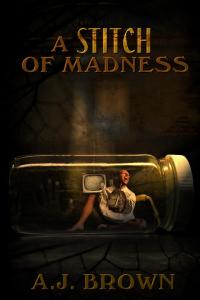
Coming to a device near you (preferably in your hand where you can read it), A Stitch of Madness, a three story collection being released by Stitched Smile Publications on January 6th 2016.

Stitch Cover 3Madness: extremely foolish behavior.

Imprisoned for the murder of his best friend, Johnny Cleary sets out to tell what happened on the day Bobby “Buster” Lennon died, but are the words he writes true or does the deception run deeper.

Madness: the state of being mentally ill, especially severely.

There is something wrong with Irene. Momma’s dead and a ragdoll speaks to her in a voice that is hauntingly familiar. And what about the stitches, the very things that just might hold Irene together?

Madness: a state of frenzied or chaotic activity.

After an odd stranger pays Robert Wallenger a visit, his world begins to unravel and the past comes rushing back, along with a sickly sweet scent.

There is madness in everyone. For most, the madness never surfaces. For others, all it takes is one thing, big or small, for them to spiral out of control.

This is the first of several books I hope to put out this year. If you like my other work, you’ll enjoy A Stitch of Madness.

There is also a Facebook release party, taking place on the 6th. Please come by, enjoy the festivities and contests and interaction with others at A Stitch of Madness Release Party.

Hmmm…that wasn’t so painful. Okay, maybe it was a little painful, simply because it feels weird trying to promote my work. This year is going to be a good year. I hope you come along for the ride and let’s make this the best year ever. Until we meet again my friends, be kind to one another.

A.J.


An Interview with Lisa Vasquez of Stitched Smile Publications

Back in October, Cate and I attended a festival in Beaufort (South Carolina). Though it was only a one day affair, Cate and I made it a weekend get-away with no children. After the festival we went to the house we were staying in and settled in for the evening. Before I went to bed that night I checked the good old Facebook (don’t judge me, you do it, too). While scrolling through posts about politics, religion, kittens, memes and some book-related things, I came across one that simply read something about someone’s book being published by Stitched Smile Publications.

I had never heard of that publisher before. I took out a pen and wrote these words: Research Stitched Smile Publications.

After arriving home the next afternoon, I sat at the computer and started researching. I found a Facebook page and a website that was in the process of being built.

During the information gathering, I came to realize Lisa Vasquez was associated with SSP. I contacted her, and guess what I found out? She wasn’t just associated with SSP, she was the founder. Being that I know Lisa works very hard at everything she does, I wanted to interview her and learn a little bit more about Stitched Smile Publications.

Let’s hop right in, why don’t we?

AJ: Lisa, not too long ago you made a decision to open a publishing house. What led you to do this?

LV: I’ve been sitting on the idea for quite some time but I think the fact that I didn’t know the ins-and-outs sort of held me back. Which is a good thing, I think, because I sat back and learned and did my time behind the scenes. As an author, I understand the pain of wanting to put your work out and having more control over what happens to it. An author’s choices are:
1. Submit to a “Big House” Publisher and hope for the best.
2. Submit to an indie publisher and hope they don’t get screwed over.
3. Publish it themselves.
The problem with publishing it yourself is not having the skills to wear all the hats necessary. I used my own book as a guinea pig, helped and volunteered whenever I could, and then finally felt confident that I could do it. That’s when Stitched Smile was born!

AJ: When you say you sat back and learned, what do you mean?

LV: I have a background in graphics and have been doing it for about 20 years for various industries. Printing, however, is so much different. If you don’t know about dpi and bleeds, you kind of spend a lot of time tossing things out that you spent hours on. So that was the first thing I tackled, because let’s face it, people do judge a book by its cover.

The second thing was learning about the industry itself. What publishers were doing that were good, and what they were doing that left room for improvement. What I found was a lack of author focus and development. The author ended up losing their identity in a lot of cases or just became a “new release”. Fans love to know things about the author and engage with them. There were other things like contracts, distribution, and marketing. I did a lot of promotional work but the book world is its own animal. Same basic concepts but different language.

AJ: How did you go about learning the things you needed to in order to feel confident in starting Stitched Smile Publications?

LV: I asked a lot of questions, trial and error, talking to others in the industry with more experience, and then I took on a position with another publisher (Burning Willow Press) as their Design Manager and got to see firsthand how it was done in real time. I applied what I knew, added what I didn’t, did a lot of trial and error with my own book, which I still continue to do, and then realized my approach was definitely unique and had some good results. I set money aside and then dove into it.

I think you just come to that moment where you feel like the only way you’re going to know if you got it is if you try it. I love what I do, and I love helping people and that added the final touch to my decision. If you don’t love what you do, you’ll never give 100%. That’s how I decided to just put my ducks in a row and start the process. I had the support of my amazing staff who got the word out, and then Jackie Chin teamed up with me and things rolled without much effort. We all knew we had a winning formula.

AJ: Sounds like you’ve done your homework. Where did the name Stitched Smile Publication come from?

LV: I wanted to branch out from my normal “persona”. I had Darque Halo Designs, and I always used wings or a halo as a brand. I wanted something that was reflective of this other side of me. It’s dark, it’s scary. It was a smile…with the darker element added to it. I don’t think there’s anything more unsettling than a maniacal grin. Since the publishing company specializes in dark content, I wanted something that appealed to both men and women. And one that would appeal to the reader. So I sat there and thought, ‘what would be the epitome of this?’ Well, one of my favorite characters is The Joker. His most memorable feature is his grin. It hit me right then that this is what I was looking for.

AJ: My favorite bad guy of all time is The Joker, and his smile is what people remember about him. I like the name and the logo. I think it fits.

LV: Thank you!

AJ: How did Jackie Chin come to be on your staff?

LV: Jackie and I were friends previous to this. I designed her new logo for her. We bonded rather quickly and she had me on her show, Zombiepalooza Radio. From there we just kept talking and when I told her what I was doing she sat back and watched me. One day she grilled the HECK out of me—which I loved because it showed me that I was really ready for this.

Then she asked, “I want to be involved, what can I do?” Now see, this was a scary decision because I love that woman and I respect her, so now the stakes were high because I didn’t want to let anyone down but least of all her because she’d done a lot for me and I know others had taken what she’d done for granted. Slowly, we began formulating an approach for marketing and I just let her run with it. Since that first day, she’s really put her heart into it and I’m happy to say she feels like it’s her home, as well. I couldn’t be more excited that she believes in us.

AJ: I’ve listened and watched Zombiepalooza Radio and I think she does a great job. She’s also quite intimidating, but she seems to have a heart of gold.

LV: Jackie is a go-getter. She’s a strong woman and knows her stuff. She comes off as hard, but she is focused and knows exactly where she wants to go.

AJ: One or two more questions and I’ll let you get back to work. I’m a writer. What do you have to offer me that other small presses (or even larger ones) cannot?

LV: What Stitched Smile Publications offers is a personalized plan for each author. We find out what they are great at and what they aren’t so great at and we build up the weaknesses so that they are a well-rounded author. Let’s face it, you have got to sell your book. It’s a product. Some people don’t think they can sell anything but in reality, anyone can sell.

What we do is take away the “car salesman” selling and teach them how to just do what they love. Work their personality into the marketing and put it out there. We also allow authors that have the skills to format their books, or design their own covers, a higher portion of the royalties. Finally, we have Jackie’s radio show. So now we’re reaching a global network with numbers that are nearly unattainable in the conventional way. We aren’t spamming the link to amazon on every Facebook group we can join, we’re inviting the readers to come to us.

Other than that, we have a badass team who are loyal and sincere in their intentions. We hold weekly meetings and allow the authors to attend. Everyone is an equal and every person’s ideas are considered when we brainstorm. There’s no one more important than the author. If the author isn’t happy, you aren’t going to have a productive relationship. It’s like a marriage. If one person isn’t happy they’re going to be looking for a way out. When we put a ring on it, we try to keep the honeymoon going!

AJ: That is an awesome way to go at it, one I am not sure I have seen or heard from any other publisher.

One last thing: Lisa, where can writers and readers find out more about SSP?

LV: We have a couple websites. The first one is the Stitched Smiles Publication Website. This is our landing site and a good place to start. In addition to that we have our SSP on Word Press where every staff member is allowed to post, including the authors! So potential readers get a place to learn about the authors, what they’re like and what’s in the future for them. And finally, we are on Facebook, Twitter, and Instagram.

AJ: Lisa Vasquez, thank you for your time. I’m sure you and your staff are going places

LV: Thank you, Jeff, for talking with me. It’s been fun!

AJ: Yes, it has.

Discussing Damnation Books with Angela Meadon

It seems writers are more and more vulnerable now than ever before. With most things being done through e-mail and online these days, and with so many smaller presses popping up around the world, it’s hard to tell which ones are there for the writers and which ones are there for themselves.

Let’s not kid ourselves for even a minute here: businesses are designed to make money. If they’re not making money, then they are losing money, and if they’re losing money, they won’t be around for long. The publishing business is just that: a business. And publishing companies, large and small, want to turn a profit like any other business out there.

Things are a little different with publishers. They have two sets of clientele. The first set of clientele is the readers, the people who will purchase the books from the publisher. Without the readers spending their money, books don’t move and when books don’t move, the publisher takes a loss. The other set of clientele? The writer. As important as the reader is, without the writers there is nothing for the publisher to sell. The writer is vital to the publisher. Without them, publishers close shop, go home, do not pass go and do not collect two hundred dollars.

So, why is it that so many publishers don’t do right by their authors? I’m not going to get into all of the Permuted stuff today. That’s a dog that’s snapped its chain and bit the mailman quite a few times over the last couple of years. But what I am going to get into is a blog post by Angela Meadon. You can find the blog post here: http://meadon.co.za/go-to-hell-my-experience-with-damnation-books/. I encourage you to go check it out, before or after you read the following interview with Mrs. Meadon.

Here’s the set-up for you: Mrs. Meadon’s book A Taste of You was published in December of 2012 by Damnation Books (DB going forward). At the tail end of 2013 she receives a royalty check from DB (instead of having the money deposited into her PayPal account, per the contract). She receives three more checks at one time. The problem? For her to cash the checks it would cost her money. A back and forth takes place between DB and Meadon and to make a long story short, she hasn’t received some of the royalties due her. If you want all the information, please read her blog, as linked above.

If you need to go ahead and read Meadon’s blog, do so now. We can wait.

Let’s get started.

AJ: At the beginning of your blog post, Go To Hell: My Experience with Damnation Books, you state “I want to break this down for you though, so that you can see how an author can do all the right things and still make bad decisions that end up hurting her in the long run.”

During this experience, where do you feel you made bad decisions that ended up hurting you?

AM: My biggest mistake was signing with Damnation Books in the first place, but I’ll go into that in detail in response to your next question.

I’d say another way I went wrong was in not sending those checks back to Damnation immediately. I didn’t trust DB to pay my royalties correctly after I received those checks. So I hung onto them for too long in the hopes that they would serve as a backup plan. I was wrong. They are worthless scraps of paper to me. I couldn’t deposit them because of the fees to do so. I should have sent them back.

My other big mistake, I think, was not seeking legal counsel for this matter. I felt like the case was fairly obvious, that DB was clearly in breach of contract, and that Kim Richards would do the right thing. I was wrong. But, legal advice costs money and how much are you prepared to spend to recover $50?

AJ: I asked that question first because, upon doing a bit of research, it appears DB doesn’t necessarily have the cleanest resume out there. It appears they have a bit of history with not treating their authors well. They had a spotty history up to that point and you considered that history before making your decision to go with them. At any point before signing the contract did the thought come up that maybe you shouldn’t go forward with them?

AM: Absolutely.

I saw a call for submissions from their “Submissions Editor” on Linked in and knew that A Taste of You fit the bill, I read up on them in all the usual places; Absolute Write, Preditors & Editors, Writer Beware. It seemed to me, at the time, that DB’s biggest problem was enforcing kill fees in their contracts and releasing books with bad covers.

However, from the responses that DB had given in these forums, it seemed like they had gotten their house in order. The complaints were more than 3 years old, and there was nothing recent that was cause for worry (that I could find). I decided that I would submit and see what happened. I wouldn’t be committed until I signed the contract, and if I wasn’t happy with the contract I wouldn’t sign. Simple, right?

The contract I have with DB is a solid, fair contract. I didn’t see any problems with it when I signed it, and I still don’t.

AJ: Let’s switch gears for just a second. DB stated they would market A Taste of You, but I’m guessing by what you wrote in your blog that they’ve done very little, if any, marketing. In your opinion, have they done any marketing for your book?

AM: They have listed it in a bunch of online book stores, and have sold a few copies at conventions they attend.

There was a poster at some point, which I think they used at a con, that had a whole lot of books by their lady authors on it.

I am not aware of any reviews they secured, or any other marketing they may have done.

AJ: The full basis of the argument between you and DB revolves around the royalty payment and how some of the payments were delivered. Instead of going into your PayPal account, according to contract, you were sent a check. I know you had a lot going on at the time and you didn’t think about it, but then you received three more royalty checks. Did this throw up a red flag for you? Or was it after you realized it would cost you about ten dollars a check to cash that you became concerned?

AM: I was concerned as soon as I received that first check, but I figured it would make a cute memento of my first ever published book.

Then there was radio silence for a long time, and I finally received all the checks in one go in the middle of 2014. I must point out that DB was never the best with timely royalty payments or statements. It would cost me $10 per check to cash them here. My bank can’t cash them all together. Cashing or depositing them would eat 80% of the value of the royalties.

Furthermore, I was concerned that cashing them would be tacit consent of receiving royalties by check. That was something I definitely did not want.

AJ: DB asked you to send the checks back and they would put the money in your PayPal account. Why did you hold the checks at first?

AM: As I mentioned in Q1, I mistakenly thought that having the checks might be a backup for me, in case Kim didn’t pay the royalties she owes me. I didn’t realize that Kim would withhold the royalties while she waited for the checks until she explicitly said so on the 12th of August. By that time our postal service was on strike.

AJ: Throughout the process DB asked you to send the checks back. You held onto them. Some folks might look at that as you being difficult, as if you held the checks ransom. Others, including yourself, would say you held onto them for leverage to make sure you received payment.

Eventually, you did send them back (around January 7th). Two questions here: Do you believe DB received those checks and are just denying it to keep from paying you what they owe you? Do you wish you had kept the paper checks, even though they were pretty much useless to you?

AM: I can’t speculate about what Kim is doing. I wouldn’t be surprised if she has received them, but I don’t know.

Actually, I wish I’d sent them back right at the beginning. All things being equal, that’s where I made my biggest mistake in this matter.

AJ: Do you think if you would have sent those checks back when DB first said to, would things have been any different? If so or if not, why?

AM: Again, I don’t like to speculate. In my heart-of-hearts I’d like to believe that Kim would have paid the checks to me, but my brain tells me she wouldn’t have.

She said she would pay the royalties all to me at the end of June. She didn’t. It took her until the end of October to pay royalties that were due in June, and September

I can’t believe that Kim is withholding these royalties simply for the paper checks. That doesn’t make sense when you consider that she could have cancelled them (I understand this would have cost her money, but she made the mistake and the onus is on her to rectify it) and I offered to void them and send her photographic proof.

AJ: At what point did you consider DB to be in breach of your contract?

AM: The minute she sent me royalties in check form without my mutual agreement in writing, which is the requirement in our contract.

AJ: In light of the issues a few years ago where authors were told they would have to pay a termination fee of up to a thousand dollars, did you consider trying to get out of your contract or were the possibility of termination fees in the back of your mind?

AM: That termination fee is in the front of my mind. I would rather wait out my contract than try and buy my way out of it.

AJ: You were accused of cyber bullying by DB. That’s a pretty heavy accusation. Do you think this was actually reversed, that DB was doing the cyber bullying?

AM: I don’t think that anybody was doing any cyber-bullying. I think that’s a buzz-word that DB threw in to the conversation to try and scare me into silence.

Since I released our email conversation, however, I know of at least one person who has emailed Kim to insult her and that makes me very unhappy. That was not my intention. I know I left her email address in the emails, but that address is publicly available on their website.

AJ: You brought this out into public with your blog. What do you hope to accomplish by doing this?

AM: I want people to see how DB flaunts contracts. The contract between an author and her publisher is the only thing regulating the relationship when all other avenues break down. If either party is unwilling to honor the contract, all kinds of abuse can take place.

DB has a long and sordid history of this kind of abuse. I want it to stop. I want other aspiring authors like myself to see how their excitement for their first sale can cloud their judgment. I want authors to know what they are getting into if they sign with DB, or any other publisher with a similar track record.

AJ: Are you concerned that by bringing this situation out into the public domain like this that you could be labeled as a difficult author to deal with?

AM: Of course I am, and I would absolutely hate for that to happen. I have learned from my mistakes here. I know what I’ve done wrong.

I think the fact that there are many other authors with similar stories about DB may stand in my favor though. DB doesn’t respond to politeness, or legally worded letters, or anything really.

AJ: We’ve seen this type of question before, but in light of your experience with DB, what advice would you give other authors when pursuing a publisher for their work?

AM: Besides the obvious (Google them and look at what Absolute Write, Preditor & Editors, and Writer Beware have to say), I’d say trust your instincts and don’t sign with somebody you don’t like and trust. Don’t let excitement cloud your judgment. I knew DB was a little off right from the start, but I was so thrilled at being offered publication that I rationalized my way into a deep hole of disappointment.

Don’t do that. If one agent/publisher is interested in your book, another one will be.

AJ: After this experience, would you consider working with other small presses again, and if so, how would you go about selecting one to publish with?

AM: I would, of course, if they would consider working with me.

I would follow my own advice: Research, and relationships, and a solid contract.

AJ: Is there anything else you would like to add?

AM: I’d like to thank everybody who has shown me support in this matter; your kind words have helped me keep my head up through it all.

Thank you Jeff, for this opportunity.

If anybody has any questions, you know where to find me.

Publishers and writers should be in this business for the same reasons: to give the readers a good product. Yes, we want to make money, but taking advantage of writers isn’t the way to go about it. Sadly, there are quite a few publishers who act like the writers need them, when in truth, they need us just as much as we need them. It’s a relationship built on trust and when that trust is gone, such as the situation Angela Meadon is dealing with, well, it’s difficult to gain it back.

As writers we have to remember that not all publishing companies do business this way. We just have to find the ones that do it the right way. Also, as writers, sometimes we make mistakes in this process as well. We have to recognize our mistakes, as Angela has done and as DB should, and move forward from there. As I said earlier, this business is all about relationships, as are most businesses. How we do business is how we will be known.

As always, until me meet again, my friends, be kind to one another…

The Pinch…with the Brothers Dunne

Sometimes you discover a writer that not many folks know about. Sometimes that writer is a breath of fresh air, so much so that, even though you want to shout their names to the universe, you still kind of want to be selfish, and keep their words all to yourself. Sometimes you just have to say, ‘Hey, check this out.’

But what do you do when that writer is actually two? What do you do when they are brothers? Do you compare them to the Brothers Grimm? You can, but really, what fairness is that for a comparison? It would be like saying, ‘you have a lot to live up to.’

Today, I want to introduce you to the Brothers Dunne, Justin and Robert. They hail from Australia and you, more than likely, have never heard of them. If you have, then consider yourself fortunate. If you haven’t, prepare to. With a combined voice that comes across as just one united style, this duo could go a long, long way.

Oh, and I hear they like needles, so they’re in the right place. Welcome to the Donor Center, Justin and Robert Dunne.

For the first few questions I’ll let you guys fight it out on:

Which one of you is the dominant voice in the writing?

RD: Justin is definitely the dominant voice in the writing. We tried writing separately, but you could really tell the difference between writing styles. Some bits I would write and Justin would tweak them into his “words” or when Justin wrote, I would just add in small bits to add my flavor.

JD: I spend more time playing with the words. Sometimes it works well, other times Rob disagrees. He keeps me honest. I look at it like making a movie, with roles for director and producer. We both want the same thing, we both put in ideas, but only one of us can hold the camera.

Which one of you is more creative?

RD: I wouldn’t say either one of us is more creative. I would say I have more ideas but that’s not necessarily a good thing. Say I have ten ideas, only three of them might be any good. Justin might only give five ideas, but 3 of them are good.

JD: I look at being creative as a muscle you can work out. The more you use it, the stronger and easier it becomes. It doesn’t have to be with writing a story. Rob strengthens his creative muscle designing beer labels. Do you even create, bro?

Which one of you cooks better? (Yeah, totally unrelated)

RD: Hands down it’s me that cooks better! (ask Justin about chicken and corn) He does make a mean mushroom risotto though. While we are on the subject I like to tell people that there are usually two types of twins – the smart and funny one and the sporty good looking one. Well I am the smart and funny and athletic and good looking one… and he is Justin J

JD: Rob’s answer to this question has offended me…because the truth hurts.

Which one of you is older?

RD: Mum didn’t get it quite right the first time so she had me 13 minutes later and I think she got it spot on. I have been a twin my whole life!

JD: I sometimes regret not enjoying those 13 minutes more while I had the chance.

Which one of you started writing first?

RD: I think we both started writing first J. I can only speak for myself here, but I have always done small bits of creative writing, I even wrote a few songs in my day. Which is strange considering I hated Enlish Studies at school and actually flunked out. JusBug (call him JusBug, he loves it) started writing the short stories first and it was his idea to combine to make a series of short stories that eventually evolved into a small novel.

JD: Don’t call me JusBug. Nope. I was writing first. 13 minutes before Rob…also, I did pretty good in English at school.

Justin, I met you a while back through the Tales of the Zombie Wars website. I’ve been fortunate enough to read your first published stories and I have seen you grow in confidence. Being that you are fairly new to the publishing world, what factors can you look at as confidence builders?

JD: Nothing is better than honest feedback from strangers. It’s all well and good your mum telling you your awesome, but…she has to. I have a fear of being arrogant, so for me confidence and arrogance walk a fine line. I just to try to learn, and have fun as I go. If I am happy with the end product and happy that it is of a level that I would enjoy reading, I am confident enough to put my work out there. Did that sound arrogant?

No, JusBug…I mean, Justin, it didn’t sound arrogant at all.

My brothers and I are completely different when it comes to hobbies and passions. Collaborating with them to write a story hasn’t really happened (except the one time my baby brother asked me to write a story based on an idea he had). What is it like collaborating with each other on a story or project?

RD: It’s easy. We don’t really worry about each other’s feelings too much so if we don’t think something is working we let the other one know (politely of course) With technology the way it is now, it’s as simple as emailing each other the progress and doing it in our own time. When inspiration strikes! I’ll often see something in my day-to-day that might give me an idea and text Justin while I remember. Little things like that make it easy to collaborate.

JD: This is how it goes. We work on a bit. Rob’s idea or mine, but I’ll spend time trying to craft the words. Rob will turn around and say, nope, yuck, don’t make sense. Not to all of it, but parts that he doesn’t like. I won’t say anything, but will have arguments loaded and ready to go. Then I take a step back, actually listen to what he has said…and normally agree. I don’t agree just because he said so, I agree because sometimes I take the easy road out. He points out the direction we should take. If it were easy, everyone would be doing it. The structures and nuances take a lot of work, and sometimes more work is needed.

Do you guys write separate stories or do you collaborate on all of them?

RD: We write separately all the time, but I like to get JusBug’s input to see what he thinks and I think Justin likes it when I give him feedback, too. Either way, I like giving him feedback. The story is the important thing at the end of the day, and if you can find someone that can help you make it the best version it can possibly be then I think that’s a good thing.

JD: Yeah, what he said. I have written quite a few stories all by myself, but Rob is always the first to read them.

Do you guys keep some of your ideas to yourselves or do you bounce them off of one another for additional insight?

RD: I bounce most of mine. Sometimes they are stupid and I don’t realize they are stupid until I hear the words coming out of my mouth, but I’m always bouncing.

JD: Half of the fun is in the bounce.

You both have stories in the zombie anthology: The Gathering Horde. Did you both intentionally write stories for this anthology or did it just kind of happen that you both got in?

RD: Zombies On A Plane was a (very) re worked concept that we/Justin changed for the anthology. It was originally a mother and daughter. The Woes of Albert Cross was a story that more spewed out of me. I wrote it in one sitting and only gave it a quick edit before submitting it. I didn’t think it was going to make the cut to be honest and was ecstatic to know it made it in. If you read those two stories, I’m sure you will see the difference in our writing styles.

JD: I also co-wrote another story in that anthology. I do enjoy a co-write, (wink wink) because I enjoy the conversation about writing almost as much as I enjoy the craft of it. I was asked by Jeff Clare, a magician of a man, if I would like to expand an idea we had already played with.

You both wrote The Nothing Man, an as yet released series of stories. Tell me about TNM, what inspired it and what each of you put into it.

RD: The Nothing Man has evolved from very humble beginnings. Without giving too much away it was originally an idea for a graphic novel, but it turns out we can’t draw. Then it was supposed to be a series of short stories all with a common theme and then it became its own monster that we don’t think people will have seen before. To begin with we used to joke about writing a whole book, something with an actual front and back cover, something we could show our Mum and give to the kids when they are older. Now that it’s happening it is a very proud time. We have only written for fun and at our own pace and not a lot of people have read the story so it will be good to hear what people think.

JD: I had a short story I was working on and Rob didn’t know about. It was missing something. Rob came to me with a paragraph, the gist of which spurred on the character, The Nothing Man. The theme of the paragraph was, What is Nothing? I put The Nothing Man into my short story. That was the first in the series. We discussed him as if he were a comic book character, and tried to theme the stories to have that sort of painted feel.

The style of TNM and the stories in The Gathering Horde are very distinct. Is that style collaborated on or is it more one of your voices and the other brother adapted to it?

RD: I write as if I’m picturing it in a movie. I try get into the characters minds and describe their surroundings and feelings in a way I think they would see and feel things. So it depends on who the character is as to what the writing style is, but again, most of TNM is JusBug’s unique style because you could tell the difference between our writing.

JD: He called me JusBug again…Have you ever made yourself smile because of a conversation you have had in your head, with yourself? I try to narrate like an honest train of thought process. With TNM we created individual characters and tried to write like the thoughts in their heads…that make sense?

Absolutely.

JD: I have tried different styles, but nothing is easier for me, than writing thoughts. They are already there. It’s wrapping them around interesting story ideas that work, aren’t predictable, or boring and don’t leave too many unanswered questions that makes writing, the craft, fun for me.

Portions of TNM originally appeared on the website, Tales of the Zombie Wars. However, I hear that the entire storyline has been picked up by All Things Zombie Publications. How did that come about?

JD: Basically, I thought we were finished. It has taken about two years and lots of wine bottles to get to where we are now. I asked some friends about publishers, word got back to the people at ATZ and they showed some interest so I asked them if they would like a look. They picked it up. Tales of the Zombie Wars have been so good to us. They gave honest, good feedback early on and I can guarantee, without their support and the feedback from the readers there, Tales of The Nothing Man, (yes, ‘Tales’ is in honour of the site) would not be nearly where it is today…which is in editing. Also, there is way more to the story than what appeared on the site. Probably shouldn’t be such a long answer when I started with the word, basically…

Can we expect non-zombie themed stories from one or both of the Brothers Dunne?

RD: I don’t know if I could go away from the zombie theme, or at least horror. I love this genre because it can make a good story great. Zombies in writing are kind of like bacon. Everything is better with bacon. Seriously though, with the horror theme you can see people stripped down to their bare bones, comment on sociological and religious beliefs and then add the horror of something that doesn’t care about your social role, your religious beliefs, your race, sexual preference or any of the things we all seem to worry about day to day.

JD: I will never say never. But here are my thoughts. Even though there are so many books in the zombie genre, I really do think there is room for more. It has that aesthetic appeal where you can tell a story of a rich man on a plane, a beggar in the streets or a drug dealer in the Bronx and then add zombies. Mystery Zombie. Crime Zombie. Funny Zombie. Romantic Zombie…ok, maybe not romantic zombie. Every time I write something, it always ends up with zombies in it.

We mentioned earlier that ATZ Publications has picked up TNM. When can we expect a release for this title?

RD: It’s in the editing stage at the moment and we are working over the next month to finish the cover art so it should be ready for release…. Actually I still don’t really know. Couple of months? Jus, do you know? Did I mention this was our first book?

JD: We are taking our time. You only get to release your first book once, and we want it to be the best version it can be. So…we don’t really know.

I want a funny story about you two from your childhood.

RD: There are a lot of funny stories, too many to just pick one. So I’ll let Jus answer thisJ. All the ones I could think of were life threatening. From running away from king brown snakes, being in a tree that falls down and unknowingly swimming in a creek with river snakes and crocks.

JD: In our childhood they all involve near death and dangerous animals. In adulthood they all involve near death and alcohol.

How can folks get in touch with you two?

JD: At our facebook page, www.facebook.com/brothersdunne or via email, thenothingmantales@gmail.com

I think you have enough blood from the both of us, but before we go I’d really like to take the opportunity to say thank you. You have given guidance and encouragement from the beginning. It is an honour to call you a mate. Until we meet again, my friend. Always wanted to say that.

Thank you, guys, for coming by. There’s orange juice and cookies at the exit.

Let me say this: I have been very fortunate to get to know Justin over the last couple of years or so, and Robert over the last few months. I’ve read everything that Justin has let me read and I truly enjoy their style of horror and humor and the humanity to which their stories are told. The story, Boys In Times of War quickly became one of my favorite stories–not just zombie stories, but stories overall–with its look into life during the apocalypse as children. The gut wrench of one of the scenes is so powerful I found myself holding my breath.

I don’t think the Dunne Brothers are good storytellers. I know they are. With that said, here’s a little teaser to The Nothing Man:

The fire is already visible, flames dance above trees and thick black smoke chokes the skyline, blocking the sun. It’s only early evening but I have to flick the headlights on to see. Like little demons playing hopscotch, the flames hop and skip from here to there, with us ultimately in their path. In no time at all we skid to a halt at the western gates of the property. The Nothing Man is off the bike and at the gate, but he struggles, fumbling with the lock. He doesn’t seem to care if we live or die. I look back over my shoulder and wish that I hadn’t. A wall of fire reaching up to the heavens is rushing down from the hills. Flames first lick, then swallow, turning everything in their path to black. The devil has sent its angry pet here to devour everything and it makes its presence known with a bellicose deafening roar. The heat is so intense I can’t tell if I’m sweating or melting.

Rooted to the ground the trees have no escape, they crack and shriek and pop. The wind howls, thunder still booms. The fire roars and here in front of us a small herd of four or five Clickers …Click…

Impending doom in the form of a raging inferno threatens our existence, but still they hunger.

Anger boils in my stomach. I get off the bike and easily knock the useless stranger out of the way. Death threatens from every possible angle. Sweat drips in my eyes. My hands shake with fear and the metal locks are extremely hot to the touch. The pressure of the situation asks me to rise and so I do. Forcing my mind to calm, I manage to quickly undo the lock on the gate and push it open, knocking down two Clickers. Back on the bike we take off again. I throw a leg out to knock a third Clicker down and maneuverer to dodge the scrambling others.

Scorching flames now racing alongside us, pushed on by the winds faster than the top speed of my old quad bike. I risk a quick glance off the beaten path to look behind us. Framed by a horizon of bright red flames an undead creature arcs it back, drops open its jaw, lolls its cracked tongue out and shambles down the rocky path after us. Moments later a bigger, crueller, less forgiving beast attacks it. Like a small shark getting swallowed by a bigger shark, the fire consumes the Clicker. Skin melts off its hands but still it claws its boney fingers at us. What meat is left on it sizzles and blackens until it cannot walk and tumbles down the path. Still a flaming mess, it opens its mouth, begging us to let it feed on us until, pop, its head explodes.

#

The Dunne Brothers gave you the links to contact them up above, but I want to add one that they didn’t give. If you would like to read a little bit of their work, including Boys In Times of War, follow this link:

http://www.talesofworldwarz.com/stories/?s=Justin+Dunne

As always, until we meet again, my friends, be kind to one another.

The Pinch: Chantal Noordeloos

You guys and gals are in for a treat. Today I want to draw a little blood from a very talented young lady. If you’ve never read anything by her, then you are missing out. She writes in a smooth, easy way that even some of the more brutal scenes can make you squirm without you realizing you are doing so. Today I would like to invite Chantal Noordeloos to the Donor Center for a little Pinch. Don’t worry, it won’t hurt much.

Draw blood? *blinks* They didn’t tell you how squeamish I am? Be warned, I might faint. I know, I know… I write really gruesome things. But that works for me… see, I know I’m onto something when I feel like I may lose consciousness at any time.

Chantal, before we get to your new book, let’s talk about Coyote. Tell me about her and the series she is in.

I love talking about Coyote! *suppresses a little squee* She’s one of my own favourite characters. Well, she shares first place with my version of Lucifer (Even Hell Has Standards and Celestials) and Soulman (Deeply Twisted), but she’s definitely up there.

So, what would you like me to tell you about Coyote? That her partner and best friend, Caesar, is a former slave, who knows a little magic? Or that she’s a bounty hunter who has a special kind of target? She hunts creatures that are called Outlanders. They’re not exactly aliens, but they are definitely not from this world. Outlanders travel through the rips of reality, from one world to the next, often by accident. The worlds can be completely different realities, but sometimes they are just an alternate dimension from the earth.

It’s up to the hunters to track the wandering Outlanders down. Not all Outlanders are dangerous monsters, so Coyote and Caesar have to find out which of their bounties need to be killed, and which need to be protected.

The series is made out of separate stories that make up one whole main tale.

I use a little bit of everything in there, Steampunk, Science Fiction, Fantasy, Weird West, which gives me a lot of freedom to play around with the setting. I use a few historical facts, and even characters, but I play around with them too. Bending them to my will, if you like. *insert devious laughter here*

Unlike my horror work, I’ve kept Coyote accessible for different ages, though I wouldn’t say it’s Young Adult. The characters are too old for that, for one, but I like to think a younger audience will appreciate the novels as well.

The Coyote series definitely expresses my more ‘fun side’.

Are there more books to come in the Coyote series?

*hooks thumbs in the belt loops of her jeans, and balances on the heels of her feet* Yup, there sure are. *drops the cowboy act, because she’s just not very good at it*.

There are two books out so far. Coyote: The Outlander is the first novel, and it is the introduction to the setting and the characters. Coyote: The Clockwork Dragonfly is actually the first book that digs deeper into the main story line. It brings out some of the bigger antagonists, and I get to play around with a mysterious circus, what’s not fun about that? The next book in the series will be Coyote: The Rip Walker.

I have at least five books planned in this series to finish the story line that I started. It really depends on how well the series is received if there are going to be more than five.

Now, let’s talk Angel Manor. Tell the readers a little about this novel, if you don’t mind.

I guess I can’t just get away with posting the blurb, can I? *cheeky grin*. Ehm, okay, a little bit about Angel Manor… Well, for one, it’s the name of the house Freya inherits from her batty old aunt. The mansion gets its name from the stone angels that are placed in front of it. They are the only remains from the old cloister that once stood in its place, which burned down in the 19th century, killing all but two people.

Sounds like a pretty stereotypical set up for a haunted house novel, right? I can tell you, it’s not. I may have put a few extra layers in there.

Angel Manor should come with a warning label, there are some very graphic and explicit descriptions in the pages. I like to think it’s not a full on ‘Splatterpunk’ novel, though. I did put a lot more emphasis on the story than I did on the gore, but it’s definitely bloody.

Where did the idea for Angel Manor come from?

Well, this nun came to my house and… no, just kidding. I’m trying to remember if I ever actually met a real nun…

But, I digress. Ehm… where did I get my idea from?

It started that I really wanted to write a haunted house story. They’re one of my favorite tropes within the horror genre, and I just had to write my own. Personally I love using tropes, and I always hope that I am able to do something a little surprising with them.

The idea behind it actually came from another series I’m working on, called Celestials. I’ve written the first book already several times, but I’m still not satisfied with it, so this year I’m rewriting it again (for the last time I hope).

There are elements in that series that I could use for something else too, and I thought it would be perfect for Angel Manor.

Initially I was going to do more with the dead children in the book, that was my first concept. The idea of Angel Manor having been an orphanage really creeped me out, but as I was writing it, the nuns took over for me. They were stronger characters than the children were, and most of the scenes I wrote with the kids were cut out.

The nuns were a conscious choice, they were a perfect fit with the back story, be a good choice to run a 19th century orphanage, and be scary on top of that too. *throws confetti* I call that a win.

As for the stone angels. I knew I wanted to throw in a hint of a Celestial presence, and I was totally inspired by Dr. Who’s weeping Angels. Though, these angels are very different, the visual image of them still plays a part.

Angel Manor is book one of a series? How do you envision this series going forward?

Without giving away too many spoilers, there will be two more books. All of them center around the house, however, the next two books will also have parts set in different locations. There will be more focus on the secret that lies beneath the manor.

As I mentioned before, there are ties with the Celestials series. Both will be set in the same time period, and their stories are interlinked. That doesn’t mean you have to read both series to understand the stories. They are two separate entities, but I think it will be fun for the reader to see familiar things when they read them. I might cross over certain characters, and I shall definitely be using similar events.

Horrific Tales Publishing put out Angel Manor. How was your experience with them?

Publishing is always a bit of a roller coaster ride. It’s nice when a book is well received and the sales are good. Horrific Tales does a lot to promote its books.

One last question: Do you think you’d make a good nun?

I don’t know if the other nuns would appreciate my lack of faith. *grins*. I am not a good follower, so, no, I don’t think I would make a good nun. And the thought of living with nothing but women for the rest of my life terrifies me. When I was a teenager I lived in a boarding school for a year, where the housing situation was ‘all girls’. (We went to school with boys too, but we weren’t allowed in each other’s houses, not even the common rooms). That was all the ‘all girl’ experience I’m willing to have in one lifetime.

Okay, see painless, right?

I had a cat put her claws in my leg as I was answering these questions, does that count? *cheeky wink*

***

Excerpt from Coyote: The Clockwork Dragonfly

“You won’t be the first bounty hunter I’ve killed, little girl.” The Outlander guffawed, spittle flying from his lips. “And you won’t be the last.” He puffed up his impressive chest, and Coyote could not hide her smile. She liked to see overconfidence in an opponent.

“Are you sure about that, fat man?” She ran the palm of her hand across the butt of her gun, the way an owner would stroke a cat. There is something alluring and powerful about having a shooting iron on my hip. “Because you won’t be the first Outlander I kill.”

“You need to be a good shot to kill me with that.” The Outlander’s froggy eyes gleamed with pleasure, and his large lips rubbed against each other. With two hands, he lifted his stomach a few inches and let it drop again. “And trust me, no matter how good you are, you won’t be good enough. I never stay down long.” The creature leered at her as if he had a secret, and Coyote nodded—her smile never faded.

“They told me that about you.” She pulled her derby away from her eyes. “That’s a neat trick, being able to come back from the dead. Oh, I’m aware of that particular talent of yours.”

The Outlander blinked at her, his face betraying his surprise.

“I can see how you killed a lot of bounty hunters with that particular skill. They probably never saw it coming.” She winked at him. “It’s a little inconvenient, to say the least, to shoot an Outlander and have him get back up.” Coyote squinted her eyes and then shrugged. “It’s nothing I can’t work around.”

The Outlander let out a boisterous laugh—more spittle flew from his liver lips—and he revealed a set of grey broken teeth.

“You can work around my immortality?” He laughed again, and his whole body shook.

“You’re not immortal, fat man,” Coyote retorted with a warm smile. “People who can’t die are immortal. You can die; you’re just hard to kill.”

The Outlander slapped the thick flesh of his belly and rubbed it slowly, the smile still prominent on his pudgy face. “You think you can shoot me with that pea shooter of yours?” His voice took on a metallic quality, like nails dragged across iron.

“I know I can shoot you with my pea shooter. I am one heck of a shot.”

“And you think you can kill me with your iron bullets?”

“Iron bullets alone won’t do the trick, but I hear that Huzela juice in your blood will help those bullets kill you just fine.”

The rubbing motion stopped and the Outlander gawked at Coyote.

“Caesar?” Coyote’s tone was soft and smug, and the Outlander jumped a little when Caesar touched him. The big creature turned just in time to see the little man with coal black skin run from harm’s way. Caesar held a large, intricate copper syringe with a curved needle in his hand, and Coyote chuckled at the sight. The fat creature roared in outrage.

“What have you done to me, you bitch?” He charged toward Coyote, and she could see the color in his eyes turn from yellow to red.

Excerpt from Angel Manor

The bodies of fallen children lay scattered around the room, their blood coagulating in a pool covering over half the chapel floor. The whimpers coming from the survivors were little more than a pitiful hum.

Agatha had thought her mission noble when she’d first joined the order, but this suffering overwhelmed her with nausea and regret. There was a better way than this needless waste of young life, Agatha was sure of it.

“We could save thousands of lives by sacrificing but a few. Sister Anne and I have studied the texts, and we’re pretty confident we can do it… tonight even. We made all the preparations, just in case you changed your mind. The sacrifice required is relatively small compared…”

The Reverend Mother’s hand lashed out, connecting with Agatha’s cheek with a loud crack. Pain spread out in tiny pinpricks across her face. Shocked, she clutched her face and looked at the Mother Superior.

“Enough of this!” Spittle flew from the Reverend Mother’s lips. “Your rituals are pagan, we serve our Lord here as we were instructed. You had best mind what blasphemous words you utter here, Sister Agatha. The Lord does not look kindly upon heathens.” The older woman’s face relaxed slightly, and her expression turned from angry to stern. “We will never speak of this again. Now go and make the sacrifices required of us.” The old woman shoved her forward with a force that belied her frail appearance. Agatha slipped on a puddle of blood, her legs sprawling under her like an awkward doe’s. She fell to the ground, her wrists and elbow hitting the floor hard. Pain shot up through her arms, her naked body shivering on the cold stones. She looked up to see the Mother Superior walk away, leaving bloody footsteps in her wake. Agatha’s eyes followed her until she passed the body of little Margaret. The young girl lay with her neck twisted at an impossible angle, eyes staring lifelessly at the horror within the chapel.

I must find Anne. Sister Agatha scrambled to her feet, her hands and legs stained with cold sticky blood. She glanced at the carnage around her and then she ran, the soles of her feet slapping against stone, the impact rattling her teeth.

She ran from the chapel, through the narrow passages, and across the great cloister. The Sister felt the cold eyes of the twelve stone angels lining the walls of the large open area look down on her. Slowing her pace, she glanced up at the imposing statues. Even knowing stone couldn’t judge her, she found it difficult not to imagine God peering down through those blank eyes. A shudder ran through her spine, and she picked up her pace, not stopping until she reached the library.

“Anne…” Her voice reverberated off the high walls, echoing parts of her words back at her. “Sister Anne?”

A voice came from behind her. “Sister Agatha…”

***

Whew. Smooth, energetic writing. If you haven’t read Chantal, you need to. I hope you enjoyed the interview. I know I did and I look forward to more from Chantal.

You can find Chantal at any of the following places:

Facebook: http://tinyurl.com/pon4e66

Blog: http://chantalnoordeloos.blogspot.nl/

Website: http://www.chantalnoordeloos.info

Twitter: C_Noordeloos

Amazon page: http://tinyurl.com/puy2t87

Goodreads: http://tinyurl.com/kb3oswg